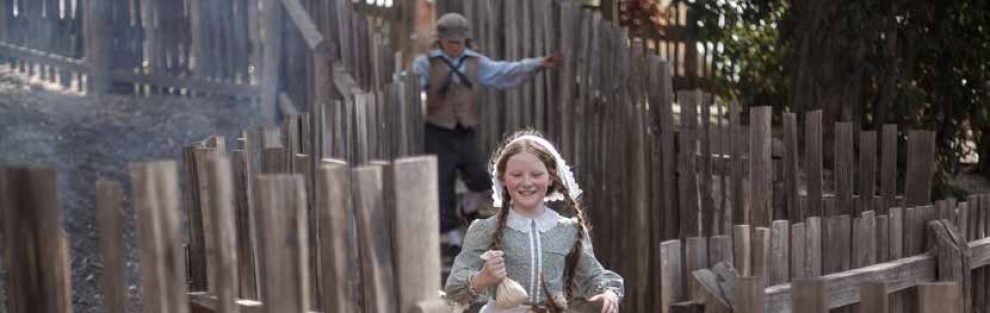
In recent blog posts, we’ve explored the primary sources behind Sovereign Hill’s recreation of the goldfields. But alongside these carefully researched reconstructions, you’ll also find a handful of authentic 19th-century buildings—structures that weren’t born on this site, but lived other lives before finding a home here.
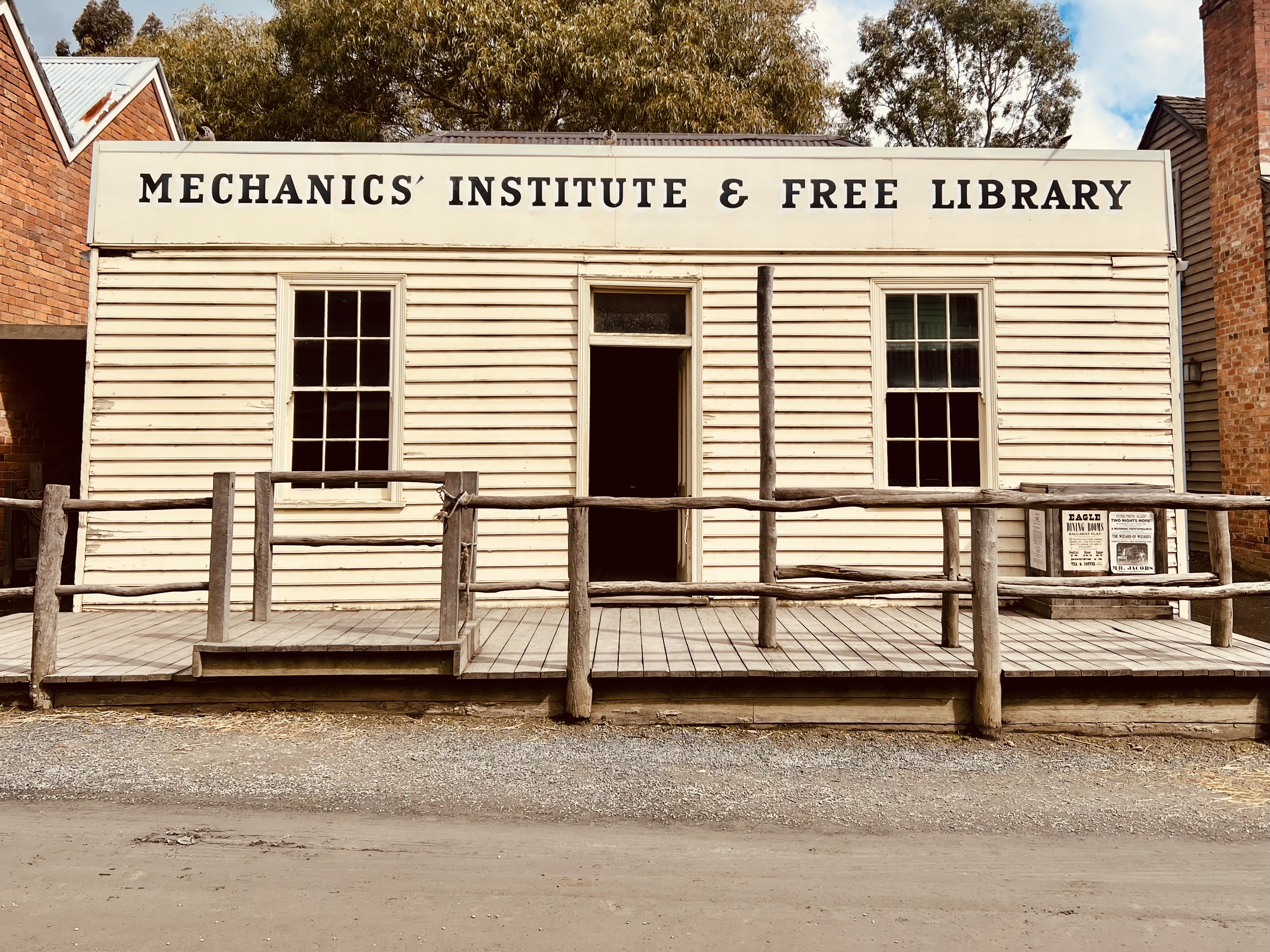
Pictured: The former Scarsdale Mechanics’ Institute on Sovereign Hill’s Main Street today. Photograph by Ellen Becker.
One of these buildings is the Mechanics’ Institute on Main Street, a small, unassuming building that represents a worldwide movement of education, self-improvement, and civic life.
The Mechanics’ Institute Movement
The mechanics’ institute movement began in Scotland in the late 18th century. In 1796, John Anderson, Professor of Natural Philosophy at the University of Glasgow, left his estate to found a new institution dedicated to spreading “useful knowledge” at a time when learning was beyond the reach of most people. Anderson believed access for all to knowledge and learning was “for the good of mankind.”
Anderson inspired George Birkbeck, a Quaker physician and academic, who noticed that the ‘mechanics’ – a term referring to skilled workers at the time – had a hunger to understand science and the new technologies shaping their world.
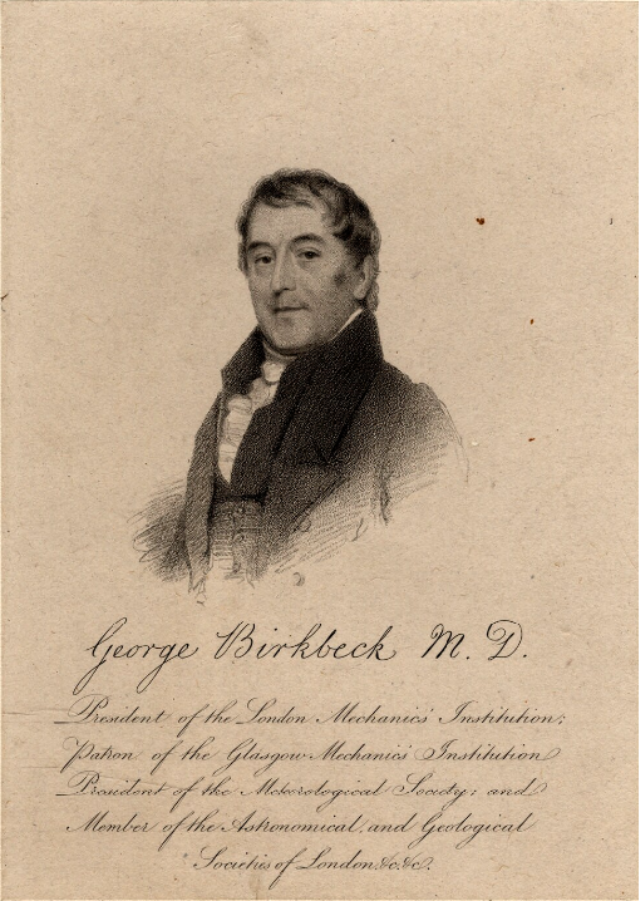
Pictured: George Birkbeck, after unknown artist. Stipple engraving, 1824 or after. National Portrait Gallery London collection.
From 1800, Birkbeck gave free and open lectures on the ‘mechanical arts,’ drawing hundreds of eager listeners. His efforts helped spark the first Mechanics’ Institute in 1821, the Edinburgh School of Arts. The movement quickly spread across Britain and its colonies, aiming to offer ‘useful knowledge’ as well as ‘rational indoor recreation.’ By the late 19th century, there were over 1,200 Mechanics’ Institutes in Britain, with thousands more across the empire.
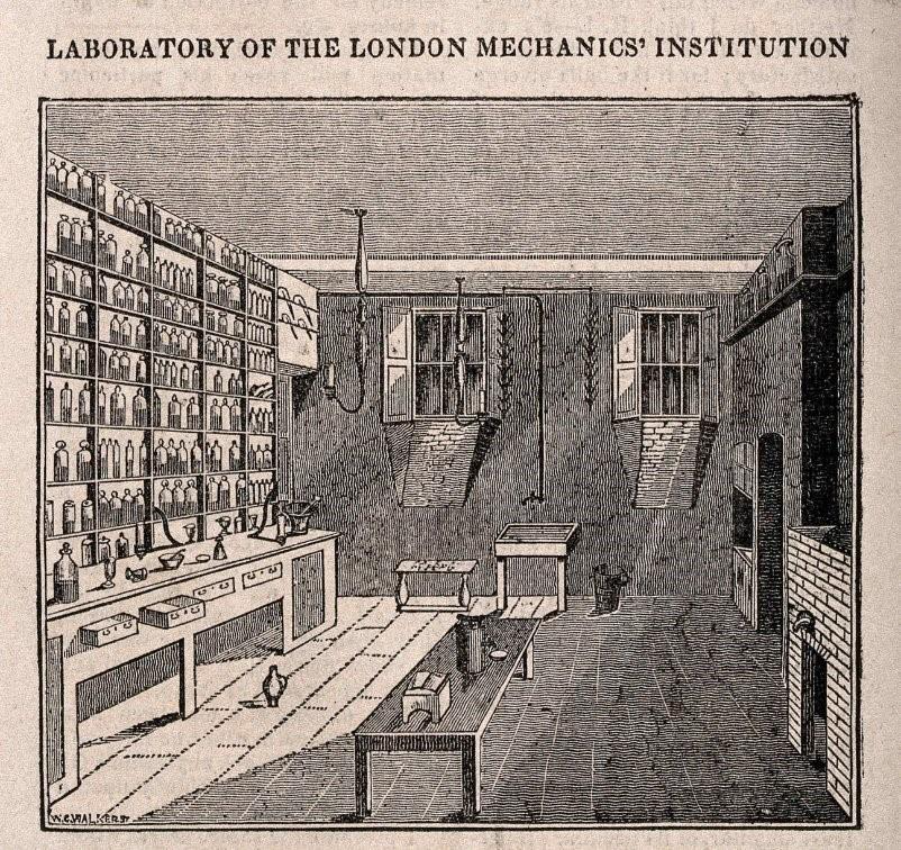
Pictured: London Mechanics’ Institute, Southampton Buildings, Holborn: the interior of the laboratory, in a cellar. Wood engraving by W. C. Walker after Mr. Davy [1828].
Mechanics’ Institutes Movement in Australia
The first Mechanics’ Institute in Australia opened in Hobart in 1827, followed by Melbourne in 1839. These institutions predated both the State Library of Victoria (1854) and the University of Melbourne (1853), making them some of the earliest centres of learning in the colony.

Pictured: The former Van Diemen’s Land Mechanics’ Institute (1827 – 1871). Photograph by Ellen Becker.
Victoria especially embraced the movement. More than 1,000 institutes were established in the state alone, with some 100 apparently already in existence before the gold rush. They served not only as libraries, but also as concert halls, theatres, debating clubs, and museums.
The Ballaarat Mechanics’ Institute
Ballarat’s own Mechanics’ Institute was born in the turbulence of the gold rush years. As early as 1853, the Ballarat Star newspaper argued that the “young men of Ballarat […] require an institution in which their minds can be improved” (The Ballarat Star newspaper, 10th May 1853).
With support from prominent Eureka figures like Peter Lalor and John Basson Humffray, the Ballaarat Mechanics’ Institute (BMI) was established. Its first reading room opened above the Ballarat Fire Brigade in 1859. In an article on the 25th May 1859, The Ballarat Times vividly describes the reprieve the reading room offered:
A lamp light being shown outside the Fire Brigade House and the engine room being open and lighted, there is something comfortable and inviting in the appearance […] to visit the interior and there find such mental pabula [food, nourishment] as will not only enlarge their understandings and encourage intellectual health and activity but also benefit them morally. In the room burn ten bright gas lights… which give it a richly illuminated appearance – bright without being glaring, and a bright fire supplies a comfortable degree of warmth, which is a very necessary requisite to literary study or recreation.
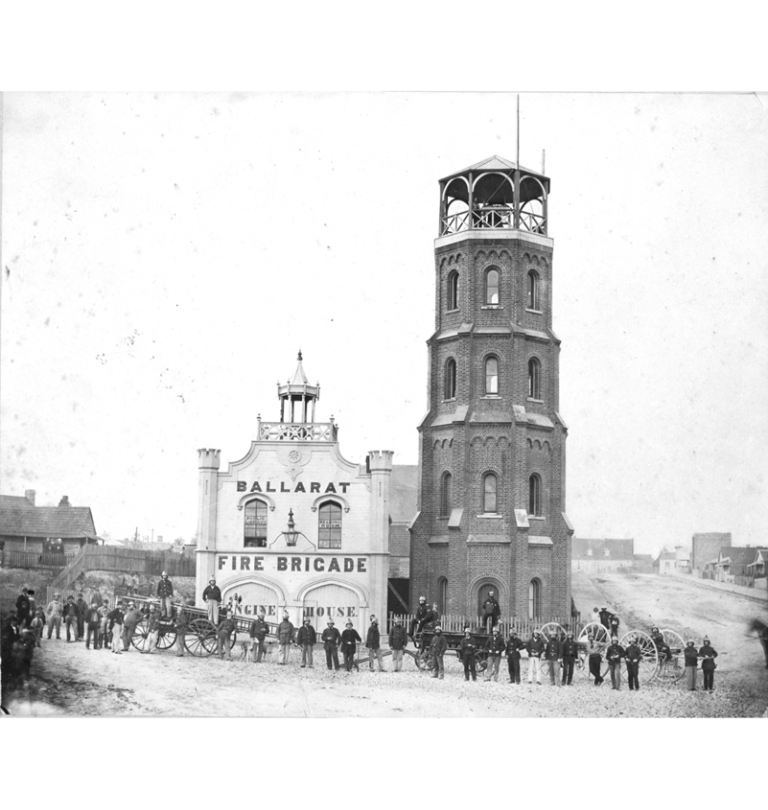

Pictured: The Ballarat Fire Brigade, 1800s. Max Harris Collection, Ballaarat Mechanics’ Institute.
By 1860, the Ballaarat Mechanics’ Institute had moved from its modest beginnings above the fire brigade into a permanent home on Sturt Street. Within a few years, its striking façade and hall became a landmark of civic pride, hosting everything from public lectures and promenade concerts to fine art exhibitions and Victorian popular entertainments, some of which would not be acceotable today. Crowds flocked to see curiosities like P.T. Barnum’s celebrated performer Tom Thumb, who drew such numbers that members complained they could barely squeeze into the reading room.
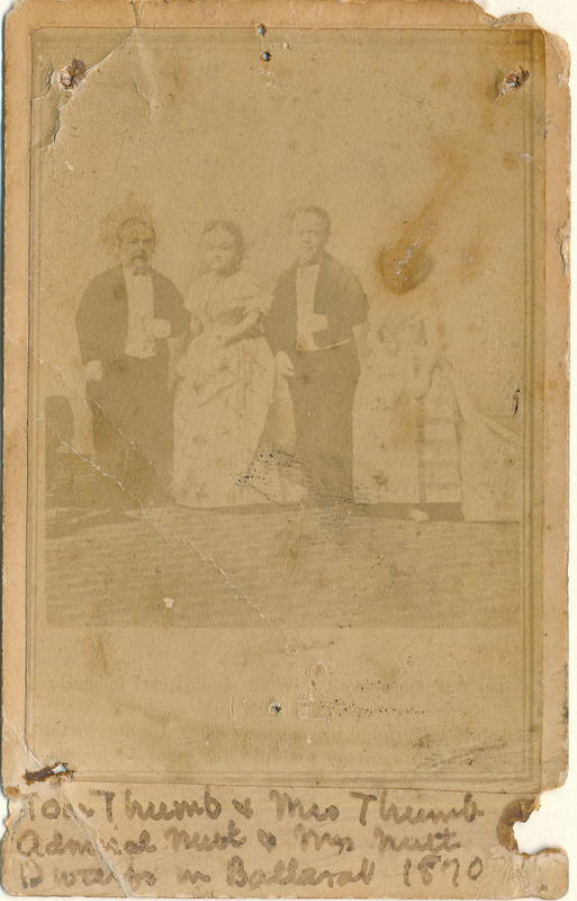
Pictured: Photograph of Tom Thumb and Mrs Thumb, Admiral Nutt and Mrs Nutt during their visit to Ballarat, 1870. Sovereign Hill Museums Collection.
The BMI was a place where ideas and innovation flourished. Its library offered access to thousands of volumes of science, art, and literature. One of its most devoted readers was a local boy named Henry Sutton, who by age 14 had read every science book on the shelves. Sutton would go on to become one of Australia’s great inventors, pioneering rechargeable batteries, designing early telephones and lighting systems, and even imagining a prototype of television decades before it became reality.

Pictured: Engraving of Ballaarat mechanics’ Institute. Harrison, W. H., engraver, 1868. State Library of Victoria Collection.
The Mechanics’ Institute at Sovereign Hill
Unlike many of the replica buildings on site, our Mechanics’ Institute is an original 1860s building – though not from Ballarat. Originally from Scarsdale, a nearby mining town, it was a modest ‘chapel cheapie’ rather than a grand structure like the real Ballaarat Mechanics’ Institute. By the mid-20th century, the building had fallen into disuse and was nearly demolished to make way for a tennis court.
Austin McCallum, a founder of Sovereign Hill and the Chief Librarian of the Ballarat Public Library and Central Highlands Regional Library, heard of the fate of the building and secured it for relocation to Sovereign Hill in 1972. As he wrote:
Mechanics’ institutes were woven into the fabric of early community life in the goldfields’ townships. They were often the first civic centres; the places where people first glimpsed, examined, and decided on the community value of each other. They performed useful library functions and in the beginning they linked adult education with the daily lives of socially isolated working men and women. Sovereign Hill would be incomplete without a mechanics’ institute.
The bookcases inside are original to the Scarsdale Mechanics’ Institute, and the first library collection came as a gift of 100 books from the Fisken family of Lal Lal. Some volumes once belonged to Reverend Thomas Hastie, who had founded the Buninyong Mechanics’ Institute. Others are ‘orphans’ from lost institutes and collections across Victoria.

Pictured: Copy of an article from the Ballarat Courier, showing Austin McCallum in the doorway to the Scarsdale Mechanics’ Institute prior to its relocation to Sovereign Hill, 14th October 1872.
***
Today, the Ballaarat Mechanics’ Institute on Sturt Street still thrives as a library and cultural centre, while Sovereign Hill’s Scarsdale building stands as a reminder of how vital these places were to community life in the past.
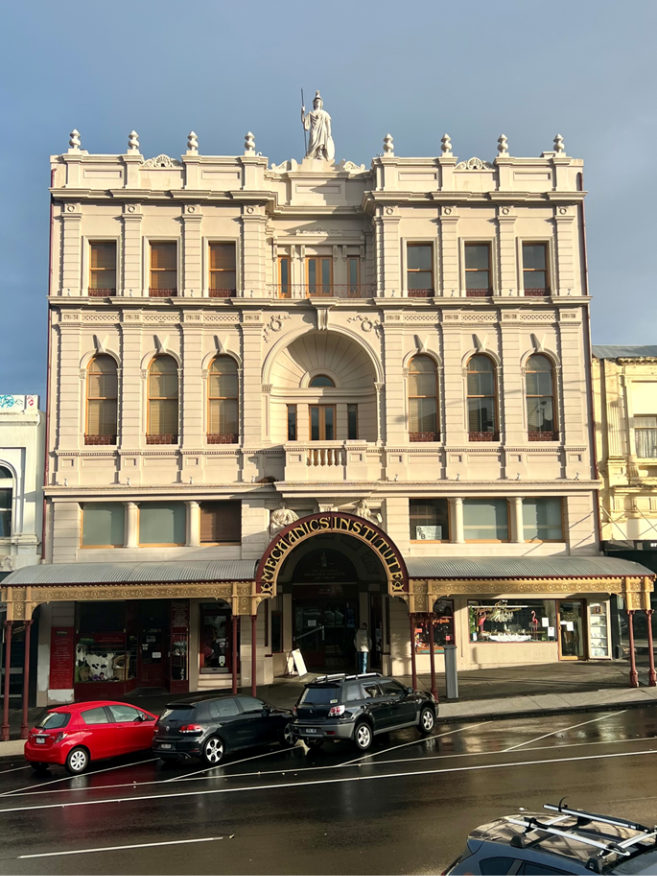
Pictured: The Ballaarat Mechanics’ Institute today. Photograph by Ellen Becker.
Mechanics’ Institutes weren’t just about learning – they were about creating community, encouraging curiosity, and imagining a better future. In many ways, that’s still the mission of museums, libraries, and schools today.
So next time you step into Sovereign Hill’s Mechanics’ Institute, take a moment to imagine the thousands of miners, performers, inventors, and everyday townsfolk who once found warmth, knowledge, and entertainment in buildings just like it.
Written by Ellen Becker, Education Officer at Sovereign Hill and Heritage Collections Curator at the Ballaarat Mechanics’ Institute.
Discover more from Sovereign Hill Education Blog
Subscribe to get the latest posts sent to your email.


 Sovereign Hill Education Blog