
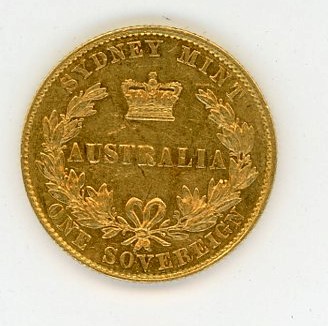
On 23rd June 1855 the first coin made in Australia was struck in the newly opened Sydney mint, the first Royal Mint outside of Britain. The coins had a narrow circulation, and were to be used in Australia. Until 1965 Australia used British currency, pounds, shilling, and pence; in 1966 Australia introduced their own decimal coinage, Australian dollars and cents.
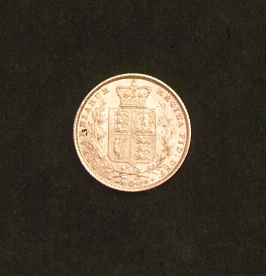
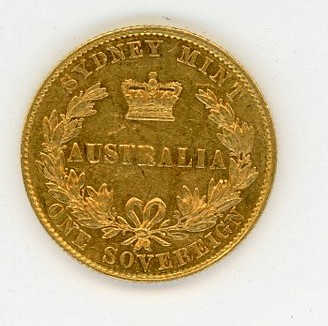
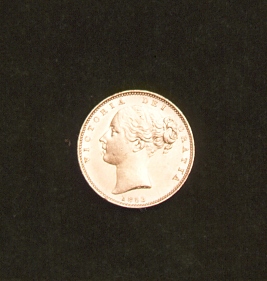
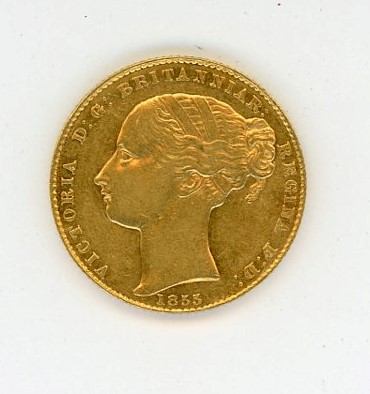
76.0107 British Sovereign 1853. This was coinage coming out of the British mints and used across the British Empire. Note the Sovereign above has a unique local design, clearly emblazoned “SYDNEY,” and would not have circulated Empire-wide.
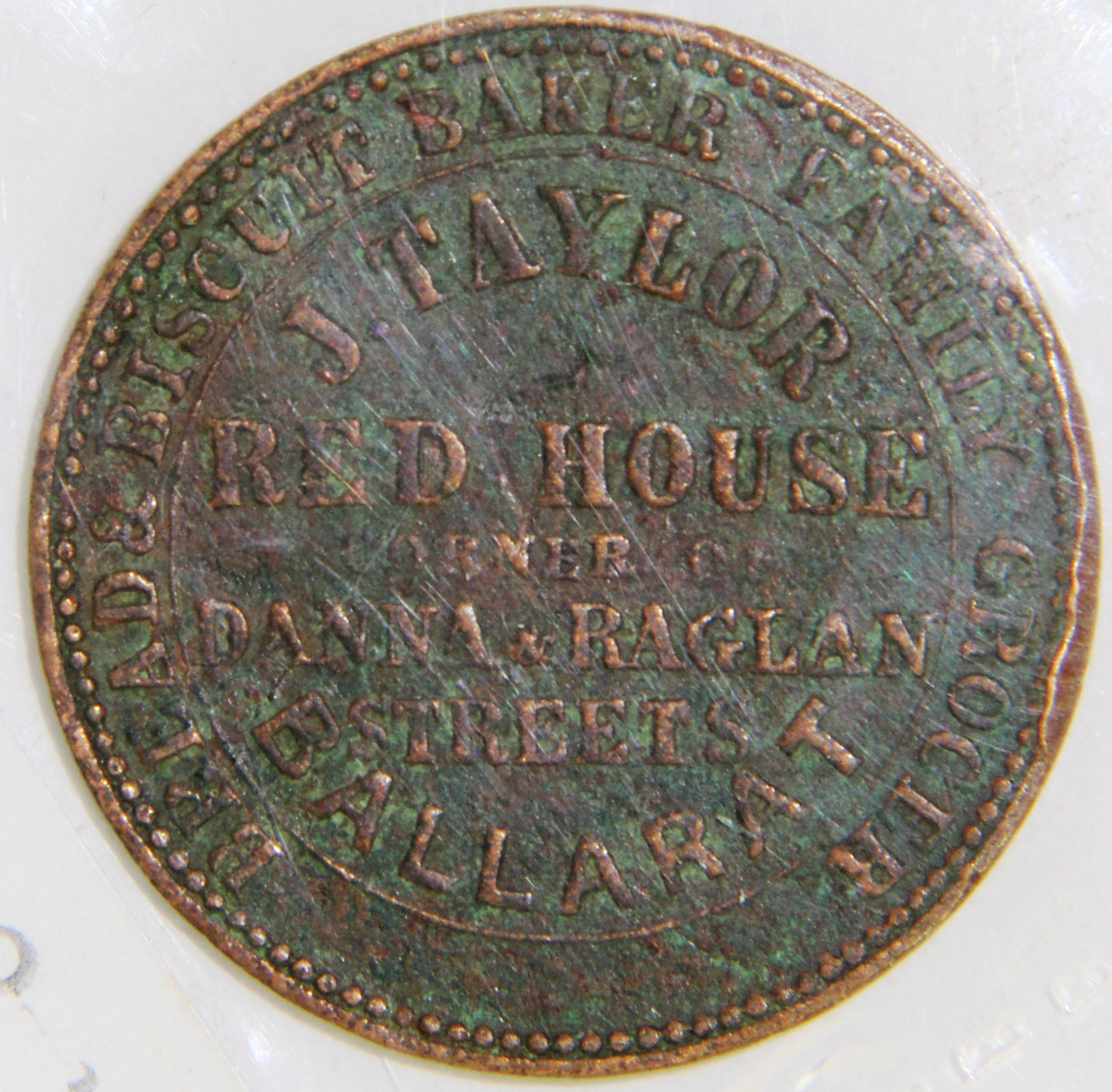
Before the opening of an official royal mint, the first minted in Australia was the Holey Dollar. Governor Macquarie had the centre cut out of foreign coins, Spanish reales, and the coin restamped. Local businesses would also mint coins, or trade tokens, that could be used locally.
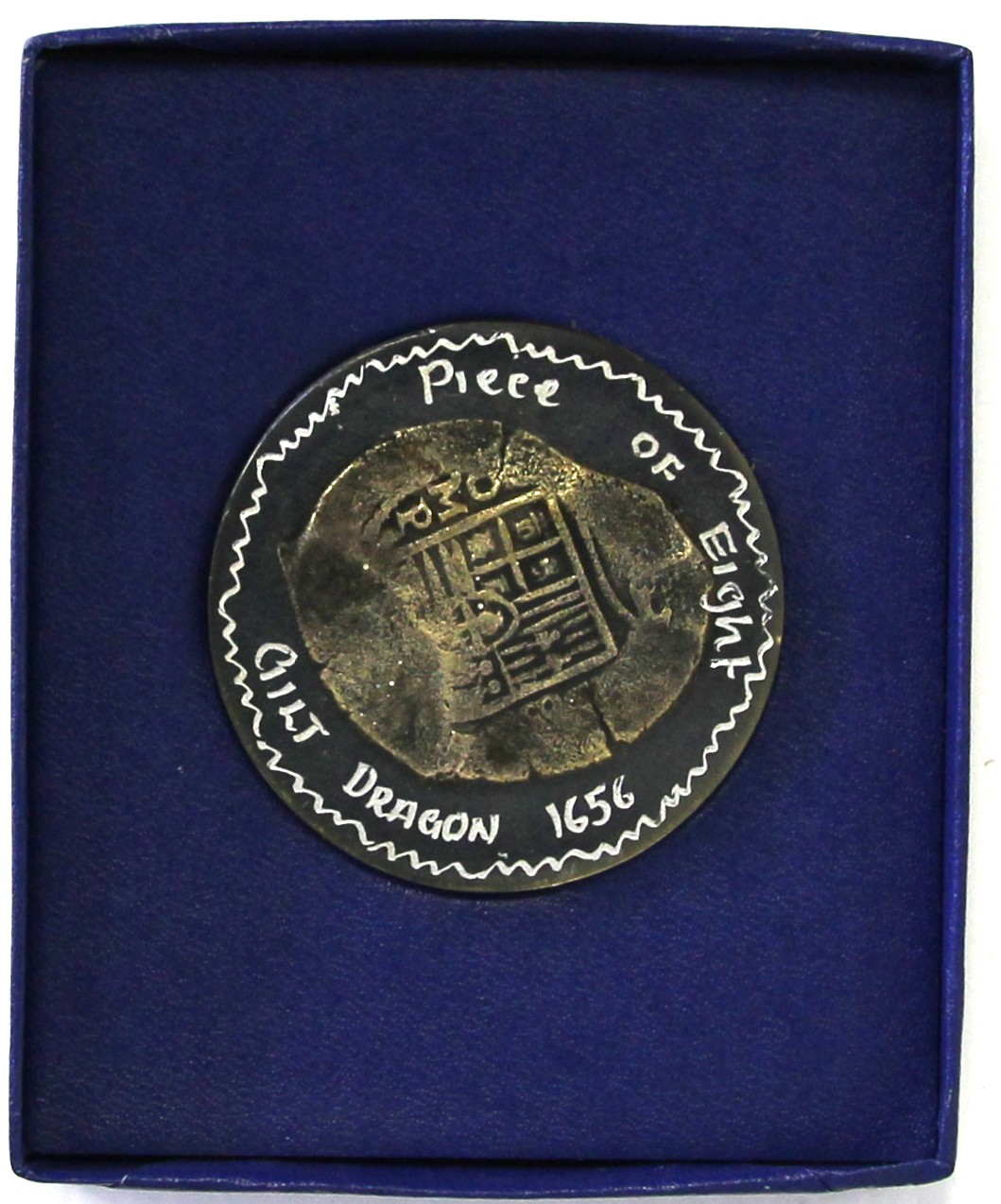
In our collections we hold a Spanish reale from the wreck of the Gilt Dragon, belonging to the Dutch East India Co, that sank of the coast of Western Australia in 1656. Amongst its trade goods were eight chests of silver coins. The wreck was discovered in 1963. For more on the wreck of the Vergulde Draeck (Gilt Dragon) visit the Western Australian Museum https://museum.wa.gov.au/maritime-archaeology-db/wrecks/id-786
These early coins show the long history of gold’s value in trade and empire building, particularly in the Roman and Byzantine empires. The Bank of Canada Museum notes that Byzantine coins were traded from North Africa to China as a stable form of currency [https://www.bankofcanadamuseum.ca/2025/08/good-as-gold-a-simple-explanation-of-the-gold-standard/].
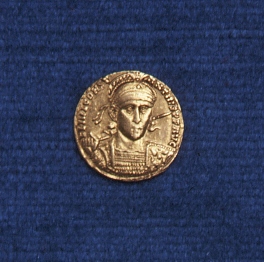
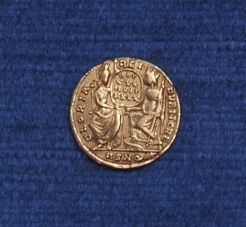
Coins have long been a symbol of wealth and empire building and have a long history as a form of currency, where their value was linked to the proportion of a given metal (gold, silver, copper) in the coin. Weighing the coin, gave you its value, therefore coins could be traded and hold value across wide regions. Coins allowed standard values, trade, between regions, taxes could be collected, and soldiers could be paid. Imagery on the coin sent a message and established authority. The bust of an emperor, an emperor who may never visit the region, put his image everywhere.
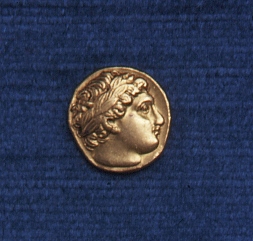
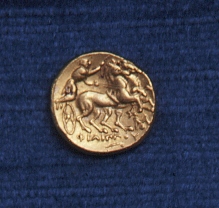
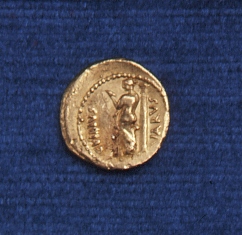
People quickly learned you could buy and borrow against the value of gold stored. The birth of early banks rested on the assumption that not everyone would need their gold at the same time. A variety of paper documents circulated as evidence of money available. In the early years of the colony a wide variety of notes, goods, and coinage was used and exchanged as forms of payment.
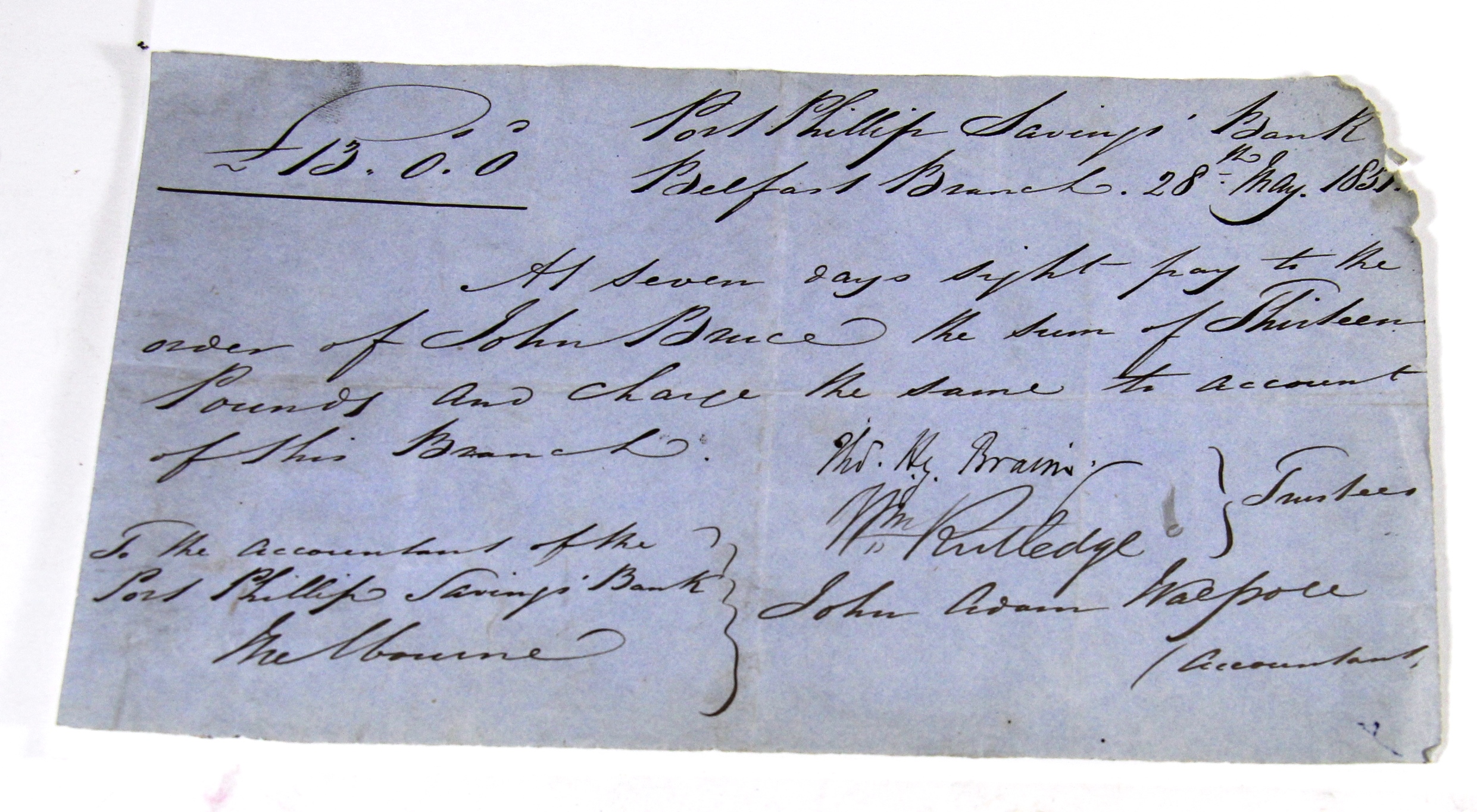
(Thos. Hy. Brain)
(Wm. Rutledge)
(Jhon Adam Walpole)”
Much of the gold extracted during the Victorian gold rush was destined for the Royal Mint to be struck into gold coins and accepted as currency across the British empire. The rush for gold generated huge demand for a stable currency as did a rapidly expanding global economy. Gold coins took the place of bartering, or exchange of goods, as a form of payment. Gold held value. The gold standard that took shape over the course of the nineteenth century fixed the value of a country’s currency against the amount of physical gold stored by that country. Although our currency is no longer directly backed by our gold stores, it continues to be stored as an a valuable, stable source of wealth. The World Gold Council estimates that approximately one fifth of the world’s mined gold is currently held in central banking reserves. (https://www.gold.org/goldhub/data/gold-reserves-by-country).
Today Australian coinage is struck at the Royal Australian Mint in Canberra.
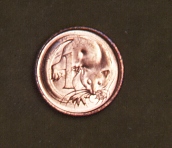
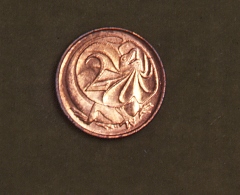

The Gold Museum opened in 1978 after the donation of 900 coins, nuggets and gold samples by Paul and Jessica Simon. The coins featured in this blog post come from Paul’s extensive coin collection that spanned a huge geographic and time span. Paul, a gold fossicker and respected numismatist, with a particular interest and expertise in gold coins.
Discover more from Sovereign Hill Education Blog
Subscribe to get the latest posts sent to your email.


