On the 25 April, Australians and New Zealanders we marked Anzac Day; a time to gather or pause and honour all citizens who have served in military and peacekeeping operations. ANZAC refers to the Australian and New Zealand Army Corps, a term that was first used in 1915 to describe the Australian and New Zealand corps serving as part of the British Army in the Mediterranean Expeditionary Force. As a relatively young nation, since Federation in 1900, a strong national identity was tied to the sending of Australian forces to serve in battle. Within weeks of Britain declaring war in July 1914, Australia was recruiting forces to the AIF. 20 000 troops were promised and by November 1914 most soldiers and nurses were enroute to Europe, including many from Ballarat. Within the Museum collections lie a collection of letters from the front received by loved ones here in Ballarat.
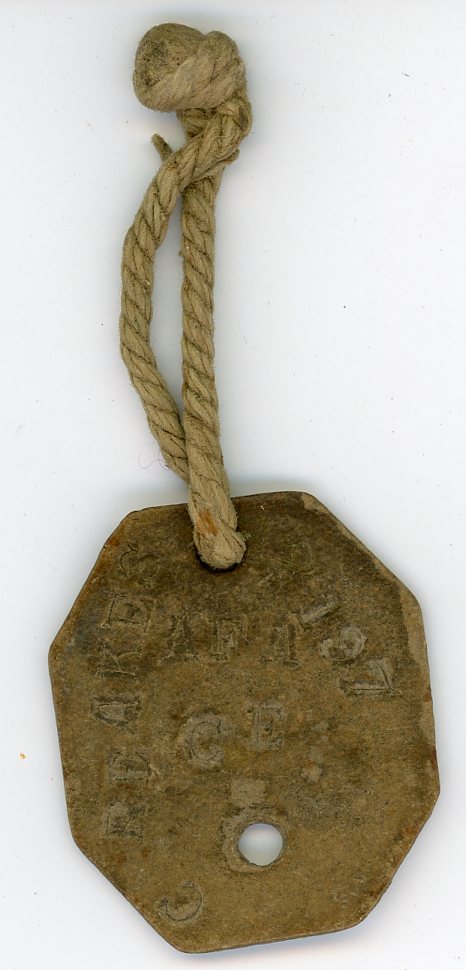
2012.0206 Dog Tags for Charles Alfred Reakes
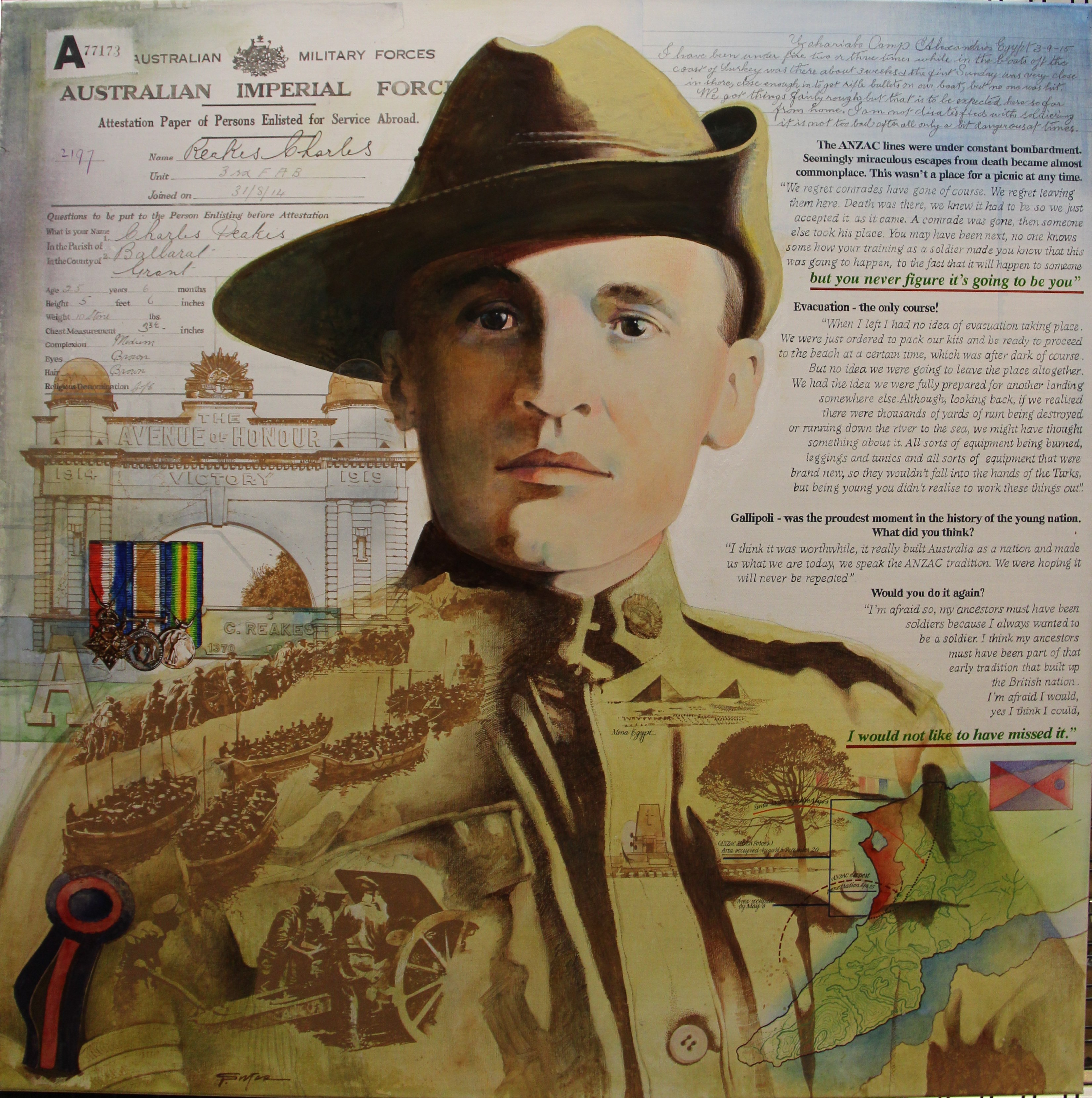
The soldier featured in the artwork “Son of Ballarat” is Charles Alfred Reakes. The artist describes him as an “adventurer, who cared for his comrades and went forth boldly”. Charles enlisted 31 August 1914 and part of the landing forces in April 1915. He served throughout the war and, as he was at sea when the Armistice was signed, was one of the first to return to Melbourne. Over the years Charles writes a number of letters to his cousin Ruby. In September 1915 he writes from Egypt “I am not dissatisfied with soldiering it is not too bad after all only a bit dangerous at times,” after mentioning being under fire two or three times. By April 1918 he writes “just beginning to realize how long I have been away from home”. Charles eventually returns home, raises a family and returns to Gallipoli for the fiftieth anniversary.
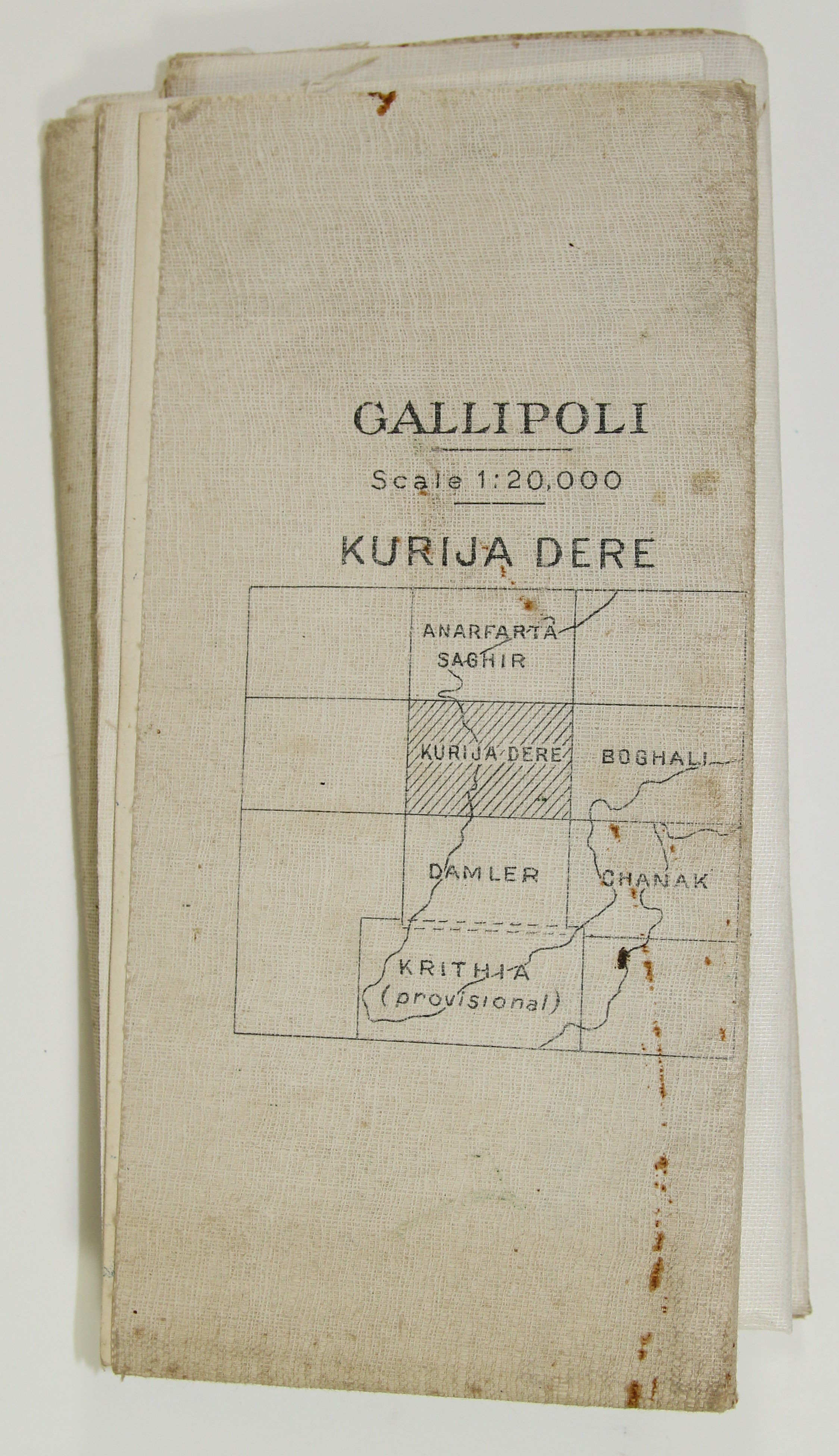
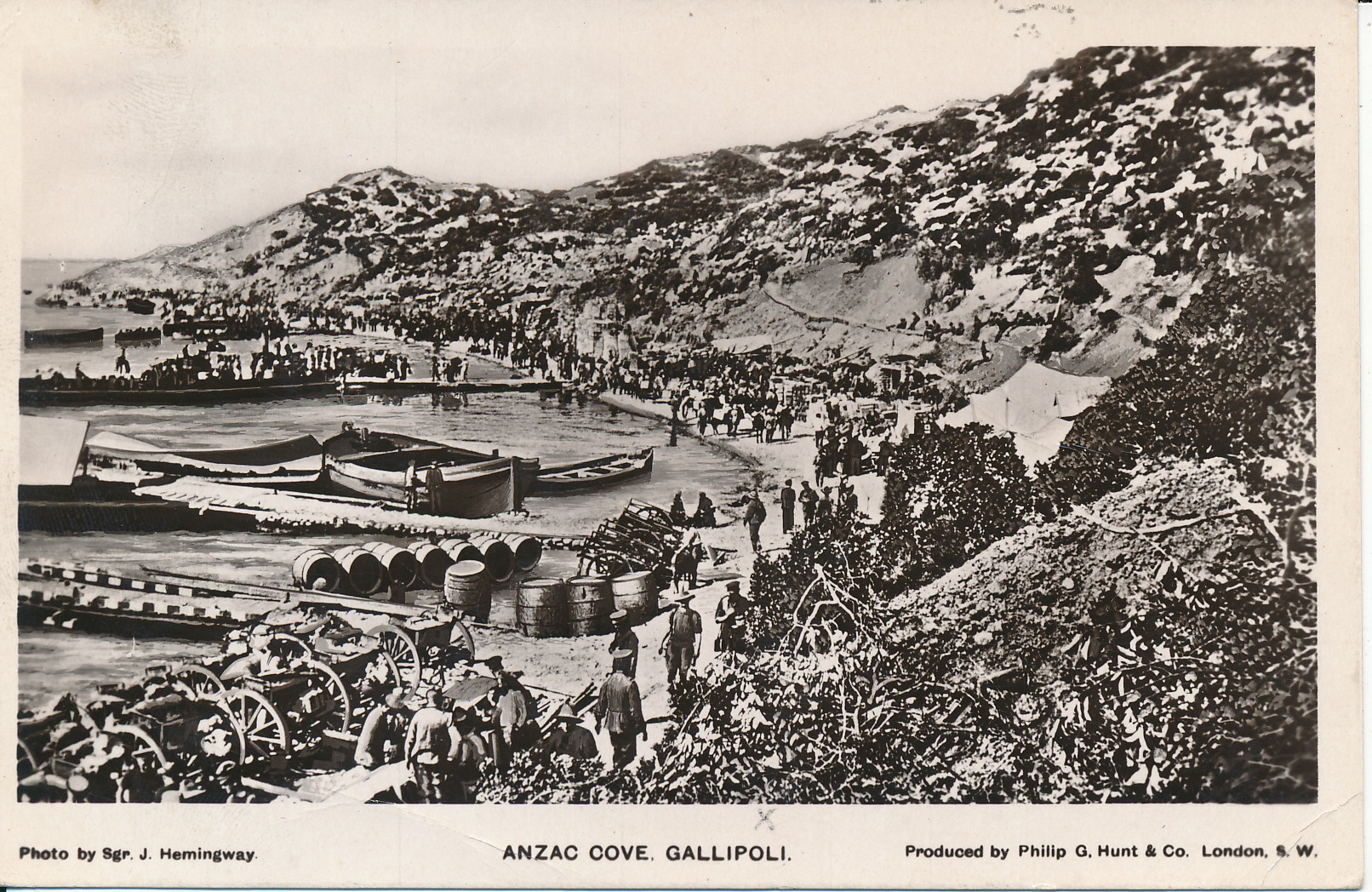
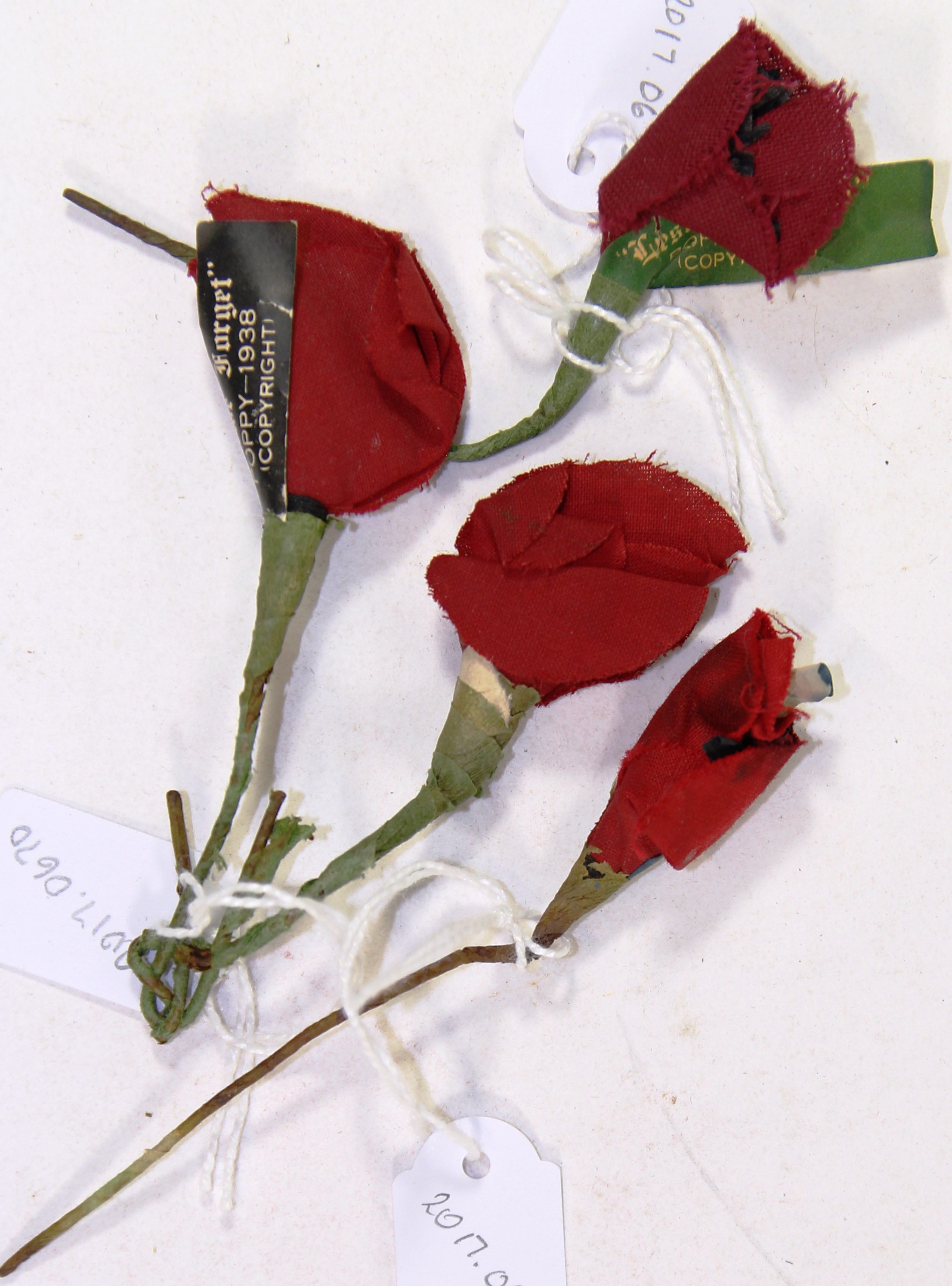
The Gallipoli campaign that came to define an ANZAC as synonymous with resilience, courage, ingenuity, and standing by each other came at a high cost The campaign lasted from April to December 1915 over which time more than 8 000 Australians, about half of those sent, were killed. A year after that landing, 1916, the 25 April was named Anzac Day in honour of the sacrifices of Anzac forces in the Gallipoli campaign. Services begin at dawn, the time of the original landing in Gallipoli, 25 April 1915. Today the term ANZAC and Anzac Day includes all military and peacekeeping operations since WW1 and men and women that serve.
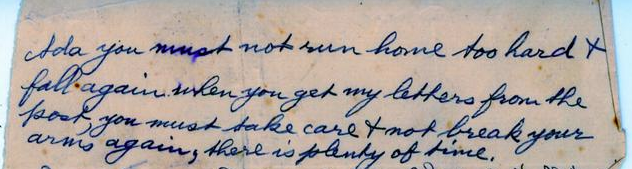
Private Joseph James Lugg was one of those who did not return from the Gallipoli campaign. Early 2015 he wrote to his family from Egypt and he includes a short note to his sister Ada that captures the anticipation at home, waiting for a letter from a brother far away.
“Ada you must not run home too hard and fall again when you get my letters from the post, you must take care and not break your arms again, there is plenty of time.”
In a letter written from Gaba Tepe, Monday 26 July 1915 he writes “I won’t be sorry when the war is all over”. He describes his experience of the landing 25 April 1915.
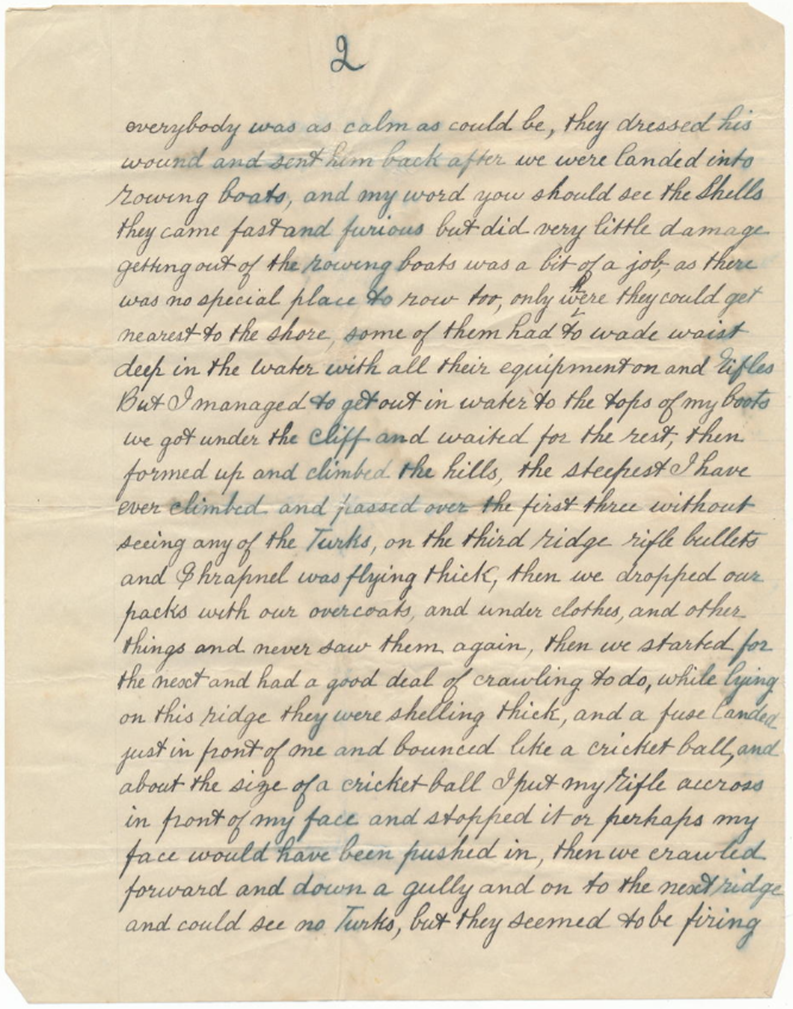
“But I managed to get out in water to topes of my boots we got under the cliff and waited for the rest, then formed up and climbed. The hills, the steepest I have ever climbed, and passed over the first three without seeing any of the Turks, on the third ridge rifle bullets and shrapnel was flying thick, then we dropped our packs…and never saw them again…a fuse landed just in front of me and bounced like a cricket ball, and about the size of a cricket ball I put my rifle across in front of my face and stopped it or perhaps my face would have been pushed in…”
A month later Joe was killed in action and buried in a cemetery about ¼ mile from Anzac Cove. In 1917 his older brother Robert, a miner, enlists and heads to the front; he returns safely in January 1919 and writes to the family throughout.
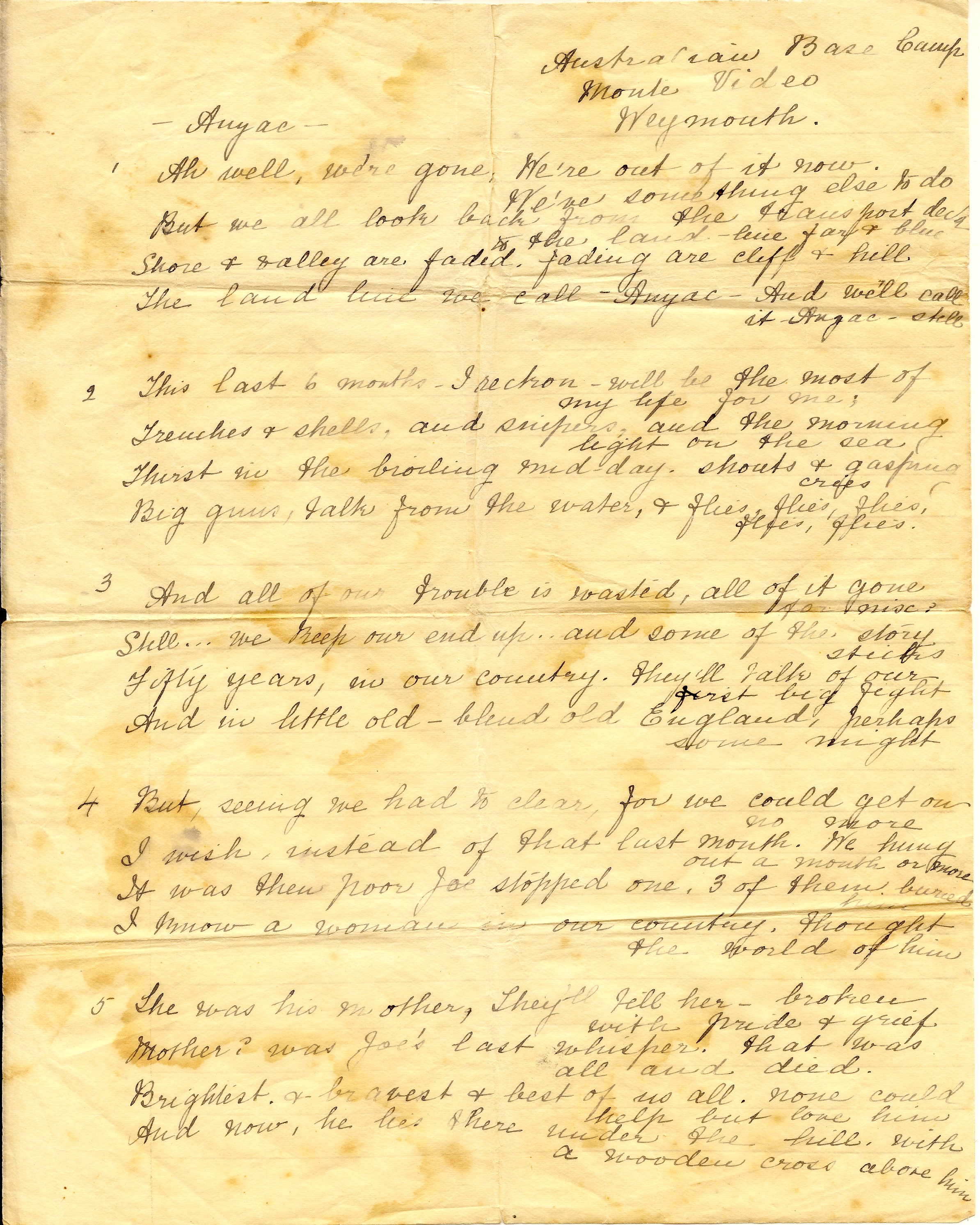
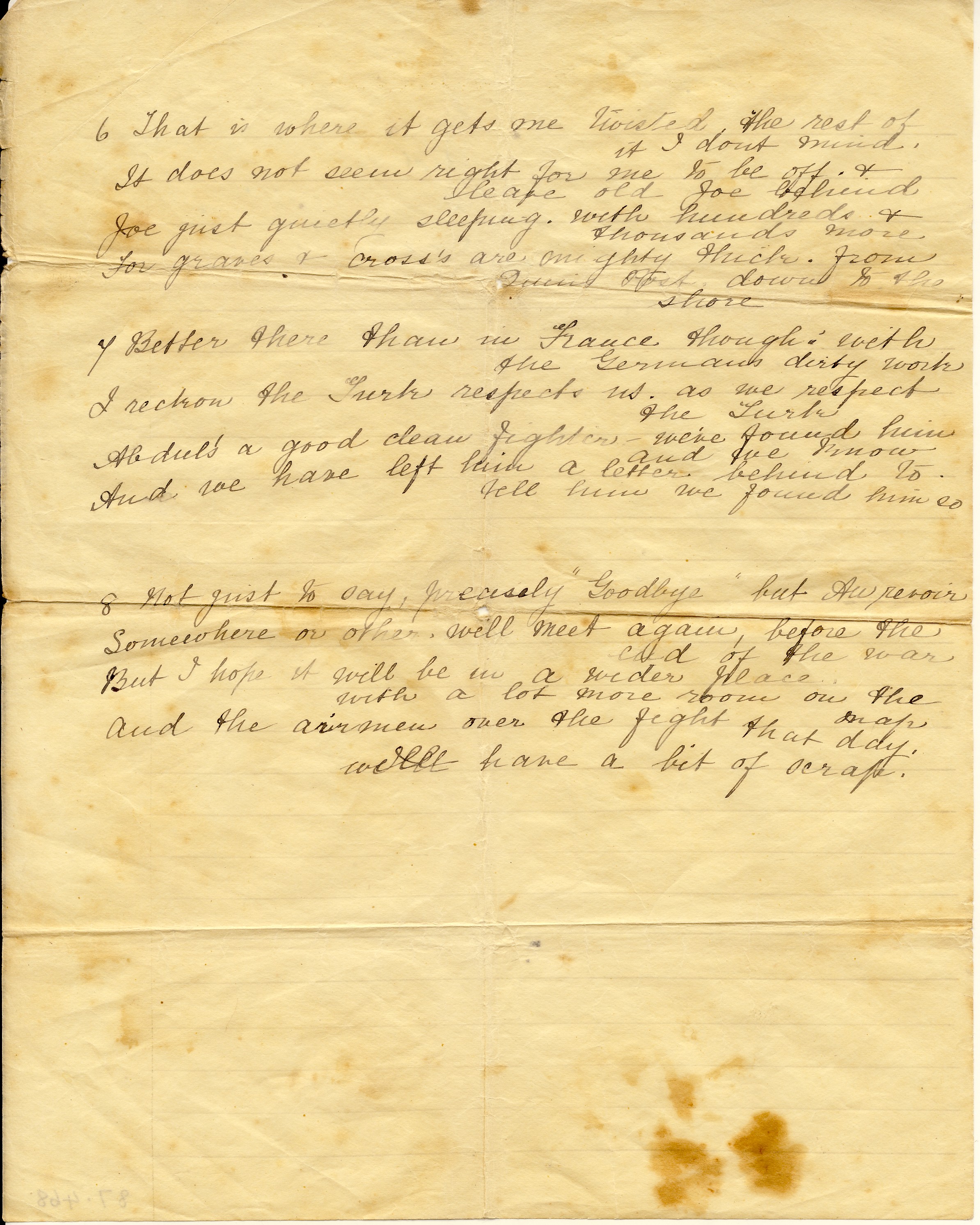
87.0468 “Anzac”
For many young men, enlisting was promoted as an opportunity to see the world, a great adventure. For their family at home, they often offer a very positive message, with few details of hardship. Amongst Joe’s papers is an anonymous poem, not written in his handwriting, but written at the Australian Base Camp, Monte Video, Weymouth.
1 Ah well, we’re gone, We’re out of it now. We’ve something else to do
But we all look back from the transport deck to the land line far & blue
Shore & valley are faded, fading are cliff & hill
The land line we call – Anzac – and we’ll call it Anzac still
2 This last 6 months – I reckon – will be the most of any life for one
Trenches & shells, and snipers and the morning light on the sea
Thirst in the boiling midday, shouts and gasping cries
Big guns, talk from the water, & flies, flies, flies, flies, flies
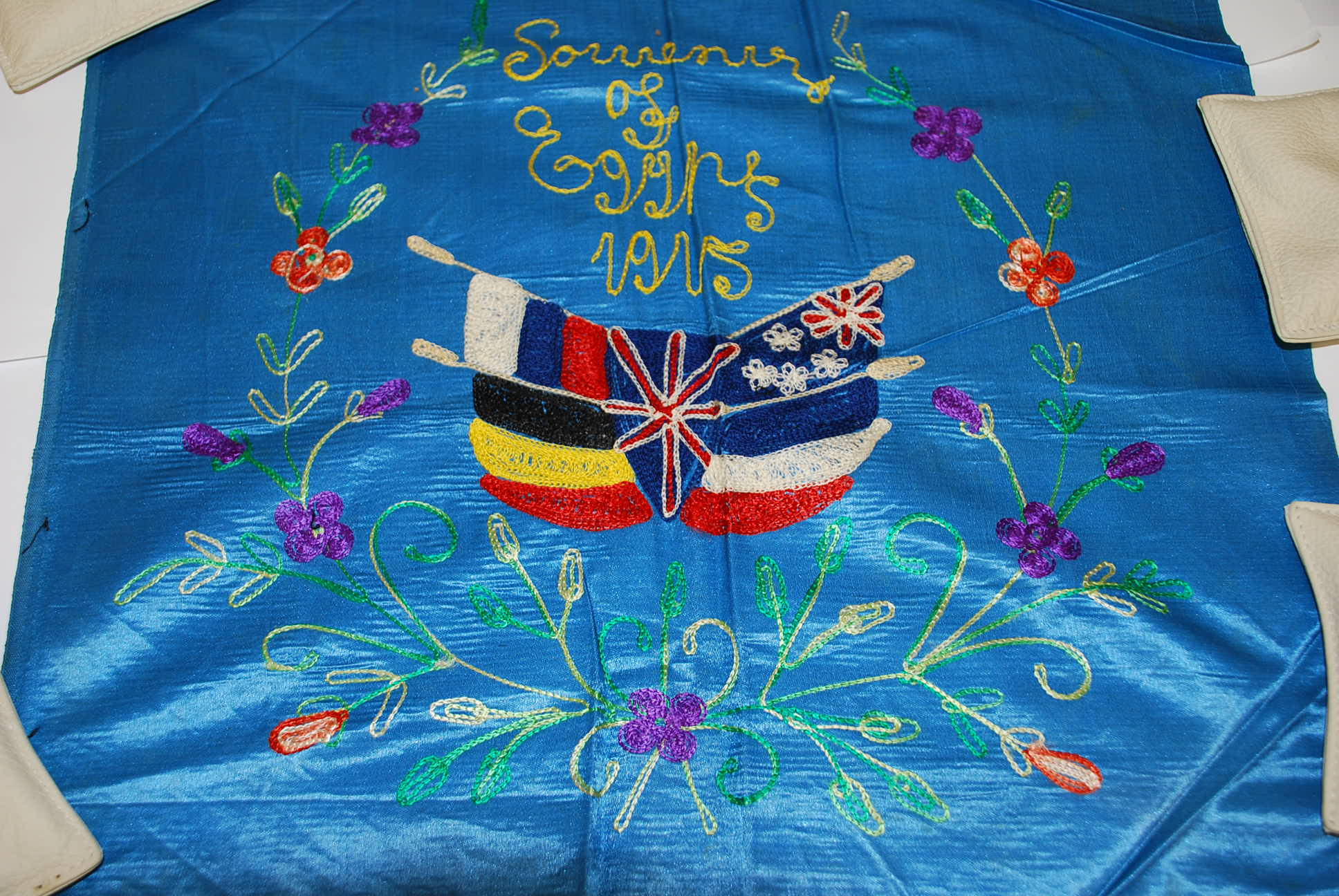
Private Hammon of Creswick wrote to his sister Jessie “When are you going to send me some pasties and pies? When I have some money I’ll send you over a handkerchief of Egyptian silk.” He was probably describing something similar to this.
2011.0785 Egyptian silk handkerchief souvenired by Cpt Brian O’Sullivan.
Roy Holloway sent many letters home to his sister Lottie. In November 1915 he writes from Gallipoli, “I am longing for some thing nice to eat, we don’t get too many daintys here and I am getting tired of bully beef and biscuits. I hope you got my letters, keep on sending a few parcels now and again. They will always come in handy here, be sure and pack them well as they get a bit of a rough time coming across.” Parcels of handknit socks, chocolate and other little treats were highly valued for comfort and morale. [05.0211]
2011.0786 Chocolate sent to soldiers Christmas 1915

Roy’s wartime took a different turn when he was captured as a prisoner of war in France November 1917. He spent the rest of the war in Soltau POW Camp in Germany before being repatriated to England in November 1919. Roy’s papers include a collection of photographs from his first few years in the army and a second album of postcards and photographs from his time as a prisoner.
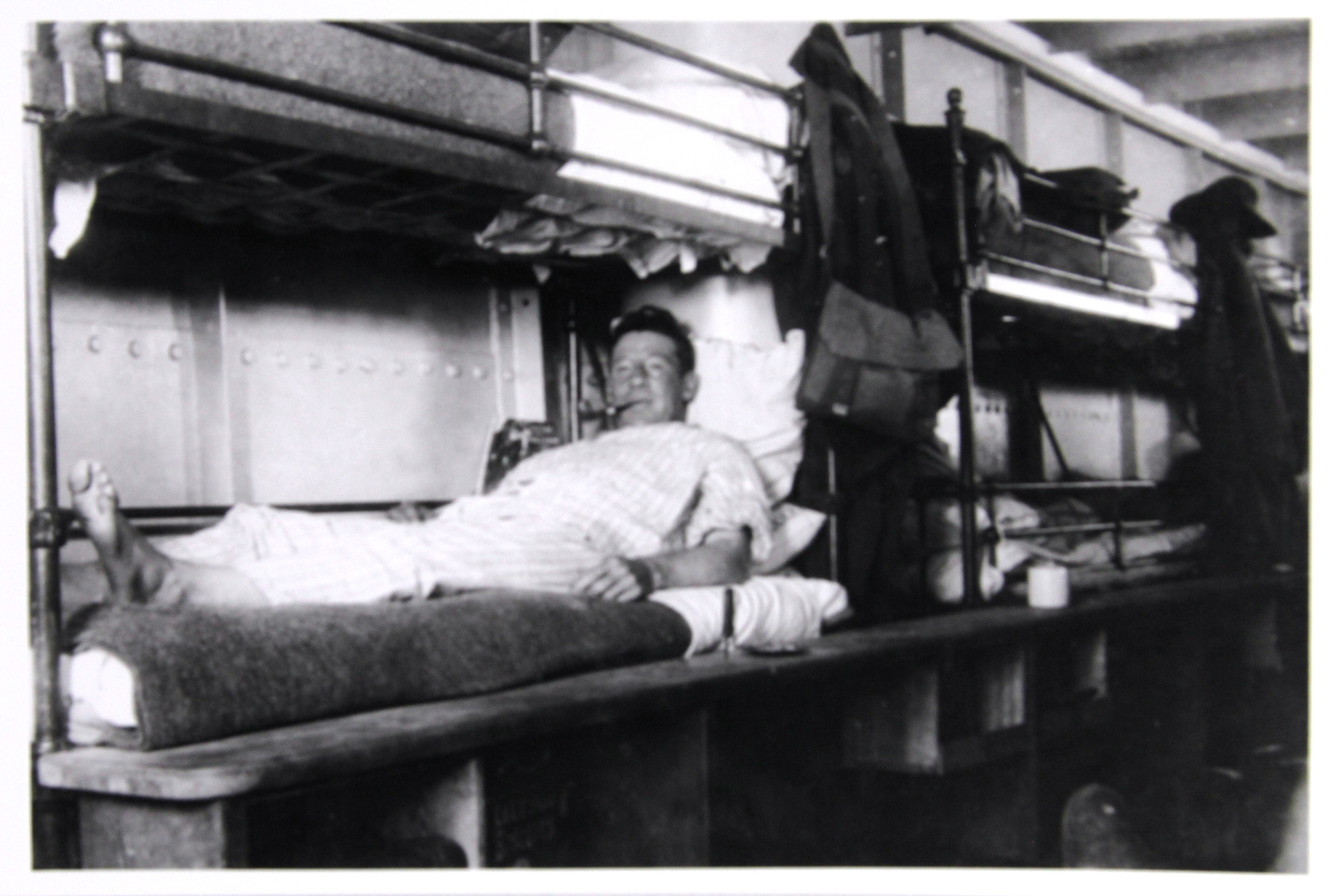
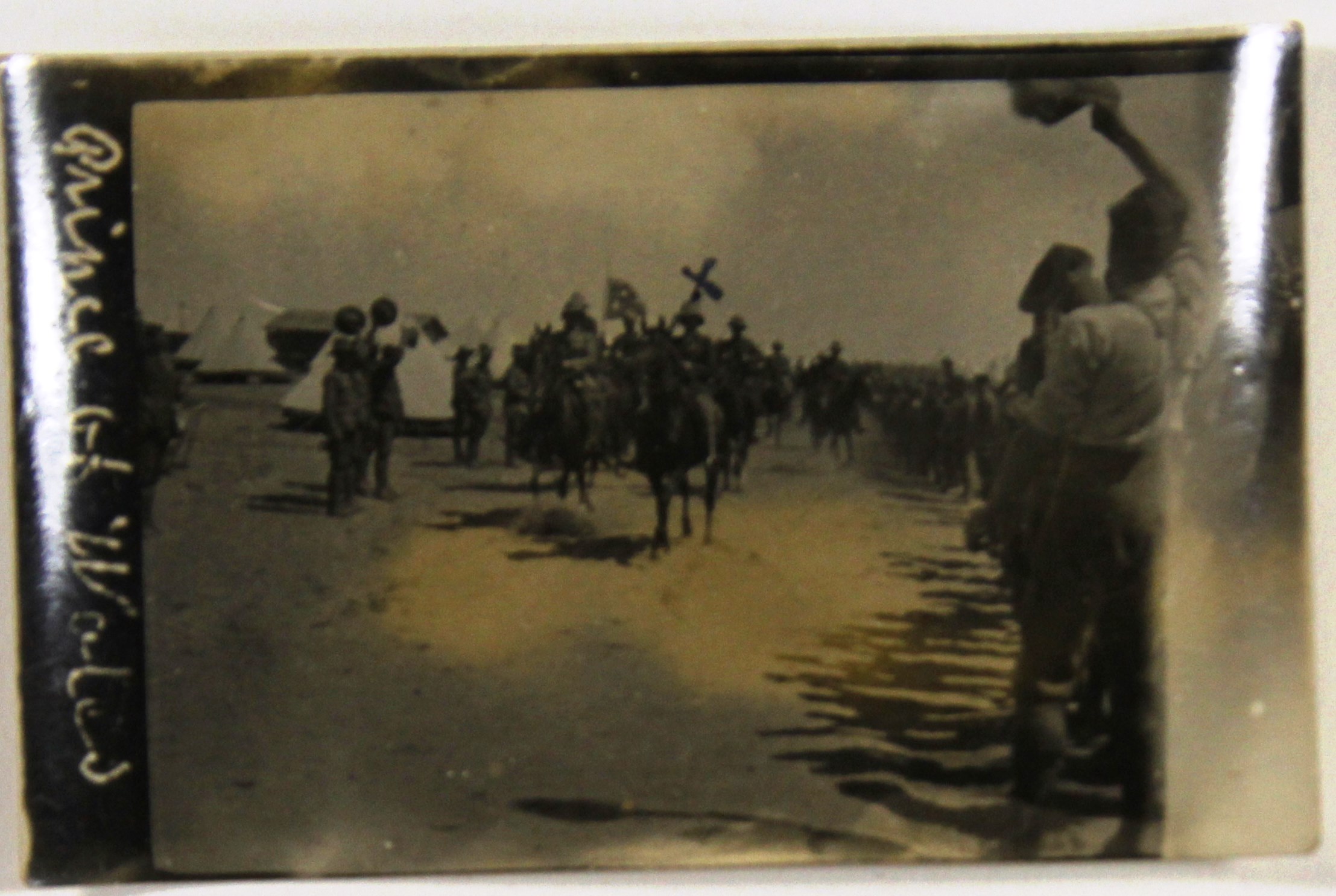
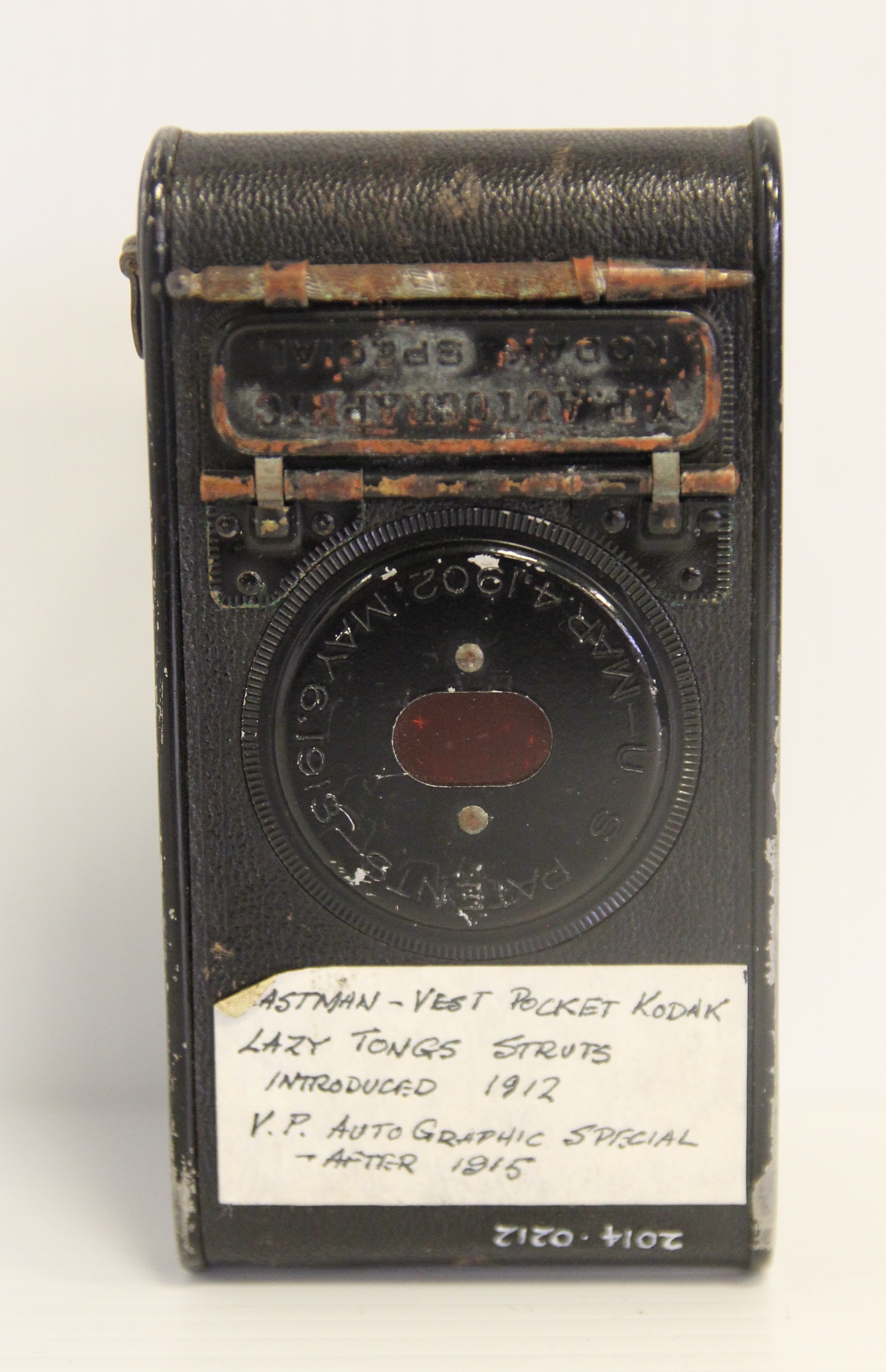
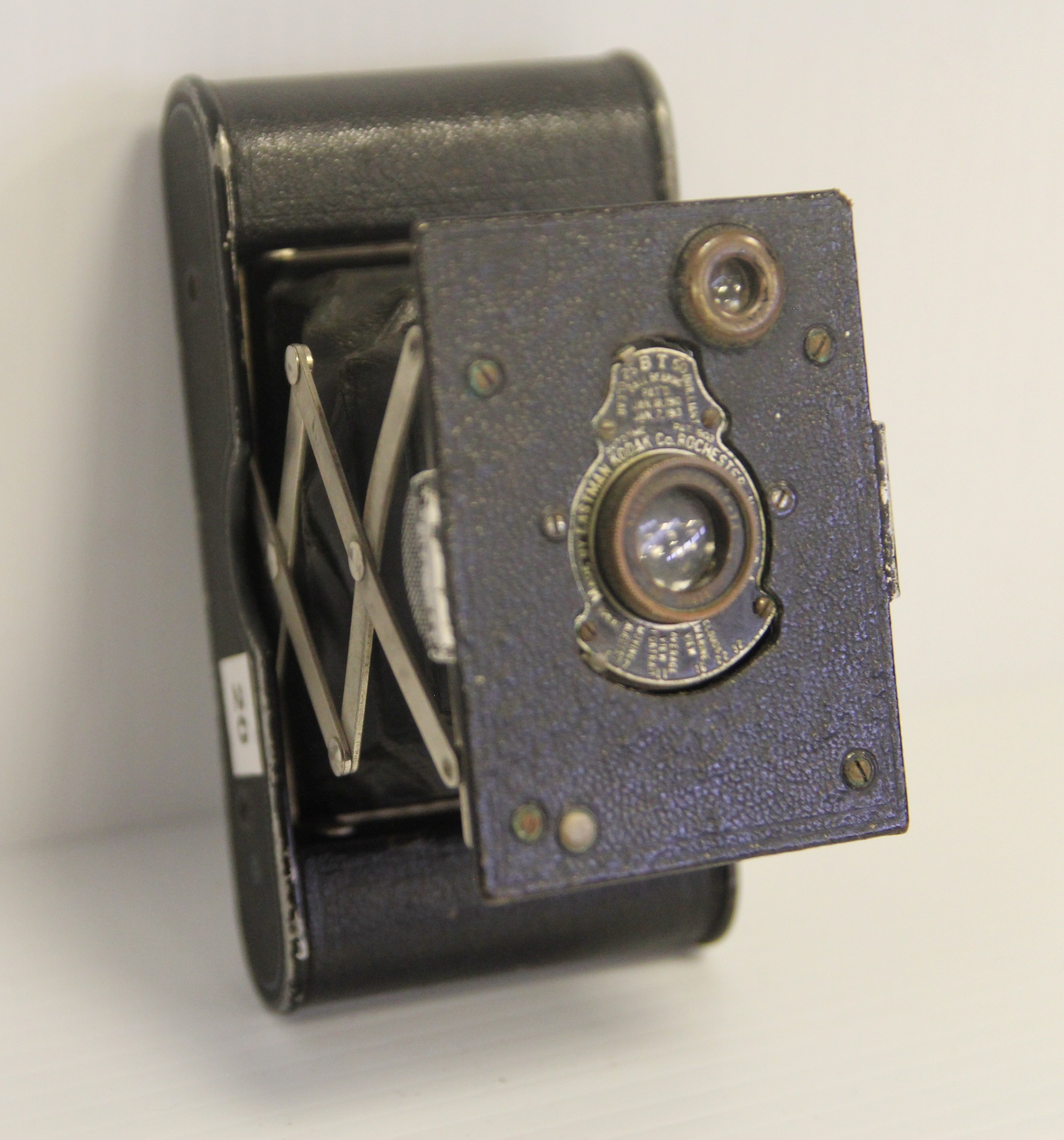
The handwritten etching on the side suggest this photograph was taken on an autographic camera like this one. The camera folds flat to fit in the vest pocket of a uniform. The small door on the back opens to let the photographer write a brief note on the film that will appear when developed.
In a letter to his mother, Lance Corporal Ben Johns writes May 7 1915. He is not allowed to reveal details of the name of his boat or his location, but they are heading to Gallipoli.
“We are about 40 miles from the scene of operations and are all anxious to go right in …as we are all tired of doing nothing on board…. We are a terribly noisy crowd and you would that that war was the last thing to concern us” J B Johns to mother. Ben is killed in action at Gallipoli, 1 August 1915. The collection includes many letters of sympathy received by his mother.

2015.0749
“Dear Mrs Johns
We can only say God help you and he has done his duty. We are Proud of him. Dear Ben I cannot believe it true yet no one knew. Whose boy will be next. God be with you Dear Friend From Eva. E Peady.”
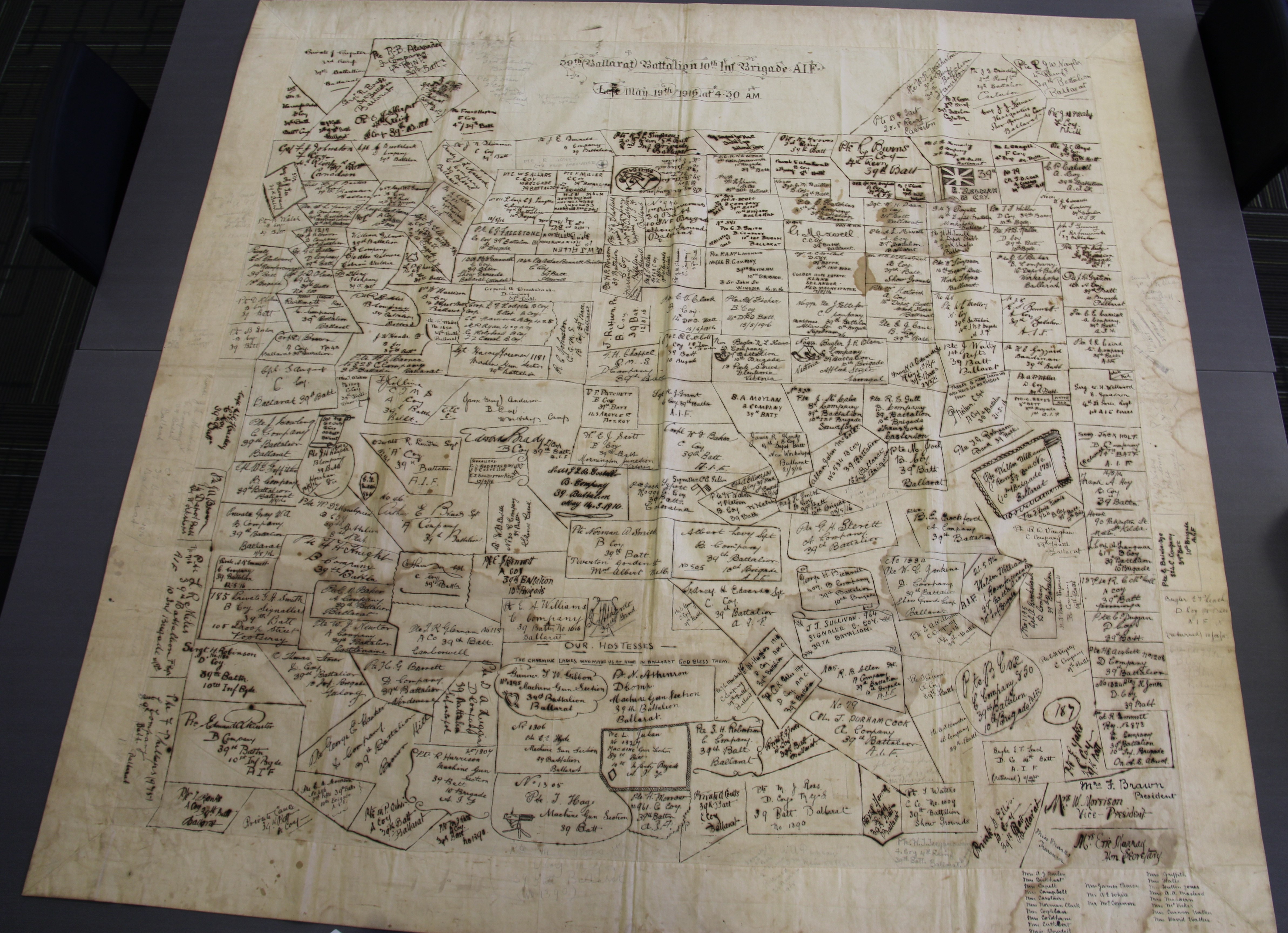
80.0550 Linen Cloth Signed by 39th Battalion 10th Inf. Brigade A.I.F., embarked 27 May, 1916
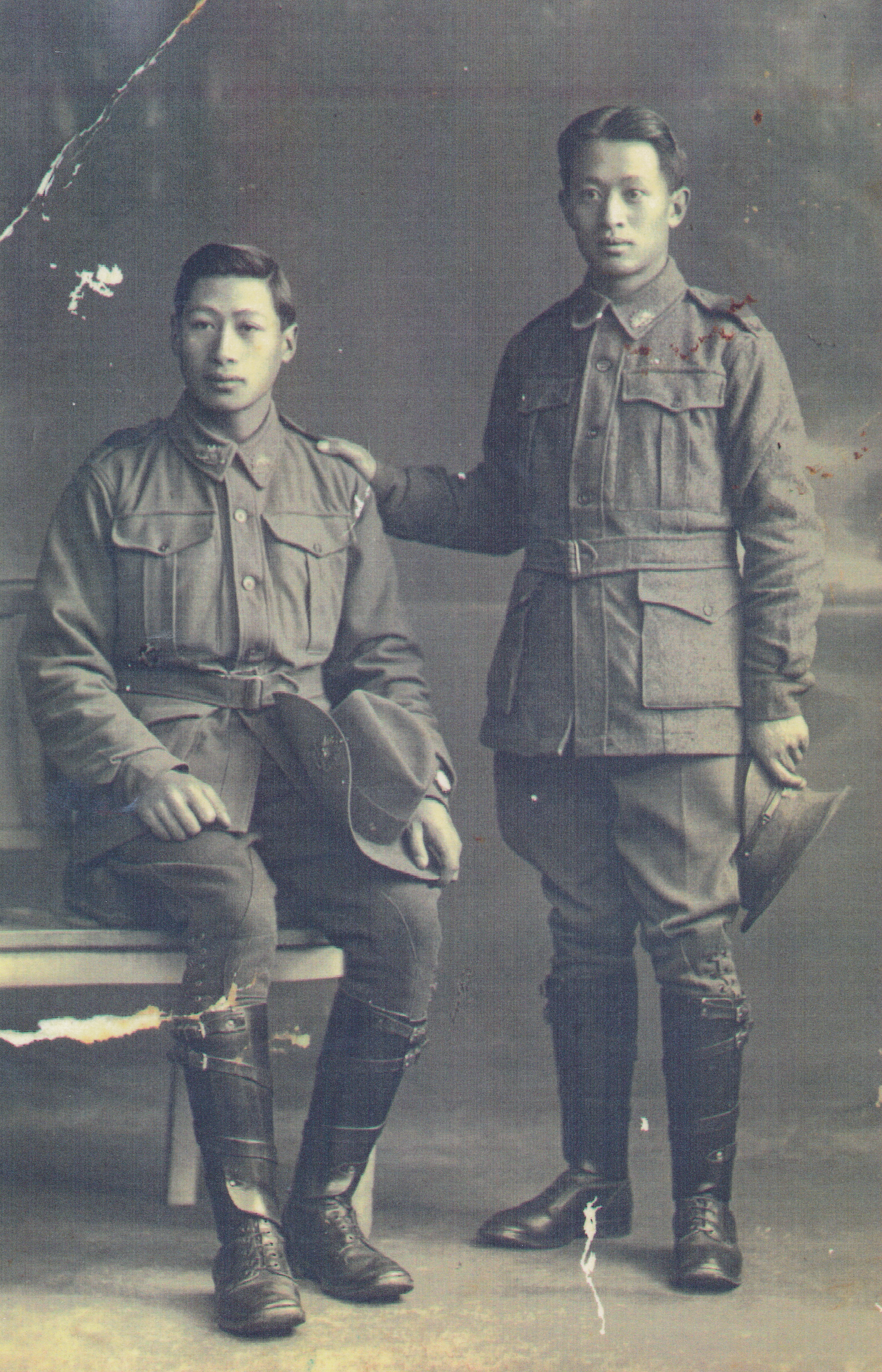
Almost 4000 people in the Ballarat district enlisted to serve in the First World War. Some fought hard for the right to serve. The Tong Way brothers, Samuel and Hedley, had attempted to enlist more than once before finally being accepted. Samuel was rejected for not being “substantially of European origin” and Hedley for poor vision. As casualties mounted and enlistments dropped, the army began to relax some of these restrictions to bolster numbers. Hedley, a clerk, enlisted May 1917 Samuel, a local high school teacher enlisted a few weeks later. The brothers served in the signalling company, responsible for maintaining lines of communication.
89.0911 Hedley seated, Samuel standing
The letters, diaries, photographs, memorabilia, and souvenirs in our collection are vital reminders of the lived experiences of those who served during wartime. They speak of the deep camaraderie among soldiers, the awe of seeing the wider world, the struggles with sicknesses like smallpox and influenza, and, of course, the harsh realities of the battlefront. These items also offer a poignant glimpse into the world left behind—preserved letters and mementos from those who never returned.
In today’s fast-paced digital world, where moments are often captured with a single click and shared in an instant, we risk overlooking the art of meaningful communication. A photo can capture an image, but it rarely conveys the depth of thought, the subtleties of emotion, or the full story behind a moment. The power of a handwritten letter or a carefully crafted diary entry lies in its ability to explain, to reflect, and to immortalize the complexity of an experience – something that a snapshot, no matter how striking, cannot always do. Writing was a practice of mindfulness, an intentional act of slowing down to capture not just what happened, but how it felt, what it meant, and how it would be remembered.
While we embrace the convenience of modern technology, it’s important to recognize what’s quietly lost in the rush toward speed. This isn’t a dismissal of progress, but a reflection on the power of the written word. Today’s quick digital messages often lack the depth and meaning of those carefully crafted by hand. What happens when we no longer take the time to explain, reflect, and capture the full complexity of a moment?
These mementos – written with intention – hold a richness that photos alone can’t convey. As technology evolves, let’s pause and consider: What moment would you choose to capture in words for others to experience in 100 years?
These voices from the past, are asking us to preserve otherwise might be lost.
You can keep exploring our collection on your own here
Visit us to explore more with your students in Collection CloseUp: World War I: A Soldier’s Journey


