Tag Archives: colonial Australia

It’s beach time!

As this blog already contains several posts about the history of Christmas, this festive season we have decided to explore the history of beach holidays!

1

An early bathing machine.

Bathing in the ocean became popular in Europe in the 1700s, before Australia was colonised by Britain. Both immersing yourself in the water and drinking sea water were considered to cure all kinds of illnesses. As a result, many of Europe’s rich and powerful would spend a “season” at the seaside, bathing most days using a bathing machine. Believe it or not, winter was considered the best time to do this.

2

Ladies “Bathing Dress”- 1858, from the magazine Harper’s Bazaar.

A bathing machine was a hut on wheels in which people changed into their swim suits. This carriage-type contraption was then pushed into the water (using man power, horse power or sometimes even steam power) so the bather could step out and immediately lower themselves into the water. Some bathing machines had tents that would extend out and enable bathers to enter the water in complete privacy, while some came with “dippers” or “bathers”. These were attendants of the same sex as the bather who would dunk you underwater the correct number of times to cure whatever illness you had been diagnosed with.

Queen Victoria’s husband Prince Albert believed that sea bathing was beneficial to one’s health, and in 1846 he had a bathing machine installed on the beach near their summer palace on the Isle of Wight. Victoria and her daughters regularly used the bathing box to enjoy the water. The queen’s bathing box, used to preserve her modesty, is now fully restored and on public view.

3

Queen Victoria’s bathing machine has a veranda at the front where curtains concealed her from view whilst she bathed. Inside is a changing room and a plumbed-in toilet. The whole contraption was run into the sea from the beach along a long ramp, and pulled back using a wire rope and winch!

By the 1850s, when gold was discovered here in Ballarat, dippers had gone out of fashion. However, people continued to visit the seaside especially after train travel made reaching the beach cheap and convenient.  Some historians think that the main motivation now was pleasure and holiday making although many people still believed a visit to the seaside was good for your health. By this time people were going to the beach during summer rather than winter.

Bathing soon became popular here in Australia although in some parts of the country it was banned during daylight hours up until 1902 because a wet woman in a swim suit was considered an indecent sight. Furthermore, some men were said to enjoy swimming naked, so you definitely couldn’t do that in public.

4

St Kilda Esplanade, main beach (1864).

The St Kilda Sea Baths were opened in 1860 to take advantage of the popular seaside excursion trend. These enclosed sea baths were thought to keep bathers safe from Australia’s scariest sea creatures. However, even before the baths were built, St Kilda was a popular swimming spot. In the 1840s it already had bathing boxes (bathing machines with their wheels taken off), and by 1854 Captain Kenney had deliberately sunk a ship just off the beach and put out ropes to it for people to swim along. Once the St Kilda train station was opened in 1857 more sea baths opened and regular swimming competitions were held. As businesses, the baths were not the financial success the owners hoped as the majority of visitors to St Kilda soon became confident to swim in open water.

Since these humble beginnings, going to the beach has now become a normal part of Australian life. Most Australians live on or near the coast, and some of our beaches like Bells in Torquay, Bondi in Sydney and the Gold Coast near Brisbane are considered to be among the best in the world. Interestingly, having tanned skin was avoided by European women during the nineteenth century, as it showed you were poor and had to work outdoors like a peasant.

Like swimming, the history of swimwear is also fascinating, read all about it here. Enjoy the summer sun and happy holidays!

Links and References

The history of sea bathing: http://en.wikipedia.org/wiki/Sea_bathing

19th century bathing history: http://consideringausten.wordpress.com/2014/04/12/so-you-want-to-go-swimming-in-regency-england/

18th and 19th century bathing history: http://www.messynessychic.com/2014/04/15/victorian-prudes-beachside-bathing-machines/

History of St Kilda Baths, Melbourne: http://www.stkildaseabaths.com.au/history

History of sun tanning: http://www.skincancer.org/prevention/tanning/tale-of-tanning

Indigenous Stories of the Goldfields

Exploration/Law and Order

This Blog may contain images and names of deceased people, it may also contain words and descriptive terms that may be offensive to Indigenous Australians.

Bushmans Hut by S. T. Gill.

Bushmans Hut by S. T. Gill. Gold Museum Collection.

Often the perceptions that are held of Aboriginal people during the Gold Rush period of Australian history were that; Aboriginal people were marginalised and only involved on the periphery of mining areas, that they did not understand what was happening and, the experience of Aboriginal people was very negative. Now a new book is casting a whole different perspective on Aboriginal involvement in Goldfields history. “Black Gold” by Dr Fred Cahir of the University of Ballarat provides a wider view of the contributions made by Aboriginal people during the Gold Rush era of Australian history. Dr Cahir gives specific examples to show the contribution to goldfields life by Aboriginal people, in exploration, and Law and Order in Goldfields society. Continue reading

The Industrial Revolution in Australia: Part 2

Ballarat and the Industrial Revolution

Pennyweight Gully, near Castlemaine. Taken by Marion Littlejohn

Pennyweight Gully, near Castlemaine. Photo taken by Marion Littlejohn

Many townships sprang up during the Gold Rush era of Colonial Victoria, but many of these towns withered and died as soon as their gold ran out, to the point that many are now ghost towns. However there are several exceptions to that. Many prosperous Central Victorian towns can trace their beginnings back to the discovery of gold. Towns such as Stawell, Ararat, Maryborough, Castlemaine and St Arnaud were larger at the time gold was being mined, but they still survive decades, even a century after the gold ran out. Ballarat and Bendigo are today major regional centres, and although there are still gold mines in or near both, they do not rely on gold to continue to grow. So what are the things that decided whether a town would grow, survive or die after the gold ran out? We think the answer involves the Industrial Revolution in Australia.

In our previous post on the Industrial revolution in Australia, we discussed how the people coming to the goldfields brought the knowledge and skills of the Industrial Revolution, and very soon were putting this knowledge to practical use in the search for gold. Here at Sovereign Hill we have many examples of these technological advances, and the benefits and/or downfalls of the use of machinery in gold mining. More importantly we also have some examples of steam technology being used for purposes not directly linked to finding gold. It is these other industries that give us the clue as to why Ballarat thrived, but towns nearby (Clunes, Smythesdale, Creswick etc) struggled after the gold mining phase of our history dwindled.

Continue reading

What was eaten on the Goldfields; part 2

Recipes of the Bush

“Damper and Mutton”

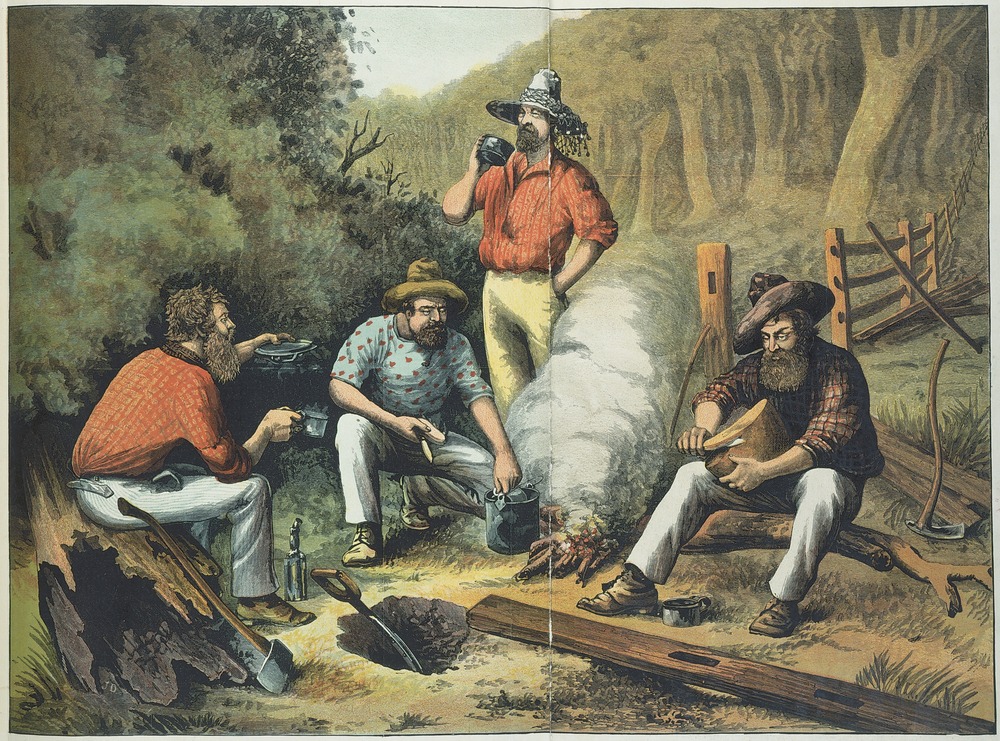
“Tea and Damper” by A . M. Ebsworth. From Digital Collection of the State Library of Victoria.

“Tea and Damper” by A . M. Ebsworth. From Digital Collection of the State Library of Victoria.

Following a previous blog post, we have tried to find a few examples of recipes from the gold rush period of our History. Robyn Annear (Nothing But Gold, 1999), says that one who lived through it called the early years of the Gold Rush (1851-1853) the “damper and mutton stage of the colony”. The foods most readily available were sheep (mutton) from the squatters and flour, sugar, tea and dried fruit as these would not go off quickly. This brings us to our first recipe – damper.

Damper and its variations.

This explanation is from James Bonwick, quoted in Nothing but Gold (1999);

Taking a washing tin dish, and clearing off the dirt a little, six or eight pannicans of flour are thrown in; a half table spoonful of carbonate soda, the like quantity of tartaric acid (together these are Baking Powder, sort of), and a spoonful of salt are then mixed together in a pannican and then well mingled with dry flour. Water is then poured in, the whole thoroughly knuckled, rolled into a good shaped loaf, and tumbled at once into the warmed camp oven. Fire is applied beneath and a couple of hours or less will turn out a loaf fit to be set before a queen.

Continue reading

Household Arts of the 1850s: A personal experience part 3.

The Woman of the Hill part 3.

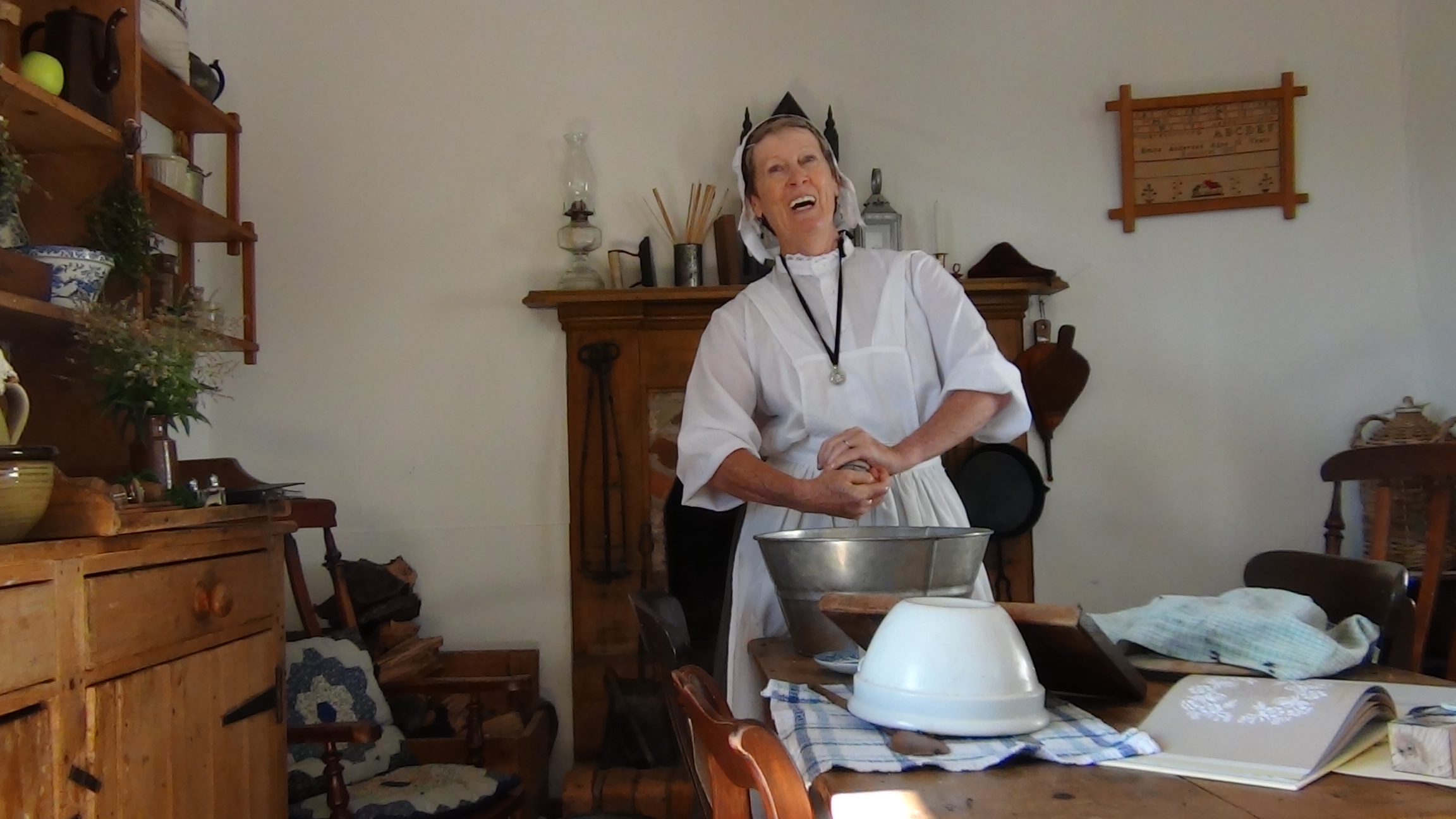
Jenni enjoying a lighter moment from her stay

Jenni enjoying a lighter moment from her stay

Our intrepid volunteer, Jenni Fithall, has completed her three days and two nights living in one of the cottages at Sovereign Hill Outdoor Museum.  During her stay approximately 3800 visitors, including about 1500 school children  came to Sovereign Hill. Many of these visitors and children visited Jenni in her cottage, so apart from living as a woman of the 1850s, Jenni also had to contend with a multitude of questions, photo opportunities and a constant stream of people walking through her little two room cottage. Continue reading

The Industrial Revolution in Australia

Teaching about the Industrial Revolution in Australia

Steam Power

Steam Power

The Industrial Revolution (1750-1914) is a fascinating part of modern world history.  It had far-reaching impacts and was the catalyst for dramatic social changes.  It is a great option for secondary teachers to choose as a Year 9 Depth Study in the new AusVELS History course.

Continue reading

AusVELS Resources for the New Year – Settlement of Victoria

New Teaching Kit focused on AusVELS level 5

Home Bound by ST Gill (Gold Museum Collection)

Home Bound by ST Gill (Gold Museum Collection)

The Education team at Sovereign Hill have just completed a new resource for teachers of History at AusVELS level 5. The Settlement of Victoria. It provides some practical advice on teaching the content and skills required by the National Curriculum, as well as online links to resources for teachers and students. The kit also provides links to a Teachers Guide and AusVELS Grid and a Diigo social bookmarking website, dedicated to this topic, so that teachers and students can share their resources.

Just follow this link to find out more.

Are you implementing AusVELS in your school yet? How are you coping with the changes? 

A Colonial Christmas in Ballarat

Christmas Celebrations in the 1850s

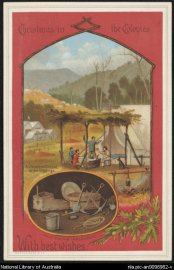
A drawing of Christmas celebrations during the gold rush.  - National Library of Australia

A drawing of Christmas celebrations on the diggings – from the National Library of Australia

Christmas in Ballarat during the gold rush was very different than it is today.  They didn’t have all the glitzy decorations that adorn our modern streets and houses.  Despite this, they worked hard to create a joyous atmosphere that could remind them of Christmas back home.  Although, as this newspaper article highlights, they don’t seem to be missing the cold winter days…

Continue reading