What was eaten on the Goldfields; part 2

Recipes of the Bush

“Damper and Mutton”

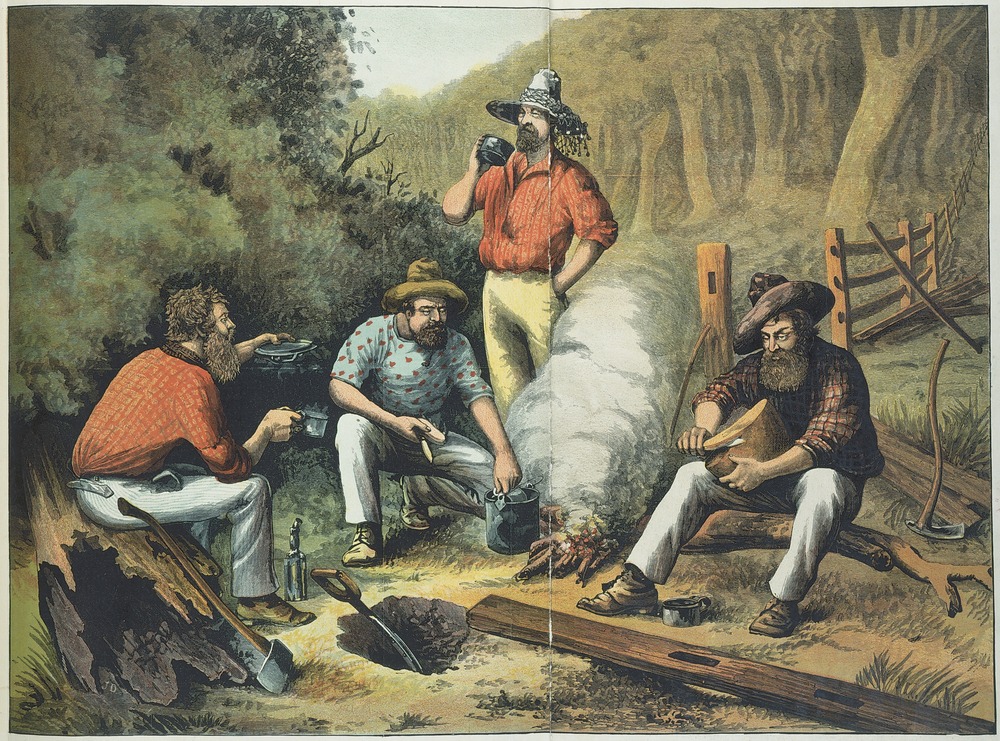
“Tea and Damper” by A . M. Ebsworth. From Digital Collection of the State Library of Victoria.

“Tea and Damper” by A . M. Ebsworth. From Digital Collection of the State Library of Victoria.

Following a previous blog post, we have tried to find a few examples of recipes from the gold rush period of our History. Robyn Annear (Nothing But Gold, 1999), says that one who lived through it called the early years of the Gold Rush (1851-1853) the “damper and mutton stage of the colony”. The foods most readily available were sheep (mutton) from the squatters and flour, sugar, tea and dried fruit as these would not go off quickly. This brings us to our first recipe – damper.

Damper and its variations.

This explanation is from James Bonwick, quoted in Nothing but Gold (1999);

Taking a washing tin dish, and clearing off the dirt a little, six or eight pannicans of flour are thrown in; a half table spoonful of carbonate soda, the like quantity of tartaric acid (together these are Baking Powder, sort of), and a spoonful of salt are then mixed together in a pannican and then well mingled with dry flour. Water is then poured in, the whole thoroughly knuckled, rolled into a good shaped loaf, and tumbled at once into the warmed camp oven. Fire is applied beneath and a couple of hours or less will turn out a loaf fit to be set before a queen.

Continue reading

Household Arts of the 1850s: A personal experience part 3.

The Woman of the Hill part 3.

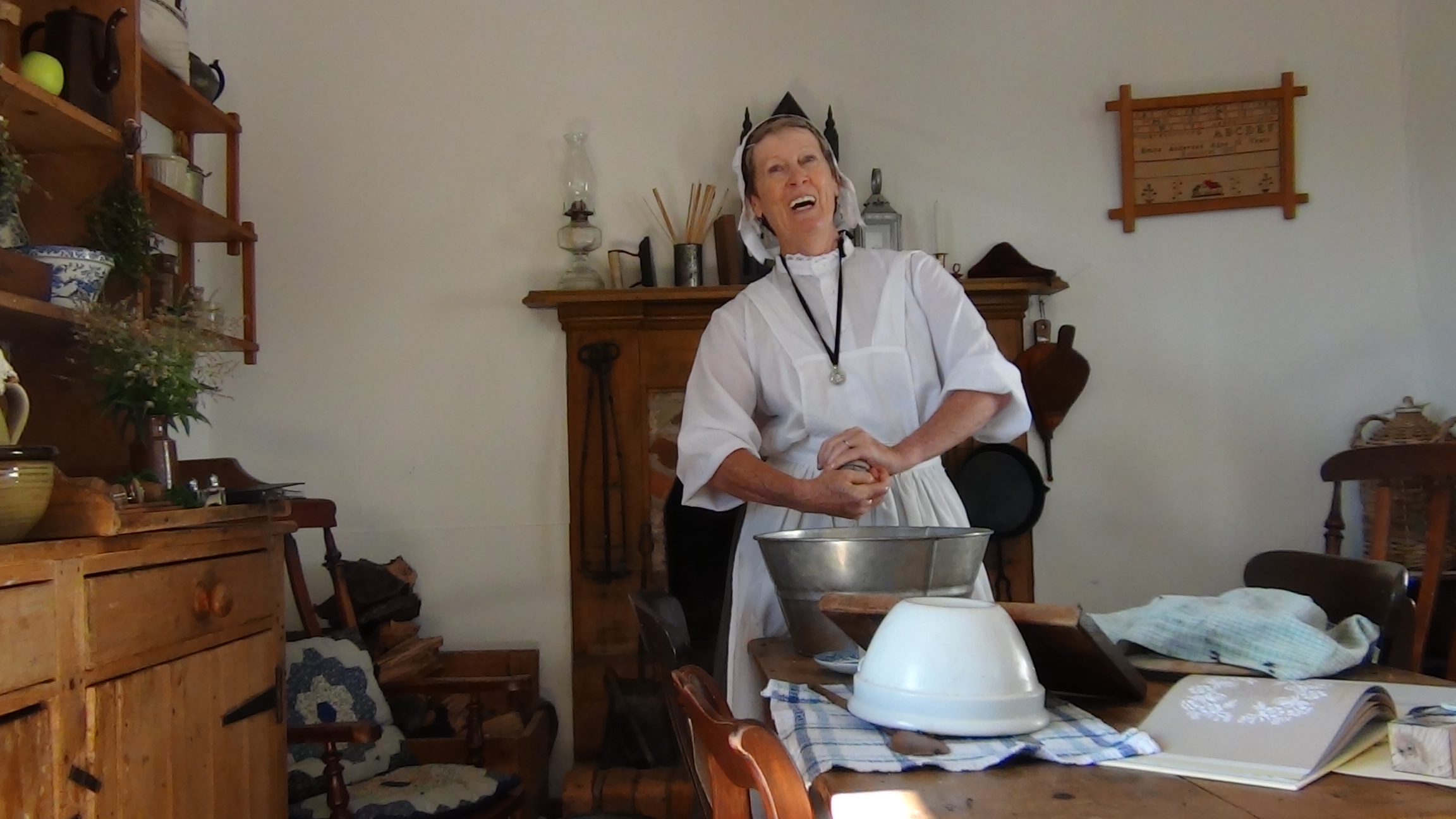
Jenni enjoying a lighter moment from her stay

Jenni enjoying a lighter moment from her stay

Our intrepid volunteer, Jenni Fithall, has completed her three days and two nights living in one of the cottages at Sovereign Hill Outdoor Museum.  During her stay approximately 3800 visitors, including about 1500 school children  came to Sovereign Hill. Many of these visitors and children visited Jenni in her cottage, so apart from living as a woman of the 1850s, Jenni also had to contend with a multitude of questions, photo opportunities and a constant stream of people walking through her little two room cottage. Continue reading

Books for teaching History – Eureka: The Unfinished Revolution

Eureka: The Unfinished Revolution

By Peter FitzSimons

Front cover of Eureka: The Unfinished Revolution

Eureka: The Unfinished Revolution
Published By : William Heinemann, North Sydney, N.S.W. Australia, 2012

The trouble with the Eureka story is that it is very involved and complex.  As Education officers at Sovereign Hill, we well know how difficult it is to maintain the interest of an audience when we try to explain the details leading to the bloody storming of the stockade. There are so many important twists and turns that the story teller often falls in a repeating pattern of “and then …. and then… and then…”

Not so Peter FitzSimons in his recent book Eureka: The Unfinished RevolutionContinue reading

Household Arts of the 1850s: a personal experience part 2; the first night

Woman of the Hill 2

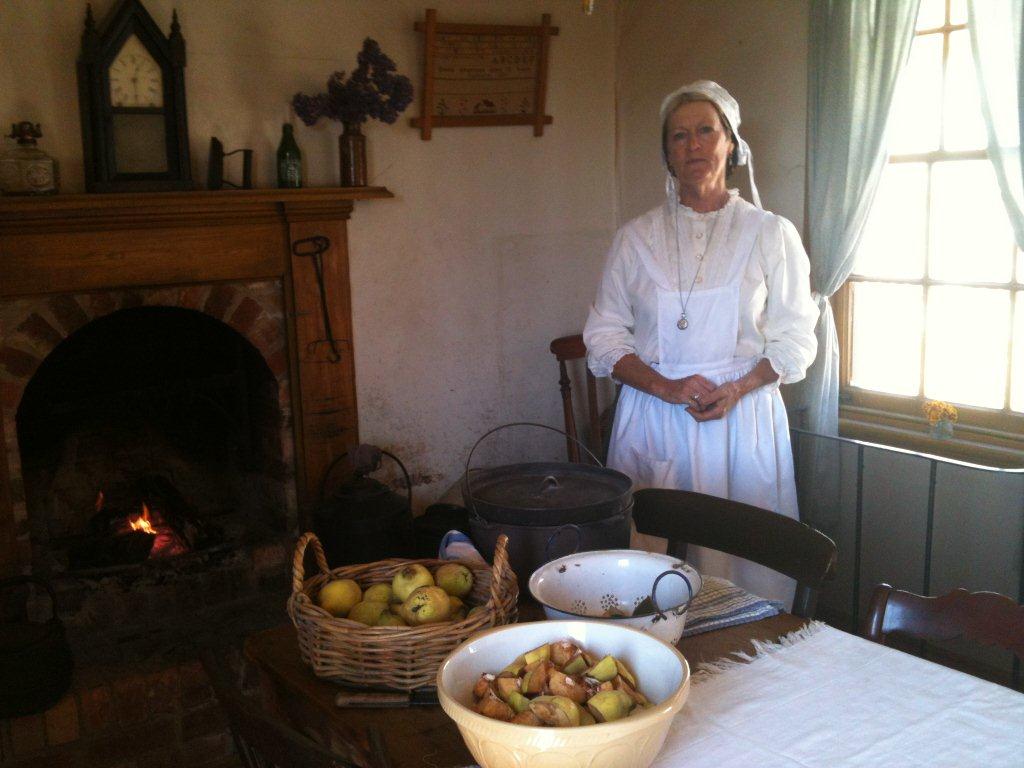
Jenni doing the dishes and talking to visitors

Jenni doing the dishes and talking to visitors

The first night of intrepid volunteer Jenni Fithall’s experiment with colonial living is over and we (two of the Education officers) called in to check up on her.

Sovereign Hill:

Morning Jenni, how did you sleep?

Jenni:

Terribly! The rooster started crowing at about 3.30 am, and all the rest joined in. They would stop for about 20 minutes, and I would drift off to sleep. Then they would start again. It was nice laying in bed watching the glow from the fire.

SH:

Any other excitement overnight?

Jenni:

Well I had a bath. It took for ever to warm up enough water for it. I set the bath up in here (Kitchen/Dining room). I now know why they (Colonial people) only bathed once a week, it was so much work, and that’s only for one person!

SH:

We notice there’s a lot of flies around, do you need another fly strip? (The one hanging from the ceiling, is covered with flies, and there is still a swarm flying around the room).

Jenni:

No I have a spare one. Marion (Education officer) and I put one up about 4 o’clock yesterday afternoon, but last night the ceiling was black with flies. (They are really bad, no wonder disease was rife in these communities)

Jenni is cooking her breakfast, some sliced potato and an egg over the fire. She has some other food cooked from yesterday covered with tea towels, at least it is quiet as the Museum is not open to visitors yet.

SH:

Do you expect many visitors today?

Jenni:

Oh yes, there was a constant flow of people coming in yesterday. And there are plenty of school children staying at the museum so I expect I will be very busy talking to visitors and completing all my chores.

If you would like your students to experience a little of Jenni’s experience, try our a woman’s work is never done education session.

For more information about women on the Goldfields, you could try the Gold museum Blog about Eliza Perrin or our earlier Blogs.

If you would like to see what Jenni went through, we have made several videos about her time at Sovereign Hill, and the links are detailed below.

Woman of the Hill part 1

Woman of the Hill part 2

Woman of the Hill part 3

Woman of the Hill making butter

Woman of the Hill, the final interview

There was so much information about this experiment, that we created a new page on our website. All the videos and links to Blogposts are here.

What was eaten on the Goldfields?

Food on the Goldfields

Butchers Shambles, by S. T. Gill. Ballarat Gold Museum Collection 86_628

Butchers Shambles, by S. T. Gill.
Image: Gold Museum Collection 86_628

What types of foods were eaten during the gold rush? What utensils were used to cook with? What was life like for a cook in the gold rush? What things did they cook on? Was it hard for a cook? Did the children or men ever help the women? These were the questions sent to us by a year 9 girl recently. These are very good questions and we’re not sure we can answer all of them here. But evidence of the eating and cooking habits of diggers can be found in their letters home, diaries, newspapers and in some of the paintings and sketches from this time.

It is generally believed that the first diggers on the goldfields lived on Mutton and Damper (Old sheep and camp bread) at first. This could be true, as it would take time to grow vegetables, and at first diggers were not allowed to plant gardens. Sheep would have been plentiful, as Squatters had already established large holdings of land, with huge herds of sheep. This all makes sense, but are we being too general, and can we find evidence of this being the case? Continue reading

Books for Teaching History: Days of my Youth

Days of my Youth

By Charles Napier Hemy Ra, ARA, RWS, 1841 – 1917

Days of my Youth

Edited by Peter McGann
Published by Viglione Press, Black Rock, Victoria 2009

This fantastic little book is a great way to personalise students experiences of our History, and provides an opportunity to debate the classification of a source as primary or secondary. Charles Napier Hemy was a renowned maritime artist of the late 19th century. At the age of 10 he accompanied his father on a trip around the world, culminating in a visit to the Goldfields of Victoria in 1851-2. In 1904 Charles sat down on board his yacht Van Der Meer in Falmouth harbour and wrote a journal of his recollections of his travels under sail, and adventures on the Goldfields. Continue reading

Household Arts of the 1850’s: A personal experience

Woman of the Hill

Ever wondered what it would be like to have lived during the 19th Century? Would you like to experience it for yourself? Well you don’t have to, because we have someone to do it for you. Jenni Fithall is a volunteer at Sovereign Hill Museum, Ballarat. She belongs to the “Friends of Sovereign Hill” (FOSH), a group that helps to bring the Museum to life for visitors.

Sovereign Hill Volunteer Jenni Fithall, who will be living in one of our cottages for 3 days in March 2013

Sovereign Hill Volunteer Jenni Fithall, who will be living in one of our cottages for 3 days in March 2013

Jenni has decided to try living in one of the cottages on Speedwell St for two nights and three days in March. Our Education Officers recently interviewed Jenni, to find out how she felt about her upcoming adventure. Continue reading

What caused the Eureka Stockade? – Part 3

Was the Government too slow to react? Did they have the time?

S.T.Gill - Australian Sketch Book- Gold Museum Collection

Gill, S.T. – High Degree- Ballarat Gold Museum Collection

Many People believe that the problems with Government and licence fees began after all the easy gold was taken, and diggers were forced to take longer to find gold. This makes sense, why would anyone be upset with paying a licence fee if they are pretty sure of getting rich quick? The National Library of Australia has set up TROVE, a free digitised search service, so you can research their extensive archive of old newspapers and magazines. A quick read through some of the newspapers around in the first year of the Victorian Gold rushes, shows that many people were already angry about paying a fee, why?

Header from the Melbourne Argus-August 14th 1851

Header from the Melbourne Argus-August 14th 1851

TROVE can be a lot of fun too. I already mentioned the Newspapers, but there are also digital copies of old magazines, maps, photos and much more. You can even edit articles that the computer didn’t read properly.

Early Problems with the licence system

Do you like paying out good money and receiving nothing in return? Well neither did the people of Victoria in the 1850s, and they made their feelings known through the newspapers.  Continue reading