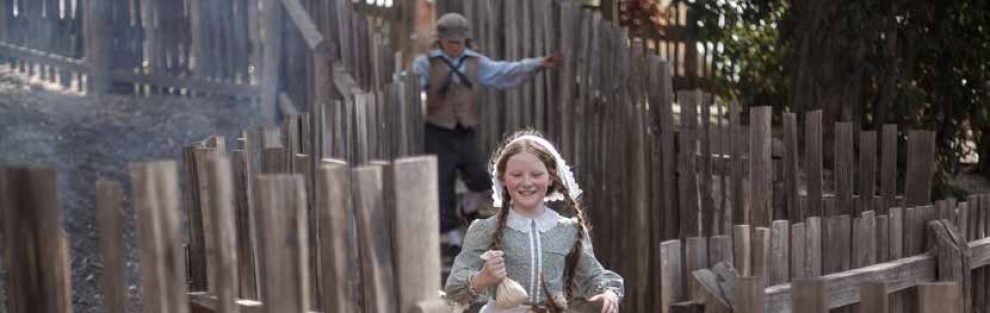
Books for teaching history
It’s the Year of Reading and we’re celebrating by sharing our favourite books for teaching (or just enjoying) history! This post introduces Doug Bradby’s Seriously Weird History series.
There were a wide range of lollies and sweets being produced during the Victorian era. When the gold rush began in Ballarat, it wasn’t long before confectioners arrived and established their businesses here. By 1857 there were a total of 18 people in Ballarat making confectionery. As was common to the time, around half were also bakers or cooks.
During the Gold Rush in Victoria most new immigrants arrived from Great Britain: England, Ireland, Scotland and Wales. They brought their ideas about dressing and fashion with them, and consequently many clothes in Victoria during 1850s follow the same lines as their British cousins.
The Eureka Stockade is a key event in Australia’s history and, arguably, the only civil battle on our soil. It is seen by most as a key step on our path towards democracy and nearly all Victorian students study the cause and effect of the Eureka Stockade in History lessons. There is a complex chronology of events that led to the storming of the Stockade, and these can be viewed in the global context of the Chartist movement. Understanding the context, motives and emotions involved can be difficult.
Here at Sovereign Hill we want to commemorate the event with students by allowing them to engage with this historical story in a meaningful, accessible and memorable way. Late last year we developed a participatory reenactment experience for the students on the eve of the 157th anniversary.
This will be the first in a series of posts about the Household Arts of the 1850s. If you have a topic you’d like us to cover, please leave a comment or contact us!
In the days before electricity and washing machines, doing the laundry was a time consuming and physically demanding job. During the early gold rush days new arrivals had to carry any washing tools they wanted all the way to the diggings. Consequently many diggers didn’t enjoy the luxury of properly washed clothes.
Posted in History Teaching, Victorian Gold Rush
Tagged 1850s lifestyles, books, Household Arts, women
Chinese migrants played a very significant role on the Ballarat Goldfields, and elsewhere around Victoria, making up approximately 20% of all males in Ballarat. They were known for being hard-working and peaceful people, however their experience of the gold rush was marred by racism and discriminatory politics.
Posted in History Teaching, Sovereign Hill, Victorian Gold Rush
Tagged 1850s people, Chinese, immigration, racism, teaching history, teaching resources
Here at Sovereign Hill we are getting ready for Christmas with some colonial-style decorations, even our animals are getting into the spirit. Some photos are included below and you can see more on the Sovereign Hill Facebook page.
Posted in History Teaching, Sovereign Hill
Tagged Colonial Christmas, teaching history, Victorian celebrations
Today, 11/11/11, is an important day for many reasons. One of those being that it was on this day in 1854 that the Ballaarat Reform League was officially born and their Charter publically adopted. This group played a significant role in the events that became the precursors to the Eureka Stockade.
Often the League is forgotten in the wake of the much more dramatic Stockade, but their presence and intended purpose is very important. Those who formed the League took their inspiration from the British Chartist movement, which some had been directly involved in before coming to Victoria. The Chartist movement was a step by the new working-class, born out of the Industrial Revolution, to improve their rights and representation.