Indigenous Stories of the Goldfields

Exploration/Law and Order

This Blog may contain images and names of deceased people, it may also contain words and descriptive terms that may be offensive to Indigenous Australians.

Bushmans Hut by S. T. Gill.

Bushmans Hut by S. T. Gill. Gold Museum Collection.

Often the perceptions that are held of Aboriginal people during the Gold Rush period of Australian history were that; Aboriginal people were marginalised and only involved on the periphery of mining areas, that they did not understand what was happening and, the experience of Aboriginal people was very negative. Now a new book is casting a whole different perspective on Aboriginal involvement in Goldfields history. “Black Gold” by Dr Fred Cahir of the University of Ballarat provides a wider view of the contributions made by Aboriginal people during the Gold Rush era of Australian history. Dr Cahir gives specific examples to show the contribution to goldfields life by Aboriginal people, in exploration, and Law and Order in Goldfields society. Continue reading

Goldfields Medicine: Part 2

Apothecaries: medicines and food

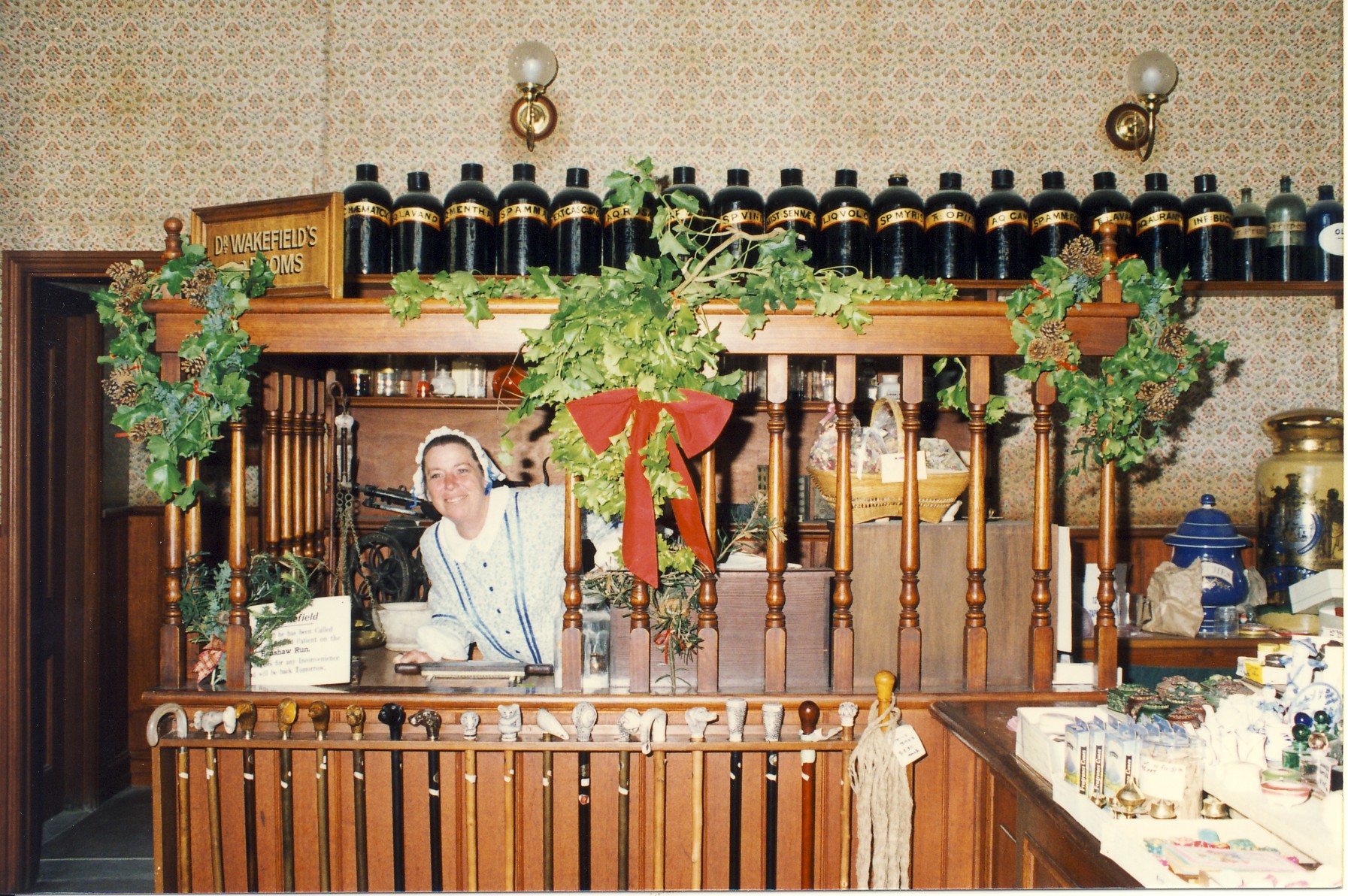
Interior of Apothecary at Sovereign Hill. Gold Museum Collection

Interior of Apothecary at Sovereign Hill. Gold Museum Collection

In a previous post we talked about doctors on the goldfields, and the early hospitals in Ballarat. But there were many other medical people on the goldfields. Among them were the Apothecaries, who could make up medicines, from the ingredients available at the time. Most of these ingredients were based on plant and animal extracts, and could also be used as foodstuffs. Their role is now mainly performed by Pharmacists, but an Apothecary did so much more. They also performed surgery, midwifery and gave medical advice. In this Blog we will explore the secretive world of the Apothecary, and how they contributed to the lives of people on the goldfields and the wider world.

Continue reading

Confectionery

A short history of sweets

Our current school holiday program, the “Raspberry Drop Rebellion” inspired us to look at our confectioners and the history of sweet making. We already have a blog on raspberry drops and the history of our confectioners, so with the assistance of our Senior Historian Dr Jan Croggon, this blog is focused on the history of sweet making up to the goldfields era.

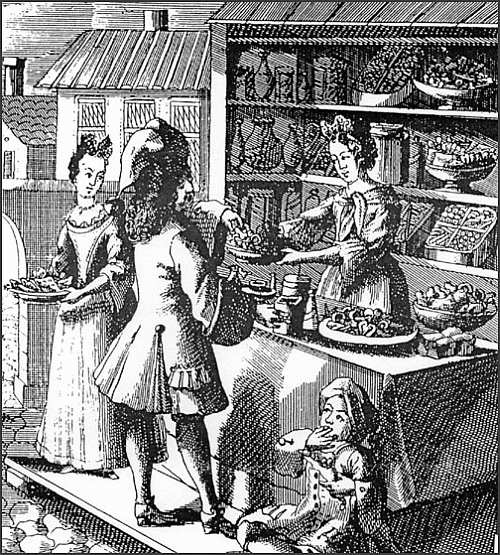
Etching of confectionery booth, including “a little boy with his conical bag of sugar plums” by Christoph Weigel, c. 1700

From earliest times, ‘Sweets’ were precious rarities, and status symbols, dating back to 600 years ago, when sugar was a rare and expensive commodity.  Sugar was closely associated with medicine, celebrations, and food preservation, and all of these came together in the early 1800s to be identified as ‘confectionery’, and sold in sweet shops.

Sugar sweetened early medicines. Apart from sweetening sugar can also preserve fruits and vegetables. Sugar was supposed to be good for colds, and comfits (nuts or seeds covered in sugar) were considered to aid digestion in the later Middle Ages (around 1400 CE). In later centuries sugar was used to preserve fruit and flowers for the winter months and enhanced the luxury image of confectionery.

From the Elizabethan age (around 1550 CE), through to the 18th century, sugar was a rich indulgence – and then falling sugar prices and technical innovation made ‘sweets’ available to more people, and ‘sugar became a necessity, and sweets a commonplace part of childhood.’ (Mason 1999).

Continue reading

Gold Rush Undies: Women’s fashionable underwear in the 1850s

Women’s Underwear

As there has been so much interest in our fashion blogs, we have decided to include another fashion post.

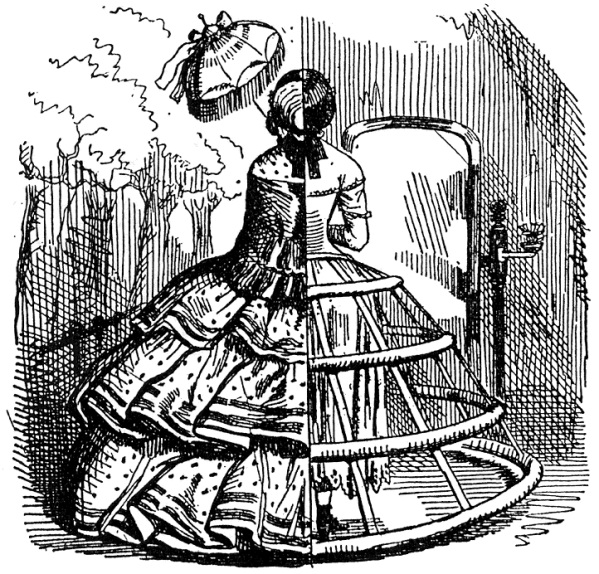
Cutaway diagram showing underclothes

Cutaway diagram showing underclothes

What did women wear under their beautiful dresses? The dressing regime of a lady would be seen as incredibly tiresome by today’s standards. Because the fashions came from Europe, the clothing would have been terribly warm and claustrophobic in the Australian climate. Let’s explore the stages of layering required to achieve the desired result for the fashion of the day.

Continue reading

Goldfields Medicine

Goldfields Doctors

Invalid Digger by S. T. Gill. Gold Museum Collection

Invalid Digger by S. T. Gill. Gold Museum Collection

We have had several requests for information on the doctors and medicines available to diggers on the Victorian goldfields. In this first blog post we will focus on the doctors and in the near future there will be another post on the Apothecarys and Pharmacists who delivered medical services during this era.

At the time of the Victorian gold rush, great leaps were being made in the advancement of medicine throughout the world. Some of the new innovations were a little slow to appear in this colony, but others were embraced quickly, as their benefits greatly improved the success of doctors to cure their patients.

Continue reading

Goldfields Immigration

Ballarat’s Scottish Heritage

This blog post has been summarised from notes by Sovereign Hill’s senior historian, Dr Jan Croggon on the Scottish in Ballarat. We would like to thank Jan for her contribution and hope she has more to share with us in the future.

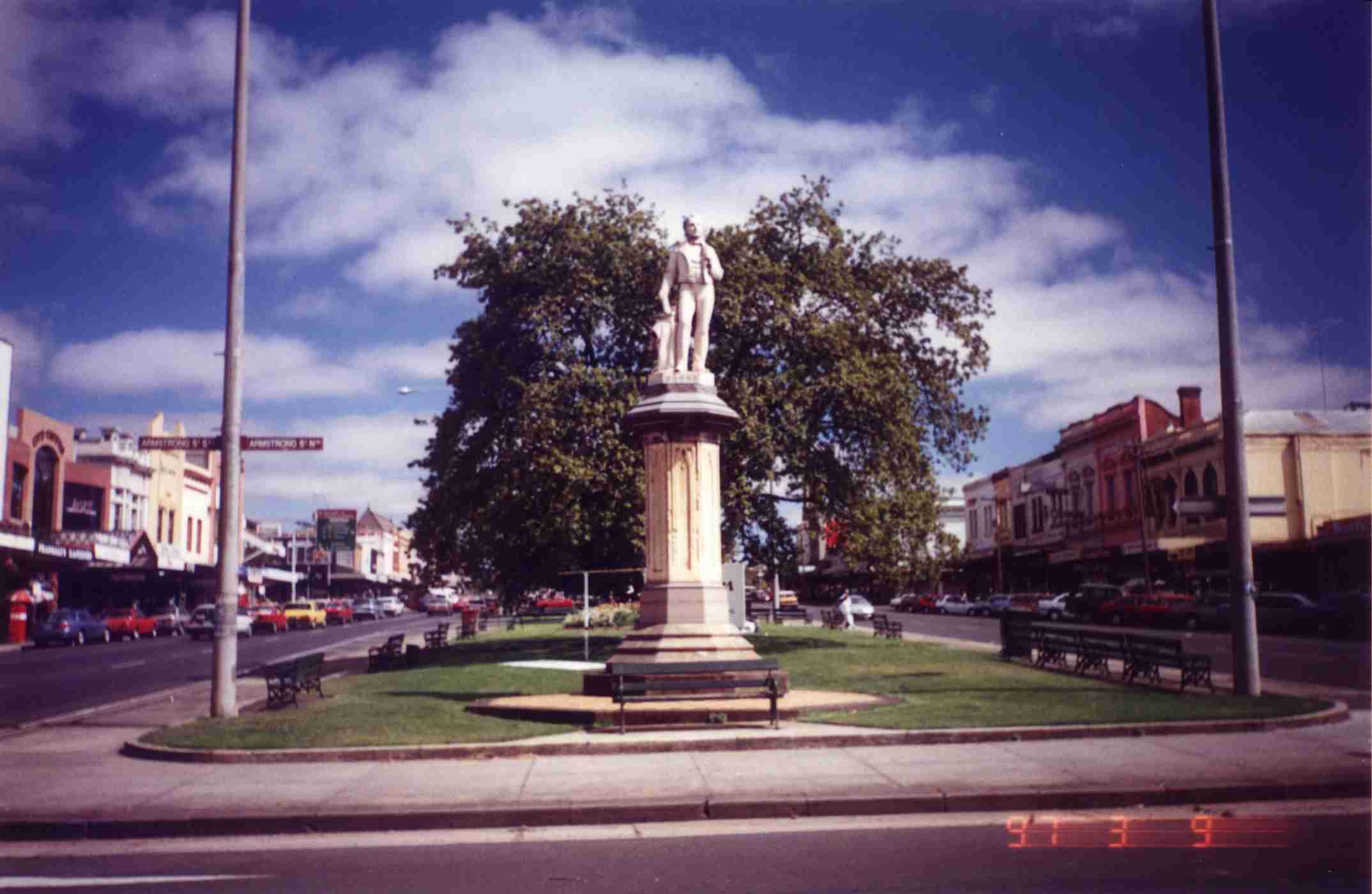
Statue of Robert Burns, Scottish poet. Sturt St Ballarat

Statue of Robert Burns, Scottish poet. Sturt St Ballarat. Gold Museum Collection

Nineteenth century Scotland was at the heart of the massive Industrial Revolution which transformed Britain, and which largely created the population pool which travelled to the Antipodes in search of gold and a new life.

EMIGRATION TO AUSTRALIA

The characteristics of the Scots who emigrated to Ballarat can be understood more clearly if regarded in the light of the world from which they came. Poverty, famine and epidemics in Scotland in the 1820s and 1830s caused the first significant Scottish emigration to Australia. Victoria was the most popular colony in which they settled. Scottish squatters and rural workers established farms, and urban settlers worked as skilled artisans and professionals.

In the Victorian census of 1854, Scots were the third largest group after the English and Irish, with 36,044 people. Within three years a further 17,000 had arrived, many hoping to make their fortunes on the goldfields. Immigration assistance schemes also swelled the number of Scottish arrivals. By 1861 the Scotland-born population of Victoria reached 60,701 – the highest level it would ever reach.

Continue reading

Goldfields Entertainment

Bowling Alleys on the Goldfields

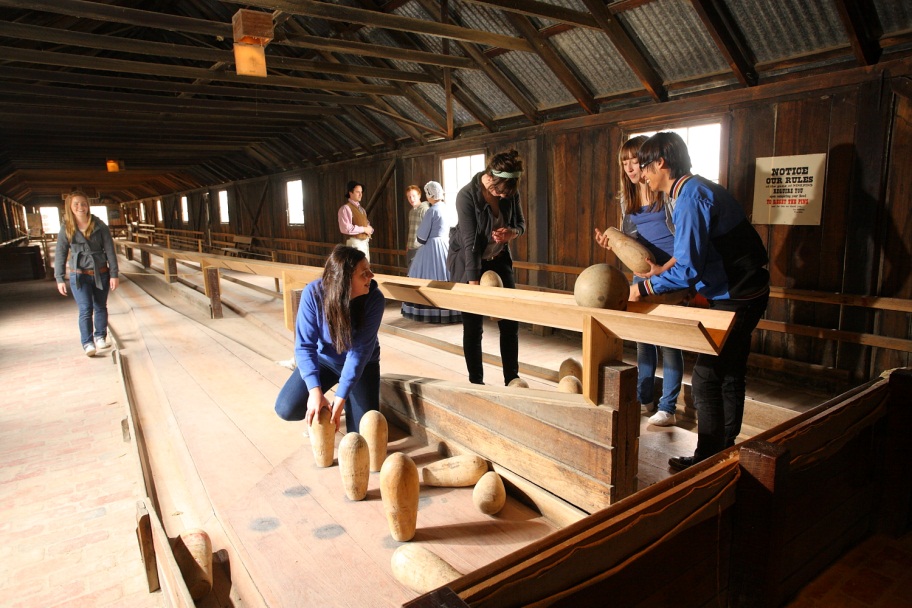
Once again a question from a student has inspired an idea for this blog. A student from Wesley College, Clunes campus wanted to know more about bowling saloons on the goldfields, similar to Sovereign Hill’s Empire Bowling Saloon.

Re-setting the pins at Sovereign Hill's Empire Bowling Saloon

Re-setting the pins at Sovereign Hill’s Empire Bowling Saloon

This turned out to be quite a challenge, as there isn’t much information from the time about this sort of sporting or gaming entertainment. However, we have managed to find some information about them. Continue reading

The Industrial Revolution in Australia: Part 2

Ballarat and the Industrial Revolution

Pennyweight Gully, near Castlemaine. Taken by Marion Littlejohn

Pennyweight Gully, near Castlemaine. Photo taken by Marion Littlejohn

Many townships sprang up during the Gold Rush era of Colonial Victoria, but many of these towns withered and died as soon as their gold ran out, to the point that many are now ghost towns. However there are several exceptions to that. Many prosperous Central Victorian towns can trace their beginnings back to the discovery of gold. Towns such as Stawell, Ararat, Maryborough, Castlemaine and St Arnaud were larger at the time gold was being mined, but they still survive decades, even a century after the gold ran out. Ballarat and Bendigo are today major regional centres, and although there are still gold mines in or near both, they do not rely on gold to continue to grow. So what are the things that decided whether a town would grow, survive or die after the gold ran out? We think the answer involves the Industrial Revolution in Australia.

In our previous post on the Industrial revolution in Australia, we discussed how the people coming to the goldfields brought the knowledge and skills of the Industrial Revolution, and very soon were putting this knowledge to practical use in the search for gold. Here at Sovereign Hill we have many examples of these technological advances, and the benefits and/or downfalls of the use of machinery in gold mining. More importantly we also have some examples of steam technology being used for purposes not directly linked to finding gold. It is these other industries that give us the clue as to why Ballarat thrived, but towns nearby (Clunes, Smythesdale, Creswick etc) struggled after the gold mining phase of our history dwindled.

Continue reading