Category Archives: Victorian Gold Rush

Goldfields Immigration 3

The Irish influence on Ballarat

Gentlemen and savages – Men of Ballarat and fellows of Bungaree” These were just some of the inflaming words spoken by the controversial Victorian politician C. E. Jones, at a political meeting in Ballarat, 1864. Jones was attempting to trade on the popular Old World idea of the Irish as lower-caste, illiterate and priest-ridden trouble makers who were intent on lowering the standards of this new society in Ballarat. In fact these ideas about the Irish presence in Ballarat were completely inaccurate.

The Irish were the second largest national group (the largest being the English), to influence the history of Australia during the gold rush and colonial periods. From 1851 to 1901 the percentage of the population considering themselves Irish remained at around 20%. Most of these immigrants came from the southwest counties of Clare, Tipperary, and Galway.

Continue reading

Goldfields Immigration: Part 2

The Jewish contribution to Ballarat’s History

Ballarat Synagogue, cnr Princes & Barkly Streets, Ballarat. Gold Museum Collection.

Ballarat Synagogue, cnr Princes & Barkly Streets, Ballarat. Gold Museum Collection.

“Hidden away in plain view”, that is how many people describe the location of the Ballarat Synagogue. On the main tourist route from Melbourne to Sovereign Hill, a large stone structure on a bend of road near the East Ballarat Fire Station, hints at a connection to a Jewish community in Ballarat. In fact there have been people of the Jewish faith involved actively in Ballarat’s history from the beginning of European settlement here.

Continue reading

The Goldfields Police

This post was inspired by an inquiry from a Year 9 student. Thank you Arron.

The origins of public policing

Propelled by the discovery of gold, the nature of policing in Victoria changed dramatically during the 1850s. These changes aimed to develop a united professional police force, based on a model of civil policing introduced in London by Sir Robert Peel in 1829.

The introduction of Peel’s model of civil policing is now seen as a great leap forward in law and order. At the time, Peel’s model was controversial because it took the responsibility of policing away from local control and placed it in the hands of the government. The British public feared a police force used by the government to keep itself in power.

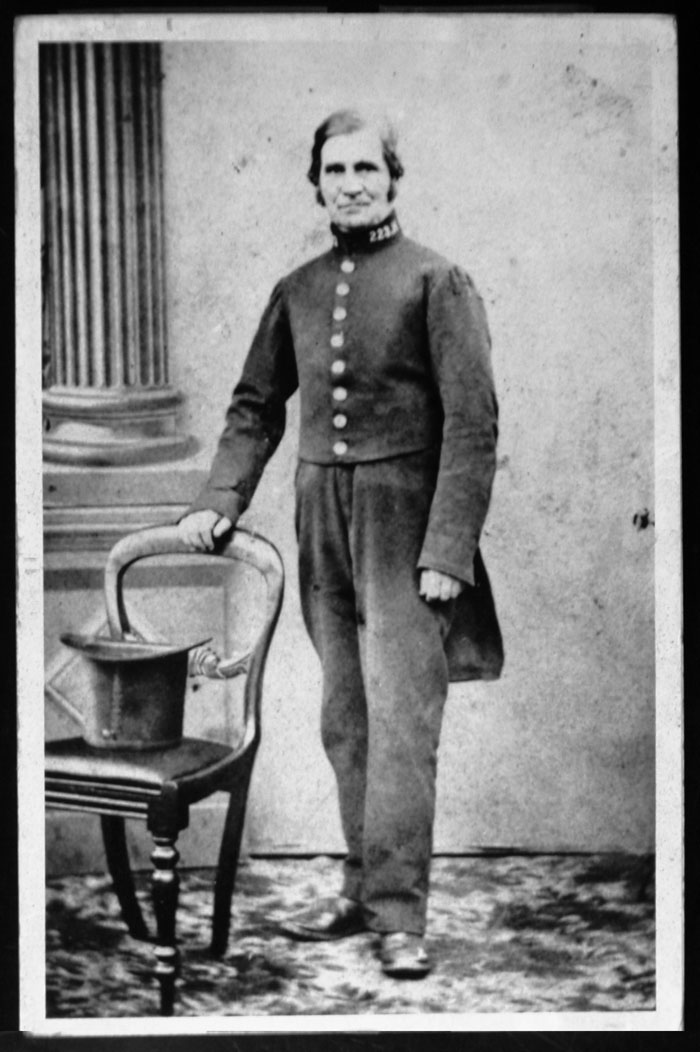
London Police Uniform 1829

London Police Uniform 1829

To help people accept this new form of policing, Peel’s model had several developments. These included police having no weapons except a concealed club and a rattle to attract attention; trying not to accept men of military rank or influence within the Government; and applying methods of crime prevention, rather than punishment. Police were assigned to a particular district, which was then divided into beats. A policeman would get to know his beat, and this would help him detect crime. Regulations and manuals regarding civil policing duties were also published.  The distinctive police uniform functioned to make people aware of the police presence and minimise accusations of police acting as spies.    Police were also ordered to be civil towards all members of the public. This civility extended to the point of accepting ridicule without any argument. You can read more about the development of Peel’s police here.

Continue reading

Alcohol on the Goldfields

Where and what did diggers drink?

This blog was inspired by a speech given by our CEO, Dr Jeremy Johnson in April 2010 at  the University of Ballarat Beer Awards. The speech was based on research done by Sovereign Hill’s Senior Historian, Dr Jan Croggon. The speech was recorded and an audio file is available at the end of this blog.

The problem of alcohol and young men

Diggers of low degree, S. T. Gill. Gold Museum Collection

“Diggers of low degree”, S. T. Gill. Gold Museum Collection

The colonial government of Victoria was incredibly worried about alcohol on the goldfields. The population of Victoria before 1860 was mainly young men, and the authorities were concerned that over indulgence in alcohol could lead to a breakdown in law and order in the colony. For that reason an act was passed to prohibit alcohol from being sold on the goldfields. This act allowed for harsh penalties if you were caught manufacturing or selling liquor.  A first offence carried a £50 fine, whereas threatening with a pistol might only incur a fine of £5. The Act was policed by plain clothes men, who were given half of the £50 fine for a first offence, and then, because a second offence brought months of hard labour, and no profit for the police, they resorted to blackmail, taking £5 whenever they felt like it.

Continue reading

Weird and wonderful goldfields history. Part one.

Animals

TigerDuring the Christmas school holiday period this year Sovereign Hill has focussed on some of the strange but true stories of the Ballarat gold rush period. These have included stories about a deep sea diver, zebra, tiger and diggers dressed as women.  As entertaining as these weird and wonderful stories have been, we must remember that as a museum it is our responsibility to be as accurate in our portrayal of goldfields’ history as possible.

ZebraFor that reason all of these activities had to have some basis in fact, and this makes the stories even better. In this Blog we will explore two of these activities and the amazing true stories that they are based on.

Continue reading

The Walk from Robe: Retracing the Chinese Journey to the Goldfields

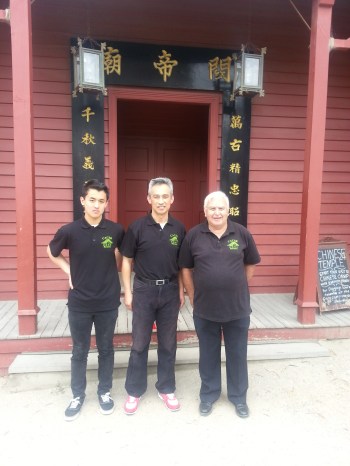
From Left; Oscar Zhang, Charles Zhang and Bill Moy From the CACSB

From Left; Oscar Zhang, Charles Zhang and Bill Moy From the CACSB standing in front of the Chinese Temple at Sovereign Hill

On the 15th of December 2013, Charles Zhang and his son Oscar will begin to retrace the footsteps of the Chinese prospectors, who travelled from Robe in South Australia to the Victorian Goldfields. The re-enactment is planned to take 15 days, with Charles and Oscar travelling approximately 35 kilometres per day. Before they leave Ballarat on their way to Robe, Charles, Oscar and Bill Moy visited the Chinese Temple at Sovereign Hill to ask for permission and good fortune from their ancestors during their adventure. Their walk from Robe to Ballarat will also end at Sovereign Hill on Saturday the 28th of December. Charles Oscar and Bill are all members of the Chinese Australian Cultural Society of Ballarat (CACSB). Interestingly they represent different generations of Chinese immigrating to Ballarat. Bill’s Ancestors came to Ballarat during the Gold Rush. Charles and Oscar represent more recent arrivals to our city.

The Aim of the walk is to follow the route taken by the Chinese miners. Oscar and Charles will commemorate the contribution made by the Chinese gold diggers on the Central Victoria Goldfields, while promoting rural Australian towns and cities.
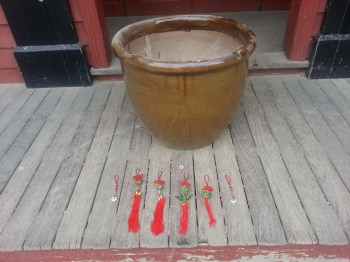
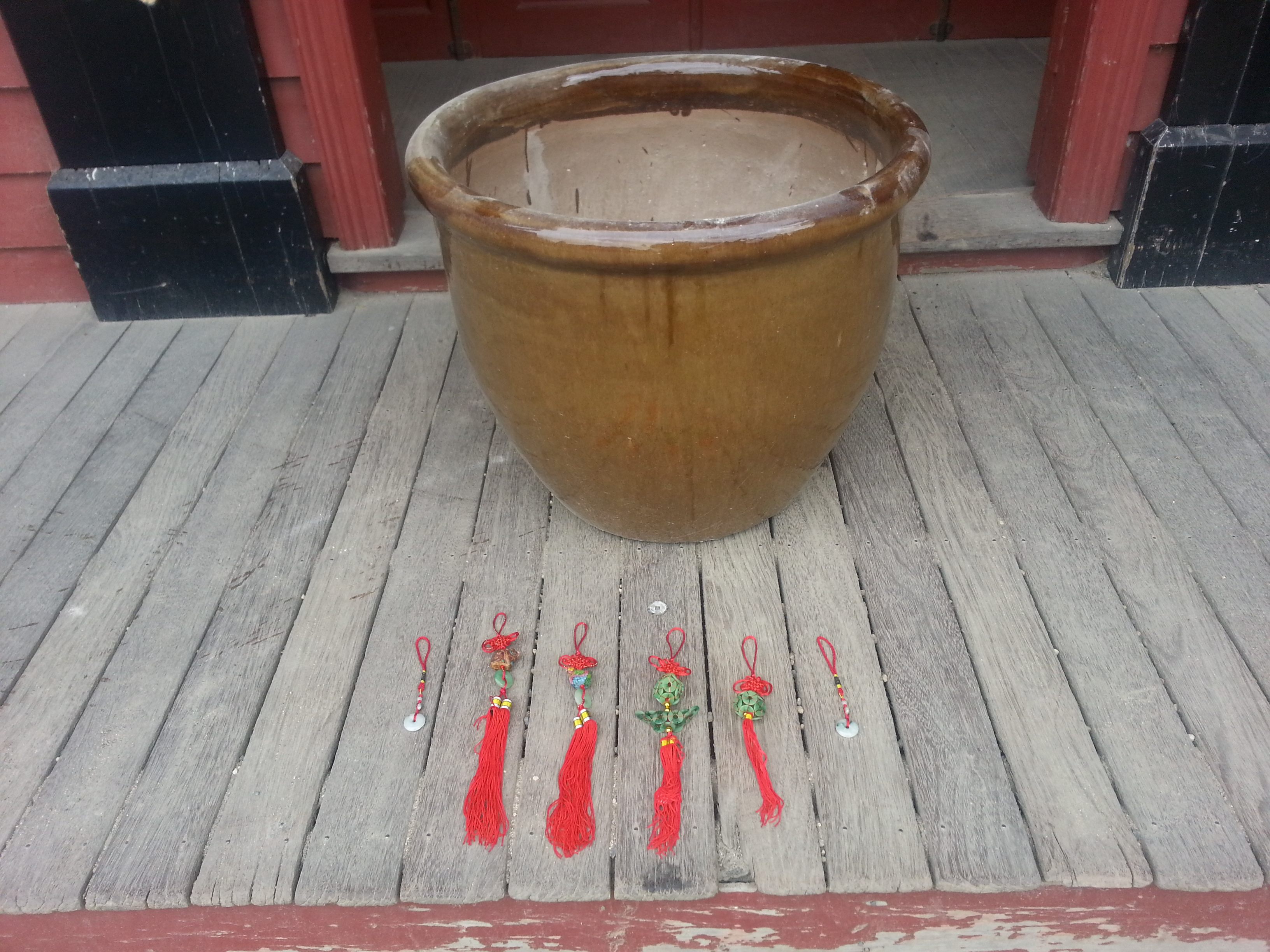
Pot for Incense burning with Jade talismans and a coin given to Charles with links to the Avoca Goldfileds. These will be carried on the journey.

Pot for Incense burning with Jade talismans and a coin given to Charles with links to the Avoca Goldfileds. These will be carried on the journey.

Regular details, stories & photos will be posted on the Chinese Australian Cultural Society Ballarat website: www.chineseballarat.org.au and Ballarat Community Radio Station 99.9 Voice FM: www.voicefm.com.au. We will also attempt to keep this post updated with information about the progress of the walk.
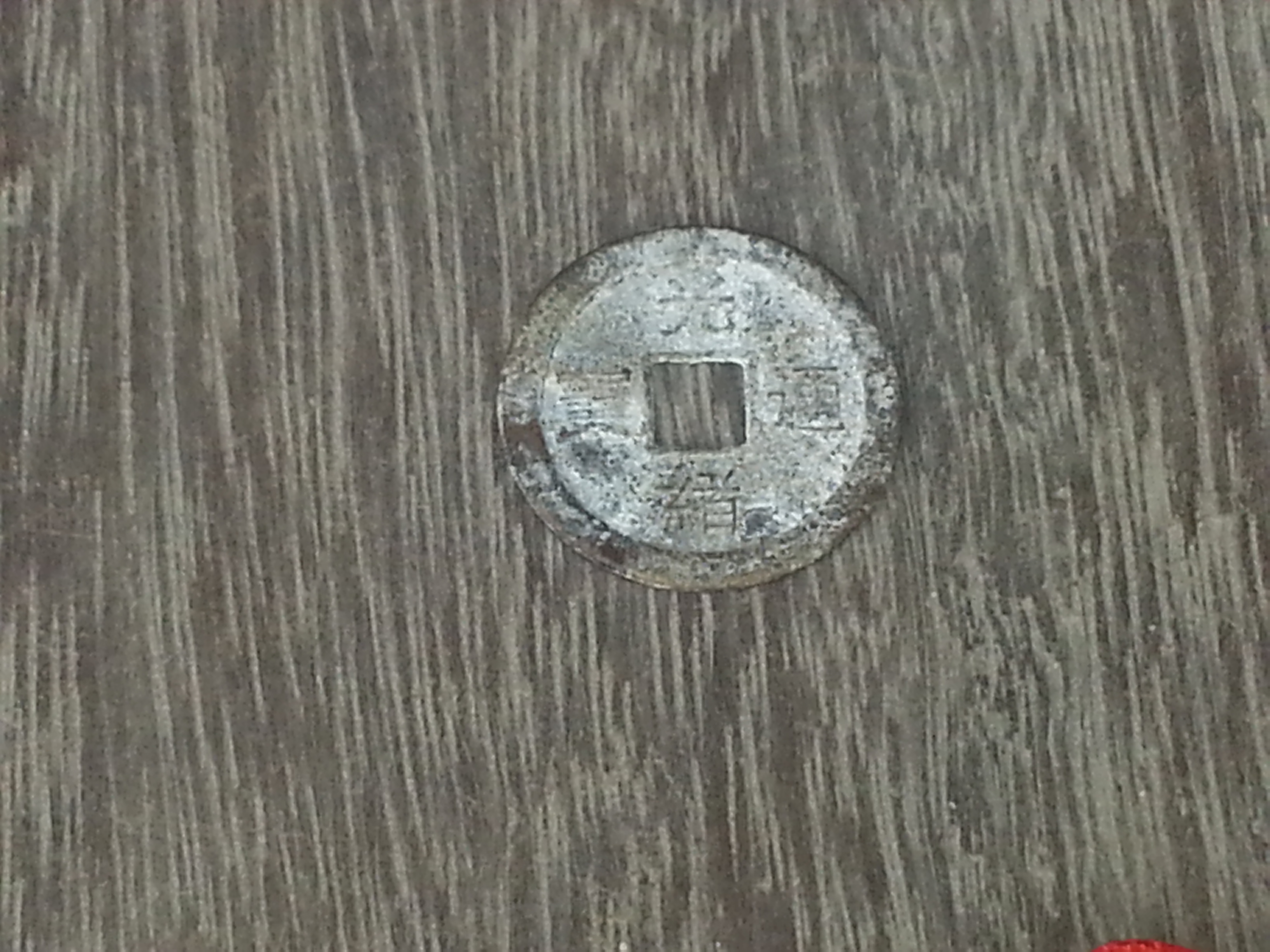
Chinese coin from Avoca

Chinese coin from Avoca

So keep coming back to follow our intrepid adventurers on their special voyage.

**Historical Note**

The Chinese were forced to travel overland from South Australia, due to an immigration tax imposed on them by the Victorian Colonial Government. The Government were concerned by the numbers of Chinese travelling to the goldfields, and tried using taxes to stop immigration from China. You can read more about this at Heritage Australia and our previous blog: Racism and Taxes: Life for the Chinese on the Goldfields

Continue reading

Indigenous Stories of the Goldfields

Exploration/Law and Order

This Blog may contain images and names of deceased people, it may also contain words and descriptive terms that may be offensive to Indigenous Australians.

Bushmans Hut by S. T. Gill.

Bushmans Hut by S. T. Gill. Gold Museum Collection.

Often the perceptions that are held of Aboriginal people during the Gold Rush period of Australian history were that; Aboriginal people were marginalised and only involved on the periphery of mining areas, that they did not understand what was happening and, the experience of Aboriginal people was very negative. Now a new book is casting a whole different perspective on Aboriginal involvement in Goldfields history. “Black Gold” by Dr Fred Cahir of the University of Ballarat provides a wider view of the contributions made by Aboriginal people during the Gold Rush era of Australian history. Dr Cahir gives specific examples to show the contribution to goldfields life by Aboriginal people, in exploration, and Law and Order in Goldfields society. Continue reading

Goldfields Medicine: Part 2

Apothecaries: medicines and food

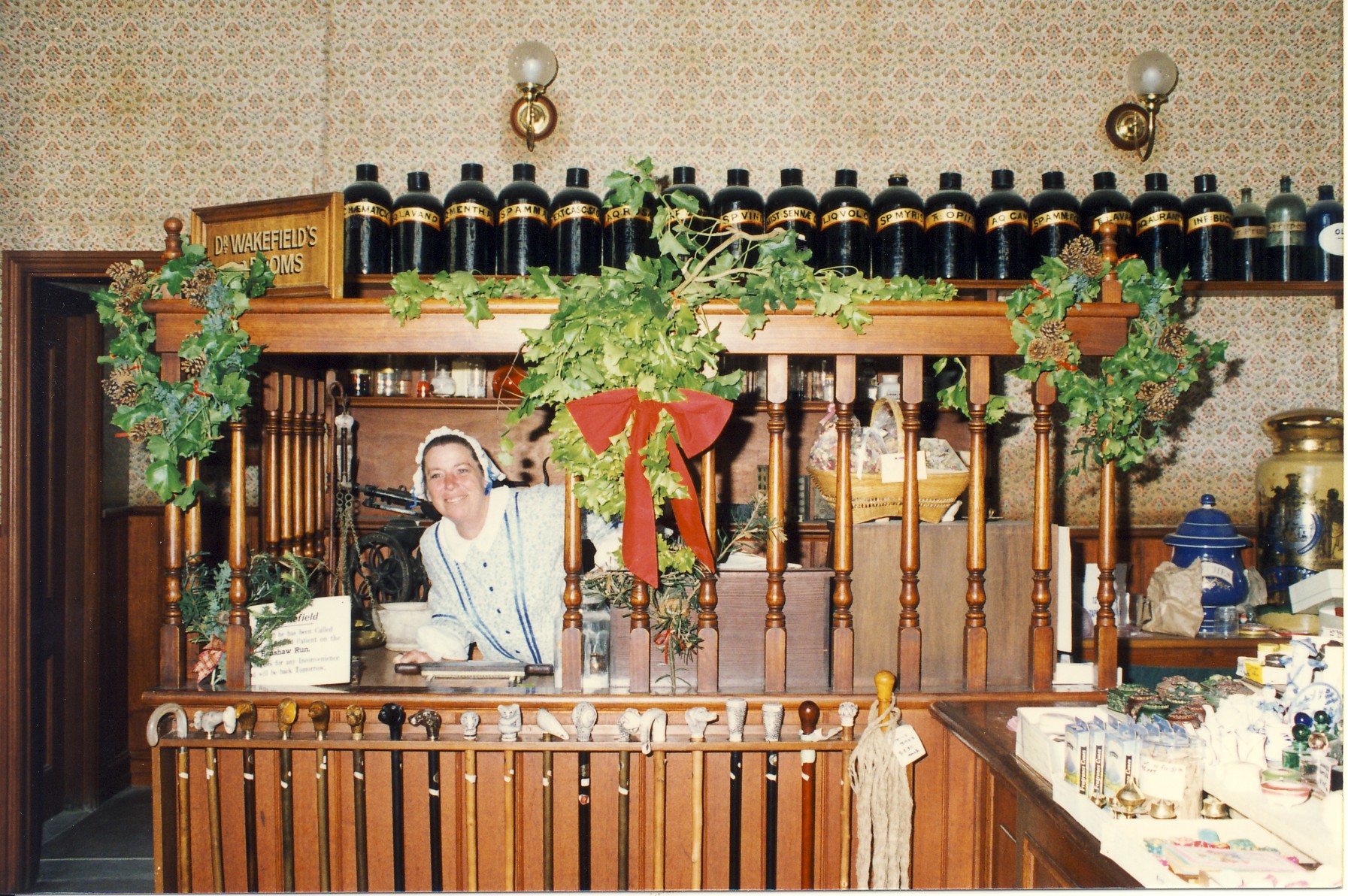
Interior of Apothecary at Sovereign Hill. Gold Museum Collection

Interior of Apothecary at Sovereign Hill. Gold Museum Collection

In a previous post we talked about doctors on the goldfields, and the early hospitals in Ballarat. But there were many other medical people on the goldfields. Among them were the Apothecaries, who could make up medicines, from the ingredients available at the time. Most of these ingredients were based on plant and animal extracts, and could also be used as foodstuffs. Their role is now mainly performed by Pharmacists, but an Apothecary did so much more. They also performed surgery, midwifery and gave medical advice. In this Blog we will explore the secretive world of the Apothecary, and how they contributed to the lives of people on the goldfields and the wider world.

Continue reading