Gold Rush Bell(e)s: Women’s Fashion in the 1850s

Background to Women’s Fashion in the 1850s

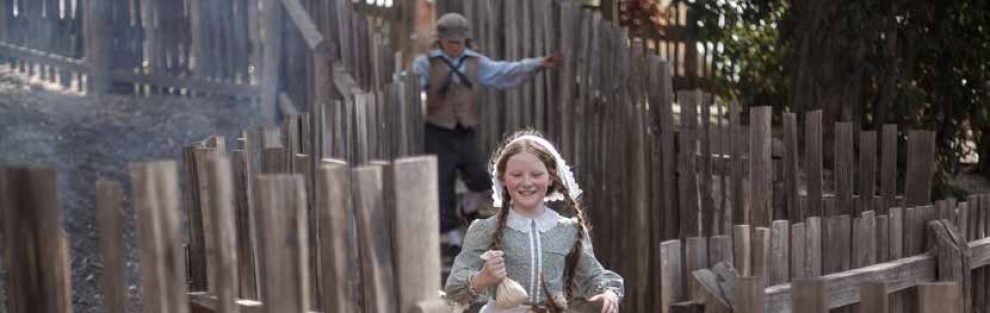
During the Gold Rush in Victoria most new immigrants arrived from Great Britain: England, Ireland, Scotland and Wales.  They brought their ideas about dressing and fashion with them, and consequently many clothes in Victoria during 1850s follow the same lines as their British cousins.

Continue reading

What caused the Eureka Stockade?

Students relive historical events and discover what caused the Eureka Stockade

The Eureka Stockade is a key event in Australia’s history and, arguably, the only civil battle on our soil.  It is seen by most as a key step on our path towards democracy and nearly all Victorian students study the cause and effect of the Eureka Stockade in History lessons.  There is a complex chronology of events that  led to the storming of the Stockade, and these can be viewed in the global context of the Chartist movement.  Understanding the context, motives and emotions involved can be difficult.

Here at Sovereign Hill we want to commemorate the event with students by allowing them to engage with this historical story in a meaningful, accessible and memorable way.  Late last year we developed a participatory reenactment experience for the students on the eve of the 157th anniversary.

Continue reading

Household Arts of the 1850s: Laundry

Laundry in the 1850s

This will be the first in a series of posts about the Household Arts of the 1850s.  If you have a topic you’d like us to cover, please leave a comment or contact us!

Student trying old washing methods at Sovereign Hill

Tools for doing the laundry in the 1850s

In the days before electricity and washing machines, doing the laundry was a time consuming and physically demanding job.  During the early gold rush days new arrivals had to carry any washing tools they wanted all the way to the diggings.  Consequently many diggers didn’t enjoy the luxury of properly washed clothes.

Continue reading

Racism and taxes: life for the Chinese on the Goldfields

Chinese migrants played a very significant role on the Ballarat Goldfields, and elsewhere around Victoria, making up approximately 20% of all males in Ballarat.  They were known for being hard-working and peaceful people, however their experience of the gold rush was marred by racism and discriminatory politics.

Continue reading

Christmas in the Colonies

Here at Sovereign Hill we are getting ready for Christmas with some colonial-style decorations, even our animals are getting into the spirit. Some photos are included below and you can see more on the Sovereign Hill Facebook page.

No plastic decorations or flashing lights in the 1850's.

Continue reading

The Charter of the Ballarat Reform League 11/11

Today, 11/11/11, is an important day for many reasons.  One of those being that it was on this day in 1854 that the Ballaarat Reform League was officially born and their Charter publically adopted.  This group played a significant role in the events that became the precursors to the Eureka Stockade.

Often the League is forgotten in the wake of the much more dramatic Stockade, but their presence and intended purpose is very important.  Those who formed the League took their inspiration from the British Chartist movement, which some had been directly involved in before coming to Victoria.  The Chartist movement was a step by the new working-class, born out of the Industrial Revolution, to improve their rights and representation.

Continue reading

World history as local history

On Friday (28/10) we were fortunate to have Mr Craig Deayton as the speaker for our annual Weston Bate Lecture.  Craig spoke about his research on the 47th battalion from the First World War undertaken for his book Battle Scarred.  His research was an eight year labour to seek out stories beyond the official records and as a result his book has been acclaimed for its honesty and descriptive detail.

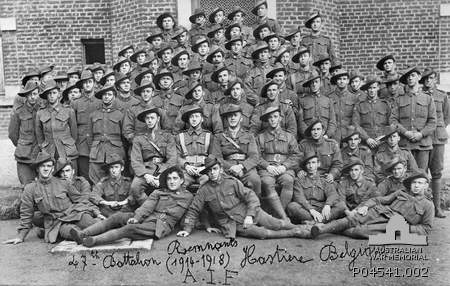
The 47th Battalion was formed in Egypt in March 1916 and made up of predominately Tasmanian and Queensland soldiers.  The battalion served on the Western Front and holds the sad honour of being one of the shortest lived units with one of the highest fatality rates (only two other units were higher).  Craig showed the image below to highlight this devastation, it shows the 73 remaining men from the original unit that numbered over 1000 men.

Remnants 47th Battalion (1914-1918) Hastiere, Belgique. AIF (Photo from the Australian War Memorial)

Continue reading

Nice teeth… and other historical inaccuracies

If there is one thing that most historical recreations get wrong, it’s probably teeth.  Dental care in the past, like most of the medical profession, was generally dreadful.  Consequently many people would have had rotten, missing or crude false teeth.  Even here at Sovereign Hill, most of us have a good set of chompers… certainly a greater number than would have been the reality in the 1850’s!

Dental care of the past: a soldier receiving dental treatment c.1915-1918 (Image from the State Library of Victoria)

Continue reading