Tag Archives: 1850s people

Queen Victoria

statue

Statue of Queen Victoria in Sturt Street, Ballarat.

Queen Victoria ruled the largest empire in human history, and was Australia’s monarch during the gold rush. She ruled over 458 million people and was queen for a record 63 years! The people of Ballarat loved her so much that they paid for a marble statue of her to be made and placed it in front of the Ballarat Town Hall in 1900.

12 curious facts about Queen Victoria:

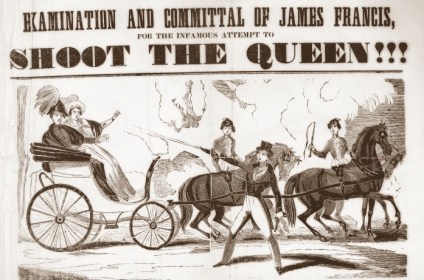
1. Queen Victoria survived 7 assassination (murder) attempts! She was so brave; after police failed to catch the second of these failed assassins on 29th May, 1842, she drove her carriage along the same road the day after the attack to tempt the man to fire his gun at her again. When he foolishly did, undercover policemen arrested him. Queen Victoria was unharmed, and the assassin, named John [James] Francis, was punished through transportation to Tasmania as a convict.
ass

Part of a ‘broadside’ (news poster) on Francis’ attempted assassination of the Queen, printed in 1842 by E. Lloyd.

2. Victoria wasn’t your ordinary 19th century woman. At a time when women were believed by most people in Europe to be weak and intellectually inferior to men, she became queen of a huge empire at the age of 18 and was one of the best educated people in the world (read more about this here). Very interestingly, Victoria asked Prince Albert to marry her, rather than the other way around. This was because nobody by law could ask the Queen to marry them. This situation would have been very uncommon during this era. Read more about life for the average Victorian woman here.

3. The political parties in England (the “Whigs” and the “Tories”) had a huge argument – called The Bedchamber Crisis – over who Victoria’s maids should be. Being close to a king or queen through helping to dress them, tutoring their children, or even cleaning their chamber pot was considered an extremely important political position, as such jobs gave you a lot of time to potentially talk to and influence the monarch.

4. During the height of the Irish Potato Famine (known in Ireland as The Great Famine or Great Hunger), despite anger from English Anglicans (Protestants), Queen Victoria donated £2,000 of her private wealth to help the suffering (Catholic) Irish. In modern money this would be about $2 million (Australian dollars).

dress

Queen Victoria in her famous white wedding dress.

5. Queen Victoria is believed to be the bride who popularised the white wedding dress. Before her wedding to Prince Albert in 1840, brides wore coloured dresses. As a keen supporter of British industry, Victoria wore a white, machine-made dress with handmade lace for trimmings, including her veil. Very soon after Victoria and Albert’s wedding, women all over the British Empire were wearing white to be married. Queen Victoria loved this dress so much that she often wore it, or parts of it at her wedding anniversaries, the baptism of her children, and later in life at her children’s weddings. When she died in 1901, she was even buried with her cherished wedding veil covering her face (along with a plaster cast of Prince Albert’s hand).

6. While Victoria was an intelligent, strong-willed woman who took a lead role in managing the British Empire during her time as queen, women couldn’t vote in Britain until long after her death, and she is thought to have been against the idea of female emancipation (women’s right to vote).

7. Queen Victoria was an only child, and had a difficult relationship with her mother who, many historians argue, wanted to control Victoria and thus keep royal power for herself.

8. Victoria and Albert had 9 children, naming them (in order) Victoria, Albert, Alice, Alfred, Helena, Louise, Arthur, Leopold and Beatrice. In total, they had 42 grandchildren. Their first grandchild, born to daughter Victoria (Jr) and her husband Prince Frederick of Prussia (Germany), was named Wilhelm and became the last German Kaiser (emperor) who is considered largely responsible for causing World War 1.

9. Victoria gave birth to her two youngest children under the influence of chloroform, which was really the first general anaesthetic. The church was not happy about her decision to have (and by way of her fame, promote) pain-free childbirth, as they believed it was against the teaching of The Bible. She didn’t listen; Victoria hated being pregnant, hated childbirth, is thought to have suffered postnatal depression, and didn’t breastfeed her own children. In her detailed diaries, she wrote “Being pregnant is an occupational hazard of being a wife”.

10. Until recent times, it was common for European royals to keep the power in the family so to speak. Queen Victoria’s husband, Prince Albert, was actually her cousin.

11. Victoria passed the haemophilia gene (which stops your blood from clotting, so you can bleed to death from a simple scratch) to many of her children and grandchildren.

pound

A gold sovereign (£1 sterling) from 1851, the year gold was discovered in Australia, featuring Queen Victoria’s profile.

12. The love of Victoria’s life, Prince Albert, died from typhoid at the age of 42 in 1861. Typhoid is a horrible bacterial infection which, without treatment causes a fever, digestive system failure, a rash, blood poisoning, and in many cases results in death. Antibiotics weren’t developed and made available until the 1940s, long after Alfred’s death. Victoria remained in mourning for the rest of her life, and wore black in memory of Albert until the day she died.

During Queen Victoria’s reign, Britain went to war with China twice (called the Opium Wars), primary education was made compulsory and free, vaccination against smallpox became compulsory, Prince Albert managed the hugely successful Great Exhibition of 1851, London’s famous underground railway – the Tube – was developed, the telephone was invented, the Irish Potato Famine occurred, and our state, Victoria (named of course after our beloved queen), became a separate colony. She lived and ruled the largest empire on Earth during a fascinating time in history!

Links and References

Child-friendly website about Queen Victoria: http://www.bbc.co.uk/schools/primaryhistory/famouspeople/victoria/

Horrible Histories on Queen Victoria: https://www.youtube.com/watch?v=flaLHJCKy3I

List of the largest empires in history: http://en.wikipedia.org/wiki/List_of_largest_empires

On assassin John Francis’ transportation to Tasmania: http://www.linc.tas.gov.au/events/featured/research/john-francis

Queen Victoria’s wedding dress: http://en.wikipedia.org/wiki/Wedding_dress_of_Queen_Victoria

Curious facts about Queen Victoria: http://www.history.com/news/5-things-you-may-not-know-about-queen-victoria

A timeline of Victoria’s reign: http://www.britroyals.com/kings.asp?id=victoria
Oh, Sovereign Hill is a museum!

lollies

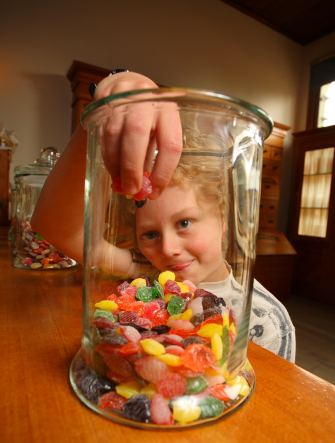
Hard-boiled lollies YUM!!!

Many of our guests – young and old – get confused about Sovereign Hill. Some people think that it is a theme park because panning for gold, eating lollies and riding in horse-drawn carriages is so much fun. However, Sovereign Hill is actually a museum, meaning it is a place where Ballarat’s history is studied, artefacts are collected, and Australia’s gold story is shared with visitors. Most museums tell their stories through displays in glass cases, but we teach visitors about the past through living exhibits.

Why does Sovereign Hill do this?

The first part of the answer challenges us to think about the purpose of studying history – why learn about the past? History helps us understand who we are; it explains why we speak the language we do, why we dress a certain way etc., and it also helps us understand the wider world and our place in it. It teaches us to avoid repeating the mistakes that others have already made, and to appreciate all of the good things about 21st century life. History also helps us see that there are other ways of living, of organising our society, of thinking about ourselves, and that things can and do change, sometimes for the better, sometimes for the worse. Also let’s not forget all of the weird and wonderful characters, events, technologies and fashions from the past that make people of all ages giggle and gasp!

Why is Sovereign Hill a museum with living exhibits such as costumed people, fragrant horse poo and a creek complete with real gold? Because we think this is the most engaging and exciting way to learn about history. When you step through our gate you are sent 160 years back into the past, to a world of dirty miners, daggy troopers (policemen), and impractically-dressed but pretty ladies in big crinolines. Instead of looking at a display in a glass case, you get to talk to our costumed staff to learn about the past – do stop to have a chat, they are all very friendly!

gold panning

“Eureka!! I found some gold!”

Play is another important part of our living museum – try your hand at gold panning, go bowling, or make a candle. You can also taste history here – try some goodies from the bakery, or a lolly, or five. Lastly, you can smell the past – the lovely perfumes of the Apothecary (known in modern times as a pharmacy/ chemist) on Main Street were actually believed to prevent sickness! You will have so much fun in our museum that you won’t even realise you are learning. We believe that is the best way to make learning about the gold rush era stick in your head.

butcher's shambles

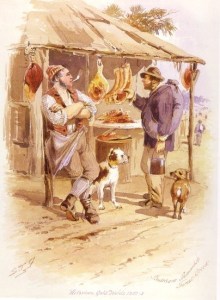
“Butcher’s Shambles” by S. T. Gill. You can find our Butcher’s Shambles at the bottom of the Red Hill Gully Diggings.

Of course not all of our exhibits are completely accurate for very practical reasons. If our museum really smelt like Ballarat did during the gold rush, you wouldn’t come. Nobody would! In the very early days after gold was discovered here in 1851, there were no sewerage pipes… You couldn’t flush away “your business”; you just tipped your chamber pot out wherever you could. By law you had to dig a hole to pour your poop down, but sometimes such muck just ended up on the street, along with the piles of horse and sheep manure. Talking of sheep, historians estimate that about 1000 sheep per day were walked into Ballarat to be butchered and eaten during the busiest part of the gold rush. This led to rotting scraps lying in huge piles next to the butchers’ shambles (shop), and this meant flies! I hope you agree that we have made the right decision in cleaning history up a little.

The most important thing we want you to do during a visit to Sovereign Hill is empathise with the people who were here 160 years ago. When you empathise with someone you try to put yourself in their shoes, and see the world through their eyes. When you walk around our Chinese Camp, try to imagine you were a Chinese gold miner living here in 1855.  What was life like for you? As you walk around the tents, imagine you were a woman with 4 children living on the diggings while your miner husband hasn’t found any gold. How would your family survive?

trooper

“No Gold License eh?!”

One of our favourite education sessions that school students enjoy is called “Gold Fever”. Maybe your class has visited us to play it, and you remember what it felt like to be a miner getting picked on by the nasty troopers. By competing to be the richest, and therefore, most successful miners, teams have to work together, be a little sneaky about Gold Licenses, and keep their eyes on the dodgy bankers. These are all problems Ballarat’s miners had to deal with on a daily basis. This game is all about teaching students to empathise with others and to understand how different life was in the past.

So, museums exist to teach people about history, while also teaching skills like empathy, critical thinking and chronology (putting historical events in order and understanding how one event often causes the next). Do you think Sovereign Hill does a good job at teaching visitors about history?

Links and References:

What is a museum? – http://en.wikipedia.org/wiki/Museum

Why go to a museum? – http://colleendilen.com/2009/07/31/10-reasons-to-visit-a-museum/

Why study history? – https://www.youtube.com/watch?v=hLE-5ElGlPM 

Studying History is important – http://www.history.ac.uk/makinghistory/resources/articles/why_history_matters.html

A great YouTube Chanel dedicated to teaching History – https://www.youtube.com/channel/UCX6b17PVsYBQ0ip5gyeme-Q

Sesame Street explain empathy – https://www.youtube.com/watch?v=9_1Rt1R4xbM

For teachers; empathy theory – https://www.ted.com/talks/jeremy_rifkin_on_the_empathic_civilization

Should museums teach facts or skills?: http://museumquestions.com/2015/01/26/schools-and-museums-can-museums-teach-content-to-school-groups/

The National Centre for History Education (Australian Government) on empathy –  http://www.hyperhistory.org/index.php?option=displaypage&Itemid=794&op=page

A Deaf Digger

Having recently learnt about a very interesting deaf man who spent some time on the Victorian goldfields during the 1850s, we thought we would share his story with you.

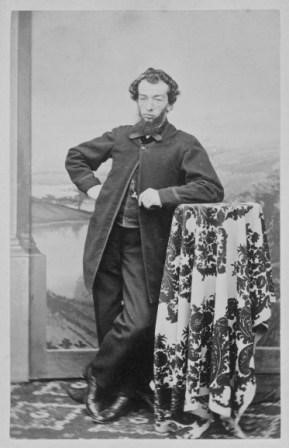
Frederick John Rose.

Frederick John Rose.

Frederick John Rose was a deaf man from England. He was born in 1831 and became profoundly deaf due to Scarlet Fever. He was educated at a Deaf School in Old Kent Road, London.

Rose came to Australia with his younger brother in 1852 when he was 21 years old. He began work as a cabinet maker in South Melbourne but was soon keen to try his luck prospecting for gold. He walked to the goldfields near Bendigo in 1853. Unfortunately he had no luck finding gold so he worked as a carpenter/builder.

While working in Bendigo, Rose saw a series of letters in the newspaper The Argus. One letter was from an unknown author who claimed there were as many as 50 deaf children living in Victoria who were without any form of schooling. Another letter was from a widow, Mrs Lewis, with a deaf daughter. Mrs Lewis wrote appealing for anyone who could educate her daughter Lucy. Rose had not realised there were so many deaf children in Victoria and so he decided to establish a school for the deaf in Melbourne. He wrote about this intention as a letter to The Argus and received answers from parents with deaf children who were interested in supporting the development of a school.

In 1860 the school, which has now become The Victorian College for the Deaf, was established and Lucy Lewis was the first pupil. By 1861 the school had eight students. Rose was now married and he and his wife had to keep renting new, bigger premises due to the increase in student numbers. Further enrolments led to Rose and his associates lobbying with the local church for a purpose-built school and in 1866 they moved into the new building and became a school and support service for Deaf children. The school and support service continued and still operate today as Deaf Children Australia, a not-for-profit agency supporting deaf and hard of hearing children and their families, and The Victorian College for the Deaf.  The school itself is no longer solely located in the original building (although some classes still occur within its facilities) however the original building still stands and is now listed with Heritage Victoria.

Frederick J. Rose continued as Superintendent and Headmaster of the school until 1891 when he was forced to leave when the school’s board of management decided to focus more on education taught through speaking and listening rather than signing. This was a result of the resolutions passed at the 2nd International Congress on Education of the Deaf. [See Milan Congress 1880 here and the rejections of the 1880 resolutions in 2010 here.]

Throughout his life, Rose raised lots of money for various organisations supporting deaf people and was a highly respected member of the community. He died in 1920 at the age of 89 and is buried in the St Kilda Cemetery in Melbourne. See a signed version of his story by Stan Batson, a highly respected deaf man, here.

Learning about the story of Frederick J. Rose has highlighted some of the historical discrimination deaf people have faced, and in some cases still face in Australia, in terms of access, education and also immigration. Jan Branson and Don Miller have written extensively on this topic. In 1998 they wrote about ship captains getting fined for bringing “infirm” people to Australia or New Zealand. Fortunately for F. J. Rose, and for all of Victoria’s deaf people past and present, he arrived in Australia before these immigration laws were created!

The sign language used by deaf people in Victorian times evolved as all languages do over time, and has today become what is called Australian Sign Language, or Auslan. This language is specific to Australian deaf people and is not ‘universal’; something many people mistakenly believe. Each country has its own sign language and culture that is particular to the deaf people living in those countries. This means that people in England use British Sign Language (BSL), people in America use American Sign Language (ASL) and people in France use French Sign Language (LSF). Auslan has links to both British and Irish sign languages because when deaf people migrated here or were transported here as convicts they brought their languages with them.

Auslan was recognised by the Australian government as a “community language other than English” and the preferred language of the Deaf community in policy statements in 1987 and 1991. However, this recognition is yet to filter through to many institutions, government departments and professionals who work with Deaf people. (http://en.wikipedia.org/wiki/Auslan)

Deaf, hard of hearing, and deafblind people may have differing needs or individual preferences to ensure access to clear communication. This may involve working with Auslan/English interpreters, Tactile Signing interpreters, seating arrangements, lighting, written information or gaining information through non-verbal signals such as facial expressions, lip patterns and body language.

In the days before technological advances such as mobile phones, the internet, television or even electric lighting, many deaf people met by gas light in the streets of Melbourne. These lights allowed deaf people to chat long after the sun had gone down.

This sign indicates that an event or video etc. has an Auslan interpreter.

This sign indicates that an event or video etc. has an Auslan interpreter.

Australian Deaf Culture is specific to the deaf community here in Australia. It contains a wealth of history, humour, customs, etiquette, and of course the language of Auslan is integral to all people who are members of the deaf community. Read more about Deaf culture here.

In many ways it can be useful to consider Auslan and the deaf community as a minority language community rather than a disability group. The deaf community in Australia have a different language, culture, history and customs to the mainstream community in Australia. In this way they are similar to people who have migrated to Australia from other countries, except that deaf people have not migrated. For this reason, many people feel there are strong similarities between deaf communities and Aboriginal or Torres Strait Islander communities who also have different languages and cultural practices compared with broader society. If we think about the deaf community like that it becomes easier to understand the challenges they face as a minority language seeking recognition, access and fair treatment in our society.

Did you know that there are also Aboriginal and Torres Strait Islander communities who use a sign language for cultural reasons and at certain times? Some of these communities have deaf people as well and use different signs to Auslan to communicate. Read more about Aboriginal and Torres Strait Islander communities and signing here.

Links and References:

Timeline of F. J. Rose’s life: http://www.deafchildrenaustralia.org.au/FJ_Rose_Chronology

Short biography of F. J. Rose: http://en.wikipedia.org/wiki/Frederick_J_Rose

Interesting article on the history of Australian government discrimination against deaf immigrants: http://deafhistoryaustralia.com/tag/frederick-j-rose/

The Victorian College for the Deaf: http://www.vcd.vic.edu.au/6354650/victorian-college-history.htm  

The history of Auslan: http://www.auslan.org.au/about/history/

An explanation of deaf culture, do’s and don’t’s for interacting with deaf people, and a history of Auslan: http://www.aussiedeafkids.org.au/deaf-culture.html

On deaf culture: http://en.wikipedia.org/wiki/Deaf_culture

Utmost for the Highest: The History of the Victorian School for Deaf Children, by J. H. Burchett, Melbourne, 1964.

No Longer By Gaslight, by John W Flynn. Adult Deaf Society, East Melbourne. 1984.

How not to say “I beg your pardon?”: http://bit.ly/17g0PfE 

Deaf History – Milan 1880: http://deafness.about.com/cs/featurearticles/a/milan1880.htm

A New Era: Deaf Participation and Collaboration, Vancover 2010: http://nad.org/sites/default/files/2010/July/ICEDNewEraVancouver2010.pdf

Frederic John Rose. Founder of the Victorian Deaf and Dumb Institutionhttp://bit.ly/1CGKgST 

Deaf History: Frederick John Rose: http://www.auslanstorybooks.com/fj-rose.html      

It’s beach time!

As this blog already contains several posts about the history of Christmas, this festive season we have decided to explore the history of beach holidays!

1

An early bathing machine.

Bathing in the ocean became popular in Europe in the 1700s, before Australia was colonised by Britain. Both immersing yourself in the water and drinking sea water were considered to cure all kinds of illnesses. As a result, many of Europe’s rich and powerful would spend a “season” at the seaside, bathing most days using a bathing machine. Believe it or not, winter was considered the best time to do this.

2

Ladies “Bathing Dress”- 1858, from the magazine Harper’s Bazaar.

A bathing machine was a hut on wheels in which people changed into their swim suits. This carriage-type contraption was then pushed into the water (using man power, horse power or sometimes even steam power) so the bather could step out and immediately lower themselves into the water. Some bathing machines had tents that would extend out and enable bathers to enter the water in complete privacy, while some came with “dippers” or “bathers”. These were attendants of the same sex as the bather who would dunk you underwater the correct number of times to cure whatever illness you had been diagnosed with.

Queen Victoria’s husband Prince Albert believed that sea bathing was beneficial to one’s health, and in 1846 he had a bathing machine installed on the beach near their summer palace on the Isle of Wight. Victoria and her daughters regularly used the bathing box to enjoy the water. The queen’s bathing box, used to preserve her modesty, is now fully restored and on public view.

3

Queen Victoria’s bathing machine has a veranda at the front where curtains concealed her from view whilst she bathed. Inside is a changing room and a plumbed-in toilet. The whole contraption was run into the sea from the beach along a long ramp, and pulled back using a wire rope and winch!

By the 1850s, when gold was discovered here in Ballarat, dippers had gone out of fashion. However, people continued to visit the seaside especially after train travel made reaching the beach cheap and convenient.  Some historians think that the main motivation now was pleasure and holiday making although many people still believed a visit to the seaside was good for your health. By this time people were going to the beach during summer rather than winter.

Bathing soon became popular here in Australia although in some parts of the country it was banned during daylight hours up until 1902 because a wet woman in a swim suit was considered an indecent sight. Furthermore, some men were said to enjoy swimming naked, so you definitely couldn’t do that in public.

4

St Kilda Esplanade, main beach (1864).

The St Kilda Sea Baths were opened in 1860 to take advantage of the popular seaside excursion trend. These enclosed sea baths were thought to keep bathers safe from Australia’s scariest sea creatures. However, even before the baths were built, St Kilda was a popular swimming spot. In the 1840s it already had bathing boxes (bathing machines with their wheels taken off), and by 1854 Captain Kenney had deliberately sunk a ship just off the beach and put out ropes to it for people to swim along. Once the St Kilda train station was opened in 1857 more sea baths opened and regular swimming competitions were held. As businesses, the baths were not the financial success the owners hoped as the majority of visitors to St Kilda soon became confident to swim in open water.

Since these humble beginnings, going to the beach has now become a normal part of Australian life. Most Australians live on or near the coast, and some of our beaches like Bells in Torquay, Bondi in Sydney and the Gold Coast near Brisbane are considered to be among the best in the world. Interestingly, having tanned skin was avoided by European women during the nineteenth century, as it showed you were poor and had to work outdoors like a peasant.

Like swimming, the history of swimwear is also fascinating, read all about it here. Enjoy the summer sun and happy holidays!

Links and References

The history of sea bathing: http://en.wikipedia.org/wiki/Sea_bathing

19th century bathing history: http://consideringausten.wordpress.com/2014/04/12/so-you-want-to-go-swimming-in-regency-england/

18th and 19th century bathing history: http://www.messynessychic.com/2014/04/15/victorian-prudes-beachside-bathing-machines/

History of St Kilda Baths, Melbourne: http://www.stkildaseabaths.com.au/history

History of sun tanning: http://www.skincancer.org/prevention/tanning/tale-of-tanning

Ten 1850s Inventions and Innovations

Some very weird and wonderful things were created during the Industrial Revolution (c. 1750-1900) and the 1850s in particular – the same decade that Ballarat’s gold rush got underway – saw some fascinating inventions and innovations.

ss great eastern

Brunel’s SS Great Eastern with its sails and steam-powered water wheel. This photo was taken in New York Harbour, 1860.

Seafaring Inventions

SS Great Eastern (ship) – Isambard Kingdom Brunel was an incredible engineer and designer during the early 1800s. He was a pioneer of steam-powered travel, and the SS Great Eastern was his third iron-hulled, steam-powered sailing ship (it had sails to use the wind and a steam engine when it was calm). This “Great Babe” as he called it, was specifically designed to bring travellers from the UK to Australia – 4,000 at a time to be exact – without needing to stop and refuel anywhere along the way. This was the largest ship in the world when it was launched in 1858, but sadly it suffered damage on its first journey south. Find out more about this amazing man and his remarkable feats of engineering here.

sub armour

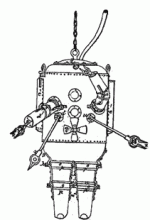
Phillips’ Submarine Exploring Armour, 1856.

Submarine Exploring Armour – Lots of submarine designs had been tested out since as early as 1580, but even in the 1850s they weren’t being taken too seriously. An American shoemaker named Lodner D. Phillips, patented (a design that is licensed for production and sale by one person or company) a submarine propeller design in 1852 which allowed his home-made subs to go down to 30 metres. Phillips also patented something much more interesting in 1856: submarine exploring armour. Little is known about the success of this invention; no one appears to have actually worn one to explore the deep.

a-7095-atl (1)

Whalers hunting sperm whale (prized for the huge amounts of oil found in its head called “spermaceti”- used by these deep diving animals for sonar communication). Date: 1847 By: Illustrated London News (Newspaper); Duncan, Edward, 1803-1882. Permission of the Alexander Turnbull Library, Wellington, New Zealand, must be obtained before any reuse of this image.

Electric Whaling Apparatus – Hunting whales was big business during the 1800s; while the majority of Australian whaling was concentrated in Tasmania and New South Wales during the 1850s, Portland in southern Victoria produced tonnes of whale oil, meat and bone. Whale products were used to fuel street lamps, light train carriages, make corsets and beauty products, and provide protein in people’s diets. Even a type of whale pooh was prized – for perfume manufacture would you believe! In 1852 two German men decided to improve whale hunting technology by electrifying the whale harpoon (spear); once the harpoon pierced the skin of the whale, the animal would receive 8 electric shocks, which were guaranteed to kill it… Find out more about this invention here.

Domestic Technologies

Dishwasher – The first dishwasher was patented in the US in 1850 by Joel Houghton. It was a wooden machine with a hand-powered wheel that splashed water on dishes. It barely cleaned anything but it was a starting point for the design of the electric dishwasher.

014EVA000000000U04195V00[SVC1]

Advert for the Singer Manufacturing Company.

Sewing Machine – Many people had tried to design a machine that could sew clothing, shoes etc. but none of the designs before the 1850s were particularly popular, practical or affordable. That was until Isaac Merritt Singer came along, combined earlier designs and lodged a patent for his foot-powered machine in 1851. “Singer did not invent any notable sewing-machine advances, but he did pioneer the hire-purchase system and aggressive sales tactics” (International Sewing Machine Collectors Society website).  This eventually quite radically changed how people made their own clothes. Clothes that had traditionally been made (mostly by women) by hand, could now be completed in a fraction of the time, and this brought down the price of clothes and allowed the average person to own a greater variety of outfits and keep up with fashion trends. Apparently, “a sewing machine could produce a man’s shirt in about one hour, compared to 14 ½ hours by hand” (Draznin, Victorian London’s Middle-Class Housewife: What She Did All Day, pp. 66–68). Singer had some legal trouble with previous sewing machine designers, but as he streamlined earlier designs, he is often credited with designing the machine that people still use in homes and factories today.

The Zip – Sick of dealing with slow and annoying buttons, cords and ribbons to do up your clothes? Elias Howe Jr. was, so he invented the first zipper-style clothing and boot fasteners. Patented in 1851, his “Fastening for Garments”, was described as an “automatic, continuous clothing closure”, but it didn’t really work very well. Howe got distracted by sewing machine designs, and another attempt at making a zipper wasn’t made until 42 years later.

Washing Machine – While the wash board had been invented in 1797, 1851 was the year the first drum (big bucket) washing machine was patented. An American by the name of James King set out the design groundwork for the modern washing machine; however his 1851 version was hand-powered. There were a few steam-powered washing machines being used in the UK and US during the 1850s, but they were huge and only affordable to big clothing factories and hotels.  The invention of the electric washing machine changed the world.

irons

Two charcoal irons from the Sovereign Hill collection.

Charcoal Iron – Before the electric iron was invented in 1882 by Henry W. Seeley, people relied on fires to heat up their irons to then press their clothes. The charcoal iron was patented in 1852, and unlike the simple flatirons (which you placed on your stove to heat up) in common usage before its creation, its base is a container to hold hot charcoal. Interestingly, at this time some irons were fuelled with whale oil or kerosene! The charcoal iron was considered a better option than most on the market as it stayed hot for a long time (and wasn’t fuelled by a flammable substance!).

Medical “Advances”

Scarificator – This odd blood-letting device used by doctors to cure all kinds of illnesses, was already in existence in the early 1800s, but it was refined and improved by Frederick Leypoldt in 1851. Interestingly, Leypoldt was not a doctor, but thought that making a scarificator smaller was worth patenting.  Find out more about this curious medical practice here.

Sometimes small, local inventions save lives

bal bucket

The Ballarat Hook.

Ballarat Hook – Many of the miners who came to the Ballarat goldfields were middle-class, well-educated men. When they realised that having a heavy bucket of rocks and mud (and hopefully gold) swinging above your head on a flimsy “S” hook while you stand at the bottom of a mineshaft was a little scary, they developed a solution to this potential disaster. The Ballarat Hook keeps you safe below while still allowing you to easily release the bucket at the end of the day to take it home for safekeeping.

Links and References

The Industrial Revolution and the history of human energy use – https://www.youtube.com/watch?v=EM1IyIyr-Zc&list=PL8dPuuaLjXtNjasccl-WajpONGX3zoY4M

Who was I. K. Brunel? – http://www.bbc.co.uk/schools/primaryhistory/famouspeople/isambard_kingdom_brunel/,  http://en.wikipedia.org/wiki/Isambard_Kingdom_Brunel

On submarines – http://www.submarine-history.com/NOVAone.htm, http://en.wikipedia.org/wiki/Submarine

The history of sewing machines: http://ismacs.net/sewing_machine_history.html

The history of washing machines – http://en.wikipedia.org/wiki/Washing_machine

Everyone wants a washing machine because they are magical – http://www.ted.com/talks/hans_rosling_and_the_magic_washing_machine

The history of irons – http://en.wikipedia.org/wiki/Clothes_iron

Strange medicine – http://en.wikipedia.org/wiki/Bloodletting

Draznin, Yaffa Claire. Victorian London’s Middle-Class Housewife: What She Did All Day (#179), Contributions in Women’s Studies Journal, Westport, Connecticut: Greenwood Press, 2001, pp. 66–68.

Collectors of the Nineteenth Century

In Victorian times, collecting was all the rage. People collected many different things such as butterflies, stamps, shells, stones, weapons, and even human bones. Some were motivated to collect in the name of science, while others filled their parlours with “curiosities” just for the fun of it. While some of these 19th century collectors and their collections have helped us better understand nature and the many different cultures around the world, collecting may have sometimes caused more harm than good.

gorilla

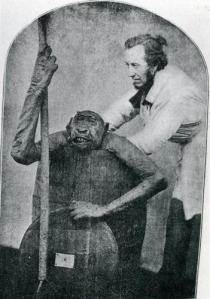
Zoologist and taxidermist Araham Dee Bartlett with his first gorilla (pickled…!), collected by Dr. Du Chaillu for Professor Owen, British Museum, 1861.

One fascinating Victorian collector was the explorer Paul Du Chaillu. He was the first European to see (and later kill) a live gorilla while he was travelling around Africa from 1856 to 1859. Until the 1860s, Europeans thought gorillas were mythical creatures. Their bones had been collected and studied in the late 1840s, but pickled (eew!) and stuffed examples of them weren’t brought back to Europe until the 1860s! Only then did people believe that these large, hairy Great Apes really existed.

Collectors have taught us much about the world. Probably the most famous collector of all was Charles Darwin, who developed the theory of evolution by natural selection (he published his famous book on this topic, On the Origin of Species, in 1859). In the 1830s Darwin sailed around the world for five years collecting many different kinds of plants and animals. This helped him develop his world-changing idea that successful animals adapt to suit their environment. While he brought many dead and preserved specimens back to England, he also collected live animals including giant Galapagos tortoises. Many people believe that Harriet, a tortoise at Australia Zoo which died in 2006 at the age of 176, was originally collected by Darwin.Tortoise

Darwin was one of many famous collectors who popularised collecting as a hobby, and by the 1850s it was a very fashionable pastime for a gentleman. Here on the Ballarat goldfields there were many men who collected minerals (stones), bird eggs, postcards, weapons made by the local Aboriginal people (the Wathaurong), and animals which would commonly be preserved using the technique of taxidermy (stuffing them). Sadly, there is even evidence that at least one collector in Western Victoria dug up bodies of Aboriginal people to take their skulls (Griffiths, Hunters and Collectors: The Antiquarian Imagination in Australia, p.28-9).

The bones of such “exotic” people would be sent to places like the British Museum to be studied and displayed. At the time this was seen as scientific inquiry but today the practise is illegal and recognised as being totally inappropriate and insensitive to the families and descendants of those deceased people. Fortunately, human remains from many countries which were sent to European museums and universities in the 19th century have now been respectfully returned to their communities of origin. The remains of Truganini, mistakenly believed to be the last Tasmanian Aboriginal person, were finally returned from the Royal College of Surgeons of England in 2002, 130 years after they were sent away from her homeland.

Mermaid

Feejee Mermaid Year: 1842. Con artist: P.T. Barnum.

Sometimes people would try to use their collections to make money, and this often caused more creative collectors to invent curious creatures and artefacts. A good example of this is the Feejee Mermaid, which was exhibited from 1842 until the 1860s in P. T. Barnam’s world-famous circus. Another example was a petrified wooden carving of a head that claimed to have been discovered in a gold mine at Creswick, 12kms north of Ballarat in 1855. This was revealed to be a hoax after some initial excitement about what it meant for understanding Australia’s history of human habitation (Griffiths, Hunters and Collectors: The Antiquarian Imagination in Australia, p.35).

Human zoo

An advertisement for a human zoo in Stuttgart, Germany, 1928.

Perhaps the most dark and worrying aspect of collecting were zoos which displayed humans. Cities such as London, New York, Paris, Milan and Barcelona all had zoos containing “exotic” peoples by the 1870s.

While the word ‘scientist’ only came into use in 1834, the 19th century was an exciting time for science and discovery; fossils of dinosaurs and mammoths were being unearthed as were the tombs of ancient Egyptian pharaohs, and millions of people were moving from one country to another – by choice – for the first time in history. While many people still collect all kinds of weird and wonderful things today like Barbie dolls, rare books and beautiful antiques, we are much more careful about the kinds of things we collect and the way we collect them. Check out some of the fascinating collections preserved by The Gold Museum here.

Links and References:

On gorillas – http://en.wikipedia.org/wiki/Paul_Du_Chaillu

About Charles Darwin and his work – http://darwin200.christs.cam.ac.uk/pages/index.php?page_id=jb

Harriet the Giant Galapagos Tortoise – http://en.wikipedia.org/wiki/Harriet_(tortoise)

Museum of things Queen Victoria and Prince Albert collected – http://www.vam.ac.uk/

The return of Truganini’s remains – http://www.theage.com.au/articles/2002/05/28/1022569769905.html

The Feejee Mermaid – http://en.wikipedia.org/wiki/P._T._Barnum

Another fake mermaid – http://www.goldmuseum.com.au/fake-mermaid-photograph/

Human zoos – http://en.wikipedia.org/wiki/Human_zoo

History of the word “scientist” – http://www.npr.org/templates/story/story.php?storyId=127037417

Gold Museum collections – http://www.goldmuseum.com.au/about-our-collections/

On creepy Victorian mummy unwrapping parties (‘Egyptomania’) – http://neovictorianparlour.blogspot.com.au/2013/04/victorian-mummy-unwrapping-parties.html

Griffiths, Tom. Hunters and Collectors: The Antiquarian Imagination in Australia, Cambridge University Press, 1996.

Goldfields Immigration 3

The Irish influence on Ballarat

Gentlemen and savages – Men of Ballarat and fellows of Bungaree” These were just some of the inflaming words spoken by the controversial Victorian politician C. E. Jones, at a political meeting in Ballarat, 1864. Jones was attempting to trade on the popular Old World idea of the Irish as lower-caste, illiterate and priest-ridden trouble makers who were intent on lowering the standards of this new society in Ballarat. In fact these ideas about the Irish presence in Ballarat were completely inaccurate.

The Irish were the second largest national group (the largest being the English), to influence the history of Australia during the gold rush and colonial periods. From 1851 to 1901 the percentage of the population considering themselves Irish remained at around 20%. Most of these immigrants came from the southwest counties of Clare, Tipperary, and Galway.

Continue reading

Goldfields Immigration: Part 2

The Jewish contribution to Ballarat’s History

Ballarat Synagogue, cnr Princes & Barkly Streets, Ballarat. Gold Museum Collection.

Ballarat Synagogue, cnr Princes & Barkly Streets, Ballarat. Gold Museum Collection.

“Hidden away in plain view”, that is how many people describe the location of the Ballarat Synagogue. On the main tourist route from Melbourne to Sovereign Hill, a large stone structure on a bend of road near the East Ballarat Fire Station, hints at a connection to a Jewish community in Ballarat. In fact there have been people of the Jewish faith involved actively in Ballarat’s history from the beginning of European settlement here.

Continue reading