Tag Archives: teaching history

Oh, Sovereign Hill is a museum!

lollies

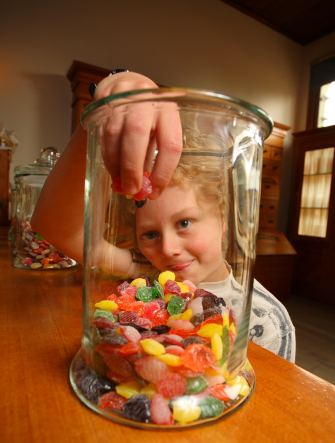
Hard-boiled lollies YUM!!!

Many of our guests – young and old – get confused about Sovereign Hill. Some people think that it is a theme park because panning for gold, eating lollies and riding in horse-drawn carriages is so much fun. However, Sovereign Hill is actually a museum, meaning it is a place where Ballarat’s history is studied, artefacts are collected, and Australia’s gold story is shared with visitors. Most museums tell their stories through displays in glass cases, but we teach visitors about the past through living exhibits.

Why does Sovereign Hill do this?

The first part of the answer challenges us to think about the purpose of studying history – why learn about the past? History helps us understand who we are; it explains why we speak the language we do, why we dress a certain way etc., and it also helps us understand the wider world and our place in it. It teaches us to avoid repeating the mistakes that others have already made, and to appreciate all of the good things about 21st century life. History also helps us see that there are other ways of living, of organising our society, of thinking about ourselves, and that things can and do change, sometimes for the better, sometimes for the worse. Also let’s not forget all of the weird and wonderful characters, events, technologies and fashions from the past that make people of all ages giggle and gasp!

Why is Sovereign Hill a museum with living exhibits such as costumed people, fragrant horse poo and a creek complete with real gold? Because we think this is the most engaging and exciting way to learn about history. When you step through our gate you are sent 160 years back into the past, to a world of dirty miners, daggy troopers (policemen), and impractically-dressed but pretty ladies in big crinolines. Instead of looking at a display in a glass case, you get to talk to our costumed staff to learn about the past – do stop to have a chat, they are all very friendly!

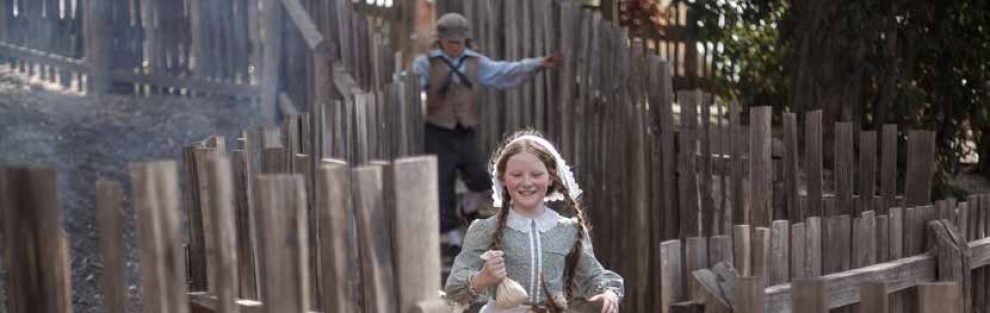
gold panning

“Eureka!! I found some gold!”

Play is another important part of our living museum – try your hand at gold panning, go bowling, or make a candle. You can also taste history here – try some goodies from the bakery, or a lolly, or five. Lastly, you can smell the past – the lovely perfumes of the Apothecary (known in modern times as a pharmacy/ chemist) on Main Street were actually believed to prevent sickness! You will have so much fun in our museum that you won’t even realise you are learning. We believe that is the best way to make learning about the gold rush era stick in your head.
butcher's shambles

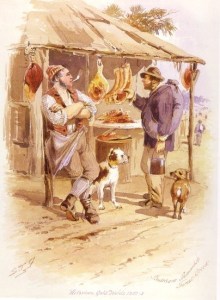
“Butcher’s Shambles” by S. T. Gill. You can find our Butcher’s Shambles at the bottom of the Red Hill Gully Diggings.

Of course not all of our exhibits are completely accurate for very practical reasons. If our museum really smelt like Ballarat did during the gold rush, you wouldn’t come. Nobody would! In the very early days after gold was discovered here in 1851, there were no sewerage pipes… You couldn’t flush away “your business”; you just tipped your chamber pot out wherever you could. By law you had to dig a hole to pour your poop down, but sometimes such muck just ended up on the street, along with the piles of horse and sheep manure. Talking of sheep, historians estimate that about 1000 sheep per day were walked into Ballarat to be butchered and eaten during the busiest part of the gold rush. This led to rotting scraps lying in huge piles next to the butchers’ shambles (shop), and this meant flies! I hope you agree that we have made the right decision in cleaning history up a little.

The most important thing we want you to do during a visit to Sovereign Hill is empathise with the people who were here 160 years ago. When you empathise with someone you try to put yourself in their shoes, and see the world through their eyes. When you walk around our Chinese Camp, try to imagine you were a Chinese gold miner living here in 1855.  What was life like for you? As you walk around the tents, imagine you were a woman with 4 children living on the diggings while your miner husband hasn’t found any gold. How would your family survive?

trooper

“No Gold License eh?!”

One of our favourite education sessions that school students enjoy is called “Gold Fever”. Maybe your class has visited us to play it, and you remember what it felt like to be a miner getting picked on by the nasty troopers. By competing to be the richest, and therefore, most successful miners, teams have to work together, be a little sneaky about Gold Licenses, and keep their eyes on the dodgy bankers. These are all problems Ballarat’s miners had to deal with on a daily basis. This game is all about teaching students to empathise with others and to understand how different life was in the past.

So, museums exist to teach people about history, while also teaching skills like empathy, critical thinking and chronology (putting historical events in order and understanding how one event often causes the next). Do you think Sovereign Hill does a good job at teaching visitors about history?

Links and References:

What is a museum? – http://en.wikipedia.org/wiki/Museum

Why go to a museum? – http://colleendilen.com/2009/07/31/10-reasons-to-visit-a-museum/

Why study history? – https://www.youtube.com/watch?v=hLE-5ElGlPM 

Studying History is important – http://www.history.ac.uk/makinghistory/resources/articles/why_history_matters.html

A great YouTube Chanel dedicated to teaching History – https://www.youtube.com/channel/UCX6b17PVsYBQ0ip5gyeme-Q

Sesame Street explain empathy – https://www.youtube.com/watch?v=9_1Rt1R4xbM

For teachers; empathy theory – https://www.ted.com/talks/jeremy_rifkin_on_the_empathic_civilization

Should museums teach facts or skills?: http://museumquestions.com/2015/01/26/schools-and-museums-can-museums-teach-content-to-school-groups/

The National Centre for History Education (Australian Government) on empathy –  http://www.hyperhistory.org/index.php?option=displaypage&Itemid=794&op=page

It’s beach time!

As this blog already contains several posts about the history of Christmas, this festive season we have decided to explore the history of beach holidays!

1

An early bathing machine.

Bathing in the ocean became popular in Europe in the 1700s, before Australia was colonised by Britain. Both immersing yourself in the water and drinking sea water were considered to cure all kinds of illnesses. As a result, many of Europe’s rich and powerful would spend a “season” at the seaside, bathing most days using a bathing machine. Believe it or not, winter was considered the best time to do this.

2

Ladies “Bathing Dress”- 1858, from the magazine Harper’s Bazaar.

A bathing machine was a hut on wheels in which people changed into their swim suits. This carriage-type contraption was then pushed into the water (using man power, horse power or sometimes even steam power) so the bather could step out and immediately lower themselves into the water. Some bathing machines had tents that would extend out and enable bathers to enter the water in complete privacy, while some came with “dippers” or “bathers”. These were attendants of the same sex as the bather who would dunk you underwater the correct number of times to cure whatever illness you had been diagnosed with.

Queen Victoria’s husband Prince Albert believed that sea bathing was beneficial to one’s health, and in 1846 he had a bathing machine installed on the beach near their summer palace on the Isle of Wight. Victoria and her daughters regularly used the bathing box to enjoy the water. The queen’s bathing box, used to preserve her modesty, is now fully restored and on public view.

3

Queen Victoria’s bathing machine has a veranda at the front where curtains concealed her from view whilst she bathed. Inside is a changing room and a plumbed-in toilet. The whole contraption was run into the sea from the beach along a long ramp, and pulled back using a wire rope and winch!

By the 1850s, when gold was discovered here in Ballarat, dippers had gone out of fashion. However, people continued to visit the seaside especially after train travel made reaching the beach cheap and convenient.  Some historians think that the main motivation now was pleasure and holiday making although many people still believed a visit to the seaside was good for your health. By this time people were going to the beach during summer rather than winter.

Bathing soon became popular here in Australia although in some parts of the country it was banned during daylight hours up until 1902 because a wet woman in a swim suit was considered an indecent sight. Furthermore, some men were said to enjoy swimming naked, so you definitely couldn’t do that in public.

4

St Kilda Esplanade, main beach (1864).

The St Kilda Sea Baths were opened in 1860 to take advantage of the popular seaside excursion trend. These enclosed sea baths were thought to keep bathers safe from Australia’s scariest sea creatures. However, even before the baths were built, St Kilda was a popular swimming spot. In the 1840s it already had bathing boxes (bathing machines with their wheels taken off), and by 1854 Captain Kenney had deliberately sunk a ship just off the beach and put out ropes to it for people to swim along. Once the St Kilda train station was opened in 1857 more sea baths opened and regular swimming competitions were held. As businesses, the baths were not the financial success the owners hoped as the majority of visitors to St Kilda soon became confident to swim in open water.

Since these humble beginnings, going to the beach has now become a normal part of Australian life. Most Australians live on or near the coast, and some of our beaches like Bells in Torquay, Bondi in Sydney and the Gold Coast near Brisbane are considered to be among the best in the world. Interestingly, having tanned skin was avoided by European women during the nineteenth century, as it showed you were poor and had to work outdoors like a peasant.

Like swimming, the history of swimwear is also fascinating, read all about it here. Enjoy the summer sun and happy holidays!

Links and References

The history of sea bathing: http://en.wikipedia.org/wiki/Sea_bathing

19th century bathing history: http://consideringausten.wordpress.com/2014/04/12/so-you-want-to-go-swimming-in-regency-england/

18th and 19th century bathing history: http://www.messynessychic.com/2014/04/15/victorian-prudes-beachside-bathing-machines/

History of St Kilda Baths, Melbourne: http://www.stkildaseabaths.com.au/history

History of sun tanning: http://www.skincancer.org/prevention/tanning/tale-of-tanning

Ten 1850s Inventions and Innovations

Some very weird and wonderful things were created during the Industrial Revolution (c. 1750-1900) and the 1850s in particular – the same decade that Ballarat’s gold rush got underway – saw some fascinating inventions and innovations.

ss great eastern

Brunel’s SS Great Eastern with its sails and steam-powered water wheel. This photo was taken in New York Harbour, 1860.

Seafaring Inventions

SS Great Eastern (ship) – Isambard Kingdom Brunel was an incredible engineer and designer during the early 1800s. He was a pioneer of steam-powered travel, and the SS Great Eastern was his third iron-hulled, steam-powered sailing ship (it had sails to use the wind and a steam engine when it was calm). This “Great Babe” as he called it, was specifically designed to bring travellers from the UK to Australia – 4,000 at a time to be exact – without needing to stop and refuel anywhere along the way. This was the largest ship in the world when it was launched in 1858, but sadly it suffered damage on its first journey south. Find out more about this amazing man and his remarkable feats of engineering here.

sub armour

Phillips’ Submarine Exploring Armour, 1856.

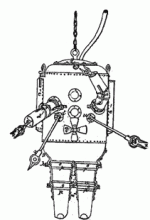
Submarine Exploring Armour – Lots of submarine designs had been tested out since as early as 1580, but even in the 1850s they weren’t being taken too seriously. An American shoemaker named Lodner D. Phillips, patented (a design that is licensed for production and sale by one person or company) a submarine propeller design in 1852 which allowed his home-made subs to go down to 30 metres. Phillips also patented something much more interesting in 1856: submarine exploring armour. Little is known about the success of this invention; no one appears to have actually worn one to explore the deep.

a-7095-atl (1)

Whalers hunting sperm whale (prized for the huge amounts of oil found in its head called “spermaceti”- used by these deep diving animals for sonar communication). Date: 1847 By: Illustrated London News (Newspaper); Duncan, Edward, 1803-1882. Permission of the Alexander Turnbull Library, Wellington, New Zealand, must be obtained before any reuse of this image.

Electric Whaling Apparatus – Hunting whales was big business during the 1800s; while the majority of Australian whaling was concentrated in Tasmania and New South Wales during the 1850s, Portland in southern Victoria produced tonnes of whale oil, meat and bone. Whale products were used to fuel street lamps, light train carriages, make corsets and beauty products, and provide protein in people’s diets. Even a type of whale pooh was prized – for perfume manufacture would you believe! In 1852 two German men decided to improve whale hunting technology by electrifying the whale harpoon (spear); once the harpoon pierced the skin of the whale, the animal would receive 8 electric shocks, which were guaranteed to kill it… Find out more about this invention here.

Domestic Technologies

Dishwasher – The first dishwasher was patented in the US in 1850 by Joel Houghton. It was a wooden machine with a hand-powered wheel that splashed water on dishes. It barely cleaned anything but it was a starting point for the design of the electric dishwasher.

014EVA000000000U04195V00[SVC1]

Advert for the Singer Manufacturing Company.

Sewing Machine – Many people had tried to design a machine that could sew clothing, shoes etc. but none of the designs before the 1850s were particularly popular, practical or affordable. That was until Isaac Merritt Singer came along, combined earlier designs and lodged a patent for his foot-powered machine in 1851. “Singer did not invent any notable sewing-machine advances, but he did pioneer the hire-purchase system and aggressive sales tactics” (International Sewing Machine Collectors Society website).  This eventually quite radically changed how people made their own clothes. Clothes that had traditionally been made (mostly by women) by hand, could now be completed in a fraction of the time, and this brought down the price of clothes and allowed the average person to own a greater variety of outfits and keep up with fashion trends. Apparently, “a sewing machine could produce a man’s shirt in about one hour, compared to 14 ½ hours by hand” (Draznin, Victorian London’s Middle-Class Housewife: What She Did All Day, pp. 66–68). Singer had some legal trouble with previous sewing machine designers, but as he streamlined earlier designs, he is often credited with designing the machine that people still use in homes and factories today.

The Zip – Sick of dealing with slow and annoying buttons, cords and ribbons to do up your clothes? Elias Howe Jr. was, so he invented the first zipper-style clothing and boot fasteners. Patented in 1851, his “Fastening for Garments”, was described as an “automatic, continuous clothing closure”, but it didn’t really work very well. Howe got distracted by sewing machine designs, and another attempt at making a zipper wasn’t made until 42 years later.

Washing Machine – While the wash board had been invented in 1797, 1851 was the year the first drum (big bucket) washing machine was patented. An American by the name of James King set out the design groundwork for the modern washing machine; however his 1851 version was hand-powered. There were a few steam-powered washing machines being used in the UK and US during the 1850s, but they were huge and only affordable to big clothing factories and hotels.  The invention of the electric washing machine changed the world.

irons

Two charcoal irons from the Sovereign Hill collection.

Charcoal Iron – Before the electric iron was invented in 1882 by Henry W. Seeley, people relied on fires to heat up their irons to then press their clothes. The charcoal iron was patented in 1852, and unlike the simple flatirons (which you placed on your stove to heat up) in common usage before its creation, its base is a container to hold hot charcoal. Interestingly, at this time some irons were fuelled with whale oil or kerosene! The charcoal iron was considered a better option than most on the market as it stayed hot for a long time (and wasn’t fuelled by a flammable substance!).

Medical “Advances”

Scarificator – This odd blood-letting device used by doctors to cure all kinds of illnesses, was already in existence in the early 1800s, but it was refined and improved by Frederick Leypoldt in 1851. Interestingly, Leypoldt was not a doctor, but thought that making a scarificator smaller was worth patenting.  Find out more about this curious medical practice here.

Sometimes small, local inventions save lives

bal bucket

The Ballarat Hook.

Ballarat Hook – Many of the miners who came to the Ballarat goldfields were middle-class, well-educated men. When they realised that having a heavy bucket of rocks and mud (and hopefully gold) swinging above your head on a flimsy “S” hook while you stand at the bottom of a mineshaft was a little scary, they developed a solution to this potential disaster. The Ballarat Hook keeps you safe below while still allowing you to easily release the bucket at the end of the day to take it home for safekeeping.

Links and References

The Industrial Revolution and the history of human energy use – https://www.youtube.com/watch?v=EM1IyIyr-Zc&list=PL8dPuuaLjXtNjasccl-WajpONGX3zoY4M

Who was I. K. Brunel? – http://www.bbc.co.uk/schools/primaryhistory/famouspeople/isambard_kingdom_brunel/,  http://en.wikipedia.org/wiki/Isambard_Kingdom_Brunel

On submarines – http://www.submarine-history.com/NOVAone.htm, http://en.wikipedia.org/wiki/Submarine

The history of sewing machines: http://ismacs.net/sewing_machine_history.html

The history of washing machines – http://en.wikipedia.org/wiki/Washing_machine

Everyone wants a washing machine because they are magical – http://www.ted.com/talks/hans_rosling_and_the_magic_washing_machine

The history of irons – http://en.wikipedia.org/wiki/Clothes_iron

Strange medicine – http://en.wikipedia.org/wiki/Bloodletting

Draznin, Yaffa Claire. Victorian London’s Middle-Class Housewife: What She Did All Day (#179), Contributions in Women’s Studies Journal, Westport, Connecticut: Greenwood Press, 2001, pp. 66–68.

Books for Teaching History – The Phoenix Foundry: Locomotive Builders of Ballarat. The History of a Ballarat Engineering Company.

The Phoenix Foundry: Locomotive Builders of Ballarat. The History of a Ballarat Engineering Company. By  Bob BUTRIMS & Dave MACARTNEY.

Here at Sovereign Hill we are in an enviable position as we are able  to portray the beginnings of the Industrial Revolution in Australia. Our museum contains the best collection of working steam engines in Victoria on permanent public display. Because of this we have developed several online education resources and face to face programs designed to support  teachers and students studying this period of Australian history. We are continually searching for more material to help our understandings of this subject.  Recently we discovered a new book focusing on Phoenix foundry bookone of the key foundries which grew from the gold rush period of Ballarat’s history. Marion Littlejohn, one of our Education Officers, has reviewed this book, which we feel would be a useful addition to any year 9 reference library for Depth Study 1 – the Industrial Revolution.

Continue reading

Indigenous Stories of the Goldfields

Exploration/Law and Order

This Blog may contain images and names of deceased people, it may also contain words and descriptive terms that may be offensive to Indigenous Australians.

Bushmans Hut by S. T. Gill.

Bushmans Hut by S. T. Gill. Gold Museum Collection.

Often the perceptions that are held of Aboriginal people during the Gold Rush period of Australian history were that; Aboriginal people were marginalised and only involved on the periphery of mining areas, that they did not understand what was happening and, the experience of Aboriginal people was very negative. Now a new book is casting a whole different perspective on Aboriginal involvement in Goldfields history. “Black Gold” by Dr Fred Cahir of the University of Ballarat provides a wider view of the contributions made by Aboriginal people during the Gold Rush era of Australian history. Dr Cahir gives specific examples to show the contribution to goldfields life by Aboriginal people, in exploration, and Law and Order in Goldfields society. Continue reading

Books for teaching History – Eureka: The Unfinished Revolution

Eureka: The Unfinished Revolution

By Peter FitzSimons

Front cover of Eureka: The Unfinished Revolution

Eureka: The Unfinished Revolution
Published By : William Heinemann, North Sydney, N.S.W. Australia, 2012

The trouble with the Eureka story is that it is very involved and complex.  As Education officers at Sovereign Hill, we well know how difficult it is to maintain the interest of an audience when we try to explain the details leading to the bloody storming of the stockade. There are so many important twists and turns that the story teller often falls in a repeating pattern of “and then …. and then… and then…”

Not so Peter FitzSimons in his recent book Eureka: The Unfinished RevolutionContinue reading

Books for Teaching History: Days of my Youth

Days of my Youth

By Charles Napier Hemy Ra, ARA, RWS, 1841 – 1917

Days of my Youth

Edited by Peter McGann
Published by Viglione Press, Black Rock, Victoria 2009

This fantastic little book is a great way to personalise students experiences of our History, and provides an opportunity to debate the classification of a source as primary or secondary. Charles Napier Hemy was a renowned maritime artist of the late 19th century. At the age of 10 he accompanied his father on a trip around the world, culminating in a visit to the Goldfields of Victoria in 1851-2. In 1904 Charles sat down on board his yacht Van Der Meer in Falmouth harbour and wrote a journal of his recollections of his travels under sail, and adventures on the Goldfields. Continue reading

The Industrial Revolution in Australia

Teaching about the Industrial Revolution in Australia

Steam Power

Steam Power

The Industrial Revolution (1750-1914) is a fascinating part of modern world history.  It had far-reaching impacts and was the catalyst for dramatic social changes.  It is a great option for secondary teachers to choose as a Year 9 Depth Study in the new AusVELS History course.

Continue reading