Category Archives: 19th century

The arrival of the train


Ballarat West Railway Station

Ballarat West Railway Station c.1889. Image courtesy of The Gold Museum, Ballarat

Trains changed the world; however, nowadays their impact can easily be overlooked. For thousands of years before the invention of the train, people only had the help of horses and simple cart technologies to move themselves and their possessions around on land. When the train first arrived in Ballarat in 1862, the city celebrated in magnificent fashion; local people knew this technology would change our city forever. It confirmed Ballarat’s place on the map and was important in securing the city’s long-term success. As writer John Béchervaise has said ‘they were anticipating a marvellous twentieth century’ (Béchervaise, J. & Hawley, G. Ballarat Sketchbook, Rigby Limited, Melbourne, 1977, p52).

STG Main Rd

S. T. Gill’s Arrival of the Geelong Mail, Main Road Ballarat, 1855. Image courtesy of The Gold Museum, Ballarat.

Many people don’t realise that Ballarat’s CBD (central business district) hasn’t always been centred around the train station. Until 1862, the most important part of the city was along Main Road, which is where you can now find Sovereign Hill. Before the train line was built, and trains started delivering passengers and cargo from first Geelong and later Melbourne to Lydiard Street, Main Road was true to its name; it was the centre of town!

There was another reason the Ballarat CBD moved from Main Road to Lydiard Street – fire. Most of the structures built along Main Road were either wooden or canvas, and after a series of fires and the introduction of the train line, Ballaratians started building in stone around the new train station. After all, community leaders wanted to make Ballarat a more permanent, established city, and these beautiful stone buildings from the 1800s are still enjoyed by millions of tourists each year.

The City of Ballarat website has this to say about the city’s historic train station: ‘Located in the heart of Ballarat, the Ballarat Station is a gateway to the city, a CBD landmark and one of the grandest Victorian-era station buildings in the state.’

The fact that one of the first grand train stations in Victoria was built in Ballarat demonstrates the importance of this goldrush city. Ballarat’s closest port is Geelong; therefore, the first railway tracks between the two cities began construction in 1858 and the line was officially opened by Governor Barkly in 1862 to move people and cargo between the goldfields and the tall ships in Corio Bay. Interestingly, on its first journey to Ballarat, the train ran out of wood to fuel its steam engine, so the crew were forced to chop down some trees in Meredith to ensure the train made it to Ballarat. In 1889 the Melbourne-Ballarat line was opened. The station we now call ‘Ballarat’ used to be called ‘Ballarat West’ as Ballarat East had its own station which has now been demolished. The famous clock tower was added in 1891 as train travel by this time was proving extremely popular; however, as the clock itself was very expensive, it wasn’t installed until 1984!

The train’s arrival in Ballarat meant two very important things for the people of this region. It meant that individuals and businesses could receive their goods with a much cheaper delivery fee, and farmers etc. could send their produce to market much more easily. On the day the first train arrived, the train station was decorated with banners that said ‘Advance Ballarat’ and ‘Success to the Geelong-Ballarat Railway’ (Dooley, N. & King, D. The Golden Steam of Ballarat, Lowden Publishing, 1973, p4). Thousands of people gathered in Lydiard Street to welcome the train, and balls, dinners and parties were held all over the city to celebrate.

phoenix

A history of Ballarat’s famous Phoenix Foundry. Find out more about this foundry and book here.

In addition to bringing the train line to the city to improve people’s lives, in 1873 Ballarat became one of the first Australian cities to manufacture trains. Ballarat’s Phoenix Foundry on Armstrong Street was the largest locomotive factory in Victoria until it ceased making engines in 1905. Businesses like the Phoenix Foundry couldn’t have existed without the railway close by.

While the train station gave Ballaratians easier access to Geelong and Melbourne, the Ballarat Train Station also provided people with access to leisure activities, like picnicking in places like Daylesford, and watching horseracing in Lal Lal. All around the station zone, city leaders have encouraged the building of what are now important Ballarat landmarks like:

To this day, the train station gives people access to all of these wonderful places in addition to important shopping areas and the Sturt Street sculpture gardens.

Trains gave Ballarat and its mines, factories and farms access to the big wide world. The locomotives that were manufactured here were a great source of pride for Ballaratians, as trains were a symbol of progress, technological skill, and serious financial investment for the city. Trains, like sailing ships in times past, and the cars and planes of today, changed our lives forever.

Links and References:

A fantastic video on the history of railroads around the world: https://www.youtube.com/watch?v=GYAk5jCTQ3s

Some great interactive photographs of Ballarat ‘then and now’: http://www.thecourier.com.au/story/1865396/ballarat-now-and-then-family-uncovers-historic-images/

The Ballarat train station on Wikipedia: https://en.wikipedia.org/wiki/Ballarat_railway_station

Horrible Histories on transport (song): https://www.youtube.com/watch?v=NLL2Txs8kCg

A short history of trains and stations in Ballarat: http://www.onmydoorstep.com.au/heritage-listing/68/ballarat-railway-complex

Bate, W. Lucky City, Melbourne University Press, 1978.

Béchervaise, J. & Hawley, G. Ballarat Sketchbook, Rigby Limited, Melbourne, 1977.

Butrims, R. & Macartney, D. Phoenix Foundry: Locomotive Builders of Ballarat, Australian Railway Historical Society, 2013.

Dooley, N. & King, D. The Golden Steam of Ballarat, Lowden Publishing, 1973.
Our favourite goldrush artist – S. T. Gill

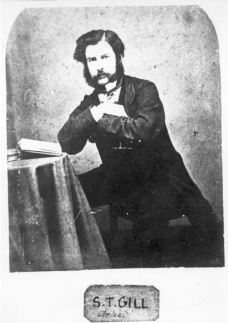
PortraitDuring a visit to Sovereign Hill and the Gold Museum, it’s hard to miss the influence of goldrush artist S. T. Gill. Samuel Thomas Gill was born in England in 1818, and migrated to Australia with his family in 1839 when he was 21. He lived in South Australia where he earned a living as an artist using his sketching skills. In 1852 he decided to walk to the Mt Alexander diggings (near Castlemaine). Here he tried his luck as a miner, but quickly returned to sketching to make ends meet. He also spent time in both Ballarat and Bendigo, observing and sketching what he saw on the diggings. These sketches of the goldfields have been invaluable in the creation of Sovereign Hill and deepening our understanding of 1850s goldrush life.

When we write history, we can only build a story based on available evidence. Nothing can be made-up, or guessed. While we should always think critically about the history that we read, as sometimes the historian has a bias (meaning they aren’t balanced and fair with the way they present the human story), most of the time historians are trying to be true to what really happened to people in the past. By looking closely at evidence, which can be in the form of a primary source (something that was created by people who lived in the time of study, i.e. a letter from a miner dated 1854) or a secondary source (something that was created after the time by people who didn’t live there/then i.e. these blogposts written by Sovereign Hill Education), historians can construct an accurate story of what has happened in the past.

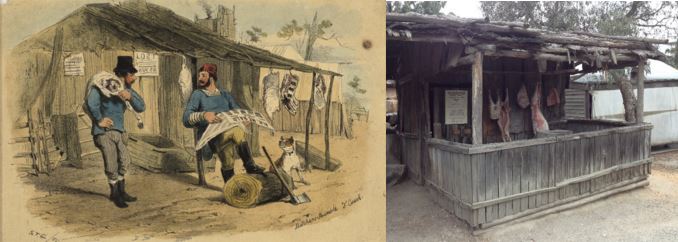
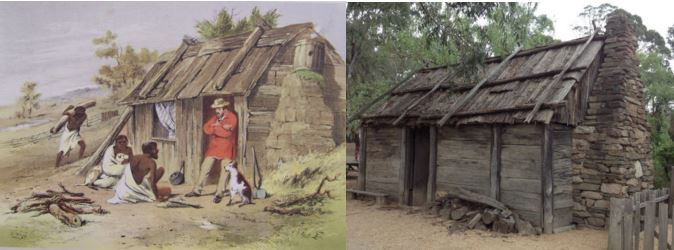
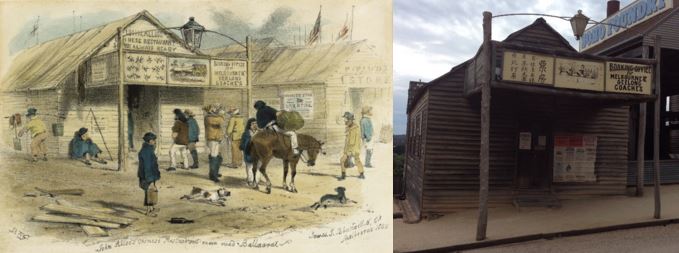
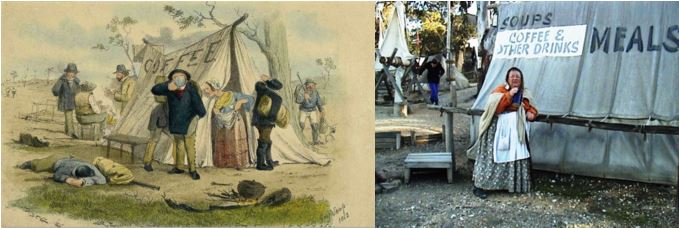
Sketches by S. T. Gill (primary sources) help us tell an accurate story of life on the Ballarat diggings. Take a look at the images below. Here we can compare one of Gill’s famous sketches with the 1850s-style buildings (secondary sources) you see at Sovereign Hill. While our visitors often get distracted by gold panning and raspberry drops, every detail of our museum, from the buildings and gardens, to costumes and food, tell carefully-researched stories about life during the Ballarat goldrush.

Do you think we have represented 1850s Ballarat accurately? What differences can you see between Gill’s sketches and the reproduced buildings? Why do you think we sometimes choose to make our buildings slightly differently from those you see in Gill’s sketches?

You can see more of Gill’s sketches and the way we have used them to create Sovereign Hill through a visit to the Gold Museum.

PO

Compare S. T. Gill’s “Ballarat Post Office & Township from Government Enclosure”, created in 1857, to Sovereign Hill’s Post Office in Main Street. Reproduced with the permission of the Gold Museum.

Butch

Compare S. T. Gill’s “Butchers Shamble”, created in 1852, to Sovereign Hill’s Butcher’s Shamble on the Red Hill Gully Diggings. Reproduced with the permission of the Gold Museum.

Hut

Compare S. T. Gill’s “Bushman’s Hut”, created in 1864, to Sovereign Hill’s slab hut near the Post Office Lake. Reproduced with the permission of the Gold Museum.

Alloo

Compare S. T. Gill’s “John Alloo’s Chinese Restaurant, Main Road, Ballaarat”, created in 1853, to Sovereign Hill’s John Alloo’s Chinese Restaurant. Reproduced with the permission of the Gold Museum.

Grog

Compare S. T. Gill’s “Coffee tent and sly grog shop, diggers breakfast”, created in 1852, to Sovereign Hill’s sly grog tent on the Red Hill Gully Diggings. Reproduced with the permission of the Gold Museum.

Links and references

A student-friendly biography of S. T. Gill’s life: http://www.egold.net.au/biogs/EG00290b.htm

Our very own Gold Museum on their collection of sketches by S. T. Gill: http://www.goldmuseum.com.au/s-t-gill-the-artist-of-the-goldfields/

A video on S. T. Gill’s “beautiful, original lithographs”: https://www.youtube.com/watch?v=21PZTJm2_XQ

Wikipedia on S. T. Gill: https://en.wikipedia.org/wiki/S._T._Gill

The Australian Dictionary of Biography on S. T. Gill: http://adb.anu.edu.au/biography/gill-samuel-thomas-2096

A video of a lecture on S. T. Gill’s life: https://www.youtube.com/watch?v=xJ6-IaVlePE


Fire in the 19th Century

Capture

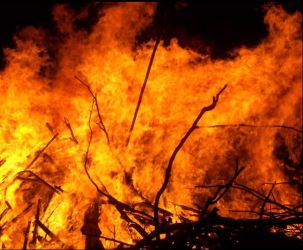
Fire is an important yet destructive force in Australia.

Fire was an important tool for Australians new and old in the 19th century, but it could also be an enemy of gold miners and farmers alike.

Aboriginal People used fire to help them with hunting, and to promote the growth of valued edible and medicinal plants. This land management system also had the benefit of keeping “bush fuel” (leaf litter, fallen branches etc.) from building up to cause huge, dangerous fires. Many historians and scientists argue that Aboriginal People regularly and strategically burned parts of their country in this way for tens of thousands of years. Learn more about this here.

When large numbers of European People arrived in Victoria in the 1830s, a lot of land was cleared to grow more grass for sheep. The felled trees were used to build houses and fuel the fires people needed for cooking and heating, and later yet more trees were felled to reinforce the mineshafts and feed the boiler houses of Australia’s industrial revolution.

HH squattors

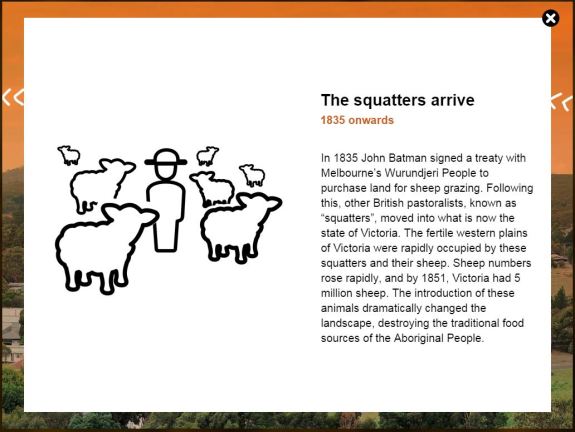
A page from Sovereign Hill’s new website about the Aboriginal side of the goldrush story. Learn more about Hidden Histories: The Wadawurrung People here.

In places like Ballarat where people searched for gold in deep quartz mines once the alluvial deposits dried up, gold workings relied on steam power, which came from boiler houses fuelled with wood taken from the surrounding bush.

By 1851, farming had changed much of Victoria’s landscape from what it looked like before European colonisation. Fire was no longer a key land management tool but instead a threat to fear. Very few Aboriginal communities were still able to routinely burn their country, which meant bush fuel had the opportunity to build up. Within 16 years of the arrival of European People, almost all of the farmable land in Victoria had been turned into private property owned by squatters (European farmers). View a map that outlines this sudden change to the Victorian landscape here.

Some historians argue that as a result of this change in land management systems, one of Australia’s largest fires in recorded history occurred in 1851, the same year gold was discovered. Black Thursday, as it was later called, saw a quarter of Victoria burn, killing 12 people and destroying 1 million sheep. There is a famous painting of this catastrophe at the State Library by celebrated goldrush artist William Strutt, entitled “Black Thursday, 6th February 1851”.

Ballarat’s firefighting history

SH Fire

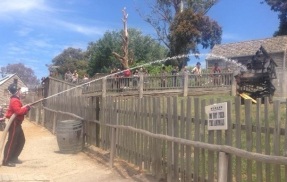
Re-enacting how 19th century fire fighters put out a staged fire as part of Fire Awareness Week 2015 at Sovereign Hill.

European and later Chinese miners on the diggings needed to use fire daily to warm and light their huts, cook their food and boil their tea. However, due to a combination of highly flammable eucalypt trees growing around the township, and its many wooden buildings etc., it was no surprise that dangerous fires featured in people’s experiences of Ballarat goldrush life.

1 December 1855: Got into Ballarat by the Red Streak (coach service) where we beheld the scene of last night’s fire. The American Hotel, the Adams Express premises and a clothing establishment next to it, and all along to the Charlie Napier which, God knows, had escaped. Several stores on the opposite side of the street had caught and were burned down. Report says eleven lives have been lost. The proprietor, Nicholls, was awakened by the noise and left his room. When he got into the lobby he recollected having left his pocket book with £90 below his pillow and returned to get it, but this delay cost him his life for he got so severely burned that he died about 9 o’clock this morning.Victorian Goldfields Diary, manuscript diary by an unidentified prospector on the Ballarat and surrounding goldfields during 1855–1856.

As a result of the danger that fire presented to the community, Victorian towns established dedicated fire brigades to tackle fires caused by campfires, candles, oil lamps and lightning strikes. In 1856 Ballarat’s first fire brigade was formed and relied entirely on volunteers. Horse-drawn hose carriages and water carts raced to a fire when the alarm bell sounded. To fight a fire, firemen used leather buckets, hooks, ladders and tomahawks. Water was very precious,so instead of using it to fight the fire they often tore down buildings in the path of the fire to stop its spread.

pump

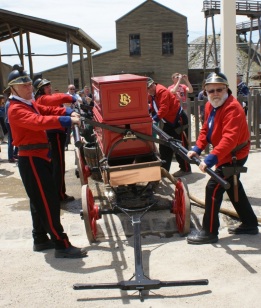
The Yarrowee, an original, hand-operated pumping engine from the 19th century on display at Sovereign Hill.

Along with the famous burning down of James Bently’s Eureka Hotel in the lead up to the Eureka Rebellion in 1854, in 1859 the Ballarat Town Hall burned to the ground!

At Sovereign Hill we have built an Engine House based on a photograph of the nearby Smythesdale Fire Brigade Hall of the mid-1860s. The pumping engine it houses is an original Shand Mason hand-operated device, and is called the Yarrowee, probably after the nearby Yarrowee River. It was recently used during Fire Action Week to demonstrate how important fire fighters are in our community.

The Sovereign Hill Museums Association future fire plans

There is still a lot to learn about fire use and management here in Australia. As a result, members of our research team at Sovereign Hill are keen to test some land management techniques we think were used by Wadawurrung People in this region before European colonisation. At our 2000 hectare, historic pastoral property Narmbool, we are planning to control-burn a patch of grassland area to see if we can improve the growth of Kangaroo Grass. We hope this fire will also cause old seeds lying dormant in the soil to germinate and start growing interesting, indigenous plants that haven’t been seen on the property for over one hundred years. Many plants in Australia require fire to make their seeds germinate, they are called fire-promoting plants, like eucalypts. Other Australian plants are fire-tolerant, like grass trees, while others are fire-sensitive, like native orchids.

Links and references

Get prepared for bushfire season: https://schools.aemi.edu.au/bushfire/bushfires-be-prepared

A visual history of fire fighting in Victoria: http://www.cfa.vic.gov.au/about/history-timeline/

Ballarat Fire Brigade artefacts and photos: http://victoriancollections.net.au/organisations/ballarat-fire-brigade

A great article about Australia’s fire history: https://meanjin.com.au/blog/this-continent-of-smoke/

Wikipedia on the history of firefighting: https://en.wikipedia.org/wiki/History_of_firefighting

The government Department of Primary Industries research into the effects of fire on Australian plants and animals:  http://www.depi.vic.gov.au/fire-and-emergencies/planned-burns/plants-and-animals

A CSIRO article about the differences between wildfires and “prescribed” fires: http://www.publish.csiro.au/onborrowedtime/docs/PCB_Ch11.pdf

Bradby, D. & Littlejohn, M. Our Stories: Life in Colonial Australia, Walker Books, 2015.

The Great Exhibition of 1851

GE1

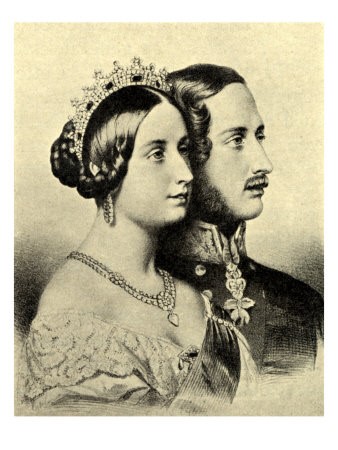
Queen Victoria and Prince Regent Albert.

There were many exciting events happening around the world in the same year gold was discovered in Ballarat. In 1851 powdered milk was invented, the New York Times newspaper was printed for the first time, the movement to end slavery in the USA was building in strength, and the famous novel about a white whale –Moby Dick– by Herman Melville was published. Louis Daguerre, the inventor of photography died in 1851, the Great Potato Famine in Ireland was at its deadly peak, and Isaac Merritt Singer patented the sewing machine, which radically transformed people’s lives. However, the biggest event, dominating newspapers the world over for nearly 6 months, was “The Great Exhibition of the Works of Industry of All Nations” held in London in 1851.

As the heart of the 1750-1900 Industrial Revolution, Britain by 1851 was the most powerful nation on Earth. Technological advances, in particular the invention of coal-powered steam engines which drove cotton mills, potteries, ships, and trains, had given Queen Victoria’s people cheap clothing and homewares, and access to all corners of the globe. What better way to celebrate Britain’s achievements than by holding a huge show of the latest local and international goodies and gadgets!

The idea for an exhibition came from the RSA (Royal Society for the encouragement of Arts, Manufactures and Commerce) and it was managed by Queen Victoria’s husband, Prince Albert. Many believed then, as many still do today, that the royal couple were visionaries. Prince Albert explained his motivation for The Great Exhibition:

We are living at a period of most wonderful transition, which tends rapidly to accomplish that great end – to which all history points – the realisation of the unity of mankind … Gentleman, the Exhibition of 1851 is to give us a true test of the point of development at which the whole of mankind has arrived in this great task, and a new starting point from which all nations will be able to direct their further exertions.”

Victoria and Albert believed they were leading the world towards peace, comfort and cooperation by celebrating technology through their Great Exhibition.

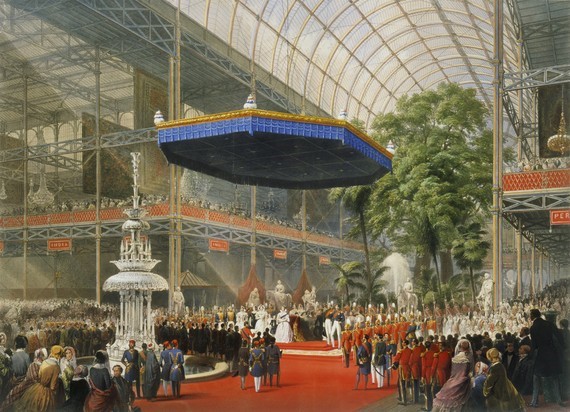
The first part of the plan was to design a grand building to showcase all of the world’s weird and wonderful inventions – Albert chose Sir Joseph Paxton’s design which was later dubbed “The Crystal Palace” because it was made of cheap cast iron and strong, cast-plate glass which had only been invented in 1848. This amazing structure was 1,851 feet long (equalling 564m) to celebrate the year of the Exhibition, and built in London’s Hyde Park. It was so cleverly designed that it was built over some huge trees, which provided shade – inside the building – on warm days. The Crystal Palace was easily accessed by visitors travelling on the new steam trains and as a result, over 6 million people (a quarter of England’s population!) attended this gigantic festival of all things machine and machine-made.

GE2

The State Opening of The Great Exhibition in 1851. Colour lithograph, England, 19th century. Victoria & Albert Museum.

Among the thousands of items displayed, visitors could see the cotton weaving looms that had transformed the manufacturing of clothing, gas cookers, fabrics of all colours and materials, farm equipment, electric clocks, newly discovered gold from Australia, a carriage drawn by kites, a ‘pocket’ knife with precisely 1851 blades, a submarine, a two person piano, miniature towns, giant diamonds from India, strange taxidermy, and fountains of perfume. Not only was this the first time such wonderful objects and inventions had been seen in public, for many people from the British countryside, this was their first visit to London. A visit which involved not only a train trip, but also seeing so many marvels of the modern world – this would have been a mind-blowing experience for many of Britain’s country folk!

GE3

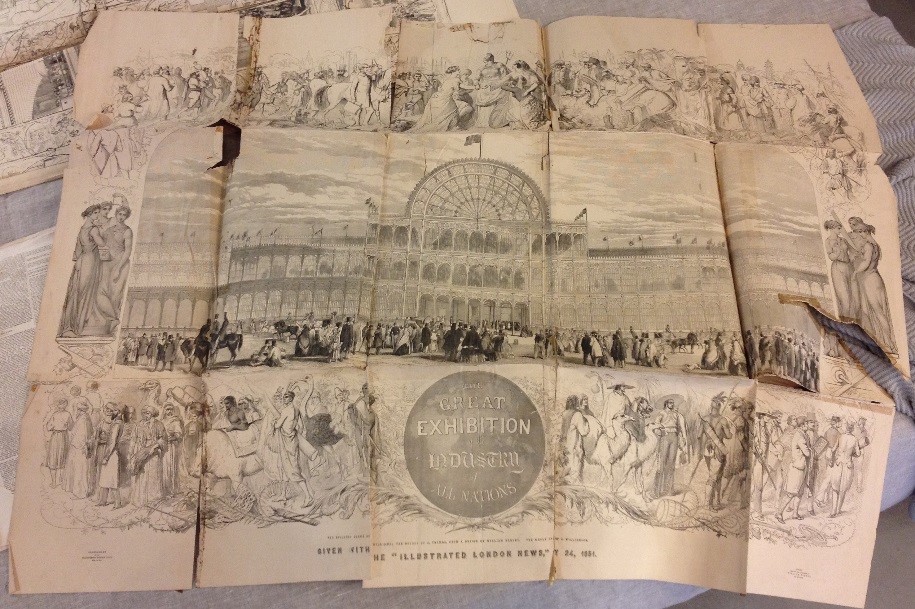
A Great Exhibition pull-out poster from the famous Illustrated London News, 1851.

On the topic of the Great Exhibition, the poet Lord Alfred Tennnyson wrote: … lo! the giant aisles
Rich in model and design;
Harvest-tool and husbandry,
Loom and when and enginery,
Secrets of the sullen mine,
Steel of the sullen mine,
Steel and gold, and coal and wine,
Fabric rough or fairy fine …
And shapes and hues of Art divine!
All of beauty, all of use,
That one fair planet can produce.

The Great Exhibition was such an incredible success that with the huge amount of money made from it, Victoria and Albert were able to set up The Natural History Museum, Science Museum and the Victoria and Albert Museum which to this day remain some of the most fascinating places to visit in London. The spirit of The Great Exhibition continued to encourage technological development: by 1862 steam trains linked Ballarat to Melbourne and Geelong, and not long after that Ballarat started building factories to create its own steam engines and machine parts (called foundries).

GE4

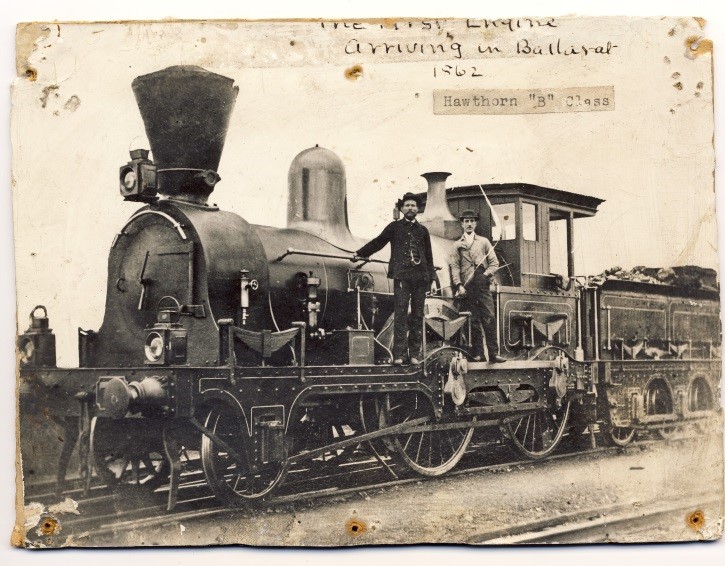
The steam train arrives in Ballarat! (1862) Australian steam trains can be identified by their strange conical chimneys, called “spark arrestors”, which stop the trains from starting bush fires. Ballarat Historical Society Photograph Collection.

Due in large part to the discovery of gold, Victoria’s population grew rapidly and people invested their gold money in industry and real estate. As one of the richest communities in the world, Victoria held an Exhibition in 1880 in the purpose-built Royal Exhibition Building (in Carlton next to the modern Melbourne Museum). It attracted around 1.5 million people at a time when Melbourne’s population hadn’t even reached 300,000.

Since 1851, many cities around the world have held international Exhibitions along the same lines as Britain’s, but none have rivalled it in size or legacy.

Links and References

Horrible Histories on The Great Exhibition and Victoria and Albert’s love for each other: https://www.youtube.com/watch?v=flaLHJCKy3I

These websites explain the major events of 1851: http://www.historyorb.com/events/date/1851 http://en.wikipedia.org/wiki/1851

Great student-friendly website about Queen Victoria: http://www.bbc.co.uk/schools/primaryhistory/famouspeople/victoria/

Wikipedia on The Great Exhibition: http://en.wikipedia.org/wiki/The_Great_Exhibition

Two great short videos about the Great Exhibition: https://www.youtube.com/watch?v=HRvOHOltp_w https://www.youtube.com/watch?v=eqM6PXyp5MA

Timeline of work undertaken by the Royal Society for the encouragement of Arts, Manufactures and Commerce: http://www.thersa.org/about-us/history-and-archive/rsa-history-timeline

Interactive game teaching about the Great Potato Famine: http://www.irishpotatofamine.org/flash.html

The history of international exhibitions: http://en.wikipedia.org/wiki/World’s_fair

A fantastic book all about The Great Exhibition is: http://www.crystalpalacefoundation.org.uk/shop/great-exhibition-1851/the-world-for-a-shilling 

Queen Victoria

statue

Statue of Queen Victoria in Sturt Street, Ballarat.

Queen Victoria ruled the largest empire in human history, and was Australia’s monarch during the gold rush. She ruled over 458 million people and was queen for a record 63 years! The people of Ballarat loved her so much that they paid for a marble statue of her to be made and placed it in front of the Ballarat Town Hall in 1900.

12 curious facts about Queen Victoria:

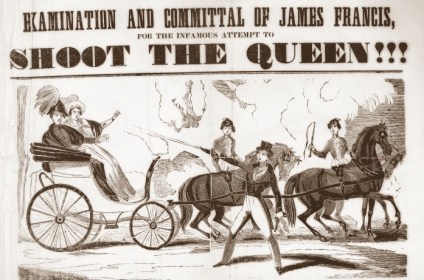
1. Queen Victoria survived 7 assassination (murder) attempts! She was so brave; after police failed to catch the second of these failed assassins on 29th May, 1842, she drove her carriage along the same road the day after the attack to tempt the man to fire his gun at her again. When he foolishly did, undercover policemen arrested him. Queen Victoria was unharmed, and the assassin, named John [James] Francis, was punished through transportation to Tasmania as a convict.

ass

Part of a ‘broadside’ (news poster) on Francis’ attempted assassination of the Queen, printed in 1842 by E. Lloyd.

2. Victoria wasn’t your ordinary 19th century woman. At a time when women were believed by most people in Europe to be weak and intellectually inferior to men, she became queen of a huge empire at the age of 18 and was one of the best educated people in the world (read more about this here). Very interestingly, Victoria asked Prince Albert to marry her, rather than the other way around. This was because nobody by law could ask the Queen to marry them. This situation would have been very uncommon during this era. Read more about life for the average Victorian woman here.

3. The political parties in England (the “Whigs” and the “Tories”) had a huge argument – called The Bedchamber Crisis – over who Victoria’s maids should be. Being close to a king or queen through helping to dress them, tutoring their children, or even cleaning their chamber pot was considered an extremely important political position, as such jobs gave you a lot of time to potentially talk to and influence the monarch.

4. During the height of the Irish Potato Famine (known in Ireland as The Great Famine or Great Hunger), despite anger from English Anglicans (Protestants), Queen Victoria donated £2,000 of her private wealth to help the suffering (Catholic) Irish. In modern money this would be about $2 million (Australian dollars).

dress

Queen Victoria in her famous white wedding dress.

5. Queen Victoria is believed to be the bride who popularised the white wedding dress. Before her wedding to Prince Albert in 1840, brides wore coloured dresses. As a keen supporter of British industry, Victoria wore a white, machine-made dress with handmade lace for trimmings, including her veil. Very soon after Victoria and Albert’s wedding, women all over the British Empire were wearing white to be married. Queen Victoria loved this dress so much that she often wore it, or parts of it at her wedding anniversaries, the baptism of her children, and later in life at her children’s weddings. When she died in 1901, she was even buried with her cherished wedding veil covering her face (along with a plaster cast of Prince Albert’s hand).

6. While Victoria was an intelligent, strong-willed woman who took a lead role in managing the British Empire during her time as queen, women couldn’t vote in Britain until long after her death, and she is thought to have been against the idea of female emancipation (women’s right to vote).

7. Queen Victoria was an only child, and had a difficult relationship with her mother who, many historians argue, wanted to control Victoria and thus keep royal power for herself.

8. Victoria and Albert had 9 children, naming them (in order) Victoria, Albert, Alice, Alfred, Helena, Louise, Arthur, Leopold and Beatrice. In total, they had 42 grandchildren. Their first grandchild, born to daughter Victoria (Jr) and her husband Prince Frederick of Prussia (Germany), was named Wilhelm and became the last German Kaiser (emperor) who is considered largely responsible for causing World War 1.

9. Victoria gave birth to her two youngest children under the influence of chloroform, which was really the first general anaesthetic. The church was not happy about her decision to have (and by way of her fame, promote) pain-free childbirth, as they believed it was against the teaching of The Bible. She didn’t listen; Victoria hated being pregnant, hated childbirth, is thought to have suffered postnatal depression, and didn’t breastfeed her own children. In her detailed diaries, she wrote “Being pregnant is an occupational hazard of being a wife”.

10. Until recent times, it was common for European royals to keep the power in the family so to speak. Queen Victoria’s husband, Prince Albert, was actually her cousin.

11. Victoria passed the haemophilia gene (which stops your blood from clotting, so you can bleed to death from a simple scratch) to many of her children and grandchildren.

pound

A gold sovereign (£1 sterling) from 1851, the year gold was discovered in Australia, featuring Queen Victoria’s profile.

12. The love of Victoria’s life, Prince Albert, died from typhoid at the age of 42 in 1861. Typhoid is a horrible bacterial infection which, without treatment causes a fever, digestive system failure, a rash, blood poisoning, and in many cases results in death. Antibiotics weren’t developed and made available until the 1940s, long after Alfred’s death. Victoria remained in mourning for the rest of her life, and wore black in memory of Albert until the day she died.

During Queen Victoria’s reign, Britain went to war with China twice (called the Opium Wars), primary education was made compulsory and free, vaccination against smallpox became compulsory, Prince Albert managed the hugely successful Great Exhibition of 1851, London’s famous underground railway – the Tube – was developed, the telephone was invented, the Irish Potato Famine occurred, and our state, Victoria (named of course after our beloved queen), became a separate colony. She lived and ruled the largest empire on Earth during a fascinating time in history!

Links and References

Child-friendly website about Queen Victoria: http://www.bbc.co.uk/schools/primaryhistory/famouspeople/victoria/

Horrible Histories on Queen Victoria: https://www.youtube.com/watch?v=flaLHJCKy3I

List of the largest empires in history: http://en.wikipedia.org/wiki/List_of_largest_empires

On assassin John Francis’ transportation to Tasmania: http://www.linc.tas.gov.au/events/featured/research/john-francis

Queen Victoria’s wedding dress: http://en.wikipedia.org/wiki/Wedding_dress_of_Queen_Victoria

Curious facts about Queen Victoria: http://www.history.com/news/5-things-you-may-not-know-about-queen-victoria

A timeline of Victoria’s reign: http://www.britroyals.com/kings.asp?id=victoria

It’s beach time!

As this blog already contains several posts about the history of Christmas, this festive season we have decided to explore the history of beach holidays!

1

An early bathing machine.

Bathing in the ocean became popular in Europe in the 1700s, before Australia was colonised by Britain. Both immersing yourself in the water and drinking sea water were considered to cure all kinds of illnesses. As a result, many of Europe’s rich and powerful would spend a “season” at the seaside, bathing most days using a bathing machine. Believe it or not, winter was considered the best time to do this.

2

Ladies “Bathing Dress”- 1858, from the magazine Harper’s Bazaar.

A bathing machine was a hut on wheels in which people changed into their swim suits. This carriage-type contraption was then pushed into the water (using man power, horse power or sometimes even steam power) so the bather could step out and immediately lower themselves into the water. Some bathing machines had tents that would extend out and enable bathers to enter the water in complete privacy, while some came with “dippers” or “bathers”. These were attendants of the same sex as the bather who would dunk you underwater the correct number of times to cure whatever illness you had been diagnosed with.

Queen Victoria’s husband Prince Albert believed that sea bathing was beneficial to one’s health, and in 1846 he had a bathing machine installed on the beach near their summer palace on the Isle of Wight. Victoria and her daughters regularly used the bathing box to enjoy the water. The queen’s bathing box, used to preserve her modesty, is now fully restored and on public view.

3

Queen Victoria’s bathing machine has a veranda at the front where curtains concealed her from view whilst she bathed. Inside is a changing room and a plumbed-in toilet. The whole contraption was run into the sea from the beach along a long ramp, and pulled back using a wire rope and winch!

By the 1850s, when gold was discovered here in Ballarat, dippers had gone out of fashion. However, people continued to visit the seaside especially after train travel made reaching the beach cheap and convenient.  Some historians think that the main motivation now was pleasure and holiday making although many people still believed a visit to the seaside was good for your health. By this time people were going to the beach during summer rather than winter.

Bathing soon became popular here in Australia although in some parts of the country it was banned during daylight hours up until 1902 because a wet woman in a swim suit was considered an indecent sight. Furthermore, some men were said to enjoy swimming naked, so you definitely couldn’t do that in public.

4

St Kilda Esplanade, main beach (1864).

The St Kilda Sea Baths were opened in 1860 to take advantage of the popular seaside excursion trend. These enclosed sea baths were thought to keep bathers safe from Australia’s scariest sea creatures. However, even before the baths were built, St Kilda was a popular swimming spot. In the 1840s it already had bathing boxes (bathing machines with their wheels taken off), and by 1854 Captain Kenney had deliberately sunk a ship just off the beach and put out ropes to it for people to swim along. Once the St Kilda train station was opened in 1857 more sea baths opened and regular swimming competitions were held. As businesses, the baths were not the financial success the owners hoped as the majority of visitors to St Kilda soon became confident to swim in open water.

Since these humble beginnings, going to the beach has now become a normal part of Australian life. Most Australians live on or near the coast, and some of our beaches like Bells in Torquay, Bondi in Sydney and the Gold Coast near Brisbane are considered to be among the best in the world. Interestingly, having tanned skin was avoided by European women during the nineteenth century, as it showed you were poor and had to work outdoors like a peasant.

Like swimming, the history of swimwear is also fascinating, read all about it here. Enjoy the summer sun and happy holidays!

Links and References

The history of sea bathing: http://en.wikipedia.org/wiki/Sea_bathing

19th century bathing history: http://consideringausten.wordpress.com/2014/04/12/so-you-want-to-go-swimming-in-regency-england/

18th and 19th century bathing history: http://www.messynessychic.com/2014/04/15/victorian-prudes-beachside-bathing-machines/

History of St Kilda Baths, Melbourne: http://www.stkildaseabaths.com.au/history

History of sun tanning: http://www.skincancer.org/prevention/tanning/tale-of-tanning

Ten 1850s Inventions and Innovations

Some very weird and wonderful things were created during the Industrial Revolution (c. 1750-1900) and the 1850s in particular – the same decade that Ballarat’s gold rush got underway – saw some fascinating inventions and innovations.

ss great eastern

Brunel’s SS Great Eastern with its sails and steam-powered water wheel. This photo was taken in New York Harbour, 1860.

Seafaring Inventions

SS Great Eastern (ship) – Isambard Kingdom Brunel was an incredible engineer and designer during the early 1800s. He was a pioneer of steam-powered travel, and the SS Great Eastern was his third iron-hulled, steam-powered sailing ship (it had sails to use the wind and a steam engine when it was calm). This “Great Babe” as he called it, was specifically designed to bring travellers from the UK to Australia – 4,000 at a time to be exact – without needing to stop and refuel anywhere along the way. This was the largest ship in the world when it was launched in 1858, but sadly it suffered damage on its first journey south. Find out more about this amazing man and his remarkable feats of engineering here.

sub armour

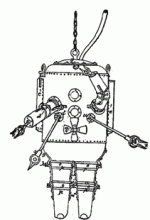
Phillips’ Submarine Exploring Armour, 1856.

Submarine Exploring Armour – Lots of submarine designs had been tested out since as early as 1580, but even in the 1850s they weren’t being taken too seriously. An American shoemaker named Lodner D. Phillips, patented (a design that is licensed for production and sale by one person or company) a submarine propeller design in 1852 which allowed his home-made subs to go down to 30 metres. Phillips also patented something much more interesting in 1856: submarine exploring armour. Little is known about the success of this invention; no one appears to have actually worn one to explore the deep.

a-7095-atl (1)

Whalers hunting sperm whale (prized for the huge amounts of oil found in its head called “spermaceti”- used by these deep diving animals for sonar communication). Date: 1847 By: Illustrated London News (Newspaper); Duncan, Edward, 1803-1882. Permission of the Alexander Turnbull Library, Wellington, New Zealand, must be obtained before any reuse of this image.

Electric Whaling Apparatus – Hunting whales was big business during the 1800s; while the majority of Australian whaling was concentrated in Tasmania and New South Wales during the 1850s, Portland in southern Victoria produced tonnes of whale oil, meat and bone. Whale products were used to fuel street lamps, light train carriages, make corsets and beauty products, and provide protein in people’s diets. Even a type of whale pooh was prized – for perfume manufacture would you believe! In 1852 two German men decided to improve whale hunting technology by electrifying the whale harpoon (spear); once the harpoon pierced the skin of the whale, the animal would receive 8 electric shocks, which were guaranteed to kill it… Find out more about this invention here.

Domestic Technologies

Dishwasher – The first dishwasher was patented in the US in 1850 by Joel Houghton. It was a wooden machine with a hand-powered wheel that splashed water on dishes. It barely cleaned anything but it was a starting point for the design of the electric dishwasher.

014EVA000000000U04195V00[SVC1]

Advert for the Singer Manufacturing Company.

Sewing Machine – Many people had tried to design a machine that could sew clothing, shoes etc. but none of the designs before the 1850s were particularly popular, practical or affordable. That was until Isaac Merritt Singer came along, combined earlier designs and lodged a patent for his foot-powered machine in 1851. “Singer did not invent any notable sewing-machine advances, but he did pioneer the hire-purchase system and aggressive sales tactics” (International Sewing Machine Collectors Society website).  This eventually quite radically changed how people made their own clothes. Clothes that had traditionally been made (mostly by women) by hand, could now be completed in a fraction of the time, and this brought down the price of clothes and allowed the average person to own a greater variety of outfits and keep up with fashion trends. Apparently, “a sewing machine could produce a man’s shirt in about one hour, compared to 14 ½ hours by hand” (Draznin, Victorian London’s Middle-Class Housewife: What She Did All Day, pp. 66–68). Singer had some legal trouble with previous sewing machine designers, but as he streamlined earlier designs, he is often credited with designing the machine that people still use in homes and factories today.

The Zip – Sick of dealing with slow and annoying buttons, cords and ribbons to do up your clothes? Elias Howe Jr. was, so he invented the first zipper-style clothing and boot fasteners. Patented in 1851, his “Fastening for Garments”, was described as an “automatic, continuous clothing closure”, but it didn’t really work very well. Howe got distracted by sewing machine designs, and another attempt at making a zipper wasn’t made until 42 years later.

Washing Machine – While the wash board had been invented in 1797, 1851 was the year the first drum (big bucket) washing machine was patented. An American by the name of James King set out the design groundwork for the modern washing machine; however his 1851 version was hand-powered. There were a few steam-powered washing machines being used in the UK and US during the 1850s, but they were huge and only affordable to big clothing factories and hotels.  The invention of the electric washing machine changed the world.

irons

Two charcoal irons from the Sovereign Hill collection.

Charcoal Iron – Before the electric iron was invented in 1882 by Henry W. Seeley, people relied on fires to heat up their irons to then press their clothes. The charcoal iron was patented in 1852, and unlike the simple flatirons (which you placed on your stove to heat up) in common usage before its creation, its base is a container to hold hot charcoal. Interestingly, at this time some irons were fuelled with whale oil or kerosene! The charcoal iron was considered a better option than most on the market as it stayed hot for a long time (and wasn’t fuelled by a flammable substance!).

Medical “Advances”

Scarificator – This odd blood-letting device used by doctors to cure all kinds of illnesses, was already in existence in the early 1800s, but it was refined and improved by Frederick Leypoldt in 1851. Interestingly, Leypoldt was not a doctor, but thought that making a scarificator smaller was worth patenting.  Find out more about this curious medical practice here.

Sometimes small, local inventions save lives

bal bucket

The Ballarat Hook.

Ballarat Hook – Many of the miners who came to the Ballarat goldfields were middle-class, well-educated men. When they realised that having a heavy bucket of rocks and mud (and hopefully gold) swinging above your head on a flimsy “S” hook while you stand at the bottom of a mineshaft was a little scary, they developed a solution to this potential disaster. The Ballarat Hook keeps you safe below while still allowing you to easily release the bucket at the end of the day to take it home for safekeeping.

Links and References

The Industrial Revolution and the history of human energy use – https://www.youtube.com/watch?v=EM1IyIyr-Zc&list=PL8dPuuaLjXtNjasccl-WajpONGX3zoY4M

Who was I. K. Brunel? – http://www.bbc.co.uk/schools/primaryhistory/famouspeople/isambard_kingdom_brunel/,  http://en.wikipedia.org/wiki/Isambard_Kingdom_Brunel

On submarines – http://www.submarine-history.com/NOVAone.htm, http://en.wikipedia.org/wiki/Submarine

The history of sewing machines: http://ismacs.net/sewing_machine_history.html

The history of washing machines – http://en.wikipedia.org/wiki/Washing_machine

Everyone wants a washing machine because they are magical – http://www.ted.com/talks/hans_rosling_and_the_magic_washing_machine

The history of irons – http://en.wikipedia.org/wiki/Clothes_iron

Strange medicine – http://en.wikipedia.org/wiki/Bloodletting

Draznin, Yaffa Claire. Victorian London’s Middle-Class Housewife: What She Did All Day (#179), Contributions in Women’s Studies Journal, Westport, Connecticut: Greenwood Press, 2001, pp. 66–68.