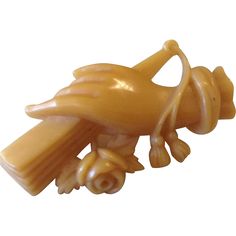
An example of 19th century nitrocellulose jewellery – if you rubbed it, it could explode! From Wikipedia Commons.
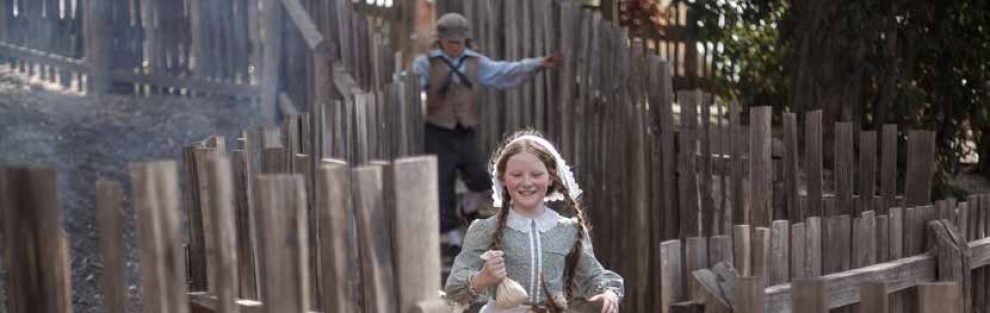
Many visiting students are shocked to learn that plastic didn’t exist in 19th century Australia. The Industrial Revolution, which began in England around 1750, encouraged the creation of many products which could be mass-produced in the newly-invented factories. Some plastic-like products – like fake ivory jewellery – were being produced as early as the 1860s, but the nitrocellulose from which they were made was extremely dangerous. Wikipedia says ‘When dry, nitrocellulose is explosive and can be ignited with heat, spark, or friction’! Therefore, the development of modern plastics (largely made from the fossil fuel crude oil) is a 20th century story. So how did people survive without plastic in the 1800s?
At Sovereign Hill, we have numerous garbage and recycling bins so our visitors can dispose of their rubbish responsibly, but these didn’t really exist in 19th century Ballarat. Before cheap plastics and paper (paper was expensive before we began making it entirely from wood pulp in factories), people rarely produced household waste. Items were reused and often re-purposed, and when they eventually fell apart, they would be disposed of in the fireplace or in the garden where most would biodegrade. Let’s describe a typical (European) family home’s production of waste over a normal goldrush day here in Ballarat to compare and contrast it to a family’s waste output today.
The family wakes at dawn (clocks were made of metal and were therefore expensive, so most people were woken by the sun). Their bedsheets were mass-produced in Manchester, England, from cotton shipped from the United States of America, and their woollen blankets were made in Bradford, England, from wool shipped from Victoria. If they were wealthy, they might also own a hand-made possum-skin rug, bought from the Wadawurrung people – these were sold on the Ballarat diggings for the equivalent of $4000-$5000 in today’s money! All of these items were made to last, and once they had reached the end of lives as sheets and blankets, they would be made into clothes or nappies (most 21st century nappies are made of plastic), used to stuff pillows, or as cleaning rags.
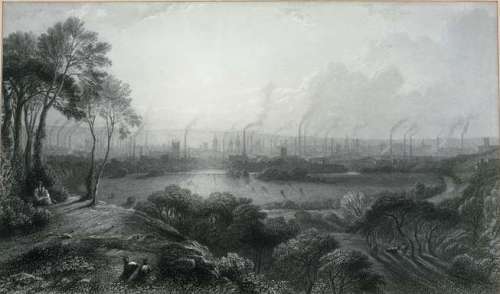
An industrial city indeed, full of cotton-spinning factories. Manchester from Kersal Moor, by Edward Goodall, c.1850. From Wikipedia Commons.
The house would be warmed by lighting a fire in the fireplace. This is also where the family meal would be prepared. Today, our energy is produced hundreds of kilometres away, by burning fossil fuels like coal or harnessing the energy of wind through turbines. Their fire fuel – wood – would be cut down from a nearby forest. Even the ash from the fire found other uses in 19th century Australia; ash could be used to make soap, polish metals, keep snails off the lettuce, fertilise the garden, or be used in the outhouse (also known as a ‘dunny’)!
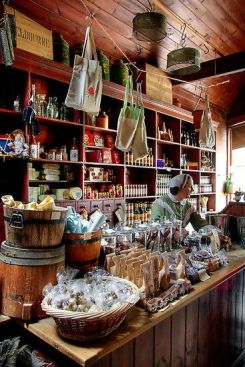
Clarke Bros. Grocers at Sovereign Hill – sometimes we have to wrap food in plastic for safety reasons, even though it isn’t historically accurate.
A breakfast would be prepared using food grown in the garden, or bought at the local grocer’s (the supermarket wasn’t invented for another 70 years!). Most store-bought food would be sold wrapped in paper (often wax paper), or perhaps even weighed and placed immediately into the family’s cooking pot (made of local iron from Lal Lal) or bucket (often made of cheap leather at this time). Only (relatively expensive) preserves like jam or mustard would be sold in glass jars or ceramic (clay) pots. After the meal, food scraps would be used again in cooking (bones for making broth/soup) or fed to the family chickens/pigs/goats/dog. The wax paper would be reused to wrap other foods until it disintegrated (the invention of Tuppaware was nearly 100 years off) and it would then be thrown in the fire. Jars or ceramic pots would be saved for another household purpose. The plates used to eat such a meal would have most likely been made in Staffordshire, England from nearby natural clays, and then shipped (by wind/steam power) to Australia. Drinking water was collected from local rivers and groundwater pumps.
If children were lucky enough to be sent to school, there they would learn the ‘3 R’s’ (reading, writing, and arithmetic) using slate boards and graphite pencils (which would last many generations of students) in the younger years, and after Grade 4 would begin using paper, ink, and dip pens (but only if they passed the Grade 3 writing test – paper was too expensive to make inky mistakes on!). For most children except the very wealthy, 19th century toys were typically handmade from wood or animal bones (which are all biodegradable materials, unlike plastic). As school uniforms were yet to be invented, children simply wore their normal clothes to school.
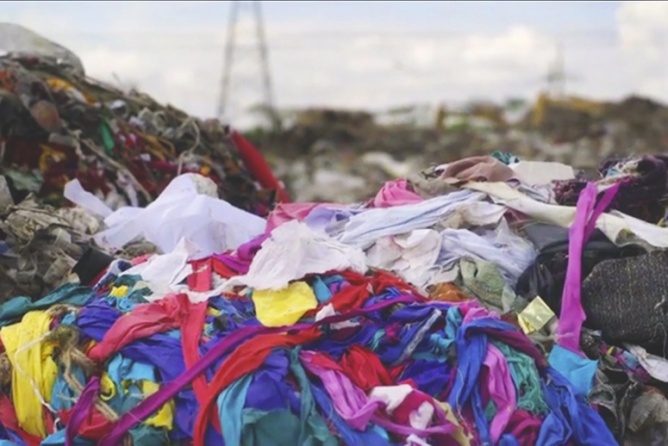
Clothes waste in the 21st century – a big problem because much of it will never biodegrade. From Wikipedia Commons.
While cloth for making things like sheets and clothing was getting cheaper in price thanks to the Industrial Revolution, most people – including children – merely owned two to three outfits at any one time. The wardrobe only became common in houses in the 20th century when ready-to-wear clothing became fashionable and was being produced very cheaply. Therefore, in the 19th century your clothing was cared for, and carefully patched and refitted, until the fabric disintegrated. Clothing was most commonly made of cotton (or sometimes other biodegradable natural fibres like wool or silk), whereas today lots of the clothing in your wardrobe is made of plastic.
While the children were at school, and wives/mothers busied themselves with 19th century housewifery, men would be at work. Most men in Ballarat worked in the goldmining industry, or in another industry that supported mining, such as a candleworks or foundry. These types of workplaces produced some waste (but nothing in comparison to most industries today!), and while some was biodegradable, some industrial waste from the 19th century is still causing pollution to Ballarat’s soil and waterways today (like arsenic from mining). The safety clothes men wore (if any!) were made from thick leather and would often last their entire working lives.
At lunch time, family members would return home for a hot meal prepared by the woman of the house. If the wife/mother had found the time to visit the grocer, baker, or butcher (all selling food produced locally – refrigeration wasn’t invented yet, so only dry food like flour, lentils and herbs could travel vast distances), she may have fresh food to serve the family. Otherwise, people ate preserved foods like salted meat, stewed fruits or re-hydrated beans. Fizzy drinks were invented in the 1700s, but it wasn’t until the late 1800s that mass-produced glass and good sealing techniques made these beverages widely available. Dinner would be similar to lunch, and any leftovers would be saved for the next meal.
At night, candles made from animal fat (called tallow) would be lit if the family could afford it. Soap was also made from animal fat at this time. Again, today your candles and soaps are most commonly made of petrochemicals (taken from crude oil, the same as plastic).
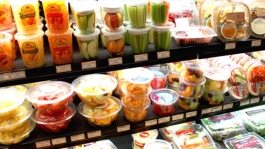
A typical sight at the supermarket today – food wrapped in plastic. From Wikipedia Commons.
So, no plastic for covering or storing food, no plastic for toys, no clothes made from plastic, and no plastic safety wear at work. No drinks in plastic bottles, no plastic bags to carry the groceries, and no plastic pens and rulers etc. for school. This meant there was no need for weekly bin collections – because there were no bins! Life certainly was different in the 1850s.
Links and References
What is plastic?: https://simple.wikipedia.org/wiki/Plastic
The history of waste management: https://en.wikipedia.org/wiki/History_of_waste_management
An ABC Catalyst episode on the arsenic in Ballarat’s soil: http://www.abc.net.au/catalyst/stories/2843289.htm
A 4-part vlog on life as an 1850s woman produced by Sovereign Hill: http://education.sovereignhill.com.au/students/video/woman-of-the-hill/
A great documentary series about the history of the rooms of our houses (and many of the items you can find in them): https://www.youtube.com/watch?v=yrn42rvTlpk






 Sovereign Hill Education Blog