Tag Archives: teaching history

Halloween in Australia: A Journey Through Time and Tradition

83.3949

Hallowe’en is often considered a recent addition to Australian celebrations, imported from the United States. However, Halloween’s roots go back thousands of years to Celtic traditions in Ireland and Scotland, and here in Australia to the nineteenth century.

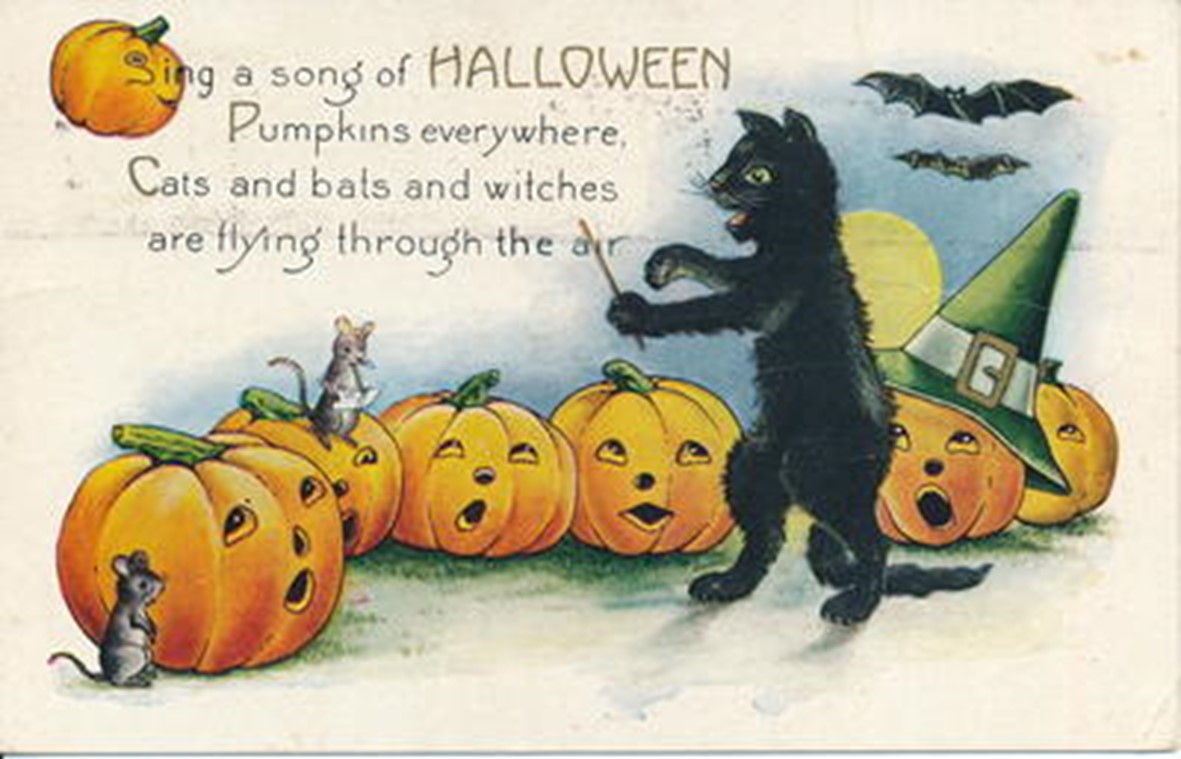
All Hallow’s Eve adopted the Celtic festival of Samhain, which celebrated the end of summer and a thinning of the line between life and death. As the season turned and the days started to get shorter and darker, it was incorporated into the Christian calendar with All Saints (All Hallows) Day. By the early nineteenth century, many of the traditions we associate with Halloween were firmly entrenched. Carved vegetables, like turnips, were used as rough lanterns for celebrations in the dark and sometimes carved with faces to scare off evil spirits. People would dress up to confuse wandering spirits; children in costume would wander from house to house in costume receiving offerings of fruit or nuts and sometimes singing or reciting poetry in return. This was known as guising, today it is known as trick-or-treating. Bonfires and fortune-telling were common practice, and Queen Victoria herself was known to love the Halloween festivities at her Balmoral property in Scotland.
83.3948

In the mid-nineteenth century, we saw the mass migration of large numbers of Irish and Scottish people around the world, estimated at 90,000 people, including to Australia. Driven by the potato famine, disease wiped out potato crops in Ireland and Scotland leading to widespread starvation in rural communities, and land clearances, the forcible eviction of cottage farmers to enable large commercial farms, along with the lure of gold large numbers headed to the colony of Victoria. In the 1854 Victorian Census, the largest migrant group, after English and Irish, was the Scottish.

In moving to a new country our Scottish migrants brought with them many traditions from home, food, music, and festivals. These traditions became really important in maintaining a connection to family and culture from the other side of the world. Scottish, or Caledonian Societies sprang up across Victoria as a way of connecting with people. They were an important part of community-building. From our Caledonian Societies, we get one of our earliest references to Halloween being celebrated in Australia.
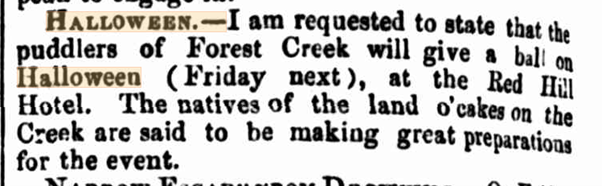
“FOREST CREEK.” Mount Alexander Mail (Vic. : 1854 – 1917) 22 October 1858: 4. Web. 21 Aug 2024 <http://nla.gov.au/nla.news-article199051715&gt;.
“Advertising” Mount Alexander Mail (Vic. : 1854 – 1917) 25 October 1858: 3. Web. 21 Aug 2024 <http://nla.gov.au/nla.news-article199052402&gt;.
“LEGISLATIVE ASSEMBLY.” Mount Alexander Mail (Vic. : 1854 – 1917) 1 November 1858: 3. Web. 21 Aug 2024 <http://nla.gov.au/nla.news-article199048639&gt;.

What to expect at a Halloween Ball

Dancing Saloon, Melbourne. On Main Road Ballarat, May 30th/55, 1855 by Samuel Thomas Gill  https://www.sl.nsw.gov.au/dancing-saloon-melbourne-lower-left-main-road-ballarat-may-30th55-1855-samuel-thomas-gill

Music and dancing!

If you attended a Halloween ball in 19th-century Victoria, you would likely enjoy music, dancing, and traditional Scottish country dances. One popular dance was the Flying Scotsman, inspired by the famous steam train.

Watch the video to learn the steps to the Flying Scotsman, or view the written instructions HERE

Poetry reading.

The work of Scottish poet Robert Burns was very popular. His poem, Halloween, which covers many of the folk fortune-telling, match-making games was adapted into a ballet that toured the gold field towns to great enjoyment. His poems include a mix of Scots and English dialect. Can you read a stanza?

Among the bonny winding banks,
Where Doon rins, wimplin' clear,
Where Bruce ance ruled the martial ranks,
And shook his Carrick spear,
Some merry, friendly, country-folks,
Together did convene,
To burn their nits, and pou their stocks,
And haud their Halloween
Fu' blithe that night.

Try writing a poem inspired by Robert Burns?

Inspiration: How to do poetry like Robert Burns

Trick or Treat.

Practice guising (trick or treating) by taking turns presenting poems to classmates.

Here is some inspiration for your poem from our own Scottish community on the diggings of Ballarat sourced from the Centre for Gold Rush Collections. Break the classroom into 4 groups and allocate an item to each group to work on a poem either as a group or individually. Use the following prompts to help identify the artefacts.

  • Create a list of describing words (colour, shape, size)
  • Create a list of sensory words (sound, taste, smell, feel)
  • What makes your thing unique? (scratches, repairs, stains)
  • Word association (what else does it make you think of?)
  • What is it?

Sampler [83.4665]  

Piece of embroidered linen with the alphabet, and flowers in cross-stitch. Name embroidered: Jane Patterson. Jane Patterson migrated to Ballarat from Scotland in the late 1850s. She married Phillip Waterson in 1860. A 12-year-old Jane made the needlework sample in 1854 when she was in school in Scotland.  

Hair chain [84.0503]

A long chain of three intertwined strands composed of human hair held at intervals by Gold clips. Link join has a small wooden pipe attached which contains 4 views of Scotland. Hair comes from Donor’s Aunts in Scotland.  

Rolling pin for Scottish Oatcakes [79.0593]

Wooden rolling pin ridged for making Scottish Oatcakes. This belonged to Mathilda Lang who came to Australia in 1855 in the Sailing Ship The Star Of The East to join her husband in Ballarat, bringing with her their five children. Her husband Thomas Lang built a house at Warrenheip and had extensive nursery gardens there till they moved to Melbourne in about 1869. He came to Australia in The SS Great Britain in 1854 from Kilmarnock, Scotland. [Thomas’ story ]  

Leather Purse [83.4669]  

Small leather purse with a short leather strap. There is a brass clasp and the front is decorated with stars of mother of pearl and a brass stud in the centre. Purple paper lining, with a leather light tan colour body for a purse. It is Worn by Jane Patterson who migrated to Ballarat from Scotland in the late 1850s. She married Phillip Waterson in 1860. An 18-year-old Jane drove in a bullock dray from Ballarat to Buckley & Nunn’s in Melbourne where the dress was made. Purse worn on the belt of the wedding dress (83.4664) expandable with concertina sides.  

If you were to travel to a new home far away, what traditions would you take with you?

WOMEN in STEM: Goldfields Pioneers

Pioneer Women. ACGRC: 78.707, Courtesy of Sovereign Hill Museums Association & Ballarat Historical Society Collection

At Sovereign Hill we are often asked about the experiences of women in the past; in particular, limitations on their dress, behaviour, education, and job opportunities as compared to men. Values, beliefs, and even some science of the time promoted the idea that men and women were inherently different and that this then justified their different treatment and access to opportunities. STEM (Science, Technology, Engineering, Mathematics) fields in the nineteenth century provide us with stories of amazing women, who were engaging, inventive, inquisitive, and pioneering in their respective fields.


MADAME ELIZABETH CHARPIOT: Daguerreotype 

Elizabeth Henwood, with her younger brother and sister, arrived in Port Phillip Bay aboard the Barque Velore in 1853. They made their way to the Victorian goldfields where in 1855 Elizabeth married George Charpiot, a watchmaker and dentist. It is unclear where her training or equipment came from but by 1856 Elizabeth had set herself up as a photographer, perhaps one of the earliest female photographers in Australia. Within her husband’s jewellery and dentistry business, she had a set of photographic rooms. The Ballarat Star, whose offices were opposite the business commented on her skill: 

“THE FINE ARTS.” The Star (Ballarat, Vic. : 1855 – 1864) 15 November 1856: 2. Web. 18 Jul 2024 <http://nla.gov.au/nla.news-article250439079&gt;. 

 A daguerreotype is the first form of commercial photography. A silver-plated copper plate was treated with a light-sensitive material that reacted when exposed to light. The plate was developed and fixed in a chemical bath, so it was a unique, single image. Our collection includes several examples of daguerreotypes like the style that Elizabeth was producing. The daguerreotype below is carefully mounted and beautifully framed. The lady is wearing several pieces of jewellery and carefully holding a book open – why do you think she chose to include a book in her picture?  

If you had your picture taken, would you wear anything special?
What one special object would you want to be included? 

“Unknown lady with book”  daguerreotype, 19th century. ACGRC: 2014.1392 

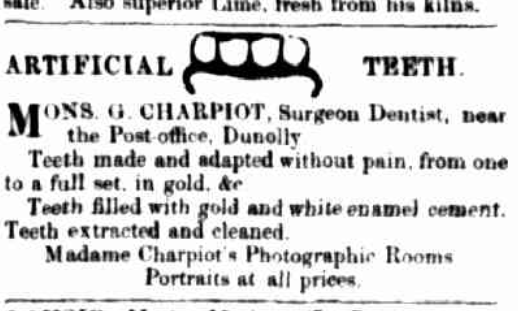
When the Charpiot’s moved to Dunolly, both continued their businesses; Madame Charpiot’s portrait services were regularly advertised alongside her husband’s dental business.  

1858 ‘Advertising’, Maryborough and Dunolly Advertiser (Vic. : 1857 – 1867 ; 1914 – 1918), 23 April, p. 3.   http://nla.gov.au/nla.news-article253586868

A few years later they moved again to the goldfields town of Tarnagulla. On New Year’s Day 1868, their business caught fire and was destroyed. Most of Elizabeth’s photographic equipment was likely lost and it would seem she never returned to professional photography after the fire. 


EADY HART: Inventor 

  
Eady Hart, ACGRC: 06.0577 

Eady Hart arrived on the goldfields in 1854 as a six-year-old, with her family seeking gold. She became a dressmaker and married engineer William Hart. It seems to have been a difficult marriage and William deserted Eady and their eight children. Eady was remarkably resilient, she supported the family, including six foster children, with her sewing and millinery skills, then taxidermy, then an innovative fire-lighting product. Eady was curious and innovative and turned her attention to dyes. In her small kitchen, she experimented with native plants, like grass trees, to produce a beautiful range of natural dyes – useful for fabric and foodstuffs. Here she met with great technical success. Thirty years of experimenting led to the formation of Hart’s Royal Dyes in 1921. In our collection, we care for a number of her recipe and sample books, along with patent applications and business correspondence.  

What is a patent? Why would Eady need a patent for her idea? 

Eady had to solve various problems with her experiments. She needed to figure out what colours different plants produced, what was required to make the colour stable and stick to fabric, and whether the ingredients were safe to work with when mixed together. She also had to ensure there were enough ingredients to make lots of dye, and that the recipes were repeatable for others to follow.

Sample page in Eady Hart’s scrapbook. Accession Number 06.0576

People loved the colours Eady created; she won awards for her colours and her dye-making process. Newspapers were filled with reports of her wonderful discovery and for seeing the Australian bush as a sustainable resource: “Mrs. Hart says she has barely tapped on the possibilities of our vegetation. The glory of the Australian bush is not yet known … Mrs. Hart regards as criminal the ruthless cutting for firewood and building purposes valuable timber that should be producing priceless dyes”1 


EUPHEMIA BAKER: Artist & Photographer 

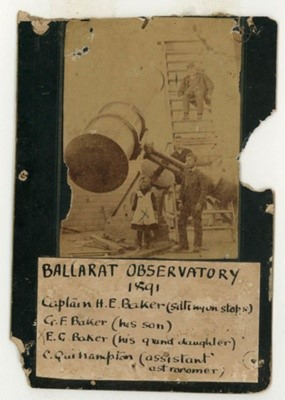
For Euphemia Baker, the move to Ballarat as a young girl to live with her grandparents opened to her the world of the Ballarat Observatory and the technology of the camera. In our collection we have a photo of young Euphemia “Effie” Baker with her grandfather, Captain Henry Baker, who ran the Ballarat Observatory, standing beside a large telescope. A retired sea caption, Baker was a master instrument maker, and his daughters grew up around the telescope and observatory. Access to this world inspired in them a love of looking at life through a lens for art and science. 

Ballarat Observatory 1891, ACGRC: 163.80 

His daughter Elizabeth Baker became a photographer and astronomical assistant at the observatory, down the road from where Sovereign Hill is situated in Golden Point. In 1896, the Ballarat Star noted that Miss Baker had taken charge of the observatory, the meteorological equipment and was contributing to international research projects and winning awards for her astronomical photography2. When her young niece, Effie, came to live with the family she gifted her a camera and mentored her in photography. Both Elizabeth and Euphemia were noted for their photography, including photos of the moon and stars taken through the telescope. 

Where do you find inspiration? 

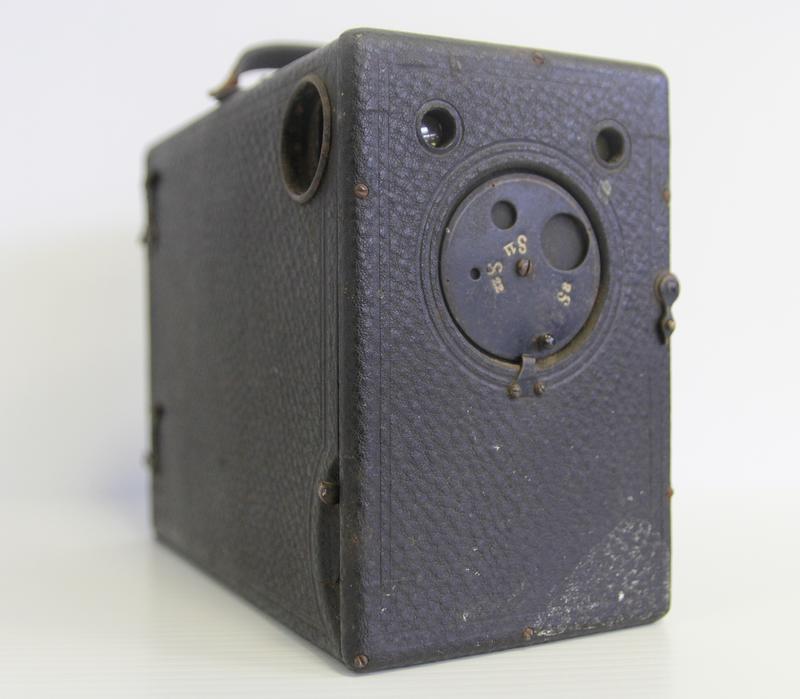
The Goldrush Centre holds several early cameras, including this quarter-plate camera, perhaps similar to the one gifted to Effie, and the camera belonging to astronomer Mr John Brittain, who lectured in astronomy at the Ballarat School of Mines. 

Quarter-plate camera, unknown maker and age, ACGRC: 2014.0204 
Camera belonging to Mr James Brittain c. 1890s, ACGRC: 78.0442 

DR. GRACE VALE: Doctor 

Were women treated equally in science and medicine? 

As a founding member of the Victorian Medical Women Society, one of the first female graduates from medical school in Melbourne, and then the first woman public vaccinator (in 1910), Dr. Vale became both a doctor and an active public figure in Ballarat, including being highly active in the suffrage movement to give women the vote. She was present for the first X-rays experiments at the Ballarat School of Mines. 

“Dr. GRACE VALE.” Table Talk (Melbourne, Vic. : 1885 – 1939) 28 December 1899: 6. Web. 18 Jul 2024 <http://nla.gov.au/nla.news-article145933182&gt;.  

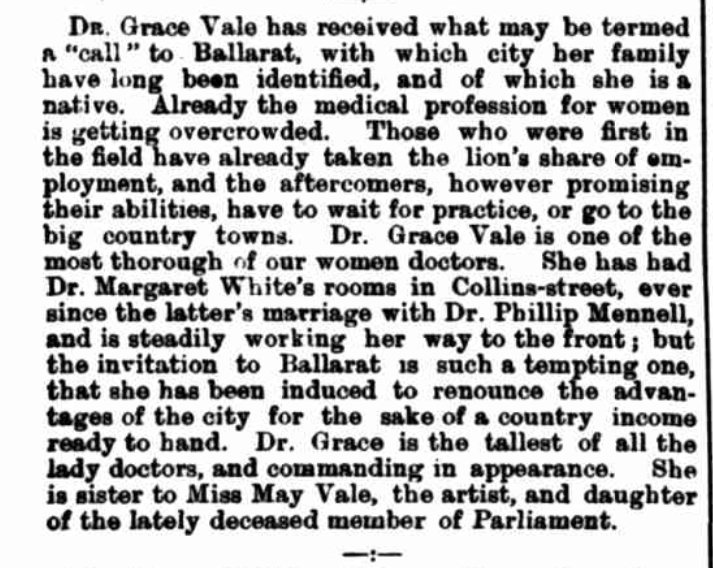
The article below gives a hint of the medical environment in which Dr Vale worked. The “medical profession for women” suggests that only part of the profession is open to them and they are always described as “woman” or “lady” doctors specifically. She has been working in the practice of another woman doctor, Margaret Whyte with whom she had graduated.  Her appearance, rather than her abilities, becoming the focus of newspaper articles. In closing remarks, she is described as “the tallest of all the lady doctors, and commanding in appearance.” 

“Personal.” Table Talk (Melbourne, Vic. : 1885 – 1939) 24 April 1896: 2. Web. 17 Jul 2024 <http://nla.gov.au/nla.news-article145921688&gt;. 

Dr Vale used her position to lobby throughout her career for the rights of women. She was active in advocating for free or low-cost healthcare for female factory workers in Melbourne, she was elected to the Ballarat City Board of Advice and spent much of her career as a Medical Officer for schools in Victoria and NSW. 

These four stories are amongst many examples of resilient, adaptable, and curious women on the goldfields. But this is just the beginningwhat stories can you find? Do challenges still exist today for some groups wanting to enter STEM fields and how can we learn from these pioneers in the past?


Gold Rush Icons and Their jewels

Lola Montez
Date
[ca. 1846 – ca. 1861]

http://handle.slv.vic.gov.au/10381/40191

In 1851 and 1862 Victoria produced 27,770,666 troy ounces of gold (over 800 tons), valued at about 110 million pounds at the time. The gold produced during this time was highly prized and would often be melted and transformed into different objects. Objects made from gold could include – coins, bullion, gold leaf, jewellery and even gold teeth!

Gold has been used in the making of jewellery Before Common Era (BCE) and has for many people, been seen as a symbol of wealth. Gold, being a rare metal, dominated the appearance of jewellery in the 19th Century. The gold being taken out of the earth in Ballarat from 1851 meant that by 1855 jewellery shops were appearing on the Ballarat landscape. Two men, who arrived from England, seized this business opportunity and opened a jewellery store, called Rees and Benjamin within Ballarat. You can visit Rees & Benjamin on the Main Street of Sovereign Hill to purchase jewellery.

Miners Brooch (1850’s) (GM07.0047)

The jewellery designs in the 1850’s reflected mostly the English style. However, jewellery being made in Ballarat could also take on a uniquely Australian design of flora and fauna and even mining. One lady on the Ballarat goldfields during this time, Lola Montez, who was a stage performer, was sometimes given gold jewellery by gold miners during her on-stage performances. One gold brooch given to Lola, as a token of appreciation in Melbourne in 1855, was then later sold by her, during her travels around San Francisco (America) a year later.

Before the mid-1850s, gold was a desired resource and usually only the wealthy could afford to have jewellery pieces, made from gold and other precious materials, handmade by a jeweller. However, largely due to the gold rush and the Industrial Revolution (creating a new emerging middle class of wealth), jewellery was becoming more affordable and popular. The Industrial Revolution made the manufacturing of jewellery more cost-effective and attainable for other levels of society. The invention of electroplating (metal coating) during this time was ideal for making inexpensive jewellery, that more people could afford to buy.

One of the great influencers of jewellery fashion in the 19th Century was Queen Victoria. Her reign as Queen on the British throne went from 1837-1901. During that time, she had great influence over the world’s fashion, including jewellery. Much like social media influencers today, Queen Victoria made a societal impact on the jewellery and fashion trends during the time she reigned. Examples of popular styles of jewellery in the mid-19th Century included lockets, rings, large bangles, brooches, crosses, and necklaces. Jewellery such as earrings were also fashionable in the Victorian era. Queen Victoria had her ears pierced when she was fourteen years old and one of her painted portraits shows her wearing dangling earrings. Wearing lots of jewellery before the mid-19th century for very young girls was frowned upon. However, ladies would wear large and chunky jewellery as well as delicate bejewelled pieces.

Locket with hair (GM 2012.0446)

Jewellery fashion in the 19th century was a little bit different compared to our jewellery today. Queen Victoria had a favourite piece of jewellery that she wore – a locket that contained her husband’s (Prince Albert) hair. Queen Victoria also wore and gave her children jewellery made from hair. In fact, a lot of jewellery of that time was made from hair, teeth, and animal claws. Prince Albert even designed a brooch for Queen Victoria that included their first daughter’s, Vicky, first milk (baby) teeth!

Another trend Queen Victoria made popular was that of receiving an engagement ring before marriage. Prince Albert gave Queen Victoria an engagement ring that was in a snake (serpent) design, with its tail in its mouth, entwined. In Victorian times this design symbolised eternal love. The snake design and many others would become popular amongst jewellery designers due to Queen Victoria.

In 1861, when Prince Albert died, Queen Victoria began wearing black jewellery, called mourning jewellery. This was mostly made from Whitby Jet (fossilised coal found in Whitby, England) and started a trend that lasted until around 1890.

Whitby Jet Jewellery (GM 84.2010)

Did you know?

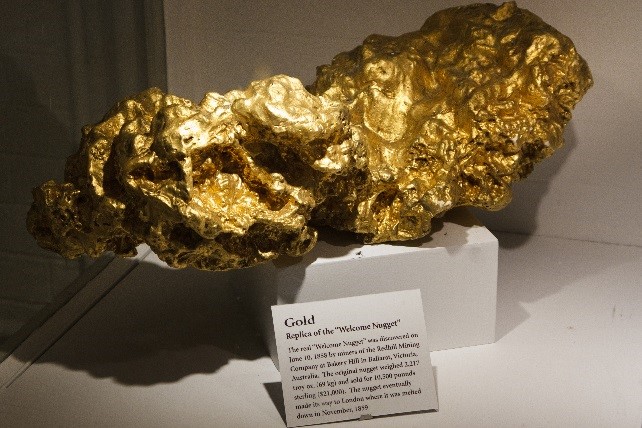
  • The ‘Welcome Nugget’, a substantial gold nugget dug up in Ballarat in 1858 was eventually sold to the British Mint and melted down to make minted gold sovereigns coins. The coin, on one side, would have held an impressed image of Queen Victoria on its obverse. 
  • Prince Albert also designed a brooch for Florence Nightingale. (Florence was named as such due to her being born in Florence, Italy).
  • Sea coral was popular and used in jewellery during the Victorian Era.
  • During the Paris Exposition of 1855, a life-size portrait of Queen Victoria was made completely out of hair!

Costume at Sovereign Hill: The Redcoat Soldiers

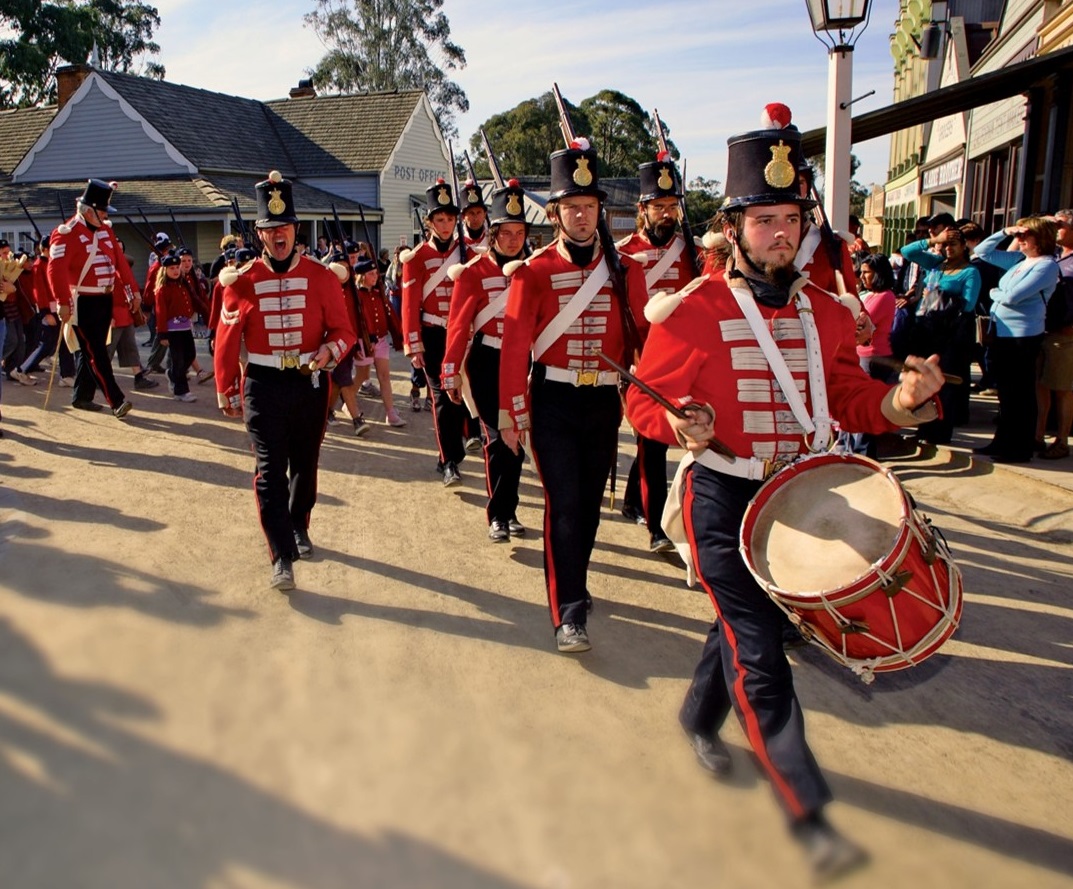
When you visit Sovereign Hill, you see lots of different kinds of costumes being worn by the staff and volunteers in the streets, shops and on the diggings. All our costumes tell stories about the kind of people who were really here in Ballarat in the 1850s. Some of our most photographed costumed characters are the Redcoat Soldiers, who tell the story of the British Army’s role in 19th century Victoria.

Redcoat9

Sovereign Hill’s daily Redcoat Soldiers parade.

Students often ask, ‘Why are they wearing bright red jackets? Soldiers today wear camouflage to hide in the bush, but a red jacket can’t hide you anywhere!’. These jackets, which are actually called coatees, were red for a number of reasons:

Redcoat1

A diagram explaining the different parts of a Redcoat’s uniform. Click on the image to enlarge.

The Redcoat Soldiers played an important role in the Eureka Rebellion and their daily parade around Sovereign Hill is one of our most popular events. We need to keep them looking ‘spiffy‘, so our Costume Department recently began a big project to make new uniforms for our hard-working soldiers.

Redcoat4

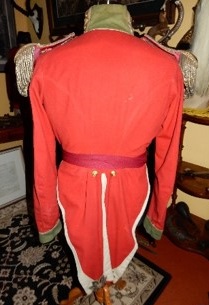
The two ‘tails’ on a coatee.

Every time our Costume Department makes a new outfit for one of our staff or volunteers, the team starts by doing some research. There are lots of paintings, photographs and written descriptions of the Redcoat Soldier uniforms, which help us re-create their outfits to look just like the real ones worn in the 1850s. We were very lucky in this instance to find a real 1840s-50s Redcoat coatee in the collection of a local history buff, which revealed secret pockets inside the coatee ‘tails’! We think these would have been used for storing gloves and hiding important documents. Next time you visit Sovereign Hill, ask a Redcoat soldier what he hides in his secret tail pockets.

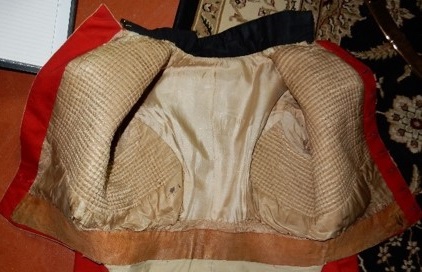
This very old, fragile coatee also helped us understand what the lining and internal structure of the coatees should be, which not only makes them more comfortable for the people wearing them, but also makes those people look more muscular and broad-shouldered.

Redcoat3

The internal structure of a coatee.

The coatee was designed to make the chest of the man wearing it (only men could be in the British Army in the 19th century) look like a triangle (women desired to be hour-glass shaped), and epaulettes would be attached to the shoulders to make them appear even bigger. If you were an important officer in the regiment (team of soldiers), you would have received a ‘uniform allowance’ as part of your wages which you could use to decorate your coatee further.

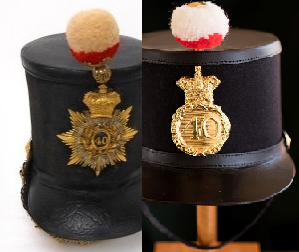
shako

Left: An 1850s shako. Right: Sovereign Hill’s re-created shako.

The Sovereign Hill Costume Department have now created three different kinds of Redcoat uniforms for our daily parades: an officer’s uniform (in scarlet red), and soldiers’ uniforms and a drummer’s uniform (in madder red).  We were able to achieve the correct coatee colouring thanks to information from a uniforms supplier in England which has been making outfits for the British Army since the Battle of Waterloo – more than 200 years ago! Many details like buttons, pom-poms and embroidered trimmings for the new costumes had to be made by hand by skilled craftspeople, which took a lot of hard work to organise. Re-creating the hats – or shakos – presented one of the biggest challenges to the Costume team, but the new Redcoat costumes are nearly finished and ready for the daily parade.

Redcoat8

Drummers wore heavily-decorated uniforms.

All of our costumes tell stories about the history of clothing dyes, innovations in sewing techniques and machines, and developments in the manufacture of textiles, as well as showcasing the fashions of the time. The popular fashions of the 1850s also tell stories about community values and ideas about masculinity and femininity. What do your clothes say about you and the community you live in?

Links and References

Read about the role of the Redcoat Soldiers in the Eureka Rebellion: https://sovereignhilledblog.com/2011/08/15/the-redcoats-connecting-history-lessons/

Sovereign Hill’s Redcoats firing their guns: https://www.youtube.com/watch?v=loLdcXa0_w8

A wonderful V&A webpage about 19th century fashion: http://www.vam.ac.uk/page/0-9/19th-century-fashion/

Learn about ladies’ weird 1850s underpants…: https://sovereignhilledblog.com/2013/09/06/gold-rush-undies-womens-fashionable-underwear-in-the-1850s/

What did children wear during the gold rush? https://sovereignhilledblog.com/2012/11/26/gold-rush-babes-childrens-fashion-in-the-1850s/

Men’s 1850s fashion: https://sovereignhilledblog.com/2012/07/17/gold-rush-beaus-mens-fashion-in-the-1850s/

Women’s 1850s fashion: https://sovereignhilledblog.com/2012/02/28/gold-rush-belles-womens-fashion-in-the-1850s/

The British Army during Queen Victoria’s reign: https://en.wikipedia.org/wiki/British_Army_during_the_Victorian_Era

A social story for ASD students preparing for a Sovereign Hill visit: http://www.sovereignhill.com.au/media/uploads/Here_come_the_Redcoats.pdf

Goldrush Immigration – Push and Pull Factors

To understand the thousands of people who chose to come to Ballarat during the gold rushes, we need to look at their motivations for leaving home for the dirty diggings. When gold was discovered in Ballarat in 1851, there were about 80,000 people living in Victoria. You can fit more than that in the MCG today! The population increased dramatically over the next ten years; by 1861, there were more than 500,000 people here! While most no doubt had their own unique, personal reasons for moving to Victoria during this time, let’s take a look at some of the things that may have pushed people out of their homes and pulled them towards gold mining towns like Ballarat.

Push factors’ – things that push people away from their homes – include wars, natural disasters, food/water shortages, a lack of paid jobs, and nasty community leaders. For example, if your country runs out of food and your family is hungry, you might decide to move to a new country where your family is less likely to suffer hunger again. This means that food shortage is your motivation to move; it’s the push factor for you and your family.

78.0973 Raffaello Carboni


The Australian gold rushes attracted lots of interesting characters – this is Raffaelo Carboni, a miner from Italy, who was in Ballarat around the time of the Eureka Rebellion.


Pull factors’ – things that pull people to a new home – include safety, food/water security, good job opportunities, and good community leaders. For example, if there’s not much opportunity for you to get a good job in your country, you might decide to move to a country with a strong economy and low unemployment, where you have a high chance of getting a great job. This means that good job opportunities is your motivation to move; it’s the pull factor for you.

The chance of finding a huge Ballarat gold nugget (which could make you so rich that you never had to work another day in your life), was a HUGE pull factor for people who wanted to improve their lives in the 1850s and 1860s. Thousands of people from all over the world heard about Ballarat’s rich alluvial goldfield and decided to try their luck on the diggings.

The kind of people who came in search of gold were usually young and usually male, but of course many brought their families. This gold-seeking adventure was often a one-way trip, and the work was hard and dangerous. Most people who came to Ballarat during the gold rushes were motivated by more than just gold – there were lots of push and pull factors for each person!

If you were from England, things that may have pushed you to Australia might have included overpopulation (lots of English cities were very crowded at this time thanks to the Industrial Revolution), limited social mobility (little chance of improving your life; if you were born poor in England in the 1850s, you were likely to stay poor, no matter how hard you worked) and frustrations with the government (the ‘Chartists’ were trying to improve democracy during this time in English history, but weren’t having much luck). Pull factors for the English, apart from gold, could have included Australia’s good weather (lots of English people still come for this reason), and the chance to buy land (almost impossible back in England, unless you were extremely rich).

Peter Lalor (Montrose Cottage Collection)


Peter Lalor, leader of the miners in the Eureka Rebellion, moved from Ireland to Ballarat in 1852.


If you were from Ireland, the biggest push factor at this time in history would have been the ‘Great Hunger’ (also known as the Irish Potato Famine). Between 1845 and 1852, over one million Irish people died of starvation due to a disease called potato blight which destroyed their main food source: the potato. As a result of the Great Hunger, two million Irish people left Ireland and never returned – some moved to the United States of America and Canada, while many others came to Australia, in particular to Ballarat.

If you were from Scotland in the 1850s and you were the second son in your family, your big brother got to keep the family home and any land your family owned. That meant second sons had to make their own fortunes. This could have been one of the main push factors for the Scottish.

If you were from China, it was likely you were a peasant farmer in the 1850s. At this time in China, you didn’t have much chance of improving your life (limited social mobility), and opium was a big social/health problem (thanks to the [English] East India Company – who bought this highly addictive drug from India to sell in China for huge profits). This led to two wars between England and China during this time. These were the major push factors
for the Chinese miners. While gold was the major pull factor, the Chinese commonly had a different motivation than the Europeans when it came to spending their gold wealth. The Europeans tended to find gold to benefit themselves and their families, and many decided to stay in Australia after finding their fortune. The Chinese instead tended to find gold to take home to benefit not just their families but their entire villages; Chinese communities often worked together to pay for a ship ticket for just one or two miners, so that any gold they brought home was for the benefit of everyone. Some historians say that most of the Chinese miners were not really immigrants for this reason.

99_0114 John Alloo's


John Alloo, from China, owned one of the first restaurants on the Ballarat diggings.


If you were from the United States of America, it was possible you had been a miner in the 1849 gold rush in San Francisco, California, or wished you had been. The pull factor of gold was probably the main reason Americans came to Ballarat.

If you were an Aboriginal Australian, you may have been on the Ballarat goldfield because this had been your family’s home for thousands of years, or you may have come from another part of Victoria as you had been forced off your homelands by invading farmers and miners. In terms of pull factors, some Aboriginal People did make money from gold during the gold rushes, while others worked as Native Police or farmhands. However, Aboriginal People had few choices at this time in history; it was very difficult to live their traditional lives any more whether they were on their homelands or not, thanks to the changes the new arrivals introduced.

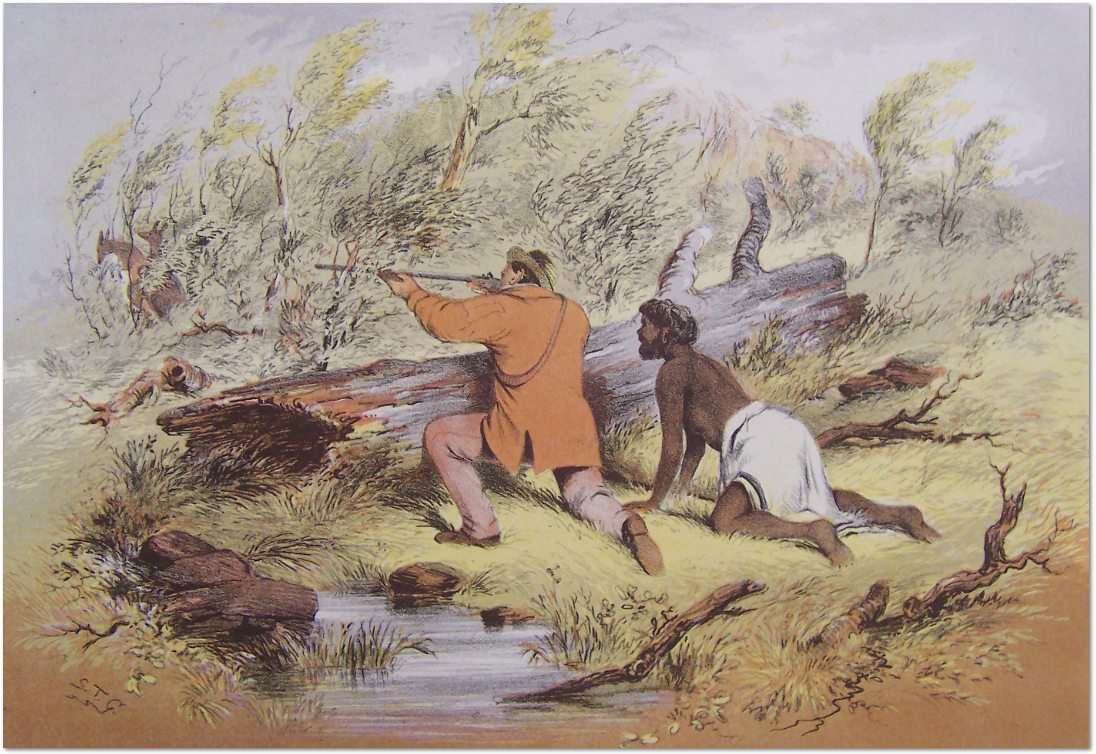
STG Kangaroo Stalking


Without the help of Aboriginal People, many new arrivals to Victoria would have perished in the harsh conditions of 19th century Australia.


Australia – in particular its population – changed dramatically during the Victorian gold rushes of the 1800s. When did your family arrive in Australia? If you’re an Aboriginal Australian, your ancestors may have arrived 60,000 years ago. If your ancestors were convicts sent to Sydney, Hobart or (later) Western Australia, they may have arrived around 230 years ago. If your ancestors came during the gold rushes, they may have arrived 160 years ago.

Regardless of when your family arrived, the Australian story is a story of immigration.

Links and References:

A great TEDed video about push and pull factors: https://www.youtube.com/watch?v=vdtQgwOOiBg

An overview of the impact of the Australian gold rushes: http://www.australia.gov.au/about-australia/australian-story/austn-gold-rush

Simple English Wikipedia on the Great Hunger: https://simple.wikipedia.org/wiki/Irish_Potato_Famine

Why do famines happen? https://www.youtube.com/watch?v=Sgae8SA-rcI

The influence of the Irish on Ballarat: https://sovereignhilledblog.com/2014/07/09/goldfields-immigration-3/

The influence of the Scottish on Ballarat: https://sovereignhilledblog.com/2013/06/24/goldfields-immigration/

The influence of the Jewish on Ballarat: https://sovereignhilledblog.com/2014/03/31/goldfields-immigration-part-2/

Research notes about the experiences of the Chinese in 19th century Ballarat: http://education.sovereignhill.com.au/media/uploads/SovHill-chinesesballarat-notes-ss1.pdf

The impact of the Victorian gold rushes and 19th century immigration on Aboriginal People: http://sovereignhillhiddenhistories.com.au/

Australia’s immigration history: https://en.wikipedia.org/wiki/Immigration_history_of_Australia


“Why do I have to learn about the Gold Rush?”

Naturally, at Sovereign Hill we think everyone should learn about the Ballarat Gold Rush. Why is it such an important period in Australian history you ask? Well, in essence it changed our country in profound ways which continue to impact on the way we live today. If gold hadn’t been found in this region, Australia may have developed a very different system of government, economy and population. And without gold, Ballarat itself probably wouldn’t even be on the map! Let’s examine some of the most important legacies of the Gold Rush, including some aspects that perhaps we are not so proud of…

The impact of the Gold Rush on our government

bh

In the lead up to the Eureka Rebellion, those involved held public meetings to discuss their ideas for making Victoria’s democracy better. Reproduced with permission from the Gold Museum.

Due in large part to the tragic loss of life at Ballarat’s Eureka Rebellion, Victoria had the most advanced democracy in the world by 1855 (Littlejohn, Marion. Eureka Stockade, Black Dog Books, Victoria 2013, p. 29). This historic event, which occurred on Sunday 3rd December, 1854, saw at least 30 people killed. It continues to be an event that historians argue about; some say it had to happen to force the government to change the taxation and democratic systems, while others say it was an utter waste of life. Historians sometimes argue that it’s a story of pesky troublemakers, or a kind of Irish uprising against the English for the long history of conflict between those two nations. Some people claim it was the start of the union movement, and the birthplace of Australian left-wing politics, while others think it was an act of terror committed by a group of extremists.

All of this debate about its significance makes it all the more interesting and important to study – and regardless of your opinion, at the time it did push the Victorian government to improve the taxation and democratic voting systems. As a result of the Eureka Rebellion, Victoria introduced the secret ballot (secret voting), salaries for members of parliament, and for the first time, most men of European descent over the age of 21 could vote. Learn more about the Eureka Rebellion here.

The impact of the Goldrush on the economy

Approximately $100 billion of gold (in today’s dollar value) was discovered in Victoria during the Gold Rush (Bradby, Doug. Don’t go to the Goldfields, 2015, Waller & Chester, Victoria, p.126) making Melbourne one of the richest cities in the world! This wealth enabled Victorians to make huge investments in industrial technologies such as foundries, factories and ports, and bought us important public infrastructure such as schools, hospitals, roads, and bridges. The foundation stones for both The University of Melbourne and the State Library were laid on the same day in 1854; such huge building projects were only made possible as a result of the Gold Rush.

wn

Most of the world’s largest gold nuggets were found in the Ballarat region, like this 68kg monster – the famous ‘Welcome Nugget”. Reproduced with permission from the Gold Museum.

Gold also transformed the structure of Victoria’s economy. Before gold, our economy was based on producing wool (sheep farming) to be exported to the factories of industrial England thus making all involved very rich. If we go back even further, the (pre-European) Aboriginal economy in this region was based on the trade of things like precious greenstone axes and possum-skin cloaks.

Many historians argue that the Ballarat Gold Rush finished when World War 1 began, as by that time Ballarat’s economy had turned to manufacturing – the city’s foundries and factories were used to make trains, shoes, woollen blankets etc. This is one of the reasons Ballarat continued to grow and thrive after the Gold Rush finished. And what is our local economy based on now? It’s based on a combination of things like healthcare, tourism and manufacturing to name just a few. Learn more about Ballarat’s 21st century economy here.

The impact of the Goldrush on Victoria’s population

Without the Gold Rush, many Victorians wouldn’t be here today. The reason many of you were born here is because your great-great-great-great grandparents immigrated to Australia in search of gold during the 19th century.

The goldfields were a true melting pot of cultures, languages and ideas. Things were harmonious at times while at others, sadly, there was racially-fueled violence in the streets. Regardless of such details, Victoria’s population exploded from about 80,000 people before gold in 1851, to more than 550,000 only ten years later (Serle, Geoffrey. The Golden Age: A history of the colony of Victoria 1851-1861, 1977, Melbourne University Press, p.382). Ask your parents and grandparents some questions about your family history – was your family in Australia at the time of the Gold Rush or did they come later as a result of it?

Some negative impacts of the Goldrush

History must not be “sugar-coated”. There are important aspects of the Gold Rush that should also be studied which don’t fill us with pride about the development of modern Australia. The first of the negative consequences of the Gold Rush involves the disruption it caused to Ballarat’s ecosystems. 160 years later there is still lots of evidence of this region being turned upside-down in pursuit of gold. Forests, animal populations and waterways are still recovering today.

hh

Learn more about the Aboriginal side of Sovereign Hill’s Gold Rush story by exploring our new digital tour – Hidden Histories: The Wadawurrung People.

This relates to the second negative consequence of the Gold Rush – this region has been the country of the Wadawurrung People for 2,000 generations. Although there were already Europeans in Victoria (mostly farming sheep) before the Gold Rush, the huge population increase the Gold Rush brought had a devastating impact on the traditional lifestyles of the Wadawurrung People. All of the new arrivals needed food, water, and wood for houses and mineshafts, which meant that natural resources in this region were in unparalleled demand. This meant that traditional hunting grounds were turned into private farms with fences, and forests that Wadawurrung People had looked after for thousands of years to ensure they produced all of the food, shelter and fibre their population needed to live comfortably, were chopped down to be built with, or burnt in the boiler houses of the goldfields (learn more about this here). In one generation, the lives of Victorian Aboriginal People were radically transformed. As a result, the Wadawurrung People will never be able to truly practice their traditional culture, as their ancestors have done for perhaps as long as 60,000 years. These aspects of the Gold Rush story are just as important to learn about as all of the wealth and prosperity it brought to this country. Sovereign Hill recently launched a new digital tour focusing on the Gold Rush experiences of the Wadawurrung People called Hidden Histories.

So, do you think the Gold Rush is an important part of the Australian story? Does studying it help us better understand who we are now? What other periods in Australian history do you think people should learn about?

Links and references

Here’s a great Lego movie about the Eureka Rebellion made by some Victorian Grade 5 students: https://www.youtube.com/watch?v=wSySV9xoHzg

A brief history of Ballarat: https://simple.wikipedia.org/wiki/Ballarat,_Victoria

Information about all of the Australian gold rushes: https://en.wikipedia.org/wiki/Australian_gold_rushes

A wonderful interactive map of Australia’s gold rushes: http://www.sbs.com.au/gold/GOLD_MAP.html

Some fascinating places to visit where you can learn more about the gold rushes: http://www.visitvictoria.com/Regions/Goldfields/Things-to-do/History-and-heritage/Gold-rush-history

A video on the history of democracy: https://www.youtube.com/watch?v=k7dTDjRnBqU&index=30&list=PL8dPuuaLjXtNjasccl-WajpONGX3zoY4M

Littlejohn, Marion. Eureka Stockade, 2013, Black Dog Books, Victoria.

Bradby, Doug. Don’t go to the Goldfields, 2015, Waller & Chester, Victoria.

Serle, Geoffrey. The Golden Age: A history of the colony of Victoria 1851-1861, 1977, Melbourne University Press.

The Great Exhibition of 1851

GE1

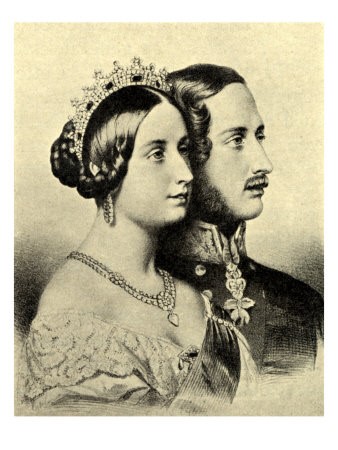
Queen Victoria and Prince Regent Albert.

There were many exciting events happening around the world in the same year gold was discovered in Ballarat. In 1851 powdered milk was invented, the New York Times newspaper was printed for the first time, the movement to end slavery in the USA was building in strength, and the famous novel about a white whale –Moby Dick– by Herman Melville was published. Louis Daguerre, the inventor of photography died in 1851, the Great Potato Famine in Ireland was at its deadly peak, and Isaac Merritt Singer patented the sewing machine, which radically transformed people’s lives. However, the biggest event, dominating newspapers the world over for nearly 6 months, was “The Great Exhibition of the Works of Industry of All Nations” held in London in 1851.

As the heart of the 1750-1900 Industrial Revolution, Britain by 1851 was the most powerful nation on Earth. Technological advances, in particular the invention of coal-powered steam engines which drove cotton mills, potteries, ships, and trains, had given Queen Victoria’s people cheap clothing and homewares, and access to all corners of the globe. What better way to celebrate Britain’s achievements than by holding a huge show of the latest local and international goodies and gadgets!

The idea for an exhibition came from the RSA (Royal Society for the encouragement of Arts, Manufactures and Commerce) and it was managed by Queen Victoria’s husband, Prince Albert. Many believed then, as many still do today, that the royal couple were visionaries. Prince Albert explained his motivation for The Great Exhibition:

We are living at a period of most wonderful transition, which tends rapidly to accomplish that great end – to which all history points – the realisation of the unity of mankind … Gentleman, the Exhibition of 1851 is to give us a true test of the point of development at which the whole of mankind has arrived in this great task, and a new starting point from which all nations will be able to direct their further exertions.”

Victoria and Albert believed they were leading the world towards peace, comfort and cooperation by celebrating technology through their Great Exhibition.

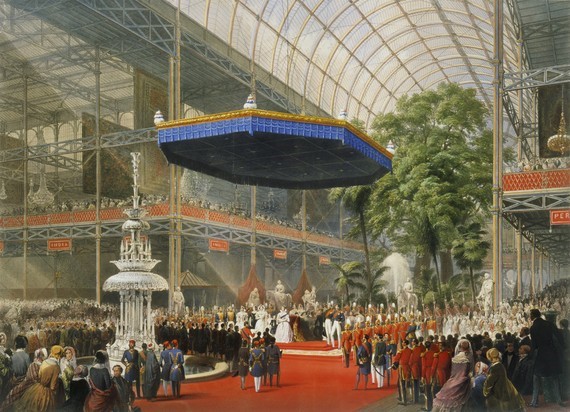
The first part of the plan was to design a grand building to showcase all of the world’s weird and wonderful inventions – Albert chose Sir Joseph Paxton’s design which was later dubbed “The Crystal Palace” because it was made of cheap cast iron and strong, cast-plate glass which had only been invented in 1848. This amazing structure was 1,851 feet long (equalling 564m) to celebrate the year of the Exhibition, and built in London’s Hyde Park. It was so cleverly designed that it was built over some huge trees, which provided shade – inside the building – on warm days. The Crystal Palace was easily accessed by visitors travelling on the new steam trains and as a result, over 6 million people (a quarter of England’s population!) attended this gigantic festival of all things machine and machine-made.

GE2

The State Opening of The Great Exhibition in 1851. Colour lithograph, England, 19th century. Victoria & Albert Museum.

Among the thousands of items displayed, visitors could see the cotton weaving looms that had transformed the manufacturing of clothing, gas cookers, fabrics of all colours and materials, farm equipment, electric clocks, newly discovered gold from Australia, a carriage drawn by kites, a ‘pocket’ knife with precisely 1851 blades, a submarine, a two person piano, miniature towns, giant diamonds from India, strange taxidermy, and fountains of perfume. Not only was this the first time such wonderful objects and inventions had been seen in public, for many people from the British countryside, this was their first visit to London. A visit which involved not only a train trip, but also seeing so many marvels of the modern world – this would have been a mind-blowing experience for many of Britain’s country folk!

GE3

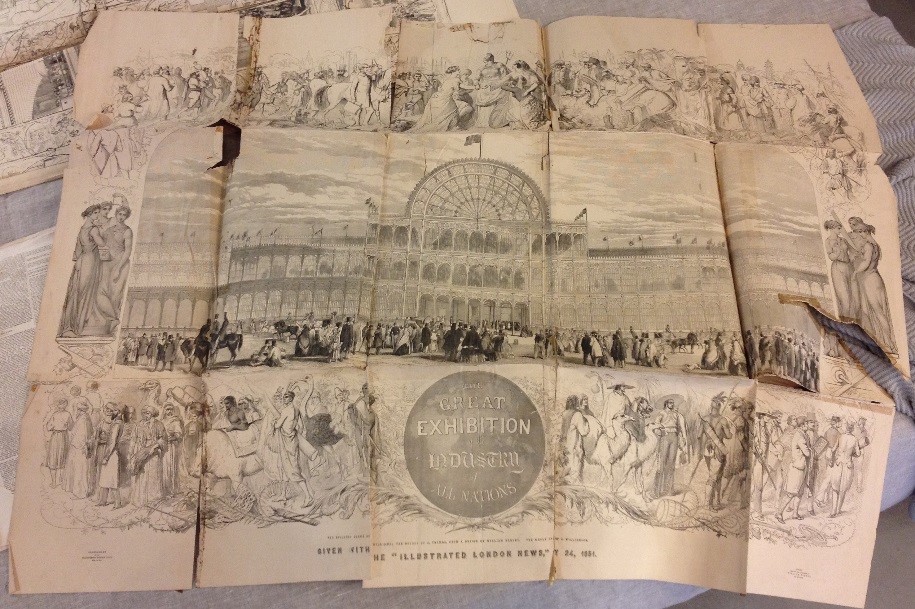
A Great Exhibition pull-out poster from the famous Illustrated London News, 1851.

On the topic of the Great Exhibition, the poet Lord Alfred Tennnyson wrote: … lo! the giant aisles
Rich in model and design;
Harvest-tool and husbandry,
Loom and when and enginery,
Secrets of the sullen mine,
Steel of the sullen mine,
Steel and gold, and coal and wine,
Fabric rough or fairy fine …
And shapes and hues of Art divine!
All of beauty, all of use,
That one fair planet can produce.

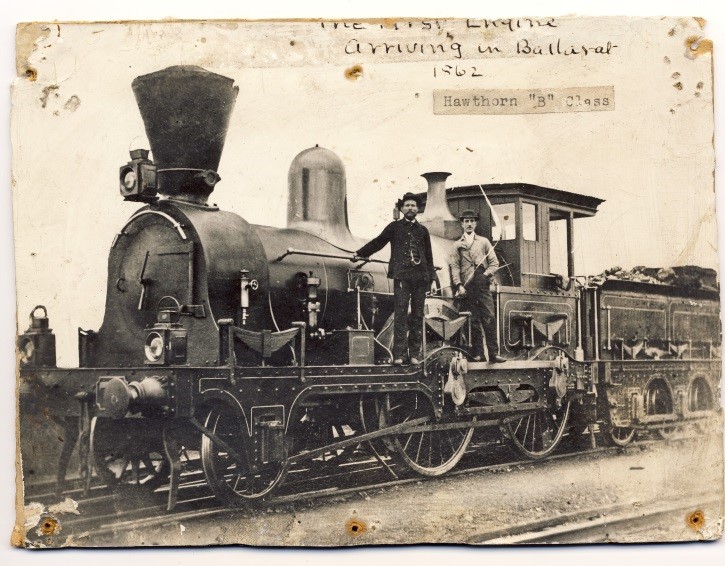
The Great Exhibition was such an incredible success that with the huge amount of money made from it, Victoria and Albert were able to set up The Natural History Museum, Science Museum and the Victoria and Albert Museum which to this day remain some of the most fascinating places to visit in London. The spirit of The Great Exhibition continued to encourage technological development: by 1862 steam trains linked Ballarat to Melbourne and Geelong, and not long after that Ballarat started building factories to create its own steam engines and machine parts (called foundries).

GE4

The steam train arrives in Ballarat! (1862) Australian steam trains can be identified by their strange conical chimneys, called “spark arrestors”, which stop the trains from starting bush fires. Ballarat Historical Society Photograph Collection.

Due in large part to the discovery of gold, Victoria’s population grew rapidly and people invested their gold money in industry and real estate. As one of the richest communities in the world, Victoria held an Exhibition in 1880 in the purpose-built Royal Exhibition Building (in Carlton next to the modern Melbourne Museum). It attracted around 1.5 million people at a time when Melbourne’s population hadn’t even reached 300,000.

Since 1851, many cities around the world have held international Exhibitions along the same lines as Britain’s, but none have rivalled it in size or legacy.

Links and References

Horrible Histories on The Great Exhibition and Victoria and Albert’s love for each other: https://www.youtube.com/watch?v=flaLHJCKy3I

These websites explain the major events of 1851: http://www.historyorb.com/events/date/1851 http://en.wikipedia.org/wiki/1851

Great student-friendly website about Queen Victoria: http://www.bbc.co.uk/schools/primaryhistory/famouspeople/victoria/

Wikipedia on The Great Exhibition: http://en.wikipedia.org/wiki/The_Great_Exhibition

Two great short videos about the Great Exhibition: https://www.youtube.com/watch?v=HRvOHOltp_w https://www.youtube.com/watch?v=eqM6PXyp5MA

Timeline of work undertaken by the Royal Society for the encouragement of Arts, Manufactures and Commerce: http://www.thersa.org/about-us/history-and-archive/rsa-history-timeline

Interactive game teaching about the Great Potato Famine: http://www.irishpotatofamine.org/flash.html

The history of international exhibitions: http://en.wikipedia.org/wiki/World’s_fair

A fantastic book all about The Great Exhibition is: http://www.crystalpalacefoundation.org.uk/shop/great-exhibition-1851/the-world-for-a-shilling 

Queen Victoria

statue

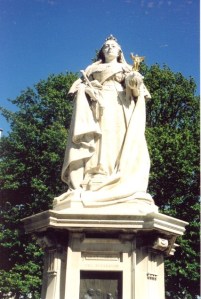
Statue of Queen Victoria in Sturt Street, Ballarat.

Queen Victoria ruled the largest empire in human history, and was Australia’s monarch during the gold rush. She ruled over 458 million people and was queen for a record 63 years! The people of Ballarat loved her so much that they paid for a marble statue of her to be made and placed it in front of the Ballarat Town Hall in 1900.

12 curious facts about Queen Victoria:

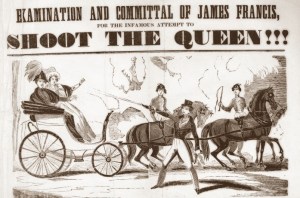
1. Queen Victoria survived 7 assassination (murder) attempts! She was so brave; after police failed to catch the second of these failed assassins on 29th May, 1842, she drove her carriage along the same road the day after the attack to tempt the man to fire his gun at her again. When he foolishly did, undercover policemen arrested him. Queen Victoria was unharmed, and the assassin, named John [James] Francis, was punished through transportation to Tasmania as a convict.

ass

Part of a ‘broadside’ (news poster) on Francis’ attempted assassination of the Queen, printed in 1842 by E. Lloyd.

2. Victoria wasn’t your ordinary 19th century woman. At a time when women were believed by most people in Europe to be weak and intellectually inferior to men, she became queen of a huge empire at the age of 18 and was one of the best educated people in the world (read more about this here). Very interestingly, Victoria asked Prince Albert to marry her, rather than the other way around. This was because nobody by law could ask the Queen to marry them. This situation would have been very uncommon during this era. Read more about life for the average Victorian woman here.

3. The political parties in England (the “Whigs” and the “Tories”) had a huge argument – called The Bedchamber Crisis – over who Victoria’s maids should be. Being close to a king or queen through helping to dress them, tutoring their children, or even cleaning their chamber pot was considered an extremely important political position, as such jobs gave you a lot of time to potentially talk to and influence the monarch.

4. During the height of the Irish Potato Famine (known in Ireland as The Great Famine or Great Hunger), despite anger from English Anglicans (Protestants), Queen Victoria donated £2,000 of her private wealth to help the suffering (Catholic) Irish. In modern money this would be about $2 million (Australian dollars).

dress

Queen Victoria in her famous white wedding dress.

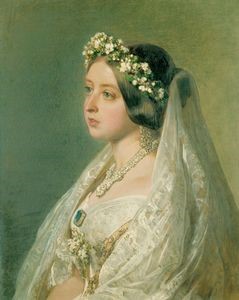
5. Queen Victoria is believed to be the bride who popularised the white wedding dress. Before her wedding to Prince Albert in 1840, brides wore coloured dresses. As a keen supporter of British industry, Victoria wore a white, machine-made dress with handmade lace for trimmings, including her veil. Very soon after Victoria and Albert’s wedding, women all over the British Empire were wearing white to be married. Queen Victoria loved this dress so much that she often wore it, or parts of it at her wedding anniversaries, the baptism of her children, and later in life at her children’s weddings. When she died in 1901, she was even buried with her cherished wedding veil covering her face (along with a plaster cast of Prince Albert’s hand).

6. While Victoria was an intelligent, strong-willed woman who took a lead role in managing the British Empire during her time as queen, women couldn’t vote in Britain until long after her death, and she is thought to have been against the idea of female emancipation (women’s right to vote).

7. Queen Victoria was an only child, and had a difficult relationship with her mother who, many historians argue, wanted to control Victoria and thus keep royal power for herself.

8. Victoria and Albert had 9 children, naming them (in order) Victoria, Albert, Alice, Alfred, Helena, Louise, Arthur, Leopold and Beatrice. In total, they had 42 grandchildren. Their first grandchild, born to daughter Victoria (Jr) and her husband Prince Frederick of Prussia (Germany), was named Wilhelm and became the last German Kaiser (emperor) who is considered largely responsible for causing World War 1.

9. Victoria gave birth to her two youngest children under the influence of chloroform, which was really the first general anaesthetic. The church was not happy about her decision to have (and by way of her fame, promote) pain-free childbirth, as they believed it was against the teaching of The Bible. She didn’t listen; Victoria hated being pregnant, hated childbirth, is thought to have suffered postnatal depression, and didn’t breastfeed her own children. In her detailed diaries, she wrote “Being pregnant is an occupational hazard of being a wife”.

10. Until recent times, it was common for European royals to keep the power in the family so to speak. Queen Victoria’s husband, Prince Albert, was actually her cousin.

11. Victoria passed the haemophilia gene (which stops your blood from clotting, so you can bleed to death from a simple scratch) to many of her children and grandchildren.

pound

A gold sovereign (£1 sterling) from 1851, the year gold was discovered in Australia, featuring Queen Victoria’s profile.

12. The love of Victoria’s life, Prince Albert, died from typhoid at the age of 42 in 1861. Typhoid is a horrible bacterial infection which, without treatment causes a fever, digestive system failure, a rash, blood poisoning, and in many cases results in death. Antibiotics weren’t developed and made available until the 1940s, long after Alfred’s death. Victoria remained in mourning for the rest of her life, and wore black in memory of Albert until the day she died.

During Queen Victoria’s reign, Britain went to war with China twice (called the Opium Wars), primary education was made compulsory and free, vaccination against smallpox became compulsory, Prince Albert managed the hugely successful Great Exhibition of 1851, London’s famous underground railway – the Tube – was developed, the telephone was invented, the Irish Potato Famine occurred, and our state, Victoria (named of course after our beloved queen), became a separate colony. She lived and ruled the largest empire on Earth during a fascinating time in history!

Links and References

Child-friendly website about Queen Victoria: http://www.bbc.co.uk/schools/primaryhistory/famouspeople/victoria/

Horrible Histories on Queen Victoria: https://www.youtube.com/watch?v=flaLHJCKy3I

List of the largest empires in history: http://en.wikipedia.org/wiki/List_of_largest_empires

On assassin John Francis’ transportation to Tasmania: http://www.linc.tas.gov.au/events/featured/research/john-francis

Queen Victoria’s wedding dress: http://en.wikipedia.org/wiki/Wedding_dress_of_Queen_Victoria

Curious facts about Queen Victoria: http://www.history.com/news/5-things-you-may-not-know-about-queen-victoria

A timeline of Victoria’s reign: http://www.britroyals.com/kings.asp?id=victoria