Tag Archives: women

How to cook a goldrush feast

Supermarkets, refrigeration, and the food pyramid were invented a long time after the Victorian gold rushes of the 1850s. During this time in history, most food on the goldfields was either grown fresh in your garden, imported in a dried state (like rice, flour and lentils), or pickled/preserved (like jams, stewed fruit and tinned anchovies). Some bush foods were hunted down by miners or supplied to them by Aboriginal people, but most new arrivals to the diggings had to work hard for their dinner. The rich could afford healthier diets than the poor, but life expectancy (the average length of time that people live in a particular country) was quite low in comparison to Australia today. Poor nutrition, dangerous work and deadly diseases worked together to make life on the diggings relatively short and harsh.

life-expectancy

Australians now live much longer lives than they did during the 19th century thanks to improved diets and medicine. This graph shows how life expectancy has increased for both men and women between 1884 and 2009. Reproduced with permission of the Australian Bureau of Statistics.
butchers-shambles-by-st-gill

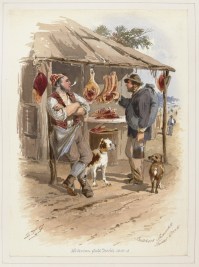
S. T. Gill’s sketch of a ‘Butcher’s Shamble’ from 1869 demonstrates life before refrigeration and modern hygiene.

Most miners in 1850s Ballarat happily ate damper (campfire bread) and mutton (old sheep – ‘lamb’ means young sheep), as such a meat-heavy diet was only affordable to the rich back in Europe at this time. However, this diet isn’t very nutritious. It lacks important vitamins and minerals that the body needs, which can be found in fruit, vegetables and nuts. While such a limited diet will keep you alive, it can make your body – brains, bones, organs – age must faster than people who eat a broader range of foods. A diet of damper and mutton could make you more likely to get sick, and you would stay sicker for longer. However, the goldfields butcher wasn’t too worried about the nutrition of his customers – butchers were often the richest people on the diggings!

The reason sheep were so common on the diggings was because of Victoria’s earlier history of colonisation. The first European settlers/invaders, who arrived from 1835 onwards, were here on the grassy plains of Victoria to farm sheep. By 1851, the year the Australian gold rushes began, there were over 6 million sheep being farmed across the state (according to the National Wool Museum). The sheep farmers (often called ‘squatters’) realised that instead of boiling down their old sheep for tallow (fat for making soap/candles), they could sell them as food to the thousands of hungry miners. News of cheap meat on the Victorian goldfields attracted thousands of people to the diggings (Blainey, G. Black Kettle and Full Moon, Penguin Books Australia, 2003, p.197). Luckily, by the 1860s, the gold rushes had also attracted many Chinese miners, who used their farming experience to grow productive market gardens full of nutritious vegetables which would have improved the general health of many Victorians at this time.

alloo

S. T. Gill’s ‘John Alloo’s Chinese Restaurant’ sketch from 1855 demonstrates the many contributions the Chinese made to diggers’ diets during the Ballarat gold rush. Reproduced with permission of the Gold Museum, Ballarat.

If a man had brought his mother/wife/daughter with him to the diggings, he was bound to have a better diet than a single man. Many goldrush women in the 1850s came to Ballarat very well prepared, as they brought bags of seeds and small animals with them to ensure the family didn’t starve (Isaacs, J. Pioneer Women of the Bush and Outback, Lansdowne Publishing Pty Ltd, Sydney, 1990, p.100).

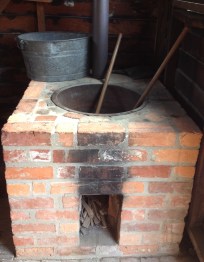
Cooks didn’t use many utensils when creating meals over a camp fire, but a simple mixing bowl, knife and camp oven (also known as a Dutch oven) were all one needed for baking bread, roasting a leg of lamb, or making stews/soups. Next time you go camping, you could try cooking like a goldrush miner!

Here are some of our favourite 1850s goldrush recipes which you could try at home or school:

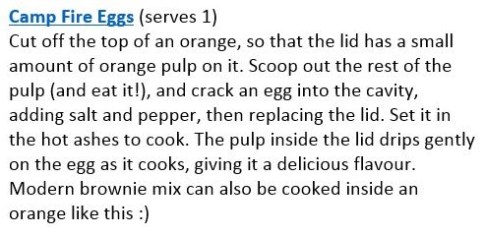
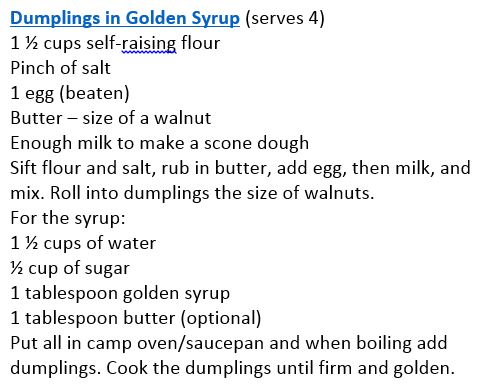
dampereggsp-soup2e-soup2dumplings

Links and References

Sovereign Hill’s other blogposts about goldrush food: https://sovereignhilledblog.com/2013/03/19/what-was-eaten-on-the-goldfields/

https://sovereignhilledblog.com/2013/04/15/what-was-eaten-on-the-goldfields-part-2/#more-1069

SBS Gold on goldrush food: http://www.sbs.com.au/gold/story.php?storyid=66

Goldrush food: http://www.egold.net.au/biogs/EG00116b.htm

A great video about 19th century British diets: https://www.youtube.com/watch?v=t5dr8WSPhzw

Mrs Beeton’s Book of Household Management (1861), maybe the most famous cookbook of all time: https://en.wikipedia.org/wiki/Mrs_Beeton%27s_Book_of_Household_Management

The British Library on food of the 1800s: http://www.bl.uk/learning/langlit/texts/cook/1800s2/18002.html

19th century menus: https://19thct.com/2012/08/11/a-menu-from-the-early-19th-century/

The most dangerous jobs in the 19th century: https://www.youtube.com/watch?v=glfVNlwv8bQ

Life for women on the early Ballarat goldfield: http://education.sovereignhill.com.au/media/uploads/SovHill-women-notes-ss1.pdf

Another webpage about the lives of goldrush women: http://www.egold.net.au/biogs/EG00115b.htm

Changing mealtimes and their names in history: http://backinmytime.blogspot.com.au/2012/08/a-bit-about-meals.html

Fantastic BBC food in history documentary: https://www.youtube.com/watch?v=I7FRQjdSHWk

Blainey, G. Black Kettle and Full Moon, Penguin Books Australia, 2003.

Isaacs, J. Pioneer Women of the Bush and Outback, Lansdowne Publishing Pty Ltd, Sydney, 1990.

Childhood in the 1850s

Growing up on the Victorian goldfields was tough, even for children from rich families. If you had healthy parents, you could expect to have lots of brothers and sisters, and if they couldn’t afford to send you to school, you would be sent to work instead. Girls and boys experienced childhood quite differently back then, and if you had one or even two toys, you were a lucky child indeed!

boots
Ballarat Orphanage boot factory, date unknown. Reproduced with permission of the Gold Museum.

Life on the goldfields was dangerous for children. While falling down a mineshaft or being trodden-on by a horse was always a risk, the big killer of children was disease. In the 1850s, people – especially children – often died from diseases which rarely kill Australians today, like scarlet fever, pneumonia, diphtheria and consumption (tuberculosis). However, children were most likely to die from drinking water contaminated by human ‘poo’ … Horrible diseases like dysentery, cholera and typhoid killed thousands of children during the Victorian gold rushes. Until Germ Theory was developed and the flushing toilet introduced, such ‘poopy’ diseases could kill as many as HALF of all British children before the age of five! Parents sometimes died of diseases and accidents too, and life was especially tough for the orphans of the gold rushes. Fortunately, we had kind people (philanthropists) in Ballarat like Emanuel Steinfeld, who established a free school for local orphans during the gold rushes.

19th century goldrush families tended to be larger than Australian families today; having lots of children ensured that some survived to old age and were therefore able to look after their elderly parents (there was no pension to support senior citizens back then). Another reason for large families was tradition. Before the Industrial Revolution (c.1750-1900), most Europeans lived and worked on farms, and having lots of children meant that you had extra hands to help look after the animals and grow the food. That’s why many children worked in England’s factories at the beginning of the Industrial Revolution. It was absolutely normal for children to work and contribute to the household income. So, when Europeans moved to Victoria in their tens-of-thousands during the gold rushes, many brought this idea of working children with them. Young boys often worked in mines or as assistants to labourers and shopkeepers, while young girls would train as maids or seamstresses (women who sew clothes) but would only work until they were married (because after that they were expected to be full-time mothers and housewives).

lollies

Lollies – like our famous raspberry drops – were adult treats in the 19th century!

Eventually, people decided that childhood was a special time in a person’s life and should be dedicated to learning and play, which meant that sending a child to work became illegal. Nowadays, children in Victoria can’t legally work until they are 13 years old, and can only work then if they have a special ‘Child Employment Permit’ from the State Government. If you are 15 years or older, you are free to work without a permit.

Believe it or not, there was no free schooling in Victoria until the 1870s. So, if your family arrived in Ballarat in the 1850s, you would only be sent to school if your parents could afford the tuition costs. This meant that lots of poor children didn’t learn to read and write, and girls were often kept at home to learn the ‘art’ of housekeeping while their brothers received an education. If girls were sent to school, they often learnt different skills to the boys (they might learn cross-stitch while the boys learnt technical drawing). The girls were also encouraged to play different games to the boys during the breaks between lessons. ‘Graces’, for example, was a game specifically for girls. During the 1850s and 60s, it is thought that only half of Victoria’s children were lucky enough to get an education (Bradby, D. and Littlejohn, M., Life in Colonial Australia, Walker Books Australia, 2015, p.17).

costumed-school-students

Girls playing a gentle, ‘feminine’ game of Graces in the Sovereign Hill Costumed Schools Program.

corset

Women’s underwear in the 19th century: a corset, chemise and pantalettes.

Boys and girls wore very different clothes during the gold rushes, but only after a boy was ‘breeched’. Both boys and girls wore dresses until boys were toilet-trained and considered ‘ready’ for pants (in those days, boys’ pants were called knickerbockers). This ‘breeching’ often involved a little party to celebrate this rite-of-passage for young boys. Girls wore short dresses and smocks over their pantalettes (loooong white underpants) until the age of 12-14 when they would begin wearing women’s clothes like crinolines, corsets and long dresses. Not long after this, they would start looking for a husband … Young women usually married quite young in comparison to now, while young men waited until they had a good job and enough money to support a wife and children. Those who had been academic high-achievers at school could become teachers from as young as 14 years of age!

Being an Aboriginal young person would have been very difficult at this time also; by the 1850s, thousands of Victorian Aboriginal people had been forced off their ancestral lands by European sheep farmers and gold miners. Many Aboriginal people across Australia found it very difficult to practise traditional culture, and pass on their knowledge, skills and stories to the next generation thanks to the European colonisation of this continent.

So, if you could be born in another historical period, would you choose the 19th century? Why/why not?

Links and References

The history of child labour: https://en.wikipedia.org/wiki/Child_labour

Industrial Revolution English children – in their own words: https://www.youtube.com/watch?v=87eVOpbcoVo

The history of the concept of childhood video: https://www.youtube.com/watch?v=3MqMuqJpVyM

The history of the concept of childhood on Wikipedia: https://en.wikipedia.org/wiki/Childhood#History

Children on the goldfields: http://www.resourcesandenergy.nsw.gov.au/__data/assets/pdf_file/0019/109324/children-on-the-goldfields.pdf

More information about children on the goldfields: http://ergo.slv.vic.gov.au/explore-history/golden-victoria/life-fields/children

School in the 1850s: http://www.myplace.edu.au/decades_timeline/1850/decade_landing_15_1.html?tabRank=3&subTabRank=2

Children’s fashion in the 1850s: https://sovereignhilledblog.com/2012/11/26/gold-rush-babes-childrens-fashion-in-the-1850s/

Women’s work in the 19th century: http://www.bbc.co.uk/history/british/victorians/womens_work_01.shtml

Bradby, D. and Littlejohn, M., Life in Colonial Australia, Walker Books Australia, 2015.

Deary, T., Horrible Histories: Vile Victorians, Scholastic Children’s Books, London, 1994.

Fabian, S. and Morag, L., Children in Australia: An Outline History, Oxford University Press, Melbourne, 1980.

In praise of washing machines

full washing equip

An 1850s ‘washing machine’.

Many historians believe that the invention of electricity was the most important nineteenth century invention because it changed women’s lives dramatically. In the 1850s, there was no electricity and therefore no electric washing machine. What did this mean for those charged with washing the family’s clothes?

Nineteenth century gender roles, meaning the different kinds of jobs men and women were expected to do, were very strict – men worked outside the home in the ‘public’ world, while women worked inside the home in the ‘private’ world. Activities like working in mines or participating in politics were supposed to be performed by men, while taking care of the children and doing the family cooking and cleaning were activities performed by women. Nowadays, it is more common that all jobs, whether it’s mowing the lawn, making money from working in a factory or supermarket, or ironing clothes, are done by both men and women.

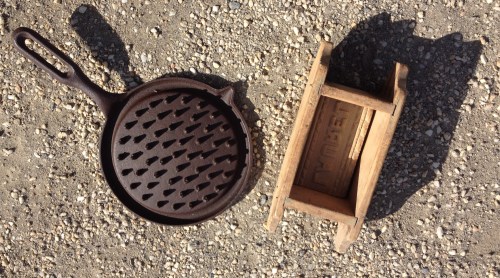
soap making

A tallow melting pan and a soap mold from the 1850s.

Washing clothes was a woman’s job in the 1850s. It required some very simple technologies: a large tub (bucket), a washboard, and some soap. Here, on the early diggings, most soap was homemade using tallow (which, in Ballarat, was sheep fat) mixed with some ash. Water had to be collected from creeks and lakes by bucket and was then heated over a fire. When Ballarat became a more established city, wealthier households built laundries in their gardens and installed ‘coppers’ (big copper buckets built over fireplaces) and garden water pumps (utilising underground ‘bore’ water) to make this work easier, but women still spent at least one entire day every week washing the family’s clothes.

copper

A laundry copper.

Have you ever heard the expression ‘She mangled her finger’? This comes from a clothes washing technology called a mangle. At first, these rollers, through which clothes would be squeezed near-dry, were hand-cranked, but when electric mangles were introduced many people (including children!) got their hands and hair caught in these machines with disastrous results. Thankfully, some of the most dangerous designs were outlawed. However, this wasn’t the only hazard to washer women. Irons made of heavy cast-iron were heated on the fireplace and then used to smoothe fabric. Modern irons are very safe in comparison! Women could easily burn themselves with 1850s irons, and getting serious burns (before antibiotics were invented) sometimes resulted in gangrene, blood poisoning and even death!

mangle

A 19th century mangle, also known as a wringer.

Until the electric washing machine became a common household appliance in the 1950s, women dedicated large amounts of their lives to washing, rinsing, wringing-out, drying, and ironing clothes. Some academics, like Swedish statistician Hans Rosling, believe that the electric washing machine was ‘the greatest invention of the Industrial Revolution’ because it suddenly afforded women time for things like education, work outside the home, and politics, once the washing machine was introduced. Can you think of any other inventions which have had a similarly big impact on people’s lives?

Links and references

A brief history of the washing machine: https://en.wikipedia.org/wiki/Washing_machine

A history of laundry: http://www.oldandinteresting.com/history-of-washing-clothes.aspx

A brief history of the mangle: https://en.wikipedia.org/wiki/Mangle_(machine)

A history of irons: https://en.wikipedia.org/wiki/Clothes_iron

A history of antibiotics and infection: https://www.healthychildren.org/English/health-issues/conditions/treatments/Pages/The-History-of-Antibiotics.aspx

A teacher resource on ‘Laundry in the 19th Century’: http://www.ebparks.org/Assets/files/Laundry_19th_Century_06-01-09.pdf


Queen Victoria

statue

Statue of Queen Victoria in Sturt Street, Ballarat.

Queen Victoria ruled the largest empire in human history, and was Australia’s monarch during the gold rush. She ruled over 458 million people and was queen for a record 63 years! The people of Ballarat loved her so much that they paid for a marble statue of her to be made and placed it in front of the Ballarat Town Hall in 1900.

12 curious facts about Queen Victoria:

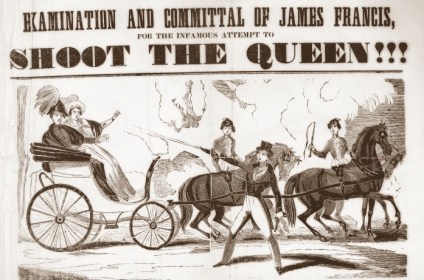
1. Queen Victoria survived 7 assassination (murder) attempts! She was so brave; after police failed to catch the second of these failed assassins on 29th May, 1842, she drove her carriage along the same road the day after the attack to tempt the man to fire his gun at her again. When he foolishly did, undercover policemen arrested him. Queen Victoria was unharmed, and the assassin, named John [James] Francis, was punished through transportation to Tasmania as a convict.

ass

Part of a ‘broadside’ (news poster) on Francis’ attempted assassination of the Queen, printed in 1842 by E. Lloyd.

2. Victoria wasn’t your ordinary 19th century woman. At a time when women were believed by most people in Europe to be weak and intellectually inferior to men, she became queen of a huge empire at the age of 18 and was one of the best educated people in the world (read more about this here). Very interestingly, Victoria asked Prince Albert to marry her, rather than the other way around. This was because nobody by law could ask the Queen to marry them. This situation would have been very uncommon during this era. Read more about life for the average Victorian woman here.

3. The political parties in England (the “Whigs” and the “Tories”) had a huge argument – called The Bedchamber Crisis – over who Victoria’s maids should be. Being close to a king or queen through helping to dress them, tutoring their children, or even cleaning their chamber pot was considered an extremely important political position, as such jobs gave you a lot of time to potentially talk to and influence the monarch.

4. During the height of the Irish Potato Famine (known in Ireland as The Great Famine or Great Hunger), despite anger from English Anglicans (Protestants), Queen Victoria donated £2,000 of her private wealth to help the suffering (Catholic) Irish. In modern money this would be about $2 million (Australian dollars).

dress

Queen Victoria in her famous white wedding dress.

5. Queen Victoria is believed to be the bride who popularised the white wedding dress. Before her wedding to Prince Albert in 1840, brides wore coloured dresses. As a keen supporter of British industry, Victoria wore a white, machine-made dress with handmade lace for trimmings, including her veil. Very soon after Victoria and Albert’s wedding, women all over the British Empire were wearing white to be married. Queen Victoria loved this dress so much that she often wore it, or parts of it at her wedding anniversaries, the baptism of her children, and later in life at her children’s weddings. When she died in 1901, she was even buried with her cherished wedding veil covering her face (along with a plaster cast of Prince Albert’s hand).

6. While Victoria was an intelligent, strong-willed woman who took a lead role in managing the British Empire during her time as queen, women couldn’t vote in Britain until long after her death, and she is thought to have been against the idea of female emancipation (women’s right to vote).

7. Queen Victoria was an only child, and had a difficult relationship with her mother who, many historians argue, wanted to control Victoria and thus keep royal power for herself.

8. Victoria and Albert had 9 children, naming them (in order) Victoria, Albert, Alice, Alfred, Helena, Louise, Arthur, Leopold and Beatrice. In total, they had 42 grandchildren. Their first grandchild, born to daughter Victoria (Jr) and her husband Prince Frederick of Prussia (Germany), was named Wilhelm and became the last German Kaiser (emperor) who is considered largely responsible for causing World War 1.

9. Victoria gave birth to her two youngest children under the influence of chloroform, which was really the first general anaesthetic. The church was not happy about her decision to have (and by way of her fame, promote) pain-free childbirth, as they believed it was against the teaching of The Bible. She didn’t listen; Victoria hated being pregnant, hated childbirth, is thought to have suffered postnatal depression, and didn’t breastfeed her own children. In her detailed diaries, she wrote “Being pregnant is an occupational hazard of being a wife”.

10. Until recent times, it was common for European royals to keep the power in the family so to speak. Queen Victoria’s husband, Prince Albert, was actually her cousin.

11. Victoria passed the haemophilia gene (which stops your blood from clotting, so you can bleed to death from a simple scratch) to many of her children and grandchildren.

pound

A gold sovereign (£1 sterling) from 1851, the year gold was discovered in Australia, featuring Queen Victoria’s profile.

12. The love of Victoria’s life, Prince Albert, died from typhoid at the age of 42 in 1861. Typhoid is a horrible bacterial infection which, without treatment causes a fever, digestive system failure, a rash, blood poisoning, and in many cases results in death. Antibiotics weren’t developed and made available until the 1940s, long after Alfred’s death. Victoria remained in mourning for the rest of her life, and wore black in memory of Albert until the day she died.

During Queen Victoria’s reign, Britain went to war with China twice (called the Opium Wars), primary education was made compulsory and free, vaccination against smallpox became compulsory, Prince Albert managed the hugely successful Great Exhibition of 1851, London’s famous underground railway – the Tube – was developed, the telephone was invented, the Irish Potato Famine occurred, and our state, Victoria (named of course after our beloved queen), became a separate colony. She lived and ruled the largest empire on Earth during a fascinating time in history!

Links and References

Child-friendly website about Queen Victoria: http://www.bbc.co.uk/schools/primaryhistory/famouspeople/victoria/

Horrible Histories on Queen Victoria: https://www.youtube.com/watch?v=flaLHJCKy3I

List of the largest empires in history: http://en.wikipedia.org/wiki/List_of_largest_empires

On assassin John Francis’ transportation to Tasmania: http://www.linc.tas.gov.au/events/featured/research/john-francis

Queen Victoria’s wedding dress: http://en.wikipedia.org/wiki/Wedding_dress_of_Queen_Victoria

Curious facts about Queen Victoria: http://www.history.com/news/5-things-you-may-not-know-about-queen-victoria

A timeline of Victoria’s reign: http://www.britroyals.com/kings.asp?id=victoria

It’s beach time!

As this blog already contains several posts about the history of Christmas, this festive season we have decided to explore the history of beach holidays!

1

An early bathing machine.

Bathing in the ocean became popular in Europe in the 1700s, before Australia was colonised by Britain. Both immersing yourself in the water and drinking sea water were considered to cure all kinds of illnesses. As a result, many of Europe’s rich and powerful would spend a “season” at the seaside, bathing most days using a bathing machine. Believe it or not, winter was considered the best time to do this.

2

Ladies “Bathing Dress”- 1858, from the magazine Harper’s Bazaar.

A bathing machine was a hut on wheels in which people changed into their swim suits. This carriage-type contraption was then pushed into the water (using man power, horse power or sometimes even steam power) so the bather could step out and immediately lower themselves into the water. Some bathing machines had tents that would extend out and enable bathers to enter the water in complete privacy, while some came with “dippers” or “bathers”. These were attendants of the same sex as the bather who would dunk you underwater the correct number of times to cure whatever illness you had been diagnosed with.

Queen Victoria’s husband Prince Albert believed that sea bathing was beneficial to one’s health, and in 1846 he had a bathing machine installed on the beach near their summer palace on the Isle of Wight. Victoria and her daughters regularly used the bathing box to enjoy the water. The queen’s bathing box, used to preserve her modesty, is now fully restored and on public view.

3

Queen Victoria’s bathing machine has a veranda at the front where curtains concealed her from view whilst she bathed. Inside is a changing room and a plumbed-in toilet. The whole contraption was run into the sea from the beach along a long ramp, and pulled back using a wire rope and winch!

By the 1850s, when gold was discovered here in Ballarat, dippers had gone out of fashion. However, people continued to visit the seaside especially after train travel made reaching the beach cheap and convenient.  Some historians think that the main motivation now was pleasure and holiday making although many people still believed a visit to the seaside was good for your health. By this time people were going to the beach during summer rather than winter.

Bathing soon became popular here in Australia although in some parts of the country it was banned during daylight hours up until 1902 because a wet woman in a swim suit was considered an indecent sight. Furthermore, some men were said to enjoy swimming naked, so you definitely couldn’t do that in public.

4

St Kilda Esplanade, main beach (1864).

The St Kilda Sea Baths were opened in 1860 to take advantage of the popular seaside excursion trend. These enclosed sea baths were thought to keep bathers safe from Australia’s scariest sea creatures. However, even before the baths were built, St Kilda was a popular swimming spot. In the 1840s it already had bathing boxes (bathing machines with their wheels taken off), and by 1854 Captain Kenney had deliberately sunk a ship just off the beach and put out ropes to it for people to swim along. Once the St Kilda train station was opened in 1857 more sea baths opened and regular swimming competitions were held. As businesses, the baths were not the financial success the owners hoped as the majority of visitors to St Kilda soon became confident to swim in open water.

Since these humble beginnings, going to the beach has now become a normal part of Australian life. Most Australians live on or near the coast, and some of our beaches like Bells in Torquay, Bondi in Sydney and the Gold Coast near Brisbane are considered to be among the best in the world. Interestingly, having tanned skin was avoided by European women during the nineteenth century, as it showed you were poor and had to work outdoors like a peasant.

Like swimming, the history of swimwear is also fascinating, read all about it here. Enjoy the summer sun and happy holidays!

Links and References

The history of sea bathing: http://en.wikipedia.org/wiki/Sea_bathing

19th century bathing history: http://consideringausten.wordpress.com/2014/04/12/so-you-want-to-go-swimming-in-regency-england/

18th and 19th century bathing history: http://www.messynessychic.com/2014/04/15/victorian-prudes-beachside-bathing-machines/

History of St Kilda Baths, Melbourne: http://www.stkildaseabaths.com.au/history

History of sun tanning: http://www.skincancer.org/prevention/tanning/tale-of-tanning

Gold Rush Undies: Women’s fashionable underwear in the 1850s

Women’s Underwear

As there has been so much interest in our fashion blogs, we have decided to include another fashion post.

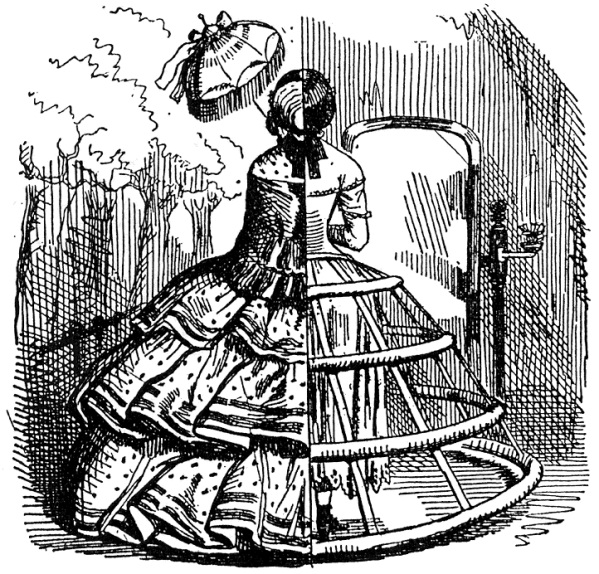
Cutaway diagram showing underclothes

Cutaway diagram showing underclothes

What did women wear under their beautiful dresses? The dressing regime of a lady would be seen as incredibly tiresome by today’s standards. Because the fashions came from Europe, the clothing would have been terribly warm and claustrophobic in the Australian climate. Let’s explore the stages of layering required to achieve the desired result for the fashion of the day.

Continue reading

What was eaten on the Goldfields; part 2

Recipes of the Bush

“Damper and Mutton”

“Tea and Damper” by A . M. Ebsworth. From Digital Collection of the State Library of Victoria.

“Tea and Damper” by A . M. Ebsworth. From Digital Collection of the State Library of Victoria.

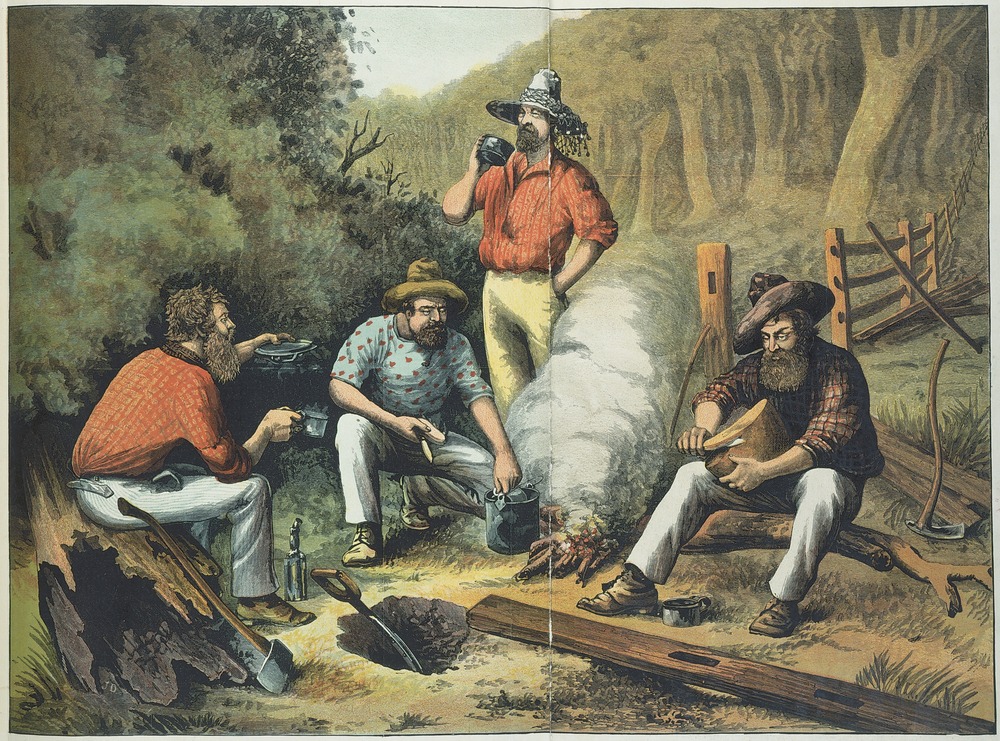
Following a previous blog post, we have tried to find a few examples of recipes from the gold rush period of our History. Robyn Annear (Nothing But Gold, 1999), says that one who lived through it called the early years of the Gold Rush (1851-1853) the “damper and mutton stage of the colony”. The foods most readily available were sheep (mutton) from the squatters and flour, sugar, tea and dried fruit as these would not go off quickly. This brings us to our first recipe – damper.

Damper and its variations.

This explanation is from James Bonwick, quoted in Nothing but Gold (1999);

Taking a washing tin dish, and clearing off the dirt a little, six or eight pannicans of flour are thrown in; a half table spoonful of carbonate soda, the like quantity of tartaric acid (together these are Baking Powder, sort of), and a spoonful of salt are then mixed together in a pannican and then well mingled with dry flour. Water is then poured in, the whole thoroughly knuckled, rolled into a good shaped loaf, and tumbled at once into the warmed camp oven. Fire is applied beneath and a couple of hours or less will turn out a loaf fit to be set before a queen.

Continue reading

Household Arts of the 1850s: A personal experience part 3.

The Woman of the Hill part 3.

Jenni enjoying a lighter moment from her stay

Jenni enjoying a lighter moment from her stay

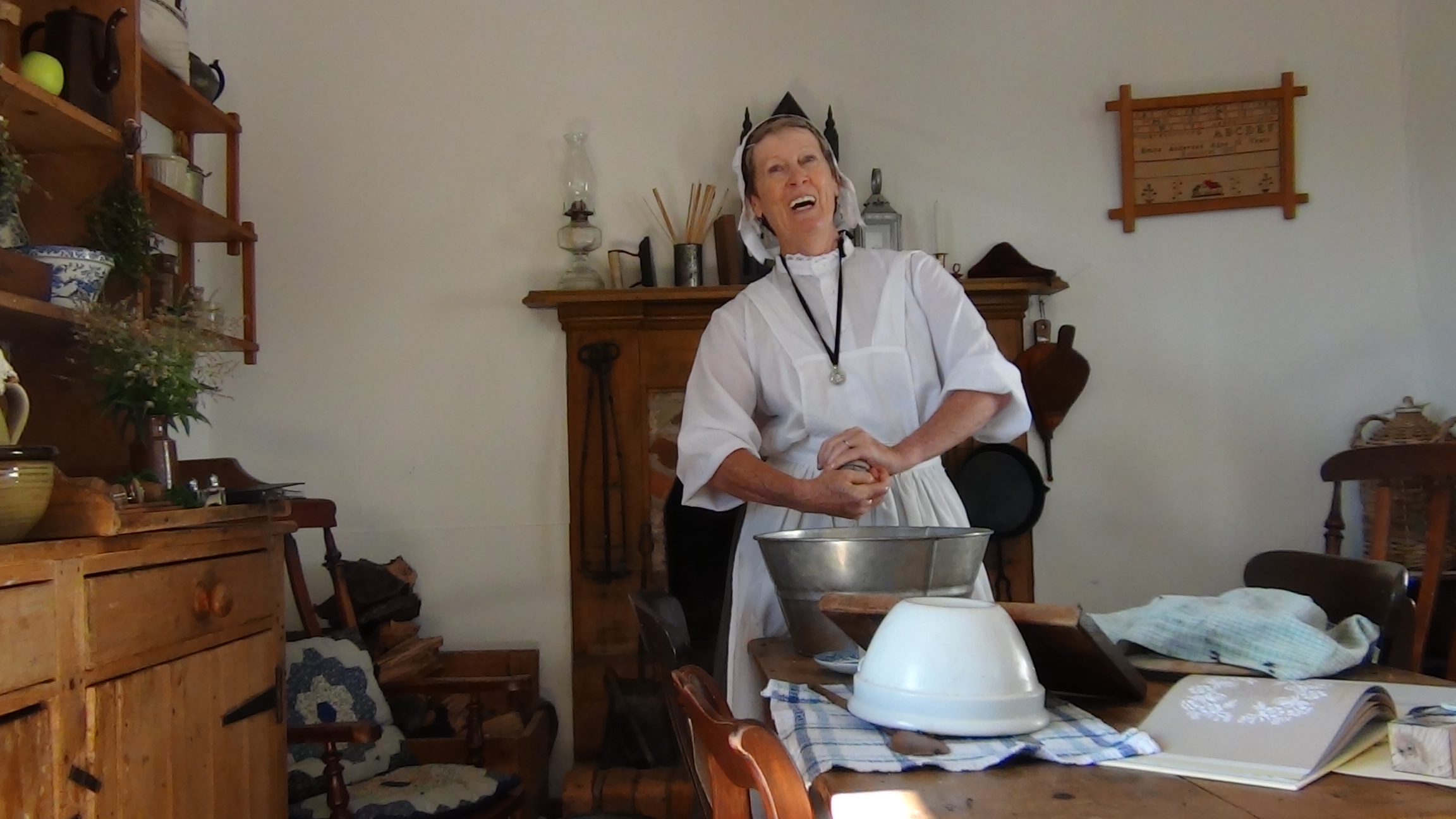
Our intrepid volunteer, Jenni Fithall, has completed her three days and two nights living in one of the cottages at Sovereign Hill Outdoor Museum.  During her stay approximately 3800 visitors, including about 1500 school children  came to Sovereign Hill. Many of these visitors and children visited Jenni in her cottage, so apart from living as a woman of the 1850s, Jenni also had to contend with a multitude of questions, photo opportunities and a constant stream of people walking through her little two room cottage. Continue reading