Category Archives: industrial revolution in australia

Why we do not say “hello”

or, “don’t” for that matter as we never “clip our words”
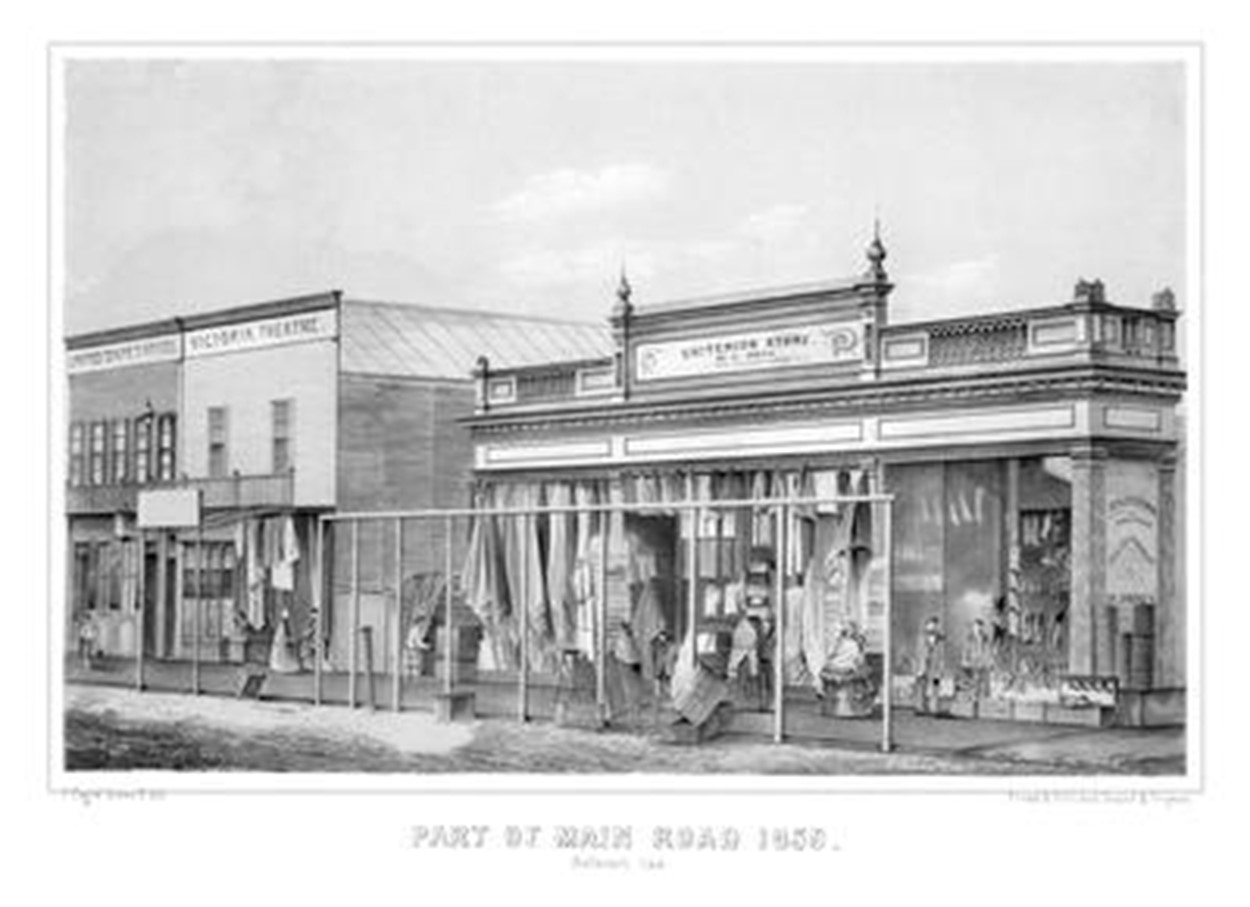
François Cogné 1859 (78.2403)
Ballarat’s middle class shopping on Main Road, Ballarat East in 1859

In welcoming you to the nineteenth-century world of Sovereign Hill one of the first things you may notice, after the clothing, is the way we speak to each other. We will greet you with “Good Morning” or “Good Day”, never “hello”. Why is this?

“Hello” is just emerging in the late nineteenth century as a form of greeting, earlier versions of ‘hullo’ or ‘holla’ were not in common use as greetings, they were informal shouts for attention. Could you go a whole day without saying “hello”?  In fact, it will take a big technological shift, the telephone, to change our use of ‘hello’.  Telephones change the rules of communication when you cannot see the speaker on the other end.  Legend has it, Thomas Edison championed “hello” (telephone inventor Alexander Graham Bell preferred “ahoy”)[1] as a useful greeting.

FitzGerald Postcard Collection (83.16892)

[1]“Quick Facts: Did Bell really say ahoy?” https://www.sciencemuseum.org.uk/objects-and-stories/ahoy-alexander-graham-bell-and-first-telephone-call accessed 21 Feb 2024 

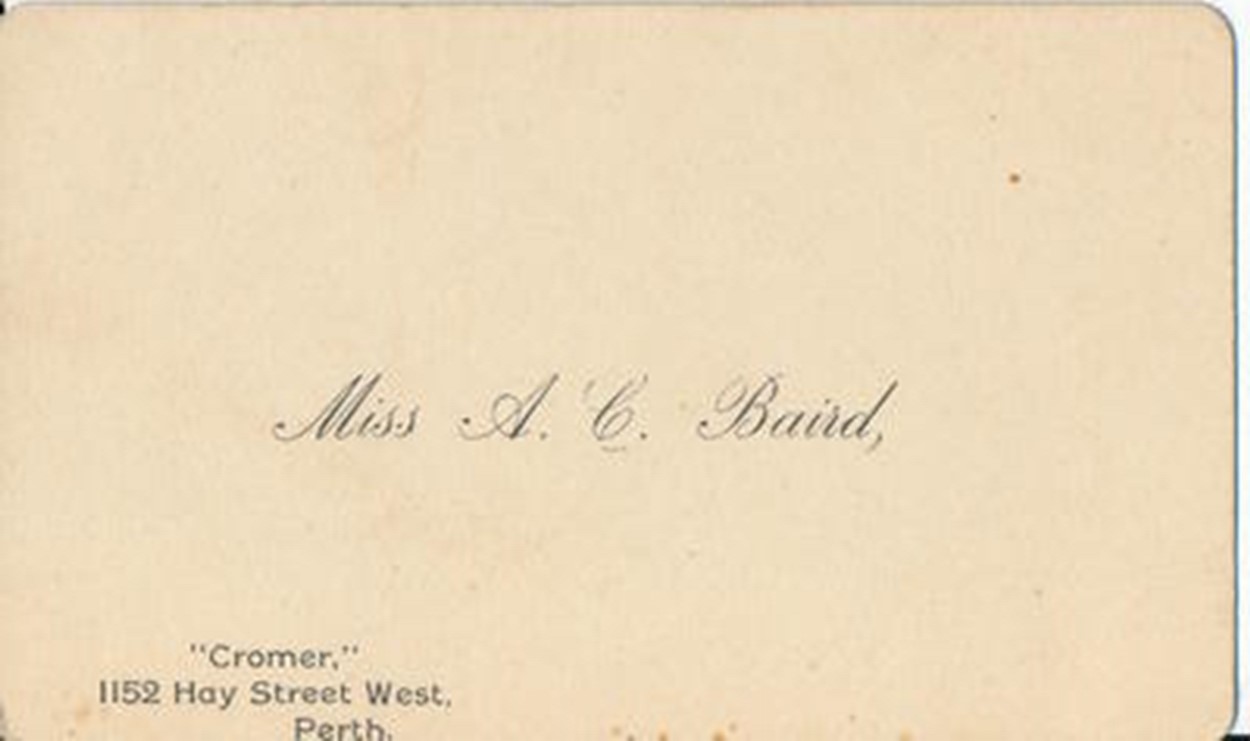
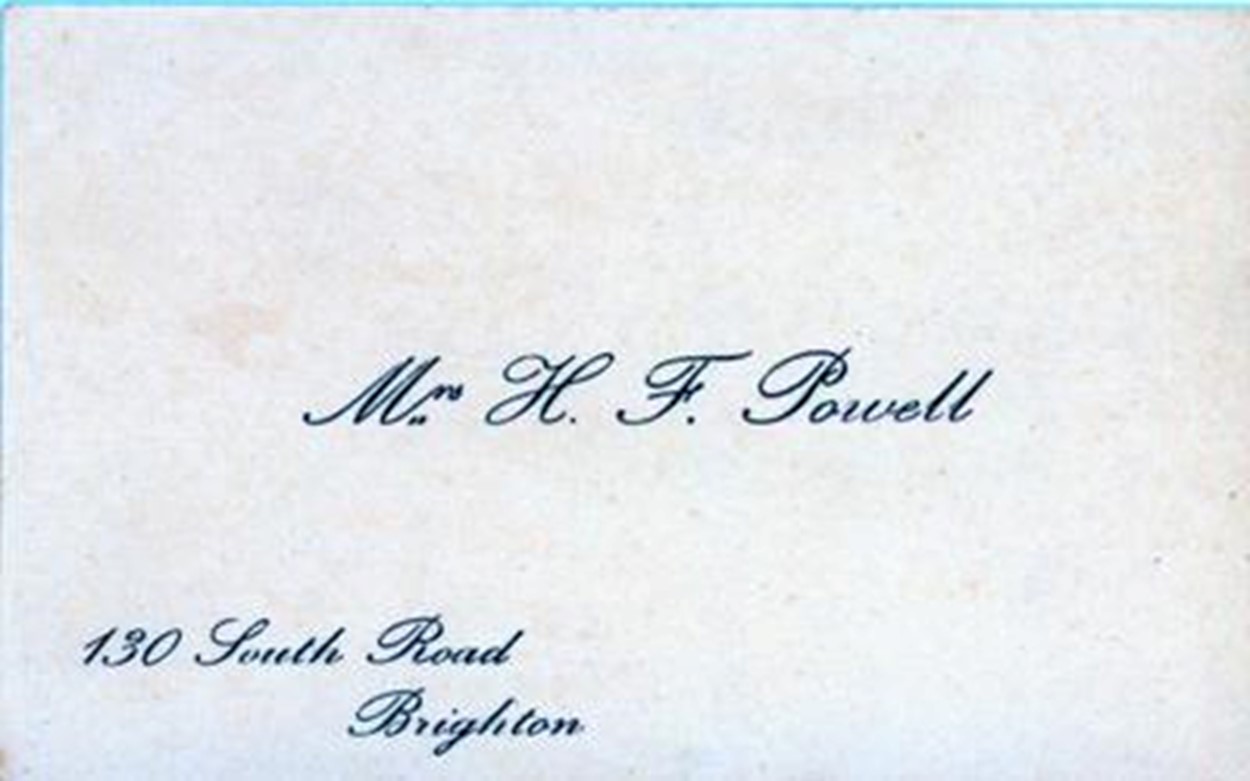
Before telephones, letters and calling cards provided introductions. You would leave a card, with your title and name, as an invitation to speak. We have several examples of these visiting cards in our collections. How many cards you left, whether you left a message on the card, or perhaps bent a corner of the card all sent a message to the recipient. It told the recipient you were home, that you were accepting visitors or that you would like to visit for example.

Is technology today changing the rules around who and how we behave when we speak to each other? Is this a good thing?
In our pre-telephone world, there are very clear rules around how we look at each other (or don’t!), move around each other and speak to each other depending on our relative age, power, and how well we know one another. These rules of behaviour in society, called “etiquette”, are taught and practiced at home and at school. They are also published again and again in books of manners and our collection contains several examples.

The nineteenth century is a period of big and increasingly fast change amongst the societies from which many of our goldfield migrants come. This big, fast change is often referred to as the Industrial Revolution. Along with the advent of steam power and factory production, and the move from country life to city life came the rise of the middle class.  The middle class was a group of people who did not come with titles (important family names and connections) or inherited power like the upper class, but who also no longer work in manual trades with little money, power, or education. This new group of people earn more money than it costs to live, have an education, and often professional jobs.
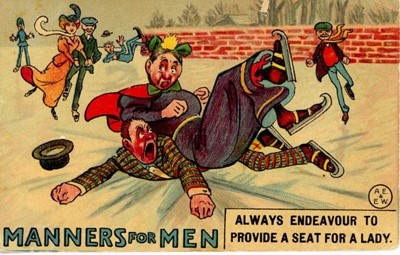
FitzGerald Postcard Collection (GM 83.16880)

The rules of behaviour are becoming a really important way of figuring out whether a person belongs in good society. In the dust and mud of the goldfields particularly it can be very difficult to tell if a person comes from the same background as you and fortunes are being made and lost very quickly. In a society used to organising people based on gender and social power, if you know and follow the rules you will have more opportunities to move up in the world. According to Australian Etiquette: Rules and usages of the best society, published in 1885, “He who does not possess them [good manners] … cannot expect to be called a gentleman; nor can a woman, without good manners, aspire to be considered a lady by ladies.”[2]

You may have noticed that our rules of behaviour are distinct for men and women. In the nineteenth century, there are very distinct understandings of what it means to be ‘male’ or ‘female’. 

Here is a primary source example from The Bendigo Advertiser, 1859, where the writer is very upset that a Magistrate at a stone laying ceremony called the females present women and deliberately not ladies[3]. What an insult! The Magistrate’s Excuse? As an aristocrat (upper class) he should know better, but as a soldier (different social space) he may have rough manners. Appropriate titles are important and make a judgement on the person’s background.

What sort of words does the writer use that tell us how to identify a lady or gentleman?

  • Gentleman: by birth, education, gone through a college curriculum, conduct
  • Lady: gentler sex, fair sex

The idea that men and women are made differently, and therefore behave differently[2], shows in different expectations of men and women, including in good behaviour.


[2] Australian Etiquette, or the rules and usages of the Best Society in the Australian Colonies. People’s Publishing Company, Melbourne. 1885, p. 19.

[3] “BAD MANNERS.” Bendigo Advertiser (Vic. : 1855 – 1918) 12 November 1859: 3. accessed 21 Feb 2024 http://nla.gov.au/nla.news-article87993464.

[4] For an example of someone who defied social conventions, explore the story of Edward de Lacy Evans. “The Mysterious Edward/Ellen De Lacy Evans: The Picaresque in Real Life” The LaTrobe Journal, No 69 Autumn 2002 https://latrobejournal.slv.vic.gov.au/latrobejournal/issue/latrobe-69/t1-g-t9.html accessed 21 Feb 2024


Our good behaviour rules may seem unfamiliar to you, as a visitor, as how we interact with each other has become much more familiar and much more diverse in the twenty-first century.  Do you have any classroom rules that you have to follow? Who made those rules? Are they different for boys and girls? Are they different for children and adults?

Meeting a new person is a good example of these changes. Our nineteenth century rules of etiquette say that we do not have to introduce someone. A formal introduction is like giving someone a good character reference for a job; if you have been introduced you must never ignore that person in future, it is very rude. Introductions must be done in the correct order: 1. Gentleman to the lady; 2. Younger to the older; 3. Inferior in social standing to the superior. Your social class decided who and how you spoke to others.

SOCIAL CLASSPROFESSION
Upper Class – landowners and investors, no manual labourAristocracy Rich gentry Royals Military Officers Lords Wealthy Men/Business Owners (new to this class)
Middle Class – skilled jobs, white collar professions with no manual labour, very class consciousMerchant Shopkeeper Bureaucracy – railroad, bank, government
Working Class – skilled jobs with manual labour, unskilled jobs, poor working conditionsTrades Factory work Labourers
*there was also an underclass of people in extreme poverty or “sunken people”

When you are introducing someone, you must use their title (which can let you know marital status, job, social achievement). Titles, and pronouns, are a great example of our changing society. We greet people by first name more often, may not use titles at all and our choice of titles and pronouns is expanding to become much more inclusive of different identities.

If you visit us, you may be greeted as “Sir” or “Ma’am” as an adult, or “Master” or “Miss” as a child, titles of respect in our time. It is respectful to greet a costumed person you meet with Sir or Ma’am. “Sir” is the title given to a gentleman whose name you do not know. “Ma’am”, short for madam, is the title for a lady whose name you do not know; it comes from the Old French for my lady. You must wait for the lady to look at you and nod a greeting first, before you speak to her, and if you are wearing a hat (which of course you would be in the nineteenth century) you would touch the side of the cap as you greet her. We do not generally shake hands when we meet new people; handshakes are more common between gentlemen, and we certainly do not high five. The high five will not be invented for another hundred years in our future.

Can you imagine how the rules might change again in the future? What do you think might be different about how we greet each other and what we call each other?
Environmental Changes to Victoria’s Landscapes

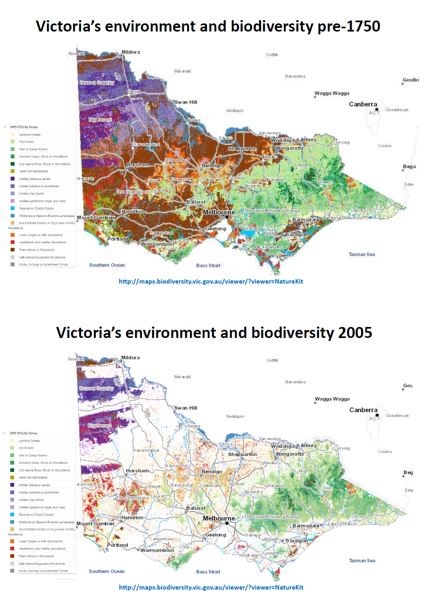
During the 19th century, what we now call the State of Victoria changed dramatically. In 1800, it was an organised collection of Aboriginal cultural landscapes, and by 1900, it was dotted with new industrial cities while the countryside was covered by farms featuring exotic animals and plants. With the introduction of European farming, the feverish gold rushes, a huge increase in population, and the impacts of the Industrial Revolution, Victoria’s landscapes were completely redesigned in less than a century. Let’s explore how and why the landscape changed, and reflect on some of the consequences of this change.

maps

Maps showing how much the surface of the landscapes have changed in Victoria since colonisation. Reproduced with permission from: https://www.environment.vic.gov.au/biodiversity/naturekit

For tens of thousands of years Victoria’s landscapes were carefully managed by Aboriginal people to produce food, fibre and medicine. In Ballarat, the Wadawurrung people farmed many plants and animals (and in some places still do today), often using fire to weed certain areas or to promote new growth. For example, on the sunny plains they farmed the murnong – a root vegetable like a mini-sweet potato. In forest areas with lots of old trees, they farmed the brushtail possum – the meat was eaten while the pelt (the skin with the fur on) could be turned into warm, waterproof clothing. By looking after landscapes carefully, they made sure there would be plenty of murnong and possums for the next generation and the many who would come after them. Such landscapes are today called Aboriginal cultural landscapes.

for blogAfter 1835, when hundreds and then thousands of European immigrants – mainly English and Scottish people – arrived to colonise South Eastern Australia with their flocks of sheep, traditional Aboriginal lifestyles and landscape management practices were interrupted. In the following sixteen years, almost all of what came to be called Victoria was divided up and made the private property of individual European farmers (known as squatters) and their families, leaving only the largest mountains and deserts un-colonised. The huge amount of wool that was produced as a result of this was sent to the new factories of England, and made many of these squatters very rich. Some historians believe this was the fastest land-grab in human history, with fences, foreign animals and protective European farmers with guns taking over. This meant the food, fibre and medicine that was being produced across Victoria’s landscapes changed radically in a very short time.

pastoral map

A map of Victoria which demonstrates how quickly European colonisation happened in this part of Australia. Reproduced with permission from the Gold Museum Ballarat Collection.

It is thought that the murnong was nearly extinct within 1-3 years after the arrival of sheep, because these new animals ate it and at the same time changed the nature of Victoria’s soils with their hard feet. Now, murnong is only found in a few places across the state. It fed people for tens of thousands of years (thought to have eight times more nutrition than the potatoes we buy from the supermarket today) and was a staple of Aboriginal diets all across South Eastern Australia (meaning it was eaten regularly, like most Australians now eat bread). Its sudden disappearance had grave consequences for 19th century Aboriginal communities.

The rapid changes to local landscapes left many Aboriginal people hungry. Occasionally they stole sheep, fruit and vegetables from the European farms to keep their families from starving. Some of the squatters reacted by killing the Aboriginal people who took these possessions, or any other Aboriginal people they found on or near their farms after a theft had taken place. As a result, we know that at least 69 massacres of Aboriginal people (where 6 or more people are killed at a time) occurred during the first sixteen years of European colonisation of what we now call Victoria.

Many Aboriginal people survived this period in our history – commonly called the “Squatter Era” – by adapting to the new colonial culture and economy. This often meant learning English, wearing European clothes, and eating the foods common to a European diet at the time. Due to this cultural change and a lack of access to land, Victorian Aboriginal people could no longer practice their landscape management to produce the foods, fibres and medicines of their ancestors. The old staple foods of murnong and possum had been replaced by wheat and lamb.

Black Thursday post-restoration

William Strutt, Black Thursday, February 6th. 1851, 1864. Reproduced with permission from the State Library of Victoria Collection. The largest fire in Victoria’s history happened in the summer of 1851. It burnt one quarter of the state, killed millions of animals, and a handful of people. Some believe this fire was so ferocious because Aboriginal people had not been able to practice traditional landscape management techniques (like firestick farming) for the 16 years beforehand, thanks to the arrival of sheep farmers. This meant that “fuel” (like dry leaves, branches, dead trees etc.) had built up across the state, making this a devastating fire both economically and environmentally.

Then, in 1851, some of Victoria’s landscapes began another transformation – the rush for gold brought thousands of new immigrants with shovels, axes and gold pans, eager to find their fortune. These gold seekers quickly multiplied (more than 500,000 new arrivals came to Victoria from all over the world between 1851 and 1861, which is the fastest population increase that Australia has ever experienced) as did the environmental change they caused to landscapes in the hunt for shiny yellow metal. Most did not plan to stay on the goldfields – or even in Australia – for long, and thought little of the lasting environmental impacts of their mining activities. Soil was upturned, rivers diverted and polluted, and trees were cut down at a rapid rate. These new arrivals all needed food, shelter and water, and took whatever could be collected from local landscapes, causing a number of plants and animals that had survived the Squatter Era to become locally extinct.

After the social change brought about by the Eureka Rebellion in 1854, many miners decided to stay and make goldfields like Ballarat, Bendigo and Beechworth, a permanent home. At this time, some local landscapes started to be protected for their beauty, or for their good soil for farming. However, this permanency also brought the Industrial Revolution to Victoria, with its wood-hungry steam engines and CO2 emissions. This transformed landscapes again. Trains, boilers, factories and foundries created urban industrial landscapes around Melbourne, Geelong, Ballarat and Bendigo which demanded yet more natural resources to be taken from local environments and re-purposed.

steam ops

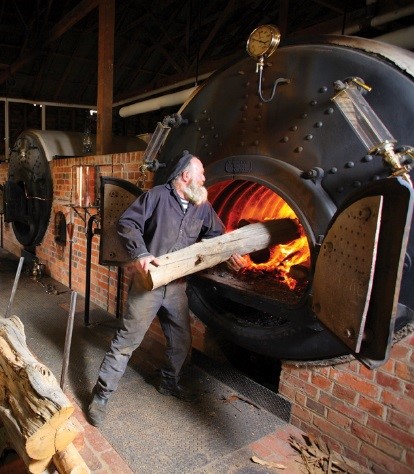
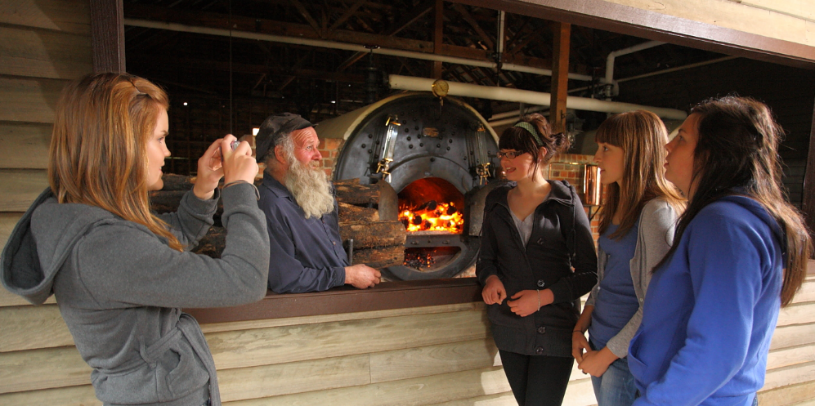
Sovereign Hill employee in the role of Boiler Attendant feeds a boiler to produce the steam to power working steam exhibits. During Australia’s Industrial Revolution, lots of communities burnt wood from local forests, instead of coal like their European equals to power their steam engines.

From this, modern Victoria as we know it today was born. There are many places across this state where sheep are still farmed, gold is still mined, and factories and foundries still operate. While Aboriginal landscape management practices were disrupted across most of Victoria for more than 180 years, in many places these practices are now being revived by Aboriginal communities and government agencies to help restore biodiversity, and manage bushfire risk. So, next time you travel around Victoria in a car/bus/train/plane, take a moment to think about how much the landscape has changed in recent history, and how it might change again in the future.

Links and References

Australia’s Aboriginal farming history in a nutshell: https://www.news.com.au/technology/environment/indigenous-historian-bruce-pascoe-says-weve-got-our-story-all-wrong/news-story/70518cd1c35efd73c126ec0c19bb8281

The National Museum of Australia has produced a free video series on Australian history, including environmental history: https://www.nma.gov.au/learn/classroom-resources/australian-journey

A free online podcast series made by La Trobe University on Australia’s environmental history: https://itunes.apple.com/au/course/australian-environmental-history/id499537077

The Australian Research Council on “Australia’s Epic Story”: https://epicaustralia.org.au/

Australia and New Zealand’s environmental history by professors Libby Robin and Tom Griffiths: https://ceh.environmentalhistory-au-nz.org/wp-content/uploads/Environmental_History_in_Australasia_2004.pdf

ANU Professor Tim Bonyhady’s take on Australia’s environmental history in “The Colonial Earth” (2003): https://www.bookdepository.com/Colonial-Earth-Tim-Bonyhady/9780522850536

The State Library of Victoria Ergo Blog on Victoria’s experiences of environmental change: http://ergo.slv.vic.gov.au/explore-history/land-exploration/environment

SBS Gold on the environmental impacts of the gold rushes: https://www.sbs.com.au/gold/story.php?storyid=124

Is modern Australian farming broken? https://theconversation.com/friday-essay-dark-emu-and-the-blindness-of-australian-agriculture-97444

An article from The Conversation called “What Australia can learn from Victoria’s shocking biodiversity record”: https://theconversation.com/what-australia-can-learn-from-victorias-shocking-biodiversity-record-113757

How? When? Why? – The Industrial Revolution in Australia

Last of England

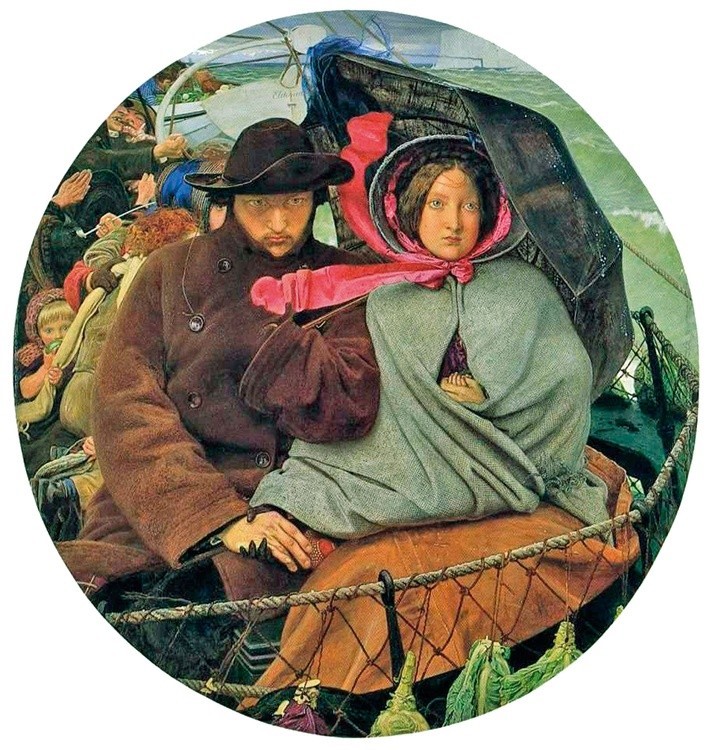
Ford Maddox Brown, The Last of England, 1855, reproduced with permission from the Birmingham Museum and Art Gallery.

Student visitors to Sovereign Hill often explore this painting during our education sessions because it can tell us interesting stories about the hundreds of thousands of people who came to Australia during the height of Ballarat’s gold rush. Painted by Ford Maddox Brown, it is entitled ‘The Last of England’. If we could, we would ask these people about the skills and ideas they are bringing with them to Australia, because these are the kind of people who shaped modern Australia into the country it is today. You can watch a source analysis of this artwork here. For better or for worse, European immigrants like these brought the Industrial Revolution, democracy, and a completely new agricultural system to this land ‘girt by sea’.

Let’s explore these imported skills and ideas in more detail.

Definitions:

Europeans realised there was gold in Victoria in 1851 at the height of the Industrial Revolution in Britain. In the same year Queen Victoria launched her Great Exhibition in London which showcased England’s new industrial technologies. Many of the six million people — equivalent to a third of the entire population of Britain at the time — who visited the Great Exhibition, were soon to join the mass migration to the Australian goldfields. They brought with them Industrial Revolution knowledge, experience and skills – many had ridden in trains, worked in factories, and believed that the ‘Age of Steam’ had made Britain the most powerful nation on Earth, and could have a similar impact on Australia.

Gill

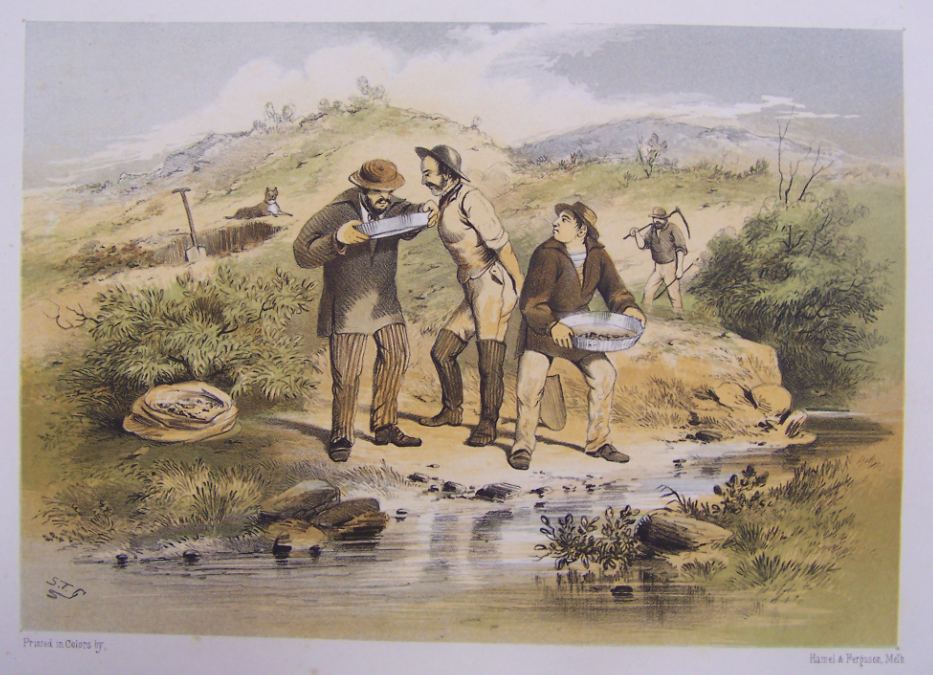
At the start of the Victorian gold rushes, only simple hand-held and often handmade technologies (like the ones in this sketch) were needed to find gold, but by the 1860s steam-powered machines were required to extract gold from deep underground. S. T. Gill, Prospecting, from The Australian Sketchbook, c.1865, reproduced with permission from The Gold Museum Ballarat.

After the Eureka Rebellion in 1854, the muddle of goldminers’ tents that people called ‘Ballaarat’ (a local Aboriginal [Wadawurrung] word for resting place) became a more permanent city. As the easily accessible gold started to run out, these immigrants began importing steam-powered machines from Britain so they could mine for gold trapped deeper underground. This meant that Ballarat’s mining changed from an individual occupation to a company (group) project, and helped to keep people here once the initial ‘rush’ was over. Without these technologies (which among other things pumped water out of mines and fresh air in, powered elevators, and crushed quartz to extract its gold) the Ballarat gold rush would probably have come to a grinding halt.

During the 1860s and 70s, many Ballaratians invested their gold wealth in local factories and foundries to build their own industrial machinery, such as steam engines and boilers. This meant that you didn’t have to wait a long time for your steam engine to arrive on a ship from the other side of the planet, you could instead purchase it (much more cheaply) from a foundry just down the road.

Phoenix

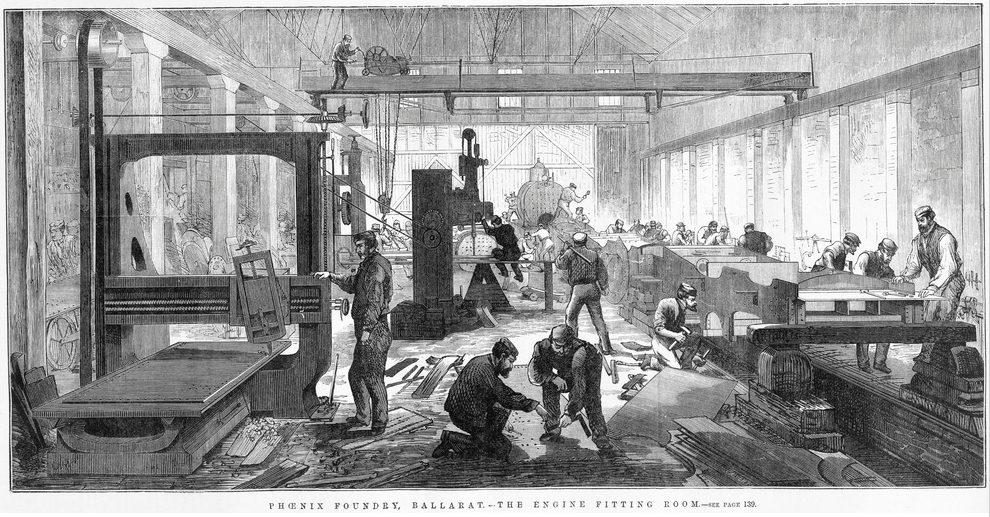
The Phoenix Foundry in Ballarat – capable of smelting iron to create steam engine components and steam trains. S. Calvert, PHOENIX FOUNDRY, BALLARAT. – THE ENGINE FITTING ROOM (where Target in central Ballarat is located today) 1873, reproduced with permission from The Gold Museum Ballarat.

Many Victorian towns had been built on gold by this time, but many withered and died as soon as their gold ran out, to the point that many are now ghost towns. However, Ballarat and Bendigo are major regional cities today, and although there are still gold mines in or near both, they do not rely on gold to continue to grow. So what are the things that decided whether a town would grow, survive or die after a gold rush? We think the answer involves the arrival of the Industrial Revolution in Australia.

The decision to change the local economies and jobs in these cities from mining to manufacturing, helped these cities to continue to grow and thrive. Immigrants with experience building railways, factories, foundries, and deep mines back in Britain used their knowledge and skills to start an Industrial Revolution here. Had it not been for the gold rushes, it may have taken much longer for such steam-powered inventions to arrive in Australia.

By 1900 the Ballarat region was dotted with steam-powered machines, and the people who lived here enjoyed mass-produced and therefore cheaply-made goods. Much came from local factories, but as steam trains and ships were making product transport much faster and safer than people had experienced before, buying things from overseas became easier than ever. Tractors and other farm technologies, along with introduced plants and animals (such as wheat and sheep) were also industrialising the way food, fibre and medicines were produced, and because we could support a growing population with jobs and food, modern Australia started taking shape.

Queen Mine

An example of a (steam-powered) company quartz mine in Ballarat. F. Kruger, Queen Mine (near Black Hill, Ballarat), 1887, reproduced with permission from The Gold Museum Ballarat. 

Australia’s Industrial Revolution did have some significant environmental impacts which should be explored – namely in the way it required lots of trees to be chopped down to burn in boilers (local wood was also used to build houses and line mineshafts). This deforestation devastated local forests and caused the localised extinction of many plants and animals. Due to advances in industrial mining and transport technology, when wood couldn’t be regrown fast enough to replace what was being burned/built with, Australians started burning coal to produce power instead (once huge quantities of it were discovered). Read more about the environmental impacts of the Victorian gold rushes and Australia’s Industrial Revolution here.

While democracy – like the Industrial Revolution – was on its way to Australia one way or another, it is often argued by historians that the gold rushes and the Eureka Rebellion helped it get here faster. You can read more about this here.

Yr9 IR

Some Year 9 students learning about the arrival of steam power in Australia and visiting many of Sovereign Hill’s related museum exhibits through the education session entitled ‘The Industrial Revolution in Australia’.

In summary, we think that Australia’s Industrial Revolution was likely sped-up by the gold rushes. If you would like to visit Sovereign Hill to learn more about this topic, we offer an education session for students entitled ‘The Industrial Revolution in Australia’.

Links and References

Wikipedia on the Industrial Revolution: https://simple.wikipedia.org/wiki/Industrial_Revolution

The impact of the Industrial Revolution on England: https://www.history.com/topics/industrial-revolution

A great video about the Industrial Revolution: https://www.youtube.com/watch?v=zhL5DCizj5c

A Sovereign Hill Education video on the Industrial Revolution in Australia: https://www.youtube.com/watch?v=kfVW6Xq3Pd4

An old post on the Sovereign Hill Education Blog called ‘The Industrial Revolution in Australia’: https://sovereignhilledblog.com/2013/02/06/the-industrial-revolution-in-australia/

Another old post on the Sovereign Hill Education Blog called ‘The Industrial Revolution in Australia: Part 2’: https://sovereignhilledblog.com/2013/04/29/the-industrial-revolution-in-australia-part-2/

Sovereign Hill Education Blog on the ‘Environmental Impacts of the Gold Rush’: https://sovereignhilledblog.com/2014/09/01/the-environmental-impact-of-the-gold-rush/

A history of Ballarat featuring lots of great primary source images: http://ballaratgenealogy.org.au/ballarat-history

Encyclopaedia Britannica on the Industrial Revolution: https://www.britannica.com/event/Industrial-Revolution

The Khan Academy on the Industrial Revolution: https://www.khanacademy.org/partner-content/big-history-project/acceleration/bhp-acceleration/a/the-industrial-revolution

A Gold Museum blog about a model train made by apprentices at Ballarat’s Phoenix Foundry in 1878: https://goldmuseumballarat.wordpress.com/2013/02/25/phoenix-foundry-model-locomotive-engine/

A podcast about the environmental impacts of Ballarat’s gold rush: https://talesfromratcity.com/2018/08/12/episode-eight/

A blogpost from the MAAS (Museum of Applied Arts & Sciences): https://maas.museum/inside-the-collection/2018/08/29/industrial-revolution-in-australia-impact-on-manufacturing-in-the-1800s/