Category Archives: Sovereign Hill

Gold Rush Icons and Their jewels

Lola Montez
Date
[ca. 1846 – ca. 1861]

http://handle.slv.vic.gov.au/10381/40191

In 1851 and 1862 Victoria produced 27,770,666 troy ounces of gold (over 800 tons), valued at about 110 million pounds at the time. The gold produced during this time was highly prized and would often be melted and transformed into different objects. Objects made from gold could include – coins, bullion, gold leaf, jewellery and even gold teeth!

Gold has been used in the making of jewellery Before Common Era (BCE) and has for many people, been seen as a symbol of wealth. Gold, being a rare metal, dominated the appearance of jewellery in the 19th Century. The gold being taken out of the earth in Ballarat from 1851 meant that by 1855 jewellery shops were appearing on the Ballarat landscape. Two men, who arrived from England, seized this business opportunity and opened a jewellery store, called Rees and Benjamin within Ballarat. You can visit Rees & Benjamin on the Main Street of Sovereign Hill to purchase jewellery.

Miners Brooch (1850’s) (GM07.0047)

The jewellery designs in the 1850’s reflected mostly the English style. However, jewellery being made in Ballarat could also take on a uniquely Australian design of flora and fauna and even mining. One lady on the Ballarat goldfields during this time, Lola Montez, who was a stage performer, was sometimes given gold jewellery by gold miners during her on-stage performances. One gold brooch given to Lola, as a token of appreciation in Melbourne in 1855, was then later sold by her, during her travels around San Francisco (America) a year later.

Before the mid-1850s, gold was a desired resource and usually only the wealthy could afford to have jewellery pieces, made from gold and other precious materials, handmade by a jeweller. However, largely due to the gold rush and the Industrial Revolution (creating a new emerging middle class of wealth), jewellery was becoming more affordable and popular. The Industrial Revolution made the manufacturing of jewellery more cost-effective and attainable for other levels of society. The invention of electroplating (metal coating) during this time was ideal for making inexpensive jewellery, that more people could afford to buy.

One of the great influencers of jewellery fashion in the 19th Century was Queen Victoria. Her reign as Queen on the British throne went from 1837-1901. During that time, she had great influence over the world’s fashion, including jewellery. Much like social media influencers today, Queen Victoria made a societal impact on the jewellery and fashion trends during the time she reigned. Examples of popular styles of jewellery in the mid-19th Century included lockets, rings, large bangles, brooches, crosses, and necklaces. Jewellery such as earrings were also fashionable in the Victorian era. Queen Victoria had her ears pierced when she was fourteen years old and one of her painted portraits shows her wearing dangling earrings. Wearing lots of jewellery before the mid-19th century for very young girls was frowned upon. However, ladies would wear large and chunky jewellery as well as delicate bejewelled pieces.

Locket with hair (GM 2012.0446)

Jewellery fashion in the 19th century was a little bit different compared to our jewellery today. Queen Victoria had a favourite piece of jewellery that she wore – a locket that contained her husband’s (Prince Albert) hair. Queen Victoria also wore and gave her children jewellery made from hair. In fact, a lot of jewellery of that time was made from hair, teeth, and animal claws. Prince Albert even designed a brooch for Queen Victoria that included their first daughter’s, Vicky, first milk (baby) teeth!

Another trend Queen Victoria made popular was that of receiving an engagement ring before marriage. Prince Albert gave Queen Victoria an engagement ring that was in a snake (serpent) design, with its tail in its mouth, entwined. In Victorian times this design symbolised eternal love. The snake design and many others would become popular amongst jewellery designers due to Queen Victoria.

In 1861, when Prince Albert died, Queen Victoria began wearing black jewellery, called mourning jewellery. This was mostly made from Whitby Jet (fossilised coal found in Whitby, England) and started a trend that lasted until around 1890.

Whitby Jet Jewellery (GM 84.2010)

Did you know?

  • The ‘Welcome Nugget’, a substantial gold nugget dug up in Ballarat in 1858 was eventually sold to the British Mint and melted down to make minted gold sovereigns coins. The coin, on one side, would have held an impressed image of Queen Victoria on its obverse. 
  • Prince Albert also designed a brooch for Florence Nightingale. (Florence was named as such due to her being born in Florence, Italy).
  • Sea coral was popular and used in jewellery during the Victorian Era.
  • During the Paris Exposition of 1855, a life-size portrait of Queen Victoria was made completely out of hair!

Goldfields Life: how active were its residents?

People in the 1850s on the goldfields in Ballarat remained physically active differently to today. Today, people count their steps and go to the gym to keep active.  School children keep active by playing sport and have Physical Education classes at school. In the past, mid-19th Century people had a very different lifestyle. Home duties and tasks to be completed around the home were unpaid work, and mostly completed by the women and older children in the household. Home duties were arduous and what was often considered ‘women’s work’, they required strength and resilience, especially when the 1850s household duties required hours upon hours of manual labour. Forward to today and groups in society are still calling for pay parity and equal opportunities.

Today, accessing clean noncontaminated hot and cold water in our home is as simple as turning on a tap. In the 1850s, if you weren’t wealthy, there were no taps in your house and no plumbed water. Most often children would have to collect the water with buckets, from the nearest water source. For many families, this could be downhill and a distance from your house. During the winter months collecting water closer to your home may have been easier with the seasonal rain, however, accessing water in the summer dry months, would have been physically exhausting.  Collecting water would mean having to walk heavy buckets filled with water to your house.

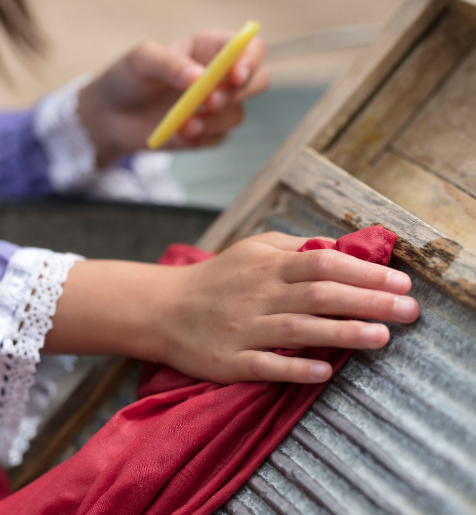
Think about everything you need and use water for in your daily life – drinking, bathing, brushing your teeth, washing clothes, watering the plants, and cooking.  Even the simple task today of washing the laundry would be physically demanding. The current average washing machine (7.5 Kg) uses about 64 litres to do one wash. Imagine now if you had to bring all that water up from the creek before you could start the washing.  It could take up to 189 litres or 17 buckets to do a load of laundry in the 1850s. Washing clothes in the mid-1800s was hard and laborious work. It wasn’t as simple as placing laundry into a washing machine and placing the laundry on the washing line to dry. Instead, it was a time-consuming and tiring process.  The laundry would first be soaked in tubs of water overnight. The next day, the laundry would be soaped, boiled, or scalded, rinsed, wrung out, mangled, dried, starched, and ironed, often with steps repeating throughout. This could have been done up to three times. Laundry would be scrubbed up and down on a washboard, by hand.

Laundry was sometimes dollied (this would mean using a wooden dolly that you would turn by hand – pictured above right) for 45-60 minutes (this is like the oscillation or turning process your washing machine does today). The wringing of laundry (getting rid of excess water out of material) was sometimes done first by hand and then squeezed through a machine called a mangle (pictured above left). The mangle required each piece of washed laundry to be squeezed or wrung through, piece by piece, it was also hard to turn, manually by hand.  This would have caused a lot of sore arms! The wet laundry could be put through the mangle up to four times (the final fourth time would be before it would be hung out on the washing line outside, to dry).

At home in the 1850s, ironing traditional fabrics without electricity was also a hot, arduous job. Irons had to be kept immaculately clean and polished. Irons in this era did not have temperature controls like they do today, constant care was needed not to scorch material. The iron, depending on which one you were using, could weigh between 2 and 6 kilos requiring a lot of heavy lifting.

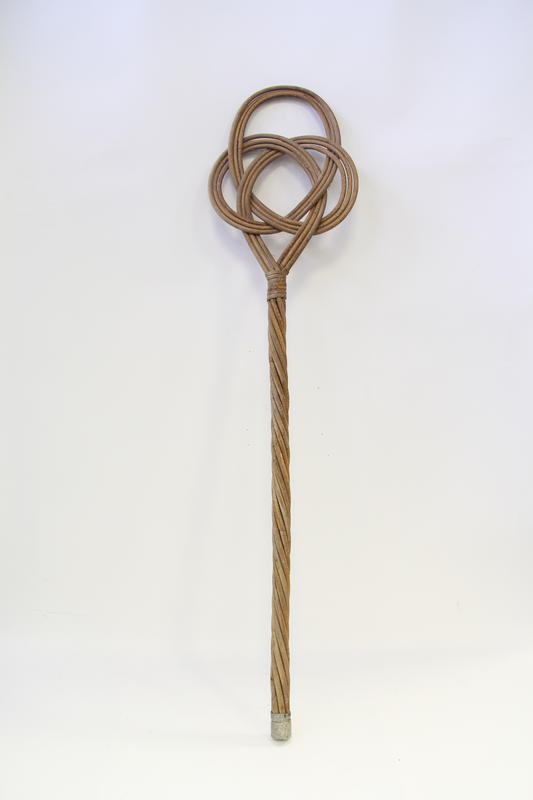
(GM Carpet beater; 06.0064)

Keeping the floors of a home clean in the 1850s was another task that was physically requiring muscle power. Today in our homes we have automatic vacuum cleaners that can be programmed to go around the home via a mobile phone app. However, in the mid-19th Century, sweeping floors, and beating rugs, and carpets would be done by the women of the household. In the 1850’s not everybody could afford expensive rugs, so many would make their own rugs out of scrap pieces of material (called rag rugs). Even a small rag rug would keep your feet warm getting out of bed on a cold morning!  If people were fortunate enough to own rugs, cleaning such carpets or rugs was no easy task. To clean the rug/carpet you would take the rug outside, hang it over a fence, and then beat it with a carpet/rug beater (a handle and large flat paddle, usually made of cane-shaped in a knot). This was sometimes done twice a day.

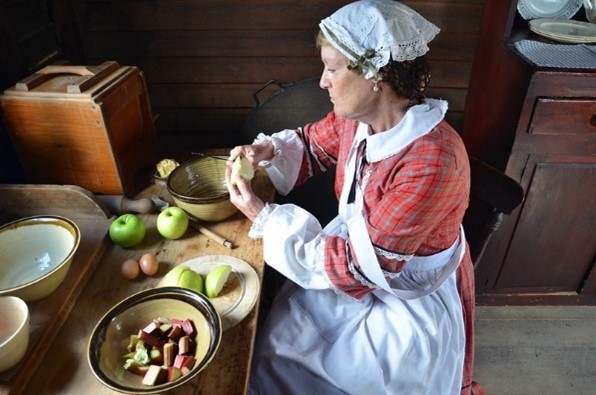
A lot of physical work was required in the 1850s to make daily food. There were no takeaway meals and no microwaves in the mid-19th Century. For some, there would be a local shop nearby that would provide essential staples (e.g. flour, sugar), but there were no supermarkets or mass pre-packaged food items for convenience, like today. The food was not pre-packaged and there were no refrigerators, as we know them today. Therefore eating seasonal produce was essential.  Women of the household, to ensure there was enough food and variety in their family’s diet would pickle foods such as tomatoes, piccalilli, and chutney. To make a preserve could take 3 hours over the stove. These preserves could be kept for months (no use by dates or best before in the 1850’s).

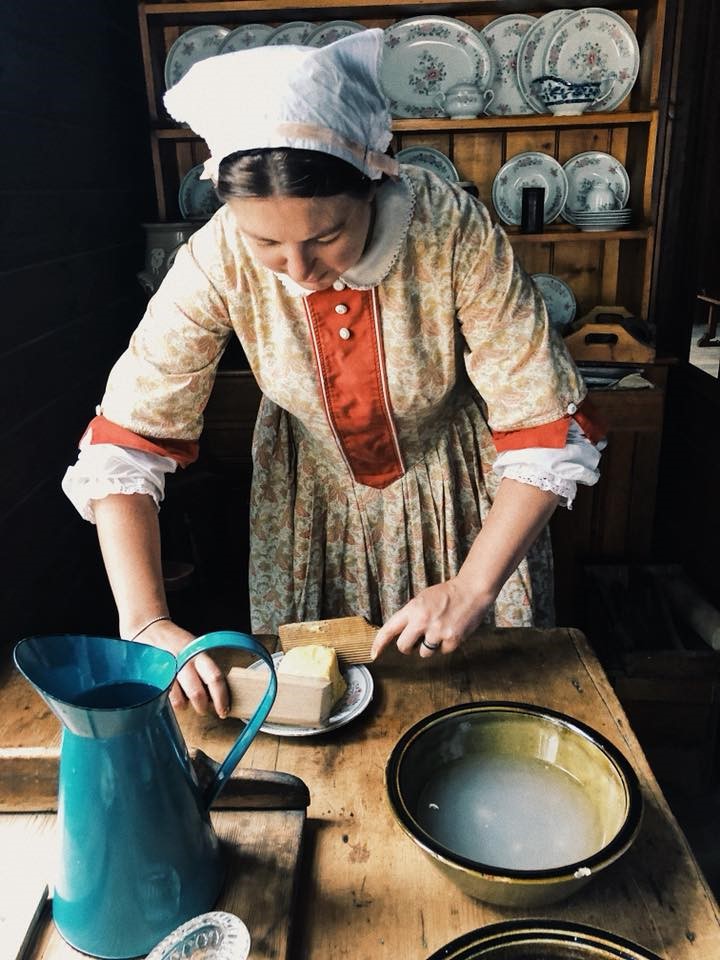
Other domestic physical work that had to be done daily would have included feeding animals and looking after them (chickens for eggs and cows for milking). One labor-intensive home duty could include making the family’s butter. Butter could be purchased from the store; however, many families saw this as expensive and would make their own. The process involved milking the family’s cow and allowing the milk to stand on its own overnight until the cream rises to the top. The next step would be to skim the cream off the top, place it into the butter churner, and turn it by hand. This would take approximately around 20 minutes of vigorous turning to turn into butter.  Not to be forgotten household work by women and children would be foraging nearby areas for extra food, cleaning the house, garden maintenance, and emptying the chamber pot (toilet).

Interesting fact – Midway through the 19th century, Dr. John Snow discovered that cholera was being transmitted through unclean water. However, putting chlorine in the drinking water, so drinking water would become safe to drink, would only begin in the early 1900’s.

Women on the Goldfields Part 3 – Working in the Home

chamber

.A costumed character at Sovereign Hill emptying the contents of a chamber pot. This is yellow cordial, not real urine.

The most valuable and respected role a European woman in the 19th century could undertake was that of housewife. Making a home, which included: raising the next generation (educating children, feeding them a nutritious diet, and caring for them during times of sickness), managing all of the chores, mastering needlework, and being able to make an excellent meal for guests, was an accomplishment that women worked hard to achieve, as many still do today.

This final blogpost in our series on goldrush women focuses on the domestic lives of European women living on Victoria’s goldfields in the 1850s.def3

The Art of Housewifery

The culture that European immigrants brought to Australia’s goldfields promoted the idea that women should manage the private life of the family, while men should be involved in public life, which included holding a job outside the home. During this time in history, housewifery was a highly honourable family and community role for women, and the majority of women were proud to perform it (as many are today). While 21st century Australian women might not hold housewifery in the same high regard, it is important to respect the status of housewifery back then.

A woman’s success in housewifery depended very much on her education in the ‘domestic arts’ and the money her husband could spend on their household.

cooking

One of Sovereign Hill’s volunteers teaching visitors how butter was made by hand in a mid-19th century kitchen.

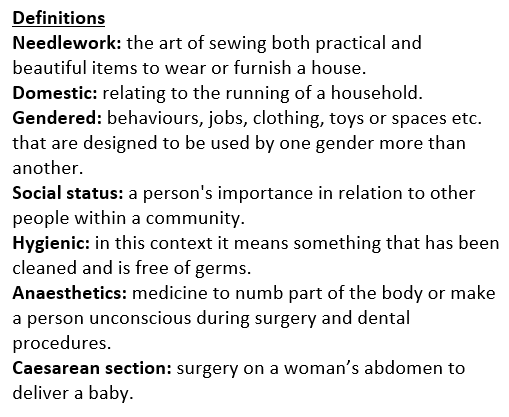
While some girls were being sent to school at this time in European history, it was much more common for boys to attend lessons with a qualified teacher. Girls instead were typically kept at home where their mothers would teach them how to cook, clean, sew and raise children because these were the most important skills for a woman to have at this time. Girls who were taught to read (which was considered worthwhile by many as they could then teach that skill to their children) could also learn from books on housewifery such as ‘Mrs Beeton’s Book of Household Management’ (published in 1861). Even if girls had the opportunity to attend school, they were often taught gendered skills like sewing, which was particularly helpful to those whose mothers had died before their skills could be passed on.

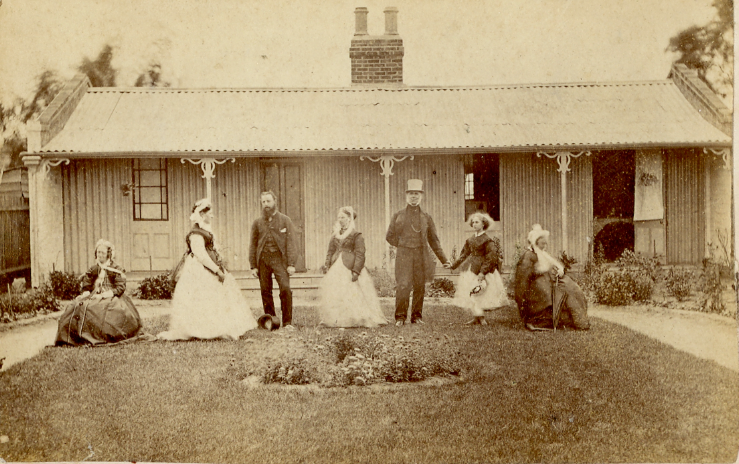
Being able to ‘keep a wife’ was an indication of a man’s status, meaning a woman’s clothing, their home and its contents communicated his social and economic success. A European man would have been ashamed if his wife was forced to take a job outside the home to support the family; it was a sign to others that he had failed as man. For a brief time, these European social norms brought to Victoria’s goldfields shifted (read more about this here), but not for long. In the 1850s, almost all of Ballarat’s miners were young men who came to the goldfields by themselves or with their male friends or family. They needed to make some money before they could afford to marry.

Living Conditions for Married Women on the Goldfields

fam

Photographer unknown, Eliza Perrin and her children, c.1860. Reproduced with permission from The Gold Museum, The Sovereign Hill Museums Association. The dress Eliza is wearing here is also in the Gold Museum Collection.

At the start of Victoria’s gold rushes, Europeans on the diggings typically lived in tents and huts. This made it hard for families to keep children healthy and maintain bodily cleanliness, especially during Ballarat’s famously cold winters. However, there were a small number of very resilient women living on the goldfields during this time. It was only in the mid-to-late 1850s, once the community became wealthier and locals started living in more permanent homes (normally made of weatherboards or bricks), that female immigration from Europe increased. This change encouraged the number of families to grow. More hygienic living conditions (including better systems for managing human waste) also made it safer to raise children.

Despite improvements in living conditions, every pregnancy a woman faced was a risk to her life no matter what her social status. Experiencing complications during childbirth was one of the most common causes of death for women until recent history. Until the mid-20th century, most women birthed their babies at home, and if complications occurred, there was a high risk that both mother and child would die. The use of anaesthetics to ease the pain of childbirth was popularised after chloroform was given to Queen Victoria when had her eighth child in 1853. Anaesthetics as we know them today, that enabled caesarean sections to be performed were not available until later in the 19th century. Even then, the risk of death from post-operative infection was still high. A woman could also bleed to death or develop a deadly infection following the successful birth of her baby. Antibiotics and blood transfusions that could save both mother and baby only came along in the 20th century.

Ballarat’s women had a particularly hard time birthing and raising children without the support of their own mothers and older women with childrearing experience. Emily Skinner travelled to Victoria in 1854 and wrote this about her lonely experience of motherhood: “You mothers in England little imagine how blessed you are compared with poor women in the diggings, at this time, especially such as I, who knew nothing about babies and their management”.

Keeping children alive during their most vulnerable early years of life also presented goldrush women with significant challenges. About a quarter of Ballarat’s children died before the age of five in the 1850s, usually from drinking polluted water. Until 1859, people didn’t know that germs existed and were the main cause of disease. At least goldrush women knew not to let their babies crawl on the filthy ground, whether they knew about germs or not. Crawling as a developmental stage in a child’s life only started being encouraged in the late 19th century thanks, in large part, to Germ Theory.

Domestic Technologies

Making a healthy and happy home for a family remains a challenging job for women, even though men today tend to play a larger role in childrearing and undertake more household chores compared to men in the past. Back then, however, housework was much more physically demanding because there were no washing machines, vacuum cleaners or supermarkets. Whether a woman was managing her own domestic duties, or was a maid working for a wealthy family, this job could include many responsibilities such as collecting water (plumbing arrived in Australian houses later in the 19th century), chopping wood, growing and making food from scratch, washing/ironing/sewing the family’s clothes, and disposing of the contents of chamber pots. Lower-class wives frequently washed other people’s laundry or sewed clothes to help pay their family’s bills, while middle class wives owned ‘high-tech’ cleaning technologies (like a charcoal iron instead of a sad iron) to make their chores easier. Wives in the upper classes usually had maids and cooks to do all of this work for them.

fam2

Photographer unknown, family outside home, c.1860. Reproduced with permission from The Gold Museum, The Sovereign Hill Museums Association.

One of the most important technologies to affect women’s lives during this time was the sewing machine. On average, it took an experienced sewer about 15 hours to hand-stitch a man’s shirt, but a sewing machine cut that time down to only an hour and a half. Inventions like these became status symbols for middle-class families, and could help many lower-class women make money by producing clothes for sale from the safety and privacy of their homes.

In addition to this busy workload of chores, housewives educated their children, cared for the sick and elderly, and often volunteered for their church. It’s no wonder they used to say “a woman’s work is never done”!

The lives Australian women live today maintain many of the traditions explained in these three blogposts, however, some have been rejected or replaced with new social norms and a focus on gender equality. What do you think Australian womanhood will look like in another 100 or 200 years?

Links and References:

Sovereign Hill Education’s student research notes about women on the Ballarat goldfields: http://education.sovereignhill.com.au/media/uploads/SovHill-women-notes-ss1.pdf

A State Library of Victoria blogpost on women on the goldfields: http://ergo.slv.vic.gov.au/explore-history/golden-victoria/life-fields/women-goldfields

An SBS blogpost about women on the goldfields: https://www.sbs.com.au/gold/story.php?storyid=27#94

Two Sovereign Hill Education blogposts on 1850s women’s fashion: https://sovereignhilledblog.com/2012/02/28/gold-rush-belles-womens-fashion-in-the-1850s/   https://sovereignhilledblog.com/2013/09/06/gold-rush-undies-womens-fashionable-underwear-in-the-1850s/

A Sovereign Hill Education blogpost on general clothing in the 1850s: https://sovereignhilledblog.com/2018/06/19/1850s-fashions-in-australia/

A Sovereign Hill Education blogpost on keeping the floor clean: https://sovereignhilledblog.com/2012/08/28/household-arts-of-the-1850s-sweeping-beating-and-scrubbing/

Two Sovereign Hill Education blogposts on laundry: https://sovereignhilledblog.com/2016/04/22/in-praise-of-washing-machines/     https://sovereignhilledblog.com/2012/02/09/household-arts-of-the-1850s-laundry/

A Sovereign Hill Education blogpost on ironing: https://sovereignhilledblog.com/2012/08/13/household-arts-of-the-1850s-ironing/

A series of videos made by a Sovereign Hill volunteer who attempted to live 1850s-style in one of the small houses within the outdoor museum for a few days: https://sovereignhilledblog.com/2013/03/05/household-arts-of-the-1850s-a-personal-experience/    https://sovereignhilledblog.com/2013/03/20/household-arts-of-the-1850s-part-2-the-first-night/    https://sovereignhilledblog.com/2013/04/03/household-arts-of-the-1850s-a-personal-experience-part-3/

A Sovereign Hill Education blogpost about Lola Montez: https://sovereignhilledblog.com/2017/07/19/who-was-lola-montez/

A Culture Victoria webpage about the few Chinese women living in 19th century Victoria: https://cv.vic.gov.au/stories/immigrants-and-emigrants/many-roads-chinese-on-the-goldfields/voyaging-to-australia/who-were-they/nearly-all-men/

Women on the Goldfields Part 2 – Working Outside the Home

alice

Alice Cornwall, also known as ‘Madam Midas’ ran a company mine and became a millionaire by the age of 30. Reproduced with permission from the Gold Museum.

While getting dirty hands in search of gold was viewed as a man’s job in the imported European culture of 1850s Victoria, there were many hardworking and enterprising women making a living in Ballarat during this era. In addition to managing families and households, some women on the goldfields opened shops and eateries, or worked as teachers and entertainers. There is even evidence that a few women swapped their skirts for trousers to search for gold, one became a newspaper editor, and later in the 1800s a woman named Alice Cornwall became a millionaire by the age of 30 through the company mine she owned!

Back then, it was rare for a married woman in Europe to hold a job outside her home, or to play a role in public life. However, the conditions on Australia’s goldfields provided some women with new opportunities and different lifestyles compared to their equals back in Europe. This second blogpost in our series on 1850s goldrush women explores their roles in Victorian communities beyond the home.def2
Working Wadawurrung Women on the Diggings

The Wadawurrung women of the Ballarat region experienced rapid changes to their lifestyles and local environment when Europeans began to colonise South Eastern Australia in the early 19th century. Therefore, by the time the gold rushes began in Ballarat 1851, historians tell us that some Wadawurrung people already spoke English and understood the new political and economic systems that Europeans had introduced. Using their skills in tanning/sewing possum skins, sourcing native food and medicine, fossicking for gold, putting on cultural performances and taking Europeans on tours of the landscape, Wadawurrung women (and men) made money from Europeans by supplying these goods and services. According to oral history handed down by members of the Wadawurrung community, European families also turned to Wadawurrung women when they needed someone to babysit their children.

Working European Women on the Diggings

In the early 1850s, there weren’t many European women living in Ballarat. As explained in Women on the Goldfields Part 1, most of the people who came to try their luck on Australia’s goldfields were European (mostly from Britain), and gold rush communities tended to be male-dominated during this time. By the mid-1850s, Ballarat had become one of the richest places in the world, and as a result of this and the government push to encourage female immigration, the number of (mostly young) women on the goldfields grew.
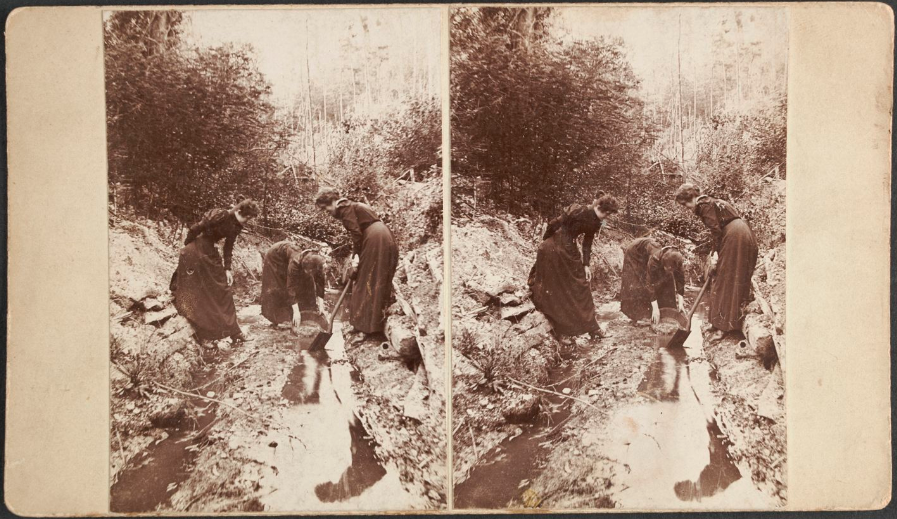
miningladies

Author unknown, Bush scene, three women panning for gold, c.1855-1910. Reproduced with permission from the State Library of Victoria.

I saw the other day four or five of these fellows strolling on behind their cart. Amongst them was a young woman very well dressed, wearing a sun-bonnet … [with] a full flap behind at least a foot long, to screen the neck. On one shoulder she had a gun, and in the other hand a basket, while one of the men carried a baby, and another a swag. … You see a good many women going up on the whole, and some of them right handsome young girls. They all seem very cheerful and even merry; and the women seem to make themselves very much at home in this wild, nomadic life. – William Howitt, Land, Labour and Gold, 1855 (1972 ed.), Victoria, p.64.

Ballarat’s immigrant women proved themselves hardworking and capable, and many appear to have made the most of the opportunity to take up jobs on the goldfields. While housewifery was a highly respected family and community role for European women to perform during this era, some of these goldrush women did all of the work for their households and worked outside their homes as well.

Part of the reason some women took on extra work was due to economics. Food, clothing and household items (much of which was imported from Europe) were very expensive on the diggings, and households with two working adults usually lived more comfortably than those relying on just one income. The main motivation for these immigrants to journey to Australia in the first place was to make money, and the more creative and resourceful you were (whether you were male or female), the more successful you were likely to be.

Some women also took up work that was usually the domain of men at this time – such as school teacher, shop assistant or hotel manager – because the men in the community were too busy searching for gold to perform these roles. Since the social norms that influenced the way Europeans were supposed to behave were somewhat relaxed on the diggings, some women saw an opportunity to work and took it.
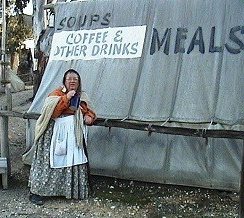
grog

A costumed character at Sovereign Hill selling her potent ‘other drinks’ (sly grog) from her tent to support her family after the disappearance of her husband – a common goldrush experience for women on the early diggings.

Being practical and resilient were important characteristics for all to demonstrate on Victoria’s goldfields. Some women had to work because they were abandoned by their husbands. It was fairly common for men to suffer deadly accidents as a result of the dangers that come with gold mining, while others ventured to different Australian goldfields and never returned to their wives and families. When such abandoned women had children to support (and didn’t already have a job), if they could not immediately remarry or turn to charity (there was no Centrelink back then – churches did most of this type of welfare work) they sometimes had to resort to selling sly grog or even their bodies to pay the family’s bills.

Regardless of the work they did, European women arguably built a new kind of womanhood for themselves in Australia, which challenged the gentle, modest 19th century femininity they were expected to perform. This attempt at creating a new culture was part of a broader push by the youthful and broadminded goldrush communities around Australia to challenge European social norms. Some women who thought along these lines even became involved in the Eureka Rebellion.

anastasia

Anastasia Hayes was a mother, school teacher and Eureka rebel. Reproduced with permission from the Public Records Office of Victoria.

Some very adventurous European women from Victoria’s gold rushes who have interesting stories to explore include Clara Seekamp, Fanny Finch, Martha Clendinning, Anastasia Hayes, Lola Montez, Edward (ne Ellen) De Lacy, Caroline Chisholm, Anne Fraser Bon, Alice Cornwall, Eliza Perrin, Catherine Bently, Anastasia Withers, Céleste de Chabrillan, Ellen Clacy, Harriette Walters, Sarah Hanmer, Elizabeth Wilson and Bridget Hynes.

As Ballarat became a more permanent township by the 1860s, many of the women who had worked in shops etc. at the start of the gold rush began to return to full-time housewifery. Martha Clendinning was a shopkeeper during the early 1850s, but the more successful her shop became as time went by, the more her femininity and class came under question. 19th century European social norms began to be reapplied, sending women back to the private sphere – so how could she be the respectable doctor’s wife, and lady of the house, when working as a shopkeeper?

The time had gone by when, even on the goldfields, a woman unaccustomed to such work could carry on her business without invidious remarks.  I began to fear my husband might be blamed for allowing me to continue at it.  After the class of residents on the field had become so superior to those of the working class, whom we had found on our first arrival, to whom all species of employment for women seemed perfectly natural if they could carry it on with success. The doctor [her husband] had been most anxious and was greatly pleased when I announced my intention [of selling her shop]. – Martha Clendinning memoirs, 1853-1930.

Chinese Women on the Diggings

By the late 1850s, there were also thousands of Chinese people on Victoria’s goldfields, but only a very small percentage of them were women. The men from China mostly left their wives and children at home to care for their family farms, as most came from agricultural communities.

table

The 1861 Census of Victoria shows that women were still performing many roles normally undertaken by men at the time across goldrush communities. Reproduced from Weston Bate’s book called ‘Victorian Gold Rushes’, page 37.

Some of Victoria’s immigrant women in the 1850s were ambitious and outspoken, despite these being uncommon characteristics in women in other parts of the world during this era. However, as time went by and Ballarat became a more permanent community, the social norms of Europe directed women (regardless of whether they were European, Aboriginal, or from any other cultural background) to the private sphere (learn more about this at our next blogpost). This is where they largely stayed until Australian factories needed workers during the 20th century’s World Wars (when women replaced the men who became soldiers). Women only became permanent members of Australia’s workforce in large numbers after the Women’s Liberation Movement of the 1960-80s.

Links and References:

Sovereign Hill Education’s student research notes about women on the Ballarat goldfields: http://education.sovereignhill.com.au/media/uploads/SovHill-women-notes-ss1.pdf

A State Library of Victoria blogpost on women on the goldfields: http://ergo.slv.vic.gov.au/explore-history/golden-victoria/life-fields/women-goldfields and website about how Victorian women’s lives have changed since the 19th century: http://ergo.slv.vic.gov.au/explore-history/fight-rights/womens-rights

An SBS blogpost about women on the goldfields: https://www.sbs.com.au/gold/story.php?storyid=27#94

Dr. Claire Wright wrote a book called ‘The Forgotten Rebels of Eureka’ about the women involved in the Eureka Rebellion: https://www.textpublishing.com.au/books/the-forgotten-rebels-of-eureka

Women played many different social roles during the Victorian gold rushes: https://theconversation.com/flashers-femmes-and-other-forgotten-figures-of-the-eureka-stockade-20939

A Culture Victoria webpage about the few Chinese women living in 19th century Victoria: https://cv.vic.gov.au/stories/immigrants-and-emigrants/many-roads-chinese-on-the-goldfields/voyaging-to-australia/who-were-they/nearly-all-men/

A gender equality timeline made by the Victorian Women’s Trust: https://www.vwt.org.au/gender-equality-timeline-australia/ and a fantastic video telling a similar story: https://vimeo.com/225932476

The gender pay gap in Australian explained: https://www.wgea.gov.au/data/fact-sheets/australias-gender-pay-gap-statistics

Sex work on Ballarat’s goldfield: https://www.thecourier.com.au/story/3704053/the-brothels-of-ballarat/
 

Women on the Goldfields Part 1 – 19th Century Womanhood

The lives women led in 19th century Australia were similar in some ways and very different in others to those experienced by women in this country today. Much has changed for Australian women in the last 170 years from clothes to hairstyles, average life expectancy and experiences of motherhood.

Over three blogposts we will explore what life was like for women on Victoria’s goldfields between 1851 to 1861. This blogpost will focus on the common characteristics of the women who lived in Ballarat during this era, the second will explain the opportunities goldrush women had to work outside their homes, and the final blogpost will examine domestic life on the goldfields for European women in Australia.def1

The Aboriginal Women of the Ballarat Region

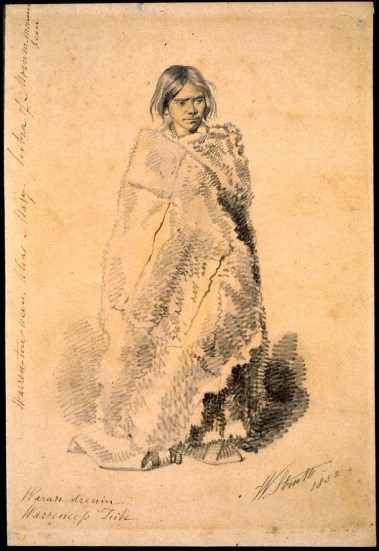
The first women of Ballarat were Wadawurrung women. They have been living in this region for tens of thousands of years and many continue to practice culture on Country (their traditional homeland) today. The lifestyles of Aboriginal and Torres Strait Islander people changed dramatically when Europeans began colonising Australia (starting in 1788). The changes took place rapidly in goldrush communities like Ballarat because of the speed at which immigrants – both human and animal – arrived from across the seas to live in such places. These new arrivals changed local ecosystems and cut off access to important Aboriginal and Torres Strait Islander cultural and food production sites.

waran

.A drawing of a young Wadawurrung woman who lived in Ballarat during the gold rush. W. Strutt, Waran-drenin, 1852. Reproduced with permission from the British Museum.

While many Wadawurrung women adapted quickly to the changing conditions and played a variety of roles in the new European economy and culture that was brought to Australia, others died from introduced diseases/alcohol and at the hands of violent settler-colonisers. By the late 1860s, most were forced off Country to live on reserves and missions in different parts of Victoria. Despite the damage this caused Aboriginal communities, many Wadawurrung women passed their language and culture onto their children, which is one of the reasons why it lives on today.

The Arrival of Non-Aboriginal Women in Ballarat

In the early years of Australia’s gold rushes, most of the non-Aboriginal women on Ballarat’s diggings came from Europe, specifically the British Isles. Female goldrush immigrants took huge risks to get to Australia by ship and hoped to become wealthy through hard work and/or a good marriage. Social mobility was nearly impossible back in Europe, but in Australia, anyone willing to work could strike it rich on a goldfield which is why around half a million new Australians arrived in Victoria during the 1850s.

punch

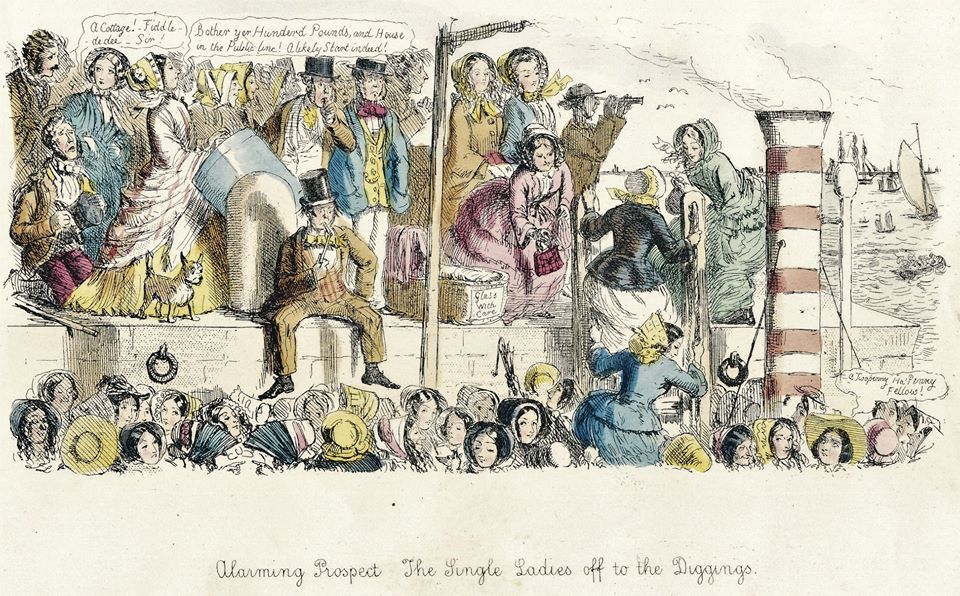
John Leech, Alarming Prospect: The Single Ladies off to the Diggings, Punch Pocket Book, 1853. Reproduced with permission from The Gold Museum, The Sovereign Hill Museums Association.

As most of these new arrivals were men, the colonial government (on advice from people like Caroline Chisholm) made many attempts to attract female immigrants because they were considered to be a ‘civilising influence’ on male-dominated goldrush communities like Ballarat. Gold seeking was thought to bring out poor behaviour in some men, and it was believed by many that just the presence of women could restore their more gentlemanly qualities.

Women were in such high demand on the early diggings – not only were they a ‘civilising influence’ but also companions, cooks and cleaners – that ships arriving in the ports of Melbourne or Geelong were often met by miners ready to propose marriage to the first female they clapped eyes on!

Typical 19th Century European Womanhood

SH ad

.A costumed character at Sovereign Hill panning for gold in a day cap which is designed to both keep hair clean and provide sun protection.

Religion, culture and tradition have always influenced the way in which people behave and dress. A model mid-19th century European woman was likely to be a Christian who obeyed the social norms that came with this identity. This included being quiet and calm, a loving mother/wife, a dutiful homemaker, and good at following the instructions of men. Such women believed that the Bible should guide their behaviour in addition to their clothing choices. During the daytime, European women wore dresses that covered every part of their body except their faces and hands because a polite Christian woman was expected to be modest and hide her body. This is part of the reason you see costumed women at Sovereign Hill wearing day caps.

Ideally, a European woman would only marry a man who could already afford to house, clothe and feed her and the family they would likely make together. On their wedding day, the bride would wear the best dress she owned in whatever colour she liked. White wedding dresses were popularised by Queen Victoria – but only very wealthy families could afford to dress brides in what was ultimately a one-use dress. Back then it was considered quite normal for European women to be married before the end of their teens, as was having ten or more children. In comparison, 21st century Australian women who choose to get married (which is far less common today than it was in the past) are on average aged 30 and will typically only have one or two children.

Womanhood on Australia’s Goldfields

Some historians suggest that immigrant women on Australia’s 1850s goldfields experienced a different kind of womanhood compared to women back in Europe. This was arguably due to the relative youth of the immigrant population and the opportunities that existed for European women in Australia to work outside their homes.

Many of the European women on the goldfields were in their late teens/early twenties. Their youth helped them survive the tough living and working conditions – raising a family in a tent and having to trudge through deep mud in a Ballarat winter to buy food or harvest it from a vegetable garden was hard work. On average, Australian women at this time in history would only live until they were about 40 years old, while life expectancy for Australian women today is about 80 years old. Their shorter (on average) lives is one of the reasons that 19th century women tended to marry and start families at a younger age than women today.

In Europe, if a woman had a job, perhaps as a seamstress, housemaid, or governess (tutor) at this time in history, she would be fired as soon as she got married (unless she was very poor). From her wedding day onwards, she was expected to be busy managing a household and having children, leaving no time for other work. If poverty forced her to work outside the home, it would be a source of shame for the whole family (you can read more about this here). In Australia, and especially in places like 1850s Ballarat, living conditions changed these social norms.

Women on Australia’s goldfields could ‘bend’ social norms somewhat because they filled essential roles that the community needed in order to function while men focused on mining. They could leave the house (to go shopping, visit friends etc.) once they were visibly pregnant, which in Europe was considered bad manners. Put simply, there were many vital jobs that needed doing, so Ballarat’s women rolled up their sleeves and got to work, whether they were already married or not. You can learn more about this topic in our next blogpost.

GM image

Photographer unknown, (from left to right) Eliza Sharwood, John Sharwood, and an unknown woman, Lot 50, Peel Street South, Ballarat, c.1875. Reproduced with permission from the Gold Museum, The Sovereign Hill Museums Association.

Once Ballarat became a more permanent community from about the 1860s, the European social norms of the era resumed and women became focussed on life in the private sphere once more.

The lives of Australian women have changed significantly since the 1850s. What social norms do you think have changed for the better and which ones have changed for the worse?

Links and References:

Sovereign Hill Education’s student research notes about women on the Ballarat goldfields: http://education.sovereignhill.com.au/media/uploads/SovHill-women-notes-ss1.pdf

A Crash Course video which summarises how women’s lives have changed in the last 150 years: https://www.youtube.com/watch?v=meC5Zl5PC1U&feature=youtu.be&utm_source=hootsuite&utm_medium=&utm_term=&utm_content=&utm_campaign=

A State Library of Victoria blogpost on women on the goldfields: http://ergo.slv.vic.gov.au/explore-history/golden-victoria/life-fields/women-goldfields

An SBS blogpost about women on the goldfields: https://www.sbs.com.au/gold/story.php?storyid=27#94

Two Sovereign Hill Education blogposts on 1850s women’s fashion: https://sovereignhilledblog.com/2012/02/28/gold-rush-belles-womens-fashion-in-the-1850s/   https://sovereignhilledblog.com/2013/09/06/gold-rush-undies-womens-fashionable-underwear-in-the-1850s/

A Sovereign Hill Education blogpost on general clothing in the 1850s: https://sovereignhilledblog.com/2018/06/19/1850s-fashions-in-australia/

A Sovereign Hill Education blogpost about Queen Victoria: https://sovereignhilledblog.com/2015/05/13/queen-victoria/

Dr. Claire Wright wrote a book called “The Forgotten Rebels of Eureka” about the women involved in the Eureka Rebellion: https://www.textpublishing.com.au/books/the-forgotten-rebels-of-eureka


Sovereign Hill’s Gardens Explained

Many visitors to Sovereign Hill are surprised to see the vegetable and decorative gardens on display around the Outdoor Museum. Did you know that many of the gardens are inspired by understandings of gardens that existed in goldfields towns like Ballarat? Here, we will explore some of their stories and what they can tell us about life on the Victorian goldfields in the 19th century.

gardens

IMG_20191118_133621

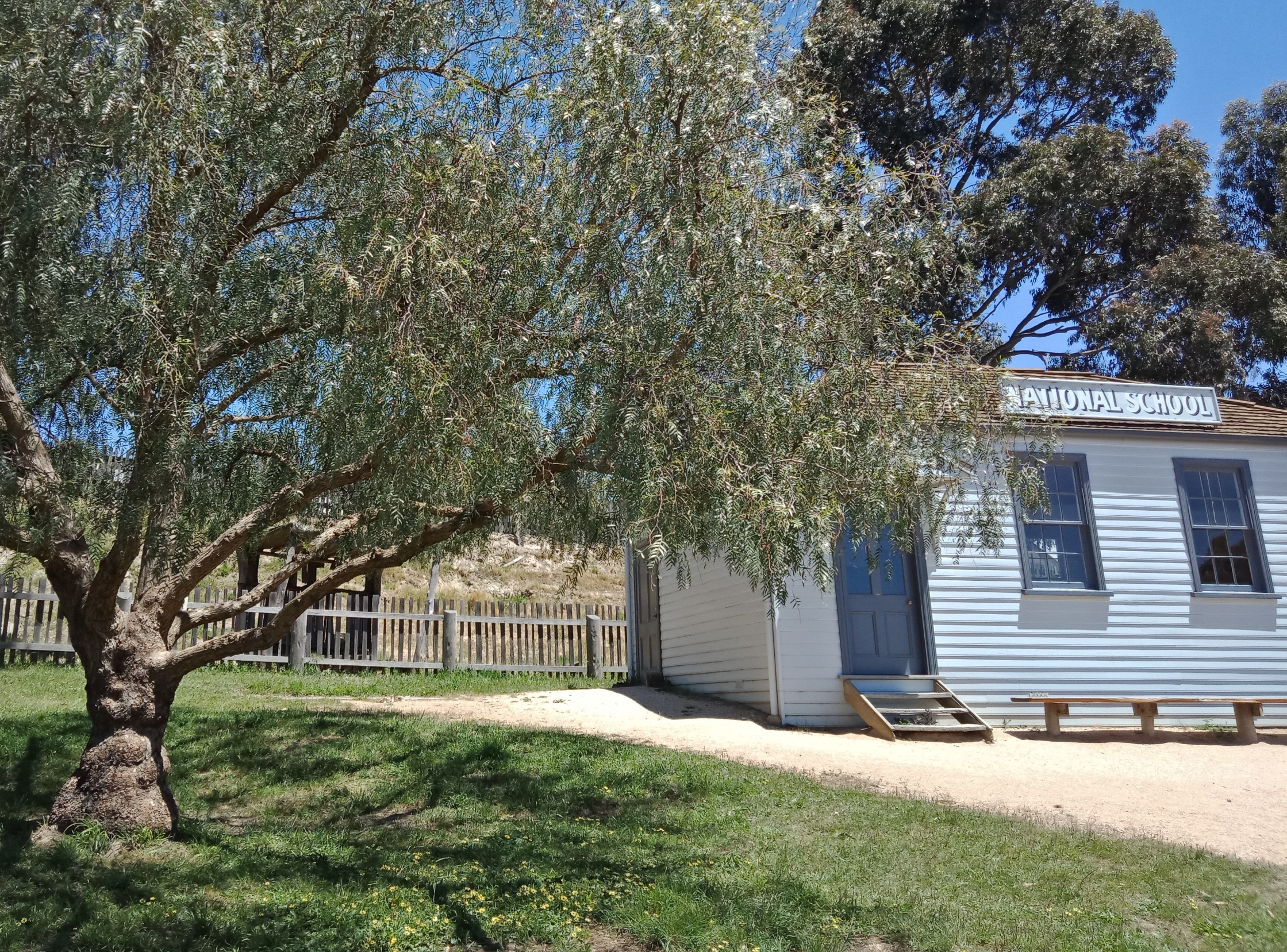
 Peppercorn trees like this one were often planted at schools to provide shade and because they were thought to keep bugs away. This tree is identified by the orange circle on the map.

The Sovereign Hill Museums Association gardeners work closely with historians to build the gardens – and even change them from season to season. These spaces tell stories about the kinds of gardens that existed in Ballarat in the 1850s and the people who would have owned them. Some residents of goldrush Ballarat had large, expensive houses and used a beautiful garden to show off their wealth. Other residents grew gardens to feed their families, or provide medicine or vegetables for sale. Trees were also used for shade, to keep the bugs away (such as peppercorn trees), or as posts for displaying advertising posters or important community news. The only lawn you see at Sovereign Hill is next to our modern Café and playspace – back in the gold rush, lawns were not very common because lawnmowers were yet to have motors (they were pushed by hand at this time, which was hard work!) and they were very expensive.

map

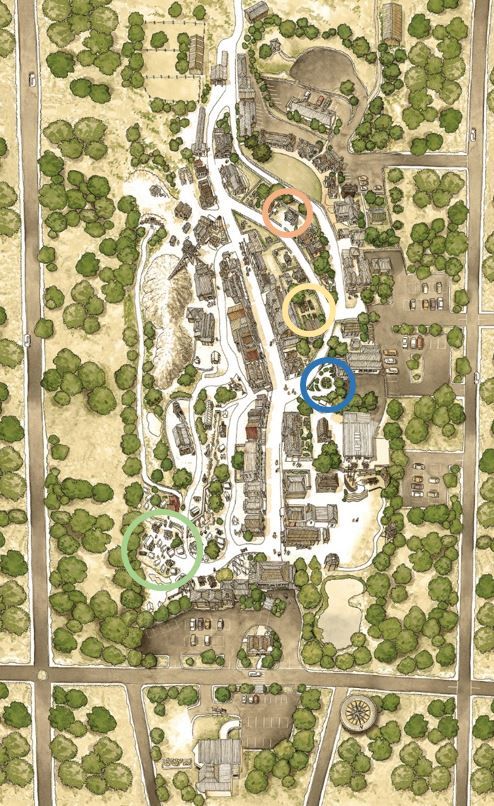
 A map of the Sovereign Hill Outdoor Museum showing the location of the gardens and trees featured in this blogpost.

IMG20191118132017

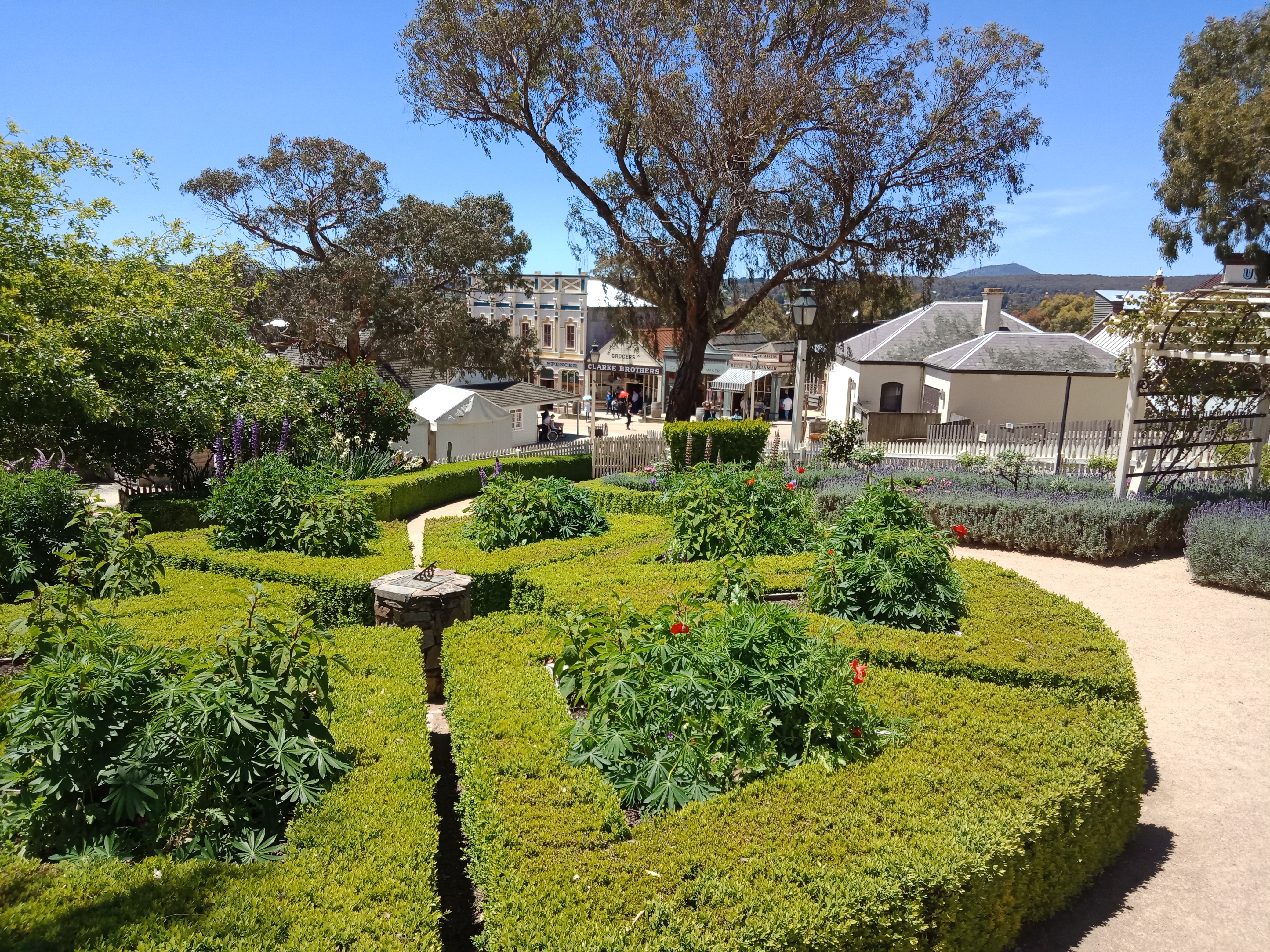
The Bright View Cottage sundial garden and rose arch.

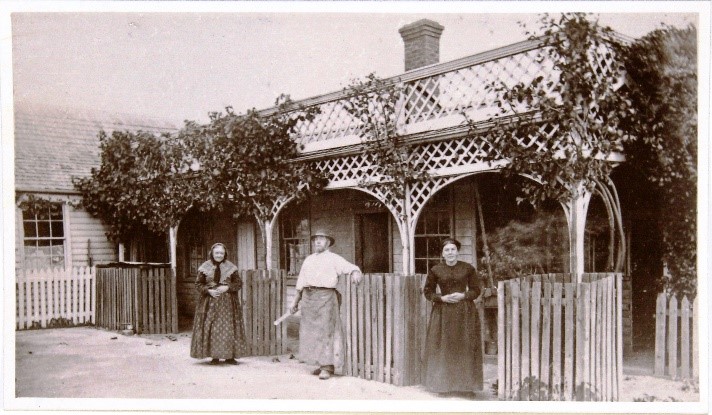
The garden in front of the Bright View Cottage has a typically orderly Victorian design. It shows that the owner can afford to use land for decorative and not just practical purposes. While the garden does include some vegetables and herbs (which were more for viewing pleasure than eating), it also includes formal decorative features such as a sundial and hedged garden beds. A rose arch greets visitors as they enter through the white picket gate into the garden. Perfumed flowers like roses, lavender and daphne were popular because it was believed at the time that good smells kept you healthy while bad smells could make you sick. Many 19th century gardeners were also interested in growing exotic plants and hunting for rare species, which is why gunnera manicata (giant rhubarb) features on the left side of the cottage. This garden is marked on the Sovereign Hill guide map by a blue circle.

IMG_20191118_133545

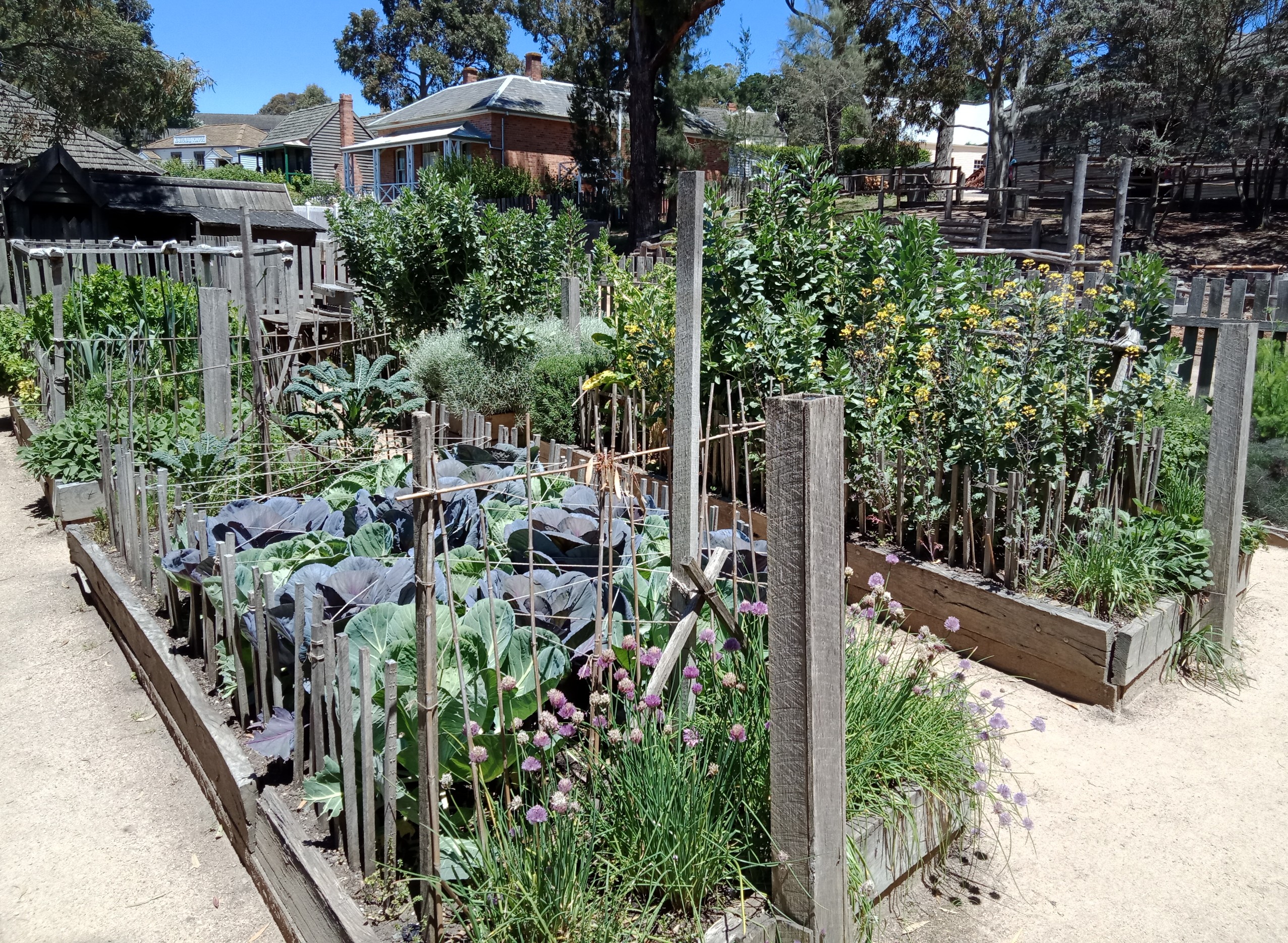
 The garden behind Linton Cottage full of springtime foods.

There is a kitchen garden located behind Linton Cottage (across the road from the Bright View Cottage) which grows fruit, vegetables, nuts and herbs. Like many people on the goldfields, the owners of such a property improved their position in society by growing food for sale in the grocery store. The trees grown in this garden are apple, pear and walnut. There is also a grapevine along the back fence. The vegetables produced by this garden change with the season, and the herbs are grown partly for their ability to control pests; rhubarb and pyrethrum can be used to keep insects away. This garden also has a compost bin to replace the nutrients in the soil; using the garden scraps to make compost to spread on the garden beds helps plants grow better. There is also a large chicken coop for the production of eggs, meat, feathers and fertiliser. It is marked on the map by a yellow circle.

IMG20191118130541

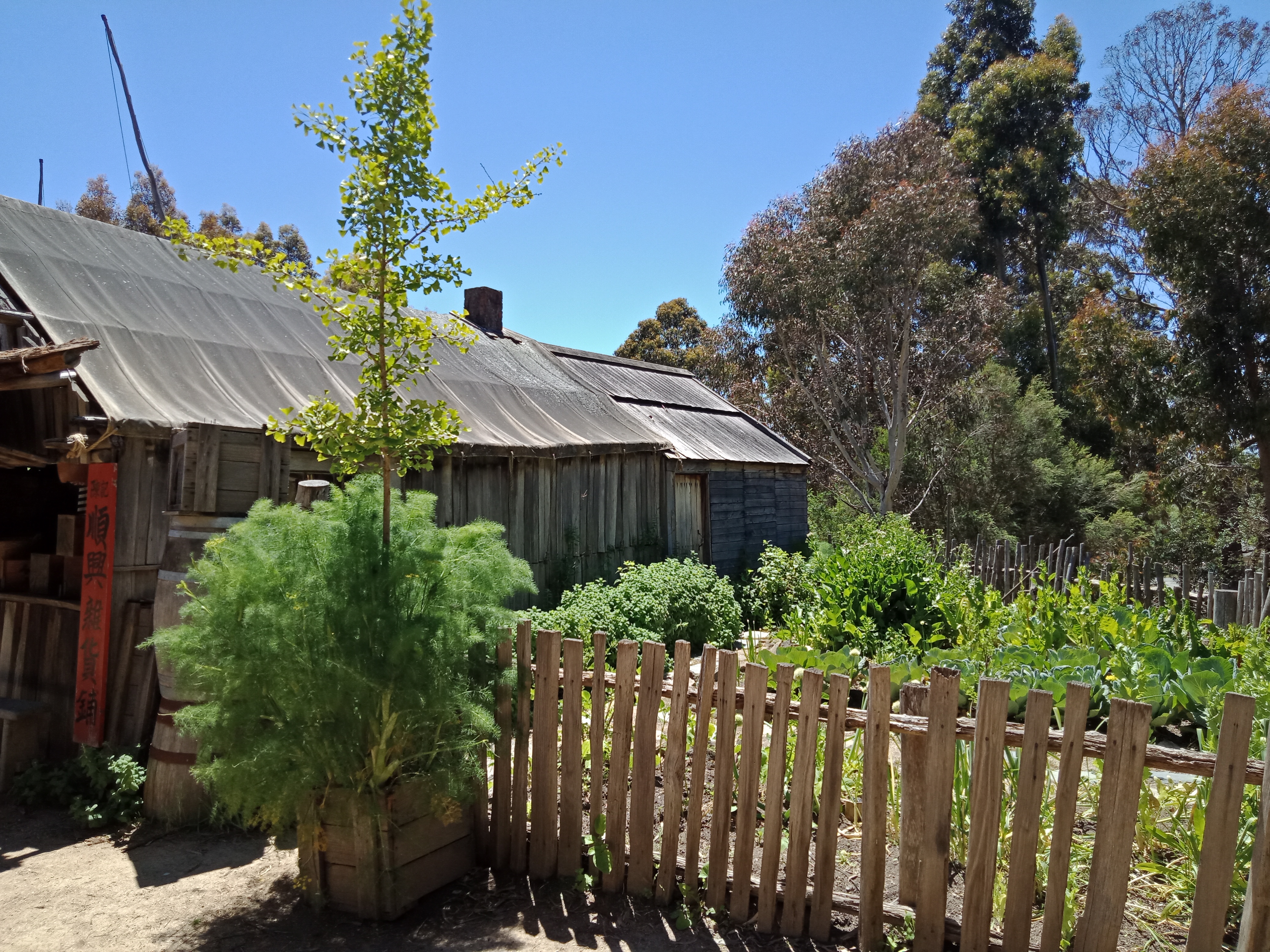
 An example of a productive vegetable garden in the Golden Point Chinese Camp.

These two gardens found in the Golden Point Chinese Camp tell different stories. The first demonstrates the way Chinese miners from the late 1850s onwards produced fresh food for themselves and sometimes the broader community. As most of the Chinese miners had been farmers back home in China, many were skilled at growing vegetables. Typically, these gardens were grown communally. So, they would take it in turns to look after them while others went mining. Some Chinese miners began growing food for sale when Ballarat’s gold became harder to find, changing their work from mining to market gardening.

IMG20191118130725

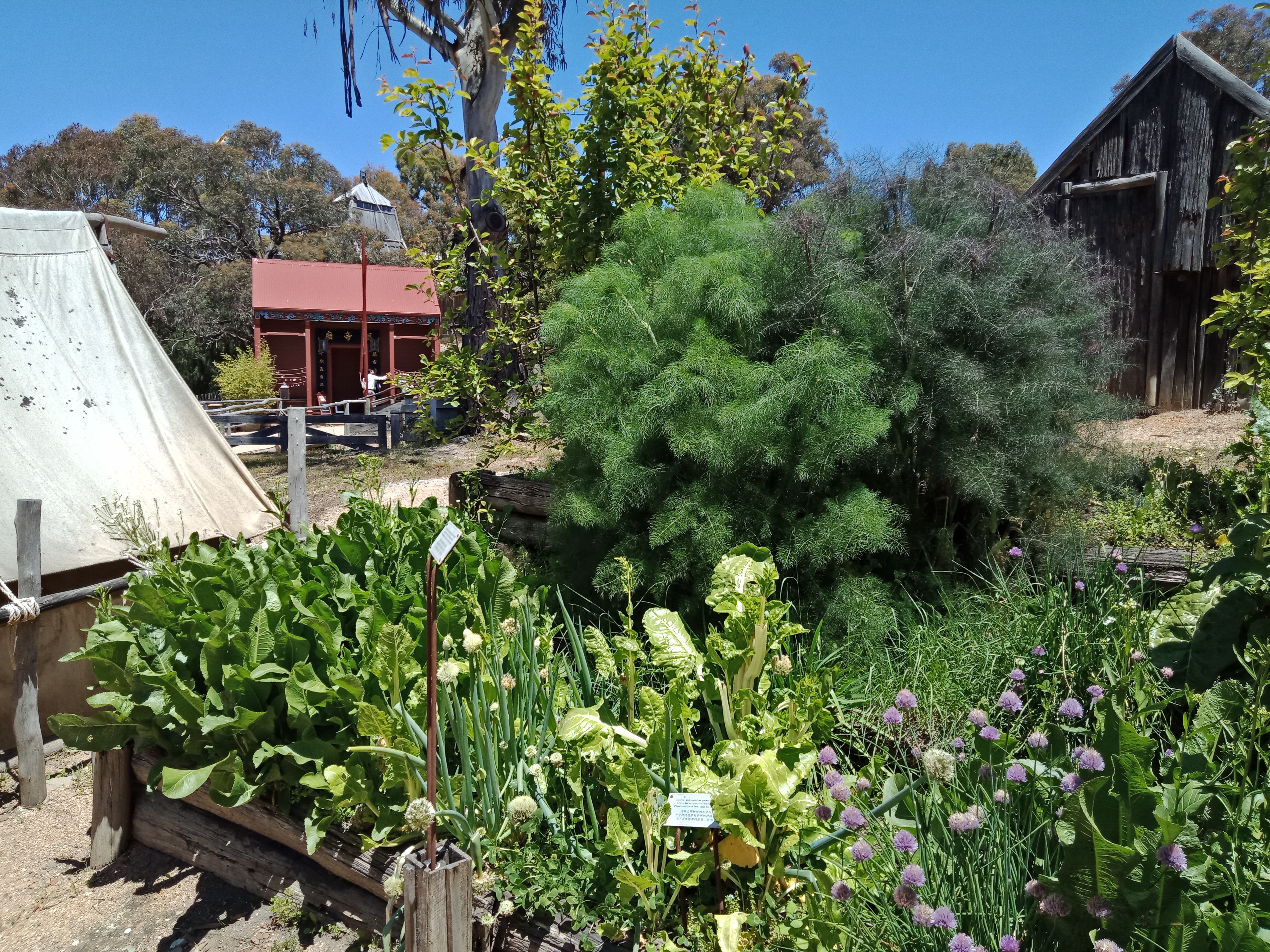
 An example of a medicinal garden owned by a Chinese herbalist.

The second of these gardens in the Chinese Camp would have belonged to a herbalist (whose replica store is close by). Today, we would call him a Traditional Chinese Medical Practitioner. This garden is growing medicines and food that can be used in a medicinal diet to treat certain diseases, although many of the herbs for sale in the herbalist’s would have been imported from China. Both these gardens are identified by the green circle on the map.

Sometimes, the Sovereign Hill gardeners grow slightly different plants than would have been seen on the Ballarat goldfields to keep visitors safe, to respond to pests, and to design gardens better suited to the region’s changing climate. According to the Bureau of Meteorology, Victoria has become warmer and drier since the 1850s. This encourages our gardeners to plant more drought-tolerant species than would have been grown in the past.

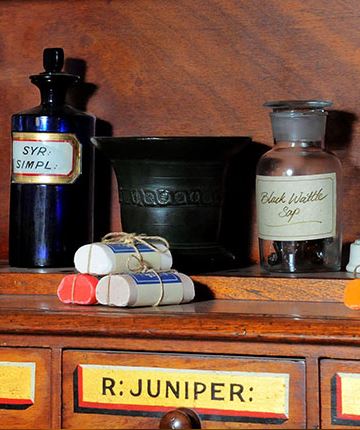
black wattle sap

 The Wadawurrung people – the Traditional Custodians of the Ballarat region – supplied black wattle sap as a diarrhoea medicine to European miners. Many native plants were promoted across the landscape over thousands of years by Aboriginal people to provide food, fibre and medicine.

Some features seen in our gardens are not as they were in the 1850s for quite different reasons. For example, while you can see poppies growing at Sovereign Hill, they are not the opium poppies you might have seen in goldrush gardens in the 19th century; real opium poppies can be turned into powerful drugs of addiction. Finally, foxes only became a pest in Australia after their introduction in Ballarat and Geelong in the 1870s. Therefore, while 1850s chicken coops were not built to keep them out, our chicken enclosures need to be much sturdier, as we do sometimes have foxes in the gardens at night.

Walk around your own garden with fresh eyes. What does it say about your diet, your family’s social status, and our climate today?

Links and References

How to cook a goldrush feast: https://sovereignhilledblog.com/2016/11/30/how-to-cook-a-gold-rush-feast/
The lives of animals on Victoria’s goldfields: https://sovereignhilledblog.com/2019/10/04/animals-on-the-goldfields/

The National Museum Australia on goldrush immigration: https://www.nma.gov.au/defining-moments/resources/gold-rushes

How and why were so many exotic street trees planted in Australia? https://www.abc.net.au/news/2018-09-12/curious-central-west-why-peppercorn-trees-were-planted/10231768

Information on pest management plants: https://www.abc.net.au/gardening/factsheets/pest-management-plants/9427576

How compost is made: https://www.abc.net.au/gardening/factsheets/get-composting/9437492

Plant hunting was very fashionable across the British Empire in the 19th century: https://www.independent.co.uk/environment/nature/the-plant-hunters-adventurers-who-transformed-our-gardens-would-put-indiana-jones-to-shame-7936364.html

Animals on the Goldfields

During Ballarat’s gold rushes, there were many animals – both native and introduced – living on the diggings. Some were of great use to the miners and their families as a source of transport or food, while others were security guards, working animals and even served as hot water bottles. Many native animals were just living their lives but when gold mining changed their habitat, they had to relocate to different parts of Victoria as the risk of becoming extinct was high. Let’s explore the roles they played and the lives they would have led back then.

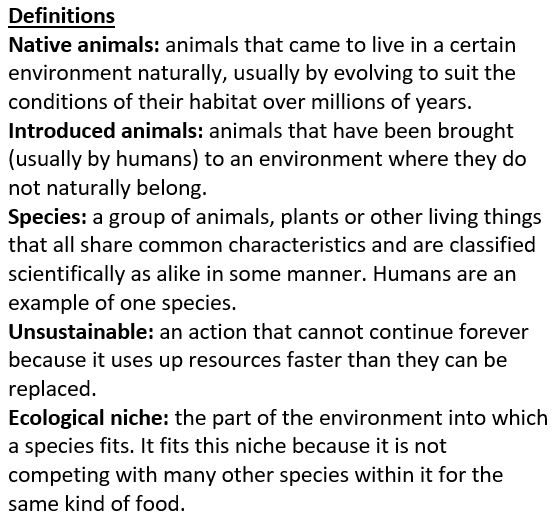
definitions

possum

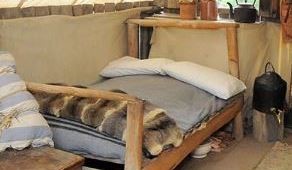
Rugs made from possum-skins like this one would keep people very warm during a cold Ballarat winter. The Wadawurrung people made these to sell to the miners, who paid a lot of money for such soft and life-saving rugs.

The Wadawurrung people encouraged certain native animals across this region for thousands of years before the arrival of the European squatters and then gold miners in the 1800s. Animals such as brushtail possums, eels and grey kangaroos were plentiful around Ballarat because traditional Wadawurrung landscape management took care of them by making sure their sources of food were in rich supply. This meant that when people wanted to make use of these animals for food or clothing, they could easily be located and collected. However, enough of each species was always left alive at the end of a hunt to ensure people living in this area could keep eating and using products from these animals long into the future.

After 1835, European farmers (known as squatters) brought introduced animals such as sheep, cows, goats, and horses to what we now call the State of Victoria. The introduction of these animals (mainly sheep) and the use of European farming practices changed the landscape in terms of the kinds of plants and trees that covered it. As a result, the habitats for native animals were affected. While some native species survived, others became locally extinct (like quolls, bandicoots and bustards [also known as bush turkeys]) because Europeans ate them in unsustainable numbers, or the introduced animals seized their ecological niche. This means that today there is a mix of native and introduced species wherever you go in Australia, from kookaburras to sparrows in the sky, wombats to foxes on land, and blue-ringed octopuses to European green shore crabs in our oceans.

We had kangaroo-soup, roasted [wild] turkey well stuffed, a boiled leg of mutton, a parrot-pie, potatoes, and green peas; next, a plum pudding and strawberry-tart, with plenty of cream. Katherine Kirkland (who lived in Trawalla – 40kms west of Ballarat), Life in the Bush. By a Lady, 1845, p.23.

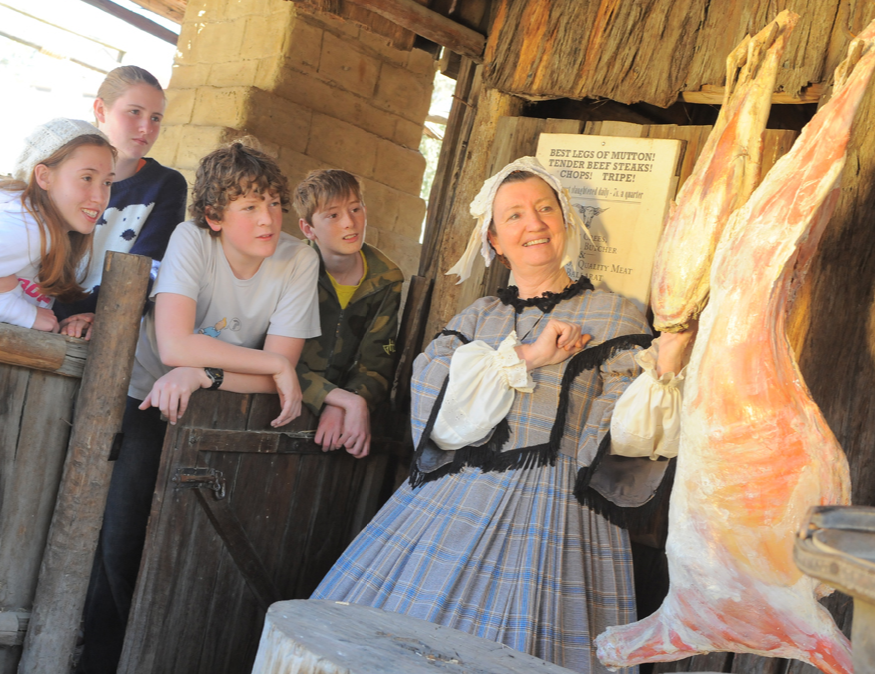
mutton.png

Here is one of our Education Officers taking visiting students to the Butcher’s Shamble, where miners could buy mutton (this mutton however, is made of plastic).

The gold rushes began in 1851 and brought hundreds of thousands of people from all around the world to the shores of Victoria. Many of these new migrants transported yet more animals with them. Dogs were particularly useful companion animals on the diggings because they could keep you warm at night and guard your tent/hut while you were goldmining. For this reason, there are many dogs featured in the sketches of ST Gill, one of the most famous goldrush artists. Some animals were even introduced from the late 1850s onward to help Europeans ease their homesickness! Songbirds like sparrows, starlings and blackbirds were thought to make the Australian bush sound more like England.

horse

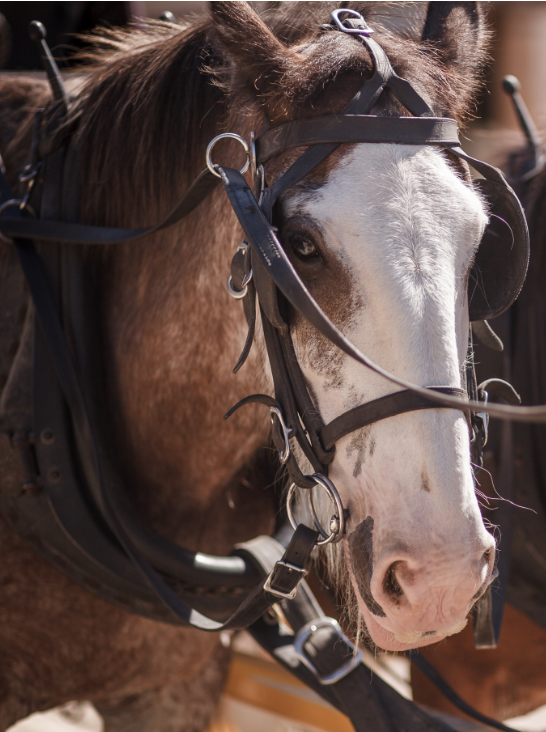
The most useful of horse breeds on the diggings were draft horses, also known as Clydesdales – these are the biggest and strongest type of horse.

Horses were also in high demand during the early years of the gold rushes (before the need for steam-powered machines increased), as all mining work relied on muscle power. As a horse can typically push/pull the same load as ten people, they were used to lift heavy metal buckets of dirt, rocks and gold from below ground in the first few years of the gold rushes. Likewise, horses could be attached to machines that were used to free gold from paydirt and quartz rock, for example, puddling machines and Chilean mills.  People and goods could also move around by horse (or sometimes bullock). They were attached to coaches or other vehicles to transport larger groups of people and/or numerous goods. Cobb & Co built a coach, which was a bit like a modern bus, called the ‘Leviathan’ (a word meaning big monster). This vehicle could carry up to 60 people from Ballarat to Geelong with the help of 16 horses, but it did not prove very successful.

soap

Sheep fat was commonly used to make soap for washing clothes and bodies. Candles could also be made from animal fat.

Many animals were also brought by the new arrivals for food. Goats and cows were milked to produce dairy products to feed miners and their families, while chickens, ducks, geese and turkeys were farmed for eggs and their meat. However, the meat that was most commonly eaten on the Victorian goldfields in the 1850s was mutton (old sheep). You can see many animals around Sovereign Hill which represent the animals that were brought here by goldrush migrants. During a visit, you might even spy our museum cat ‘Fergus’ who helps to keep the mice and rats away from the outdoor museum.

Some animals also toured the Victorian goldfields as entertainment – read about the visits from a tiger, an elephant and two zebras that came to Ballarat in the 1850s here.

corset

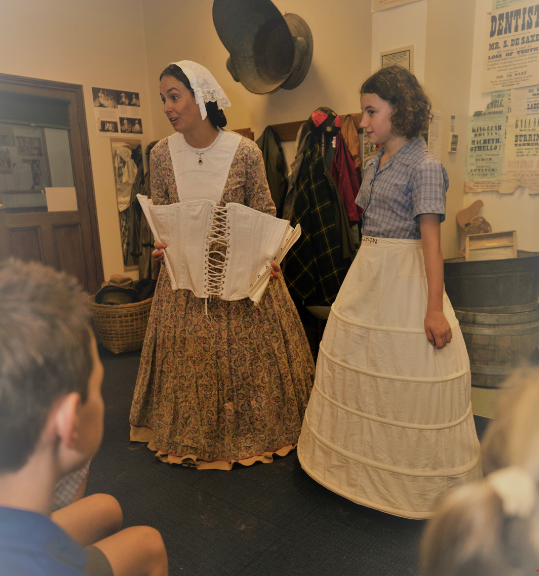
Even 19th century ladies’ underwear, like this corset, were often made using animal products – the tough ribbing was typically made of baleen whale teeth, while the smooth lining was made by silk worms (the caterpillar of the silk moth).

Next time you visit Sovereign Hill, perhaps you could take photos to write a story book about the many animals that miners would have encountered on the diggings – from native animals to domesticated pets and animals that produce food.

Links and References

An ABC Education ‘digibook’ featuring Bruce Pascoe talking about traditional Aboriginal land management: http://education.abc.net.au/home#!/digibook/3122184/bruce-pascoe-aboriginal-agriculture-technology-an

An ecological niche explained: https://www.youtube.com/watch?v=xIVixvcR4Jc

A brief history of Victoria: https://sovereignhilledblog.com/2017/05/18/the-history-of-victoria/

In the 18th and 19th centuries, Europeans in Australia ate native foods to survive: https://cass.anu.edu.au/news/parrot-pie-and-possum-curry-how-colonial-australians-embraced-native-food

SBS Gold on Australia’s introduced species: https://www.sbs.com.au/gold/story.php?storyid=130

A fact sheet on invasive species in Australia: https://www.environment.gov.au/system/files/resources/2bf26cd3-1462-4b9a-a0cc-e72842815b99/files/invasive.pdf

The introduction of rabbits in Australia explained by the National Museum Australia: https://www.nma.gov.au/defining-moments/resources/rabbits-introduced

A blogpost exploring what was commonly eaten by goldrush immigrants: https://sovereignhilledblog.com/2016/11/30/how-to-cook-a-gold-rush-feast/

An online version of Katherine Kirkland’s book Life in the Bush. By a Lady, published in 1845: https://tinyurl.com/yxavj9fh

Information on animals introduced to Australia to make European settlers less homesick: http://myplace.edu.au/decades_timeline/1860/decade_landing_14.html?tabRank=4&subTabRank=3

A blogpost on mid-19th century transport: https://sovereignhilledblog.com/2015/06/25/1850s-transport/

A great Gold Museum blogpost about dogs on the Victorian diggings: http://www.goldmuseum.com.au/canine-companions/

More information about the Leviathan coach: https://blog.qm.qld.gov.au/2017/09/13/how-big-was-the-leviathan-monster-coach/

lollies

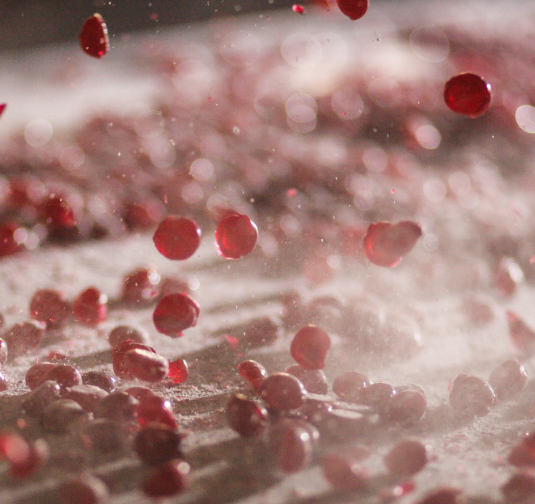
In the 1850s, animals were even used to create the red colour of raspberry drops. The cochineal beetle from Brazil was dried and ground-up to make red dye. But don’t worry, no living things are harmed in the making of Sovereign Hill’s lollies.


How? When? Why? – The Industrial Revolution in Australia

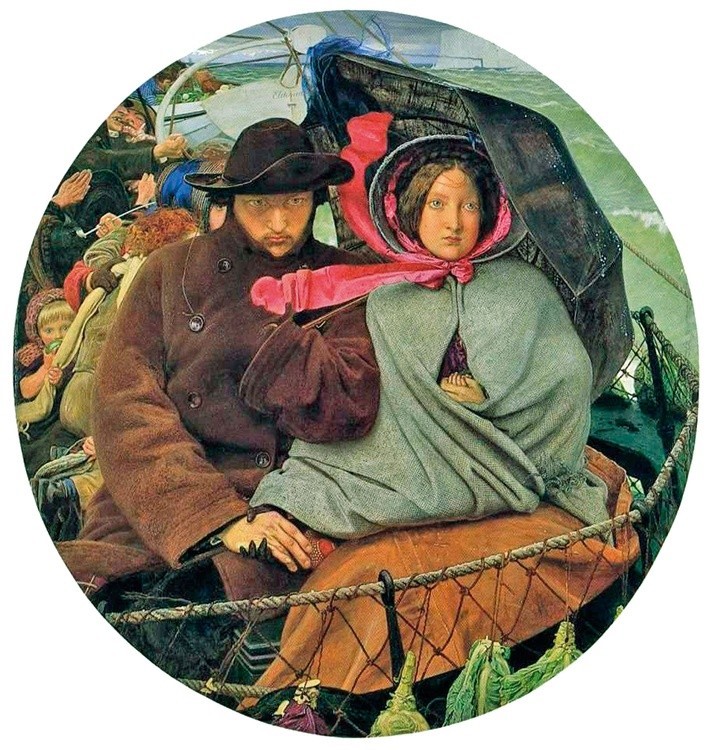
Last of England

Ford Maddox Brown, The Last of England, 1855, reproduced with permission from the Birmingham Museum and Art Gallery.

Student visitors to Sovereign Hill often explore this painting during our education sessions because it can tell us interesting stories about the hundreds of thousands of people who came to Australia during the height of Ballarat’s gold rush. Painted by Ford Maddox Brown, it is entitled ‘The Last of England’. If we could, we would ask these people about the skills and ideas they are bringing with them to Australia, because these are the kind of people who shaped modern Australia into the country it is today. You can watch a source analysis of this artwork here. For better or for worse, European immigrants like these brought the Industrial Revolution, democracy, and a completely new agricultural system to this land ‘girt by sea’.

Let’s explore these imported skills and ideas in more detail.

Definitions:

Europeans realised there was gold in Victoria in 1851 at the height of the Industrial Revolution in Britain. In the same year Queen Victoria launched her Great Exhibition in London which showcased England’s new industrial technologies. Many of the six million people — equivalent to a third of the entire population of Britain at the time — who visited the Great Exhibition, were soon to join the mass migration to the Australian goldfields. They brought with them Industrial Revolution knowledge, experience and skills – many had ridden in trains, worked in factories, and believed that the ‘Age of Steam’ had made Britain the most powerful nation on Earth, and could have a similar impact on Australia.

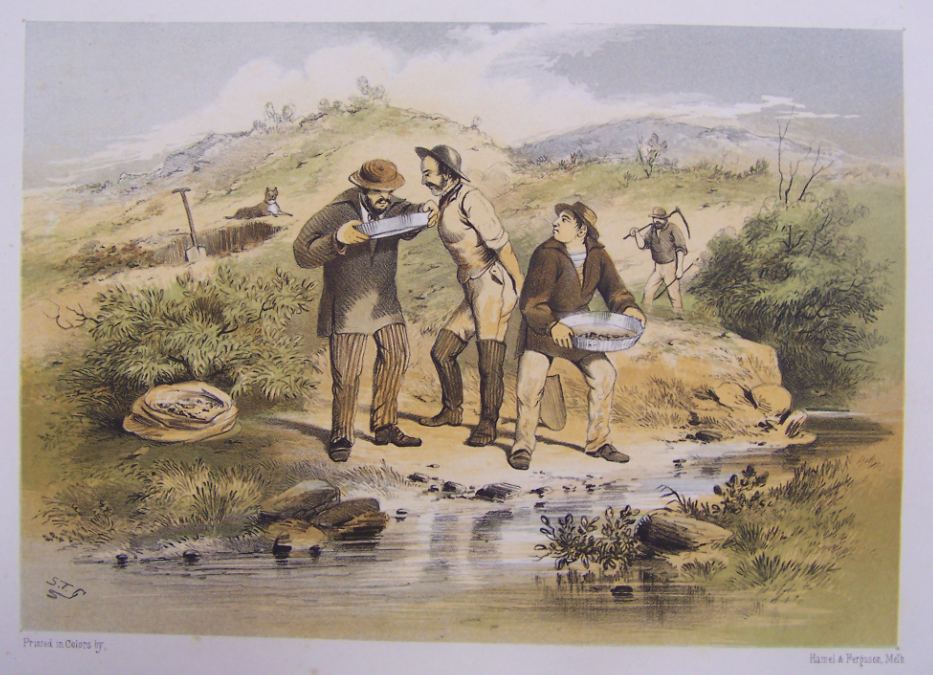
Gill

At the start of the Victorian gold rushes, only simple hand-held and often handmade technologies (like the ones in this sketch) were needed to find gold, but by the 1860s steam-powered machines were required to extract gold from deep underground. S. T. Gill, Prospecting, from The Australian Sketchbook, c.1865, reproduced with permission from The Gold Museum Ballarat.

After the Eureka Rebellion in 1854, the muddle of goldminers’ tents that people called ‘Ballaarat’ (a local Aboriginal [Wadawurrung] word for resting place) became a more permanent city. As the easily accessible gold started to run out, these immigrants began importing steam-powered machines from Britain so they could mine for gold trapped deeper underground. This meant that Ballarat’s mining changed from an individual occupation to a company (group) project, and helped to keep people here once the initial ‘rush’ was over. Without these technologies (which among other things pumped water out of mines and fresh air in, powered elevators, and crushed quartz to extract its gold) the Ballarat gold rush would probably have come to a grinding halt.

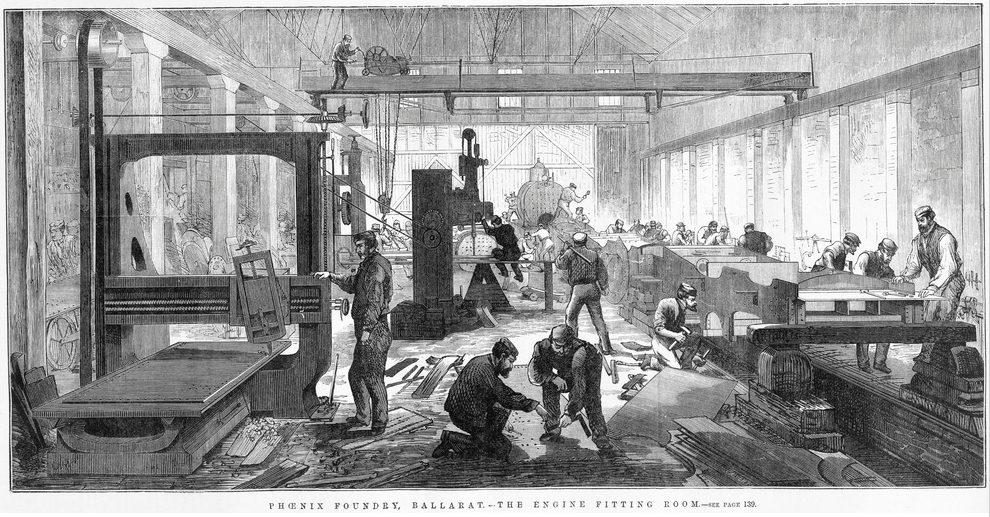
During the 1860s and 70s, many Ballaratians invested their gold wealth in local factories and foundries to build their own industrial machinery, such as steam engines and boilers. This meant that you didn’t have to wait a long time for your steam engine to arrive on a ship from the other side of the planet, you could instead purchase it (much more cheaply) from a foundry just down the road.

Phoenix

The Phoenix Foundry in Ballarat – capable of smelting iron to create steam engine components and steam trains. S. Calvert, PHOENIX FOUNDRY, BALLARAT. – THE ENGINE FITTING ROOM (where Target in central Ballarat is located today) 1873, reproduced with permission from The Gold Museum Ballarat.

Many Victorian towns had been built on gold by this time, but many withered and died as soon as their gold ran out, to the point that many are now ghost towns. However, Ballarat and Bendigo are major regional cities today, and although there are still gold mines in or near both, they do not rely on gold to continue to grow. So what are the things that decided whether a town would grow, survive or die after a gold rush? We think the answer involves the arrival of the Industrial Revolution in Australia.

The decision to change the local economies and jobs in these cities from mining to manufacturing, helped these cities to continue to grow and thrive. Immigrants with experience building railways, factories, foundries, and deep mines back in Britain used their knowledge and skills to start an Industrial Revolution here. Had it not been for the gold rushes, it may have taken much longer for such steam-powered inventions to arrive in Australia.

By 1900 the Ballarat region was dotted with steam-powered machines, and the people who lived here enjoyed mass-produced and therefore cheaply-made goods. Much came from local factories, but as steam trains and ships were making product transport much faster and safer than people had experienced before, buying things from overseas became easier than ever. Tractors and other farm technologies, along with introduced plants and animals (such as wheat and sheep) were also industrialising the way food, fibre and medicines were produced, and because we could support a growing population with jobs and food, modern Australia started taking shape.

Queen Mine

An example of a (steam-powered) company quartz mine in Ballarat. F. Kruger, Queen Mine (near Black Hill, Ballarat), 1887, reproduced with permission from The Gold Museum Ballarat. 

Australia’s Industrial Revolution did have some significant environmental impacts which should be explored – namely in the way it required lots of trees to be chopped down to burn in boilers (local wood was also used to build houses and line mineshafts). This deforestation devastated local forests and caused the localised extinction of many plants and animals. Due to advances in industrial mining and transport technology, when wood couldn’t be regrown fast enough to replace what was being burned/built with, Australians started burning coal to produce power instead (once huge quantities of it were discovered). Read more about the environmental impacts of the Victorian gold rushes and Australia’s Industrial Revolution here.

While democracy – like the Industrial Revolution – was on its way to Australia one way or another, it is often argued by historians that the gold rushes and the Eureka Rebellion helped it get here faster. You can read more about this here.

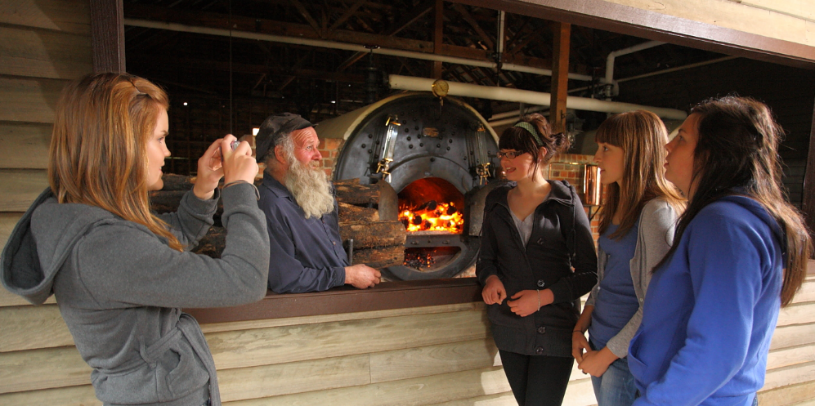
Yr9 IR

Some Year 9 students learning about the arrival of steam power in Australia and visiting many of Sovereign Hill’s related museum exhibits through the education session entitled ‘The Industrial Revolution in Australia’.

In summary, we think that Australia’s Industrial Revolution was likely sped-up by the gold rushes. If you would like to visit Sovereign Hill to learn more about this topic, we offer an education session for students entitled ‘The Industrial Revolution in Australia’.

Links and References

Wikipedia on the Industrial Revolution: https://simple.wikipedia.org/wiki/Industrial_Revolution

The impact of the Industrial Revolution on England: https://www.history.com/topics/industrial-revolution

A great video about the Industrial Revolution: https://www.youtube.com/watch?v=zhL5DCizj5c

A Sovereign Hill Education video on the Industrial Revolution in Australia: https://www.youtube.com/watch?v=kfVW6Xq3Pd4

An old post on the Sovereign Hill Education Blog called ‘The Industrial Revolution in Australia’: https://sovereignhilledblog.com/2013/02/06/the-industrial-revolution-in-australia/

Another old post on the Sovereign Hill Education Blog called ‘The Industrial Revolution in Australia: Part 2’: https://sovereignhilledblog.com/2013/04/29/the-industrial-revolution-in-australia-part-2/

Sovereign Hill Education Blog on the ‘Environmental Impacts of the Gold Rush’: https://sovereignhilledblog.com/2014/09/01/the-environmental-impact-of-the-gold-rush/

A history of Ballarat featuring lots of great primary source images: http://ballaratgenealogy.org.au/ballarat-history

Encyclopaedia Britannica on the Industrial Revolution: https://www.britannica.com/event/Industrial-Revolution

The Khan Academy on the Industrial Revolution: https://www.khanacademy.org/partner-content/big-history-project/acceleration/bhp-acceleration/a/the-industrial-revolution

A Gold Museum blog about a model train made by apprentices at Ballarat’s Phoenix Foundry in 1878: https://goldmuseumballarat.wordpress.com/2013/02/25/phoenix-foundry-model-locomotive-engine/

A podcast about the environmental impacts of Ballarat’s gold rush: https://talesfromratcity.com/2018/08/12/episode-eight/

A blogpost from the MAAS (Museum of Applied Arts & Sciences): https://maas.museum/inside-the-collection/2018/08/29/industrial-revolution-in-australia-impact-on-manufacturing-in-the-1800s/