This year, February 17 marked the start of a two-week celebration of the Lunar New Year based on the lunisolar Chinese Calendar, also known as the Spring Festival as the seasons change in the Northern Hemisphere. The cycles of the moon relative to the Winter Solstice determine the date each year. Each year is represented by a different animal, on a twelve year cycle associated with the 12 new moons of the year. This animal is associated with particular personality traits, if you are born that year, and expectations for the year ahead. 2026 is the Year of the Horse, a symbol of speed, energy and adventure. The horse is also associated with good fortune and success which bodes well for the year ahead.
84.2208 Qing Dynasty calendar 1894, collected by George and Robina Arnott-Rogers. The document references months, solar terms, specific dates related to 20th year of Guangxu Reign.
We do not yet know what this year holds, but let us take a look back at another year of the horse that ushered in great success on the Ballarat diggings, 1858. The Chinese population in Victoria has peaked at approximately 40 000 persons, on the diggings of Ballarat 1 in 5 men come from China. The whole town is aware of the New Year festivities and celebrations are reported in The Star. Over the weekend of the 13 and 14 February the writer describes much noise, crackers and pyrotechnics. [“Local and General News- Chinese New Year” The Star (Ballarat, Vic. : 1855 – 1864) 16 February 1858: 3. Web. 19 Feb 2026 <http://nla.gov.au/nla.news-article66046584>.]
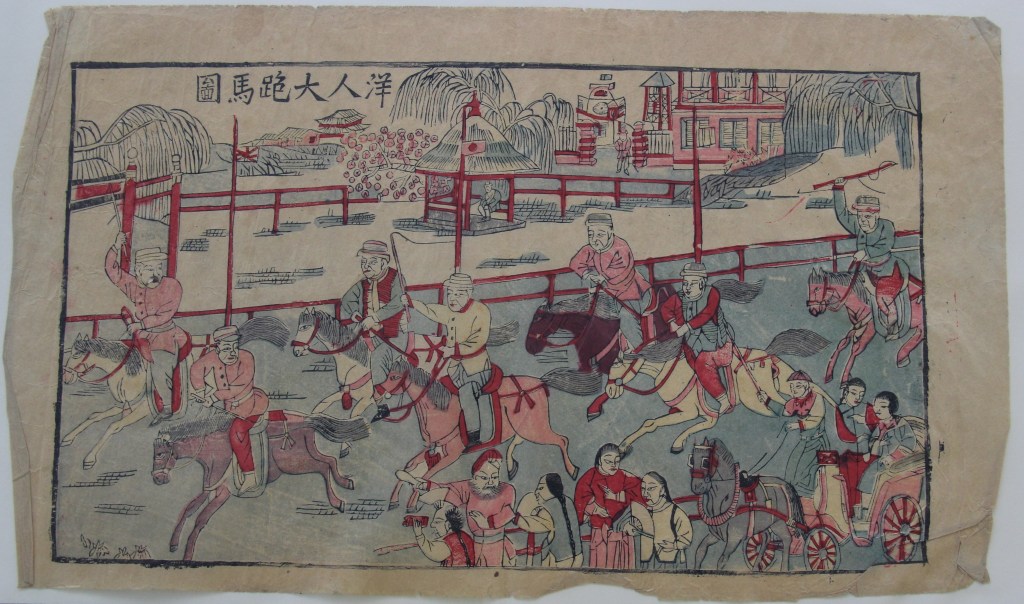
Speed
84.1237 Woodblock print of a horse race, collected by George and Robina Arnott-Rogers.
1858 marks the start of a universal birthday for Thoroughbred race horses. Associations across Britain agree that all horses will celebrate their birthday 1 January to make it easier to manage age classification in race categories. The following year Australia also votes to adopt a single birthday for horses, but decides to stick with August 1, so horses in different hemispheres are different ages!
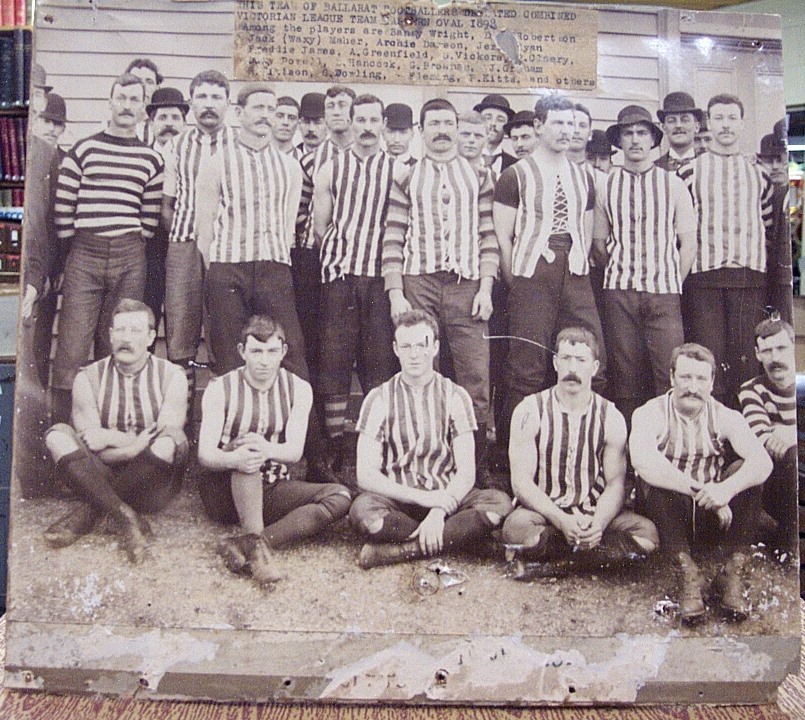
Energy
676.81 Ballarat Footballer’s that defeated the combined Victoria League Team, Eastern Oval, 1892
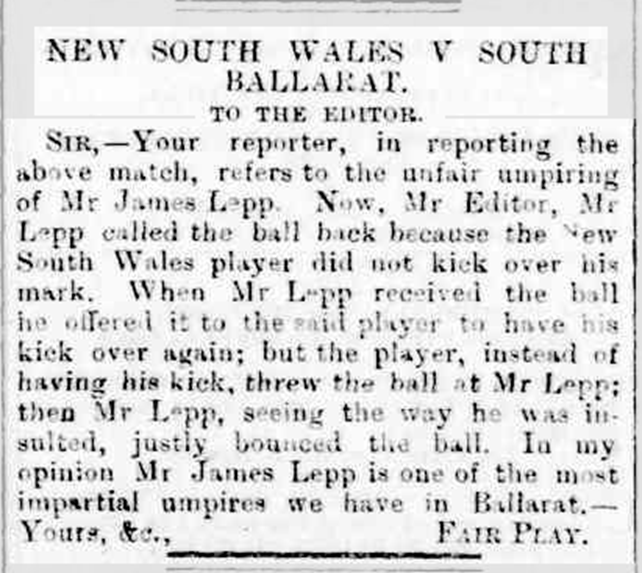
The first AFL match is played 7 August 1858 between Scotch College and Melbourne Grammar School in Melbourne. The following year the rules would be codified and the game would spread across Victoria, including Ballarat’s Chinese community. James Lepp, for example, played football at school and then, while working at the mine, played for their team. In 1886 he became the first recorded Chinese-Australian umpire.
Ballarat’s Young Sportsperson of the Year receives the Wunhym Trophy named in honour Jack Wunhym. His uncle had been the captain of the Ballarat Chinese team, while Jack went on to become the first Chinese-Australian Captain of a VFL/VFA team.
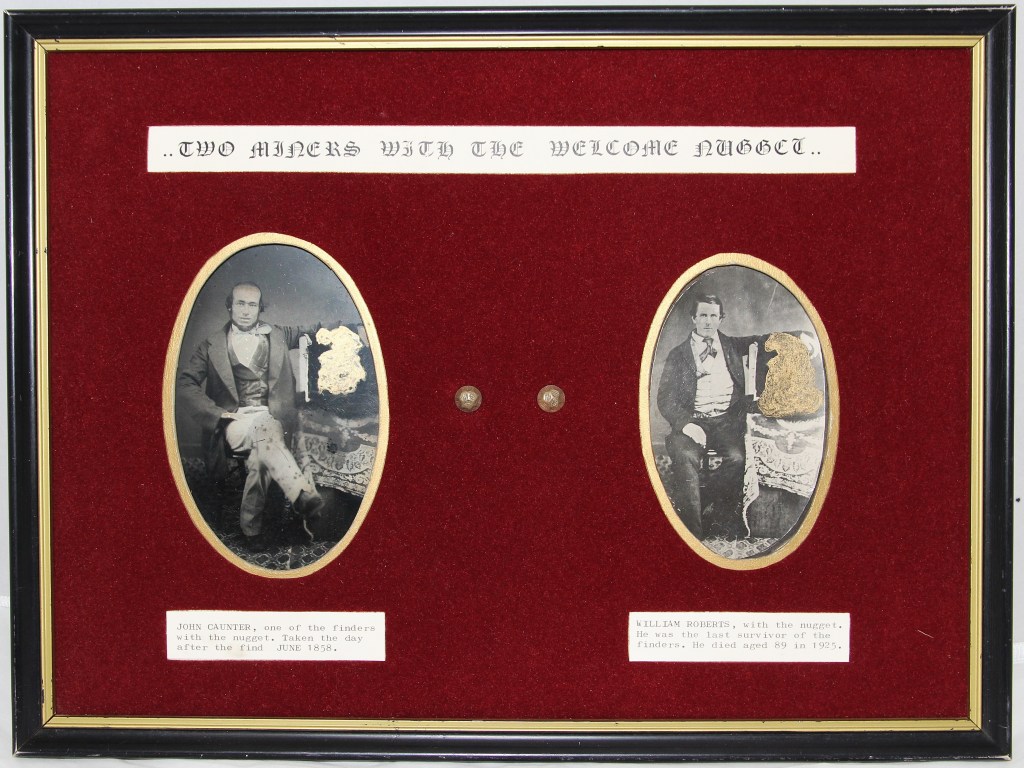
1858 is also the year the largest nugget ever discovered in Ballarat was unearthed, 9 June at the Red Hill Mining Company. The Welcome Nugget weighed 69kg, still the second largest nugget ever found in Australia, and was discovered by a team of 22 Cornish miners. The nugget toured Australia before being sold to the London Mint and melted down. You can find out more about the Welcome Nugget with a visit to Sovereign Hill’s Red Hill Mine.
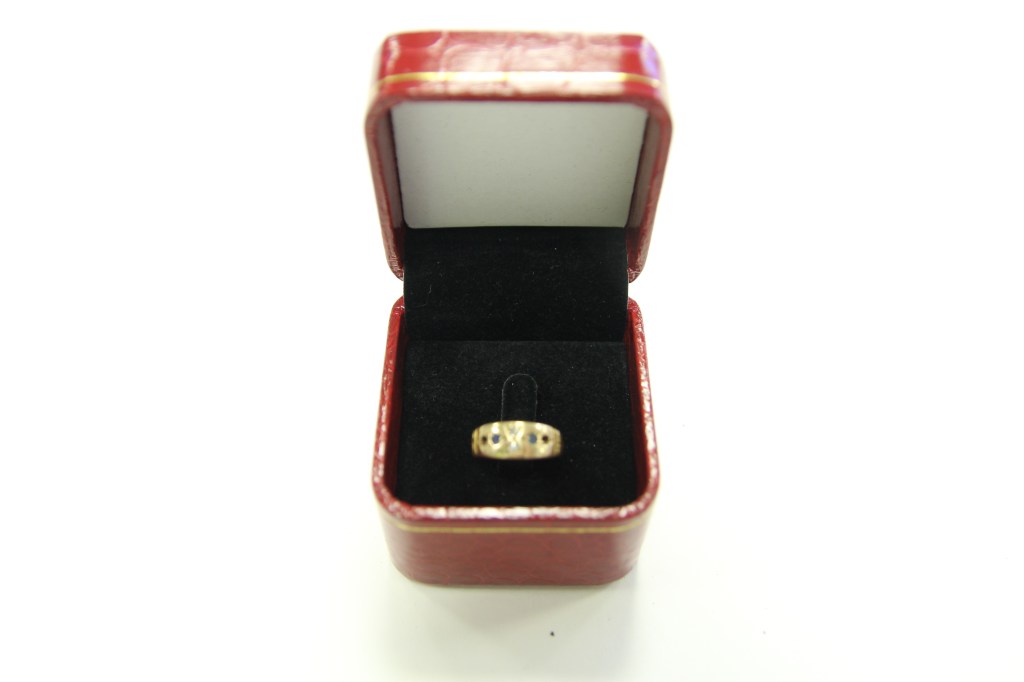
2018.0800 Gold ring.
Family history suggests this ring was made with a piece of the Welcome Nugget. Wishing you happiness and prosperity this New Year. What will the year bring you?
Come and visit us at Sovereign Hill, while you are in the Chinese Village make a wish at the temple.
The decision to migrate is not one to be taken lightly. Where will you go? How will you get there? What will you take with you? And, what (and who) will you leave behind?
The 19th Century is a world of mass migration – boats carrying vast numbers of people and goods to the far corners of the globe. Migrants face a challenging trip over, cramped conditions, heat and cold, unpleasant food, homesickness, and anxiety over the unknown.
Pictured: Travelling trunk, Sovereign Hill Museums Association collection.
To pass the time aboard ship many passengers kept diaries. Where possible they sometimes wrote letters home – sending them via returning ships they passed on the voyage over. These letters and diaries were treasured. Many obituaries to our migrants reference the journey over; this is a defining decision in their life and a story they may have told many times. Several travel letters and diaries have found their way into our museum collections and they give us a passenger-eye view of life aboard ship.
One diary in our collection, twelve pages from the journey of Thomas Ballingal, describes his journey to Australia and back to Scotland from the diggings. At one point he mentions sending a letter from Melbourne to his mother back in Scotland, knowing it will take 90 days to reach her!
On his return to Scotland he does some sightseeing in London and Liverpool. On Friday 28th November, 1856, he notes:
While in Liverpool went with Mary Martin & Robina to see the Picture Gallery – did not think much of the Picture that took the prize but saw some others thought much better as the “Thurscape Goat” – “Last of England” and “Arrest of John Brown in the time of Henry VIII”.
Pictured: Ford Madox Brown, The Last of England, 1852-55. Birmingham Museum and Art Gallery.
This painting remains an iconic image of the migrants’ journey, particularly for the more than 60% of our migrants that made the journey from Great Britain. Although he never made the journey himself, Brown captured the feelings and atmosphere of leaving the familiar behind and the unknown journey ahead.
Another diarist in our collection, baker David Wilson, of whose diaries we again hold only a part, describe conditions aboard ship in shared accommodation. He is travelling with his new wife Grace who struggles with seasickness aboard ship.
Conditions aboard the Donald MacKay are made all the more crowded as the Captain takes aboard hundreds of Irish passengers bound for Van Deimen’s land whose ship has foundered. The ship carries over 600 passengers.
The shipping manifest on arrival indicates that provisions, food aboard ship, was not good: “Numerous complaints among passengers of bad provisions”. Some passengers packed a selection of their own foods to improve their diet. On the goldfields Wilson sets himself up as a baker in Golden Point and appears to have been in business for a few years.
Got up into our little bed – had both of our heads 2 or 3 times knocked on a large beam directly above our head – got up in the morning – unpacked our boxes roped them up again had a desperate struggle for our breakfast and soon found out that a great number of Irish Emigrants – who had been ship-wrecked in the “Ship – Fortune” were to be crammed in amongst us – truly they were amongst the lowest of the Irish – I had ever been in lodgings with – another desperate fight for Dinner – “might being right”
…
Ship lying so much leeward – our tea service rolled down to the other side of the table – Grace filled and as fast as she did so – so did the teacups run away towards the foot of the table – the water coming in to our beds in great drops wetting all our bedding – so much so that we both slept on the forms – I slept sound – but whilst I did so the ship was lying entirely on her side the sea running over her bows – most of those who were awake were praying – or _? _? could neither get into Bed nor a seat – Grace I believe was amongst this number – not being fallen asleep – so soon as I was – the sailors were kept at the pumps for hours – and an extra one put up on the low side of the ship – tins & crockery was (?) crashing – and strolling up and down everywhere – some were actually thrown out of their beds.
Pictured: A note has been added at the end of the Donald McKay passenger lists particularly noting passenger complaints about provisions. Passenger List Donald MacKay, 1855.
To plan your journey you relied on conversations with returned migrants like Thomas Ballingal or their families, letters from abroad and newspaper clippings. Emigrant guides were also available to help you plan your journey.
Our museum collections hold several examples of these guides, including: Gleanings from the Goldfields: A Guide for the Emigrant in Australia: by an Australian Journalist published in 1852 and Gwlad Yr Aur; Neu Gydymaith Yr Ymfudwr Cymreig Australia also published in 1852, a Welsh-language emigrant’s guide to the goldfields. ‘Gwlad Yr Aur’ means ‘Land of Gold’, alluding to the idea that gold has become a primary motivator in the decision to emigrate to Australia.
In their advice to emigrants the author reminds migrants that the ship provides very little – you must bring your own mattress, pillows and blankets, dishes, cutlery, containers for water, some extra food (!) and soap for washing, and sufficient clothes as you will do very little laundry aboard ship!
The guides’ highlight the abundance Australia has to offer:
Of the multitudes attracted thither by the gold discoveries, a large proportion must necessarily be unfitted by their physical constitution and their previous habits for… [this] kind of work…. These persons need not, therefore, by any means despair… Many lucrative employments will fall to their lot… less precarious than those of the gold-digger.
For our migrants, while gold is a big pull factor challenges in their home country, poverty, civil unrest, famine, for example, are pushing them to seek new opportunities. These guides are selling Australia as a land of plenty, beyond gold, for everyone.
Pictured: page from J.B. Humffray’s Journal 1853-54. Sovereign Hill Museums collection.
Welsh migrant J. B. Humffray found himself aboard the ‘Star of the East’ in July 1853 alongside his brother Frederick. While aboard he kept a detailed diary, the following are excerpts:
8th July 1853
The Surgeon – Mr King – called all the passengers together and read the Rules of the Ship – and urged upon the passengers the importance of cleanliness care of fire &c &c –
This our 3rd day and the rations are being delivered out in a much better manner today than before a Classification of passengers takes place tomorrow between the 1st & 2nd class passengers – I will dine one hour earlier – most of the passengers are in good health and spirits
16th July 1853
[upset that there is very little distinction between 2nd and 3rd class passengers. 2nd class passengers are protesting]
That he would insist upon the Between decks being cleaned out daily before breakfast – I explained to him that it was the wish of every 2nd class passengers that the deck should be so cleaned the matter of dispute was as to whose duty it was to clean it – C – It is clearly laid down in the act that the passengers must clean their Berths every morning & carry the dirt out – I told him we were willing to clean out our Berths but we did not like to clean up the floor of the Between deck inasmuch we were lead to believe that parties would be appointed to do that.
5 Sept 1853
– the vessel rolling very much I was trying in vain to write some fresh copies of the Rules to put up in different parts of the ship – I had to hold myself up with one hand as I tried to write with the other.
* * *
Excerpts from diaries such as Humffray’s were often transcribed and sent back overseas to families and published in pamphlets and newspapers to be shared with prospective migrants. Other peoples’ journeys were an important source of information when making your own plans. Much of Humffray’s diary is in shorthand, and likely intended as a private record; however, six weeks into his journey he noted down some ‘Advice for Intending Emigrants’ in his diary, very similar to the guides, including the following:
See the ship’s Berths and general accommodation – Cooking Galleys – Water Closets – pumps – tables – seats &c
Be careful in forming your messes – for much of your comfort depends upon this – do not be in a hurry to form a mess at the bidding of the Cooks and Purser for their accommodation [a mess is a group of people you will eat your meals with]
Bring with you some hams & Bacon as you will find it very useful in crossing the Tropics & indeed I may say during the voyage – Bring some Baking powder – pickles and some preserves of preserves. …
the Berths are very narrow & it is unpleasant to have too many things in them – a few good books essential you can steal an hour occasionally for an intellectual repast out of the noise …
Bring as few clothing as you can do with. It is of little use putting on costly clothing on Board ship unless you are disposed to be arrogant – as they soon get spoiled …
3 Blue flannel shirts & 2 Gurnsey shirts are very comfortable and useful
3 pair of Ducks 2 pr of Cords –
2 pr of Deck slippers – a pair of water tights – as the Decks are frequently flooded – and wet feet are unpleasant indeed while I write the vessel is lurching violently & shipping heavy seas get a Nor-Wester cap –
Water proof coat & leggings
A good stock of common coloured sheets
add to the above – a good stock of courage – firmness – patience – forbearance – cleanly habits forbearance and confidence in the great I am – who holds the waters in the hollow of his hand & you may thus hope for as much comfort as is to be found on Board an Immigrant ship…
* * *
You must be prepared for a great deal aboard ship, Humffray describes both stifling heat and slushy snow aboard ship over the course of their journey.
His journey to Melbourne took 75 days and carried 500 passengers, only half of whom are listed on the passenger manifest. Steerage passengers, the lowest class of traveller, are often not listed beyond a total passenger count – they are just a number. Humffray, as a second class passenger, is named.
The ship continued on from Melbourne to Sydney and from there to Shanghai. In Sydney an image and description appeared in the Illustrated Sydney News praising the clipper as one of the finest to arrive in port; newly built earlier in 1853.
Humffray would go on to be a key figure in the political unrest of the Ballarat diggings around the Eureka uprising. Even aboard ship you can see his interest in fair roles and rules, as he leads passenger petitions to the Captain and commits to recording and circulating shipboard rules. He was secretary of the Ballarat Reform League, and later elected alongside Peter Lalor as a representative in the Victorian Legislative Council (later Legislative Assembly). His brother went into business as a printer and stationer, unsuccessful in Ballarat he moved his family with greater success to Dunedin, NZ.
The journey to the diggings is just the beginning, but the experience aboard ship, the partnerships formed on the months over could have a big impact on the new life that lay ahead of you. Would you make the journey?
In 1851 and 1862 Victoria produced 27,770,666 troy ounces of gold (over 800 tons), valued at about 110 million pounds at the time. The gold produced during this time was highly prized and would often be melted and transformed into different objects. Objects made from gold could include – coins, bullion, gold leaf, jewellery and even gold teeth!
Gold has been used in the making of jewellery Before Common Era (BCE) and has for many people, been seen as a symbol of wealth. Gold, being a rare metal, dominated the appearance of jewellery in the 19th Century. The gold being taken out of the earth in Ballarat from 1851 meant that by 1855 jewellery shops were appearing on the Ballarat landscape. Two men, who arrived from England, seized this business opportunity and opened a jewellery store, called Rees and Benjamin within Ballarat. You can visit Rees & Benjamin on the Main Street of Sovereign Hill to purchase jewellery.
Miners Brooch (1850’s) (GM07.0047)
The jewellery designs in the 1850’s reflected mostly the English style. However, jewellery being made in Ballarat could also take on a uniquely Australian design of flora and fauna and even mining. One lady on the Ballarat goldfields during this time, Lola Montez, who was a stage performer, was sometimes given gold jewellery by gold miners during her on-stage performances. One gold brooch given to Lola, as a token of appreciation in Melbourne in 1855, was then later sold by her, during her travels around San Francisco (America) a year later.
Before the mid-1850s, gold was a desired resource and usually only the wealthy could afford to have jewellery pieces, made from gold and other precious materials, handmade by a jeweller. However, largely due to the gold rush and the Industrial Revolution (creating a new emerging middle class of wealth), jewellery was becoming more affordable and popular. The Industrial Revolution made the manufacturing of jewellery more cost-effective and attainable for other levels of society. The invention of electroplating (metal coating) during this time was ideal for making inexpensive jewellery, that more people could afford to buy.
One of the great influencers of jewellery fashion in the 19th Century was Queen Victoria. Her reign as Queen on the British throne went from 1837-1901. During that time, she had great influence over the world’s fashion, including jewellery. Much like social media influencers today, Queen Victoria made a societal impact on the jewellery and fashion trends during the time she reigned. Examples of popular styles of jewellery in the mid-19th Century included lockets, rings, large bangles, brooches, crosses, and necklaces. Jewellery such as earrings were also fashionable in the Victorian era. Queen Victoria had her ears pierced when she was fourteen years old and one of her painted portraits shows her wearing dangling earrings. Wearing lots of jewellery before the mid-19th century for very young girls was frowned upon. However, ladies would wear large and chunky jewellery as well as delicate bejewelled pieces.
Locket with hair (GM 2012.0446)
Jewellery fashion in the 19th century was a little bit different compared to our jewellery today. Queen Victoria had a favourite piece of jewellery that she wore – a locket that contained her husband’s (Prince Albert) hair. Queen Victoria also wore and gave her children jewellery made from hair. In fact, a lot of jewellery of that time was made from hair, teeth, and animal claws. Prince Albert even designed a brooch for Queen Victoria that included their first daughter’s, Vicky, first milk (baby) teeth!
Another trend Queen Victoria made popular was that of receiving an engagement ring before marriage. Prince Albert gave Queen Victoria an engagement ring that was in a snake (serpent) design, with its tail in its mouth, entwined. In Victorian times this design symbolised eternal love. The snake design and many others would become popular amongst jewellery designers due to Queen Victoria.
In 1861, when Prince Albert died, Queen Victoria began wearing black jewellery, called mourning jewellery. This was mostly made from Whitby Jet (fossilised coal found in Whitby, England) and started a trend that lasted until around 1890.
Whitby Jet Jewellery(GM 84.2010)
Did you know?
The ‘Welcome Nugget’, a substantial gold nugget dug up in Ballarat in 1858 was eventually sold to the British Mint and melted down to make minted gold sovereigns coins. The coin, on one side, would have held an impressed image of Queen Victoria on its obverse.
Prince Albert also designed a brooch for Florence Nightingale. (Florence was named as such due to her being born in Florence, Italy).
Sea coral was popular and used in jewellery during the Victorian Era.
During the Paris Exposition of 1855, a life-size portrait of Queen Victoria was made completely out of hair!
or, “don’t” for that matter as we never “clip our words”
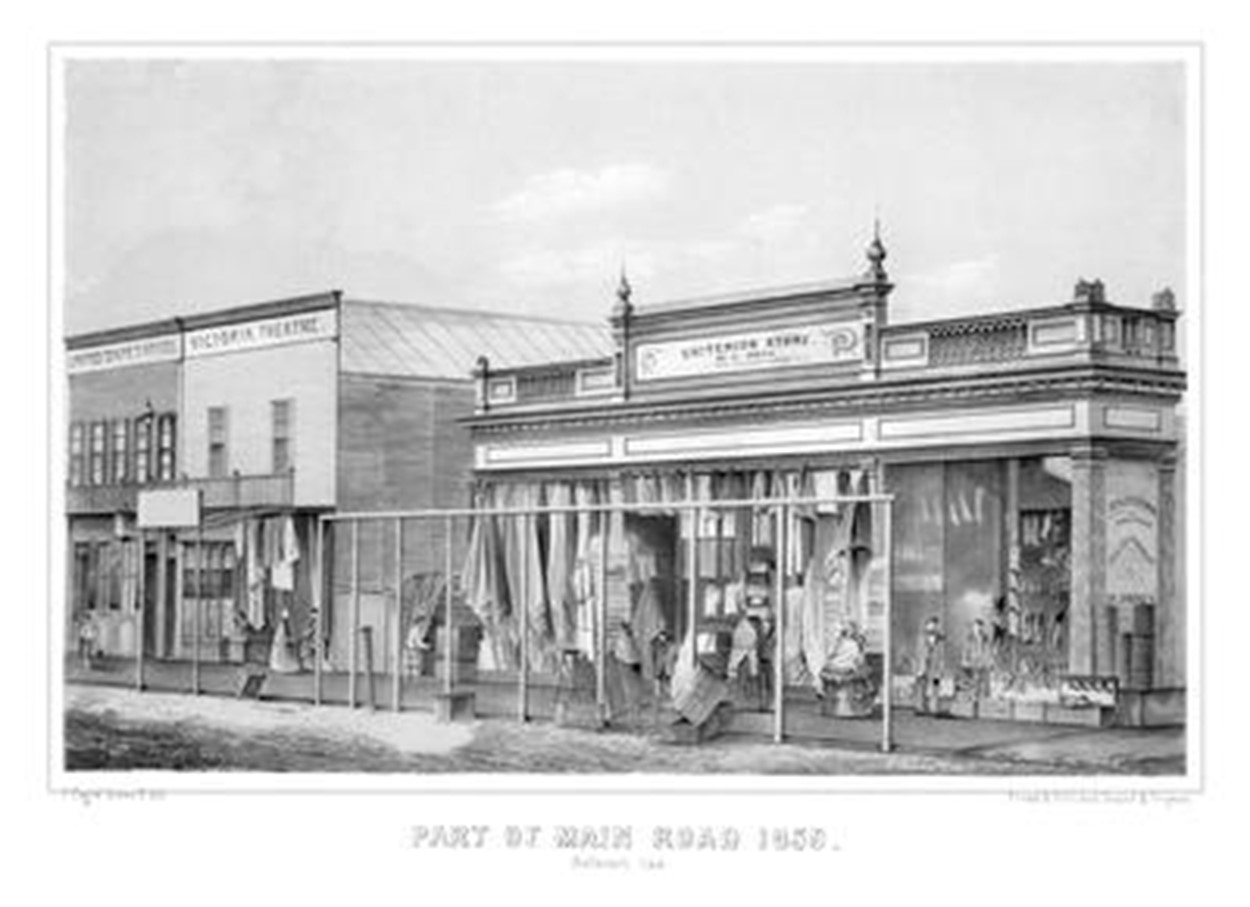
François Cogné 1859 (78.2403) Ballarat’s middle class shopping on Main Road, Ballarat East in 1859
In welcoming you to the nineteenth-century world of Sovereign Hill one of the first things you may notice, after the clothing, is the way we speak to each other. We will greet you with “Good Morning” or “Good Day”, never “hello”. Why is this?
“Hello” is just emerging in the late nineteenth century as a form of greeting, earlier versions of ‘hullo’ or ‘holla’ were not in common use as greetings, they were informal shouts for attention. Could you go a whole day without saying “hello”? In fact, it will take a big technological shift, the telephone, to change our use of ‘hello’. Telephones change the rules of communication when you cannot see the speaker on the other end. Legend has it, Thomas Edison championed “hello” (telephone inventor Alexander Graham Bell preferred “ahoy”)[1] as a useful greeting.
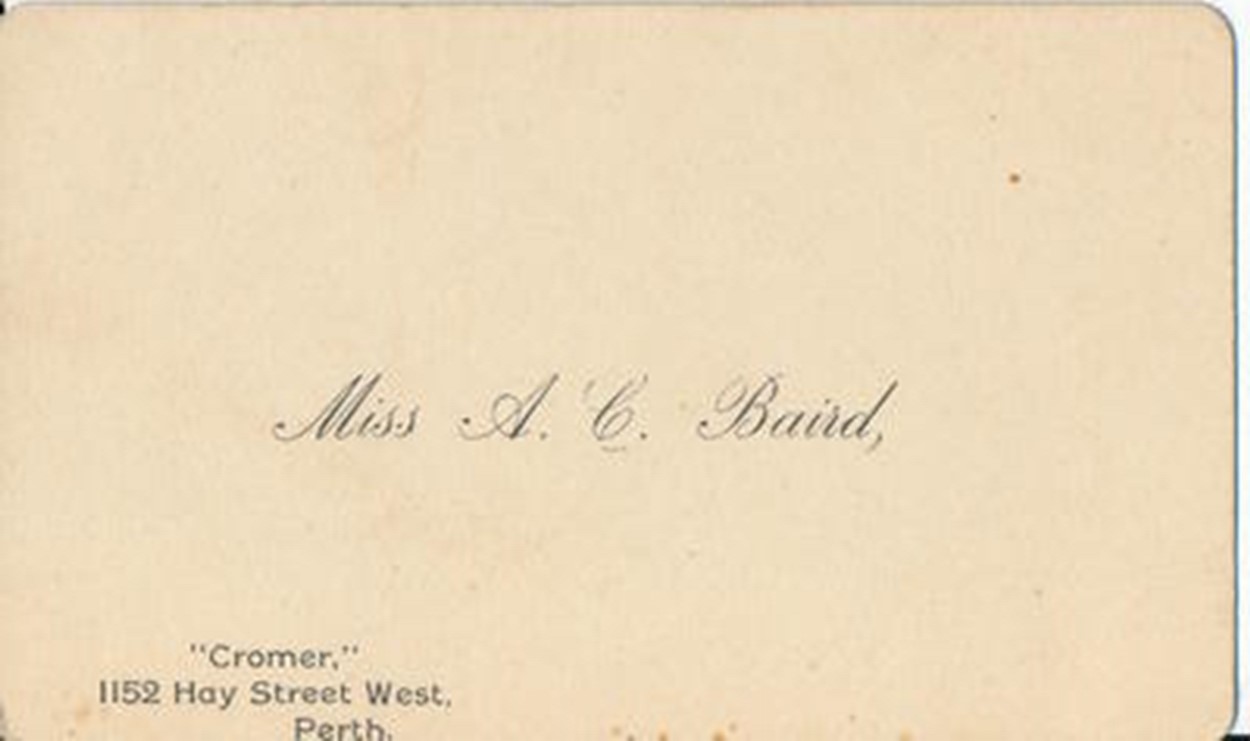
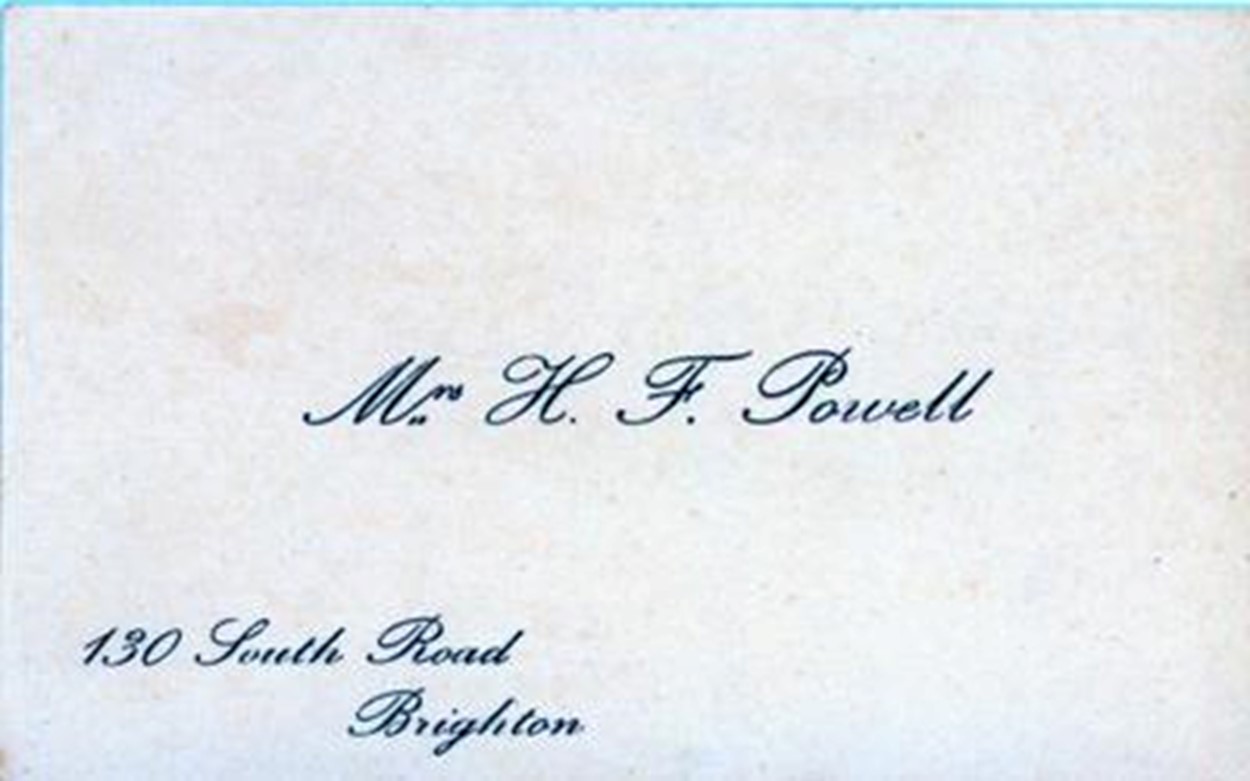
Before telephones, letters and calling cards provided introductions. You would leave a card, with your title and name, as an invitation to speak. We have several examples of these visiting cards in our collections. How many cards you left, whether you left a message on the card, or perhaps bent a corner of the card all sent a message to the recipient. It told the recipient you were home, that you were accepting visitors or that you would like to visit for example.
Is technology today changing the rules around who and how we behave when we speak to each other? Is this a good thing?
05.07292016.0352
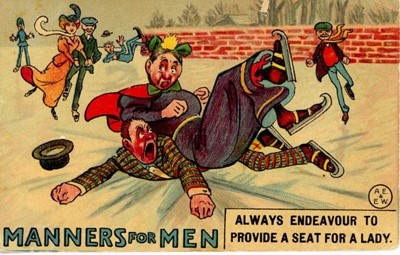
In our pre-telephone world, there are very clear rules around how we look at each other (or don’t!), move around each other and speak to each other depending on our relative age, power, and how well we know one another. These rules of behaviour in society, called “etiquette”, are taught and practiced at home and at school. They are also published again and again in books of manners and our collection contains several examples.
The nineteenth century is a period of big and increasingly fast change amongst the societies from which many of our goldfield migrants come. This big, fast change is often referred to as the Industrial Revolution. Along with the advent of steam power and factory production, and the move from country life to city life came the rise of the middle class. The middle class was a group of people who did not come with titles (important family names and connections) or inherited power like the upper class, but who also no longer work in manual trades with little money, power, or education. This new group of people earn more money than it costs to live, have an education, and often professional jobs.
FitzGerald Postcard Collection (GM 83.16880)
The rules of behaviour are becoming a really important way of figuring out whether a person belongs in good society. In the dust and mud of the goldfields particularly it can be very difficult to tell if a person comes from the same background as you and fortunes are being made and lost very quickly. In a society used to organising people based on gender and social power, if you know and follow the rules you will have more opportunities to move up in the world. According to Australian Etiquette: Rules and usages of the best society, published in 1885, “He who does not possess them [good manners] … cannot expect to be called a gentleman; nor can a woman, without good manners, aspire to be considered a lady by ladies.”[2]
You may have noticed that our rules of behaviour are distinct for men and women. In the nineteenth century, there are very distinct understandings of what it means to be ‘male’ or ‘female’.
Here is a primary source example from The Bendigo Advertiser, 1859, where the writer is very upset that a Magistrate at a stone laying ceremony called the females present women and deliberately not ladies[3]. What an insult! The Magistrate’s Excuse? As an aristocrat (upper class) he should know better, but as a soldier (different social space) he may have rough manners. Appropriate titles are important and make a judgement on the person’s background.
What sort of words does the writer use that tell us how to identify a lady or gentleman?
Gentleman: by birth, education, gone through a college curriculum, conduct
Lady: gentler sex, fair sex
The idea that men and women are made differently, and therefore behave differently[2], shows in different expectations of men and women, including in good behaviour.
[2] Australian Etiquette, or the rules and usages of the Best Society in the Australian Colonies. People’s Publishing Company, Melbourne. 1885, p. 19.
Our good behaviour rules may seem unfamiliar to you, as a visitor, as how we interact with each other has become much more familiar and much more diverse in the twenty-first century. Do you have any classroom rules that you have to follow? Who made those rules? Are they different for boys and girls? Are they different for children and adults?
Meeting a new person is a good example of these changes. Our nineteenth century rules of etiquette say that we do not have to introduce someone. A formal introduction is like giving someone a good character reference for a job; if you have been introduced you must never ignore that person in future, it is very rude. Introductions must be done in the correct order: 1. Gentleman to the lady; 2. Younger to the older; 3. Inferior in social standing to the superior. Your social class decided who and how you spoke to others.
SOCIAL CLASS
PROFESSION
Upper Class – landowners and investors, no manual labour
Aristocracy Rich gentry Royals Military Officers Lords Wealthy Men/Business Owners (new to this class)
Middle Class – skilled jobs, white collar professions with no manual labour, very class conscious
Merchant Shopkeeper Bureaucracy – railroad, bank, government
Working Class – skilled jobs with manual labour, unskilled jobs, poor working conditions
Trades Factory work Labourers
*there was also an underclass of people in extreme poverty or “sunken people”
When you are introducing someone, you must use their title (which can let you know marital status, job, social achievement). Titles, and pronouns, are a great example of our changing society. We greet people by first name more often, may not use titles at all and our choice of titles and pronouns is expanding to become much more inclusive of different identities.
If you visit us, you may be greeted as “Sir” or “Ma’am” as an adult, or “Master” or “Miss” as a child, titles of respect in our time. It is respectful to greet a costumed person you meet with Sir or Ma’am. “Sir” is the title given to a gentleman whose name you do not know. “Ma’am”, short for madam, is the title for a lady whose name you do not know; it comes from the Old French for my lady. You must wait for the lady to look at you and nod a greeting first, before you speak to her, and if you are wearing a hat (which of course you would be in the nineteenth century) you would touch the side of the cap as you greet her. We do not generally shake hands when we meet new people; handshakes are more common between gentlemen, and we certainly do not high five. The high five will not be invented for another hundred years in our future.
Can you imagine how the rules might change again in the future? What do you think might be different about how we greet each other and what we call each other?
Alice Cornwall, also known as ‘Madam Midas’ ran a company mine and became a millionaire by the age of 30. Reproduced with permission from the Gold Museum.
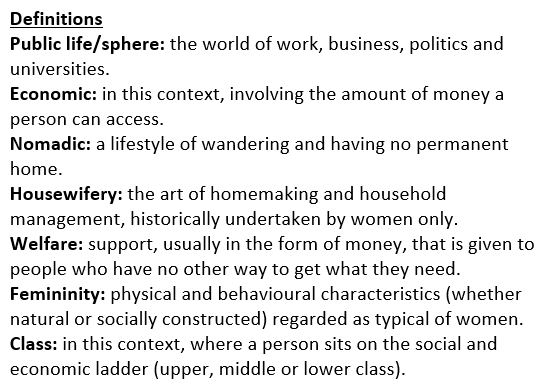
While getting dirty hands in search of gold was viewed as a man’s job in the imported European culture of 1850s Victoria, there were many hardworking and enterprising women making a living in Ballarat during this era. In addition to managing families and households, some women on the goldfields opened shops and eateries, or worked as teachers and entertainers. There is even evidence that a few women swapped their skirts for trousers to search for gold, one became a newspaper editor, and later in the 1800s a woman named Alice Cornwall became a millionaire by the age of 30 through the company mine she owned!
Back then, it was rare for a married woman in Europe to hold a job outside her home, or to play a role in public life. However, the conditions on Australia’s goldfields provided some women with new opportunities and different lifestyles compared to their equals back in Europe. This second blogpost in our series on 1850s goldrush women explores their roles in Victorian communities beyond the home.
Working Wadawurrung Women on the Diggings
The Wadawurrung women of the Ballarat region experienced rapid changes to their lifestyles and local environment when Europeans began to colonise South Eastern Australia in the early 19th century. Therefore, by the time the gold rushes began in Ballarat 1851, historians tell us that some Wadawurrung people already spoke English and understood the new political and economic systems that Europeans had introduced. Using their skills in tanning/sewing possum skins, sourcing native food and medicine, fossicking for gold, putting on cultural performances and taking Europeans on tours of the landscape, Wadawurrung women (and men) made money from Europeans by supplying these goods and services. According to oral history handed down by members of the Wadawurrung community, European families also turned to Wadawurrung women when they needed someone to babysit their children.
Working European Women on the Diggings
In the early 1850s, there weren’t many European women living in Ballarat. As explained in Women on the Goldfields Part 1, most of the people who came to try their luck on Australia’s goldfields were European (mostly from Britain), and gold rush communities tended to be male-dominated during this time. By the mid-1850s, Ballarat had become one of the richest places in the world, and as a result of this and the government push to encourage female immigration, the number of (mostly young) women on the goldfields grew.
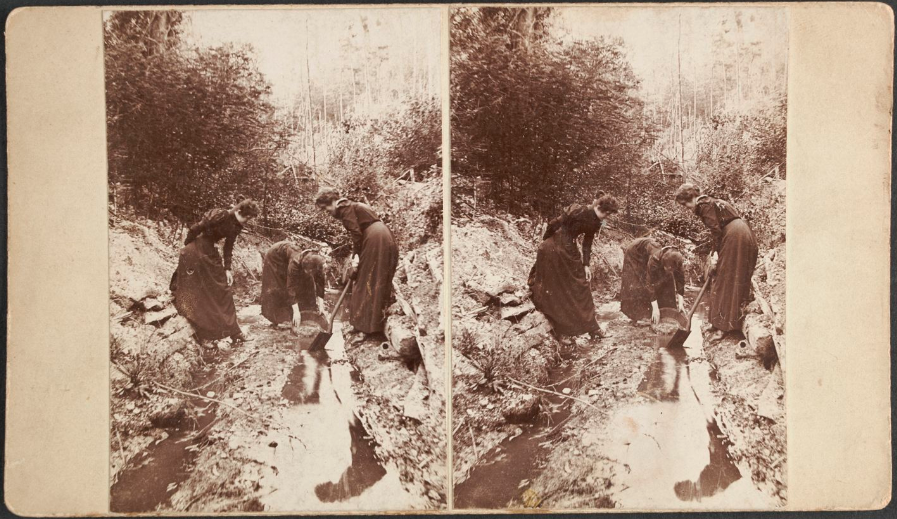
Author unknown, Bush scene, three women panning for gold, c.1855-1910. Reproduced with permission from the State Library of Victoria.
I saw the other day four or five of these fellows strolling on behind their cart. Amongst them was a young woman very well dressed, wearing a sun-bonnet … [with] a full flap behind at least a foot long, to screen the neck. On one shoulder she had a gun, and in the other hand a basket, while one of the men carried a baby, and another a swag. … You see a good many women going up on the whole, and some of them right handsome young girls. They all seem very cheerful and even merry; and the women seem to make themselves very much at home in this wild, nomadic life. – William Howitt, Land, Labour and Gold, 1855 (1972 ed.), Victoria, p.64.
Part of the reason some women took on extra work was due to economics. Food, clothing and household items (much of which was imported from Europe) were very expensive on the diggings, and households with two working adults usually lived more comfortably than those relying on just one income. The main motivation for these immigrants to journey to Australia in the first place was to make money, and the more creative and resourceful you were (whether you were male or female), the more successful you were likely to be.
Some women also took up work that was usually the domain of men at this time – such as school teacher, shop assistant or hotel manager – because the men in the community were too busy searching for gold to perform these roles. Since the social norms that influenced the way Europeans were supposed to behave were somewhat relaxed on the diggings, some women saw an opportunity to work and took it.
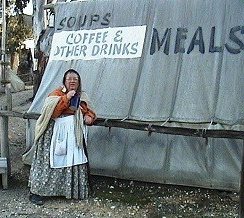
A costumed character at Sovereign Hill selling her potent ‘other drinks’ (sly grog) from her tent to support her family after the disappearance of her husband – a common goldrush experience for women on the early diggings.
Being practical and resilient were important characteristics for all to demonstrate on Victoria’s goldfields. Some women had to work because they were abandoned by their husbands. It was fairly common for men to suffer deadly accidents as a result of the dangers that come with gold mining, while others ventured to different Australian goldfields and never returned to their wives and families. When such abandoned women had children to support (and didn’t already have a job), if they could not immediately remarry or turn to charity (there was no Centrelink back then – churches did most of this type of welfare work) they sometimes had to resort to selling sly grog or even their bodies to pay the family’s bills.
Regardless of the work they did, European women arguably built a new kind of womanhood for themselves in Australia, which challenged the gentle, modest 19th century femininity they were expected to perform. This attempt at creating a new culture was part of a broader push by the youthful and broadminded goldrush communities around Australia to challenge European social norms. Some women who thought along these lines even became involved in the Eureka Rebellion.
Anastasia Hayes was a mother, school teacher and Eureka rebel. Reproduced with permission from the Public Records Office of Victoria.
Some very adventurous European women from Victoria’s gold rushes who have interesting stories to explore include Clara Seekamp, Fanny Finch, Martha Clendinning, Anastasia Hayes, Lola Montez, Edward (ne Ellen) De Lacy, Caroline Chisholm, Anne Fraser Bon, Alice Cornwall, Eliza Perrin, Catherine Bently, Anastasia Withers, Céleste de Chabrillan, Ellen Clacy, Harriette Walters, Sarah Hanmer, Elizabeth Wilson and Bridget Hynes.
As Ballarat became a more permanent township by the 1860s, many of the women who had worked in shops etc. at the start of the gold rush began to return to full-time housewifery. Martha Clendinning was a shopkeeper during the early 1850s, but the more successful her shop became as time went by, the more her femininity and class came under question. 19th century European social norms began to be reapplied, sending women back to the private sphere – so how could she be the respectable doctor’s wife, and lady of the house, when working as a shopkeeper?
The time had gone by when, even on the goldfields, a woman unaccustomed to such work could carry on her business without invidious remarks. I began to fear my husband might be blamed for allowing me to continue at it. After the class of residents on the field had become so superior to those of the working class, whom we had found on our first arrival, to whom all species of employment for women seemed perfectly natural if they could carry it on with success. The doctor [her husband] had been most anxious and was greatly pleased when I announced my intention [of selling her shop]. – Martha Clendinning memoirs, 1853-1930.
The 1861 Census of Victoria shows that women were still performing many roles normally undertaken by men at the time across goldrush communities. Reproduced from Weston Bate’s book called ‘Victorian Gold Rushes’, page 37.
Some of Victoria’s immigrant women in the 1850s were ambitious and outspoken, despite these being uncommon characteristics in women in other parts of the world during this era. However, as time went by and Ballarat became a more permanent community, the social norms of Europe directed women (regardless of whether they were European, Aboriginal, or from any other cultural background) to the private sphere (learn more about this at our next blogpost). This is where they largely stayed until Australian factories needed workers during the 20th century’s World Wars (when women replaced the men who became soldiers). Women only became permanent members of Australia’s workforce in large numbers after the Women’s Liberation Movement of the 1960-80s.
The lives women led in 19th century Australia were similar in some ways and very different in others to those experienced by women in this country today. Much has changed for Australian women in the last 170 years from clothes to hairstyles, average life expectancy and experiences of motherhood.
Over three blogposts we will explore what life was like for women on Victoria’s goldfields between 1851 to 1861. This blogpost will focus on the common characteristics of the women who lived in Ballarat during this era, the second will explain the opportunities goldrush women had to work outside their homes, and the final blogpost will examine domestic life on the goldfields for European women in Australia.
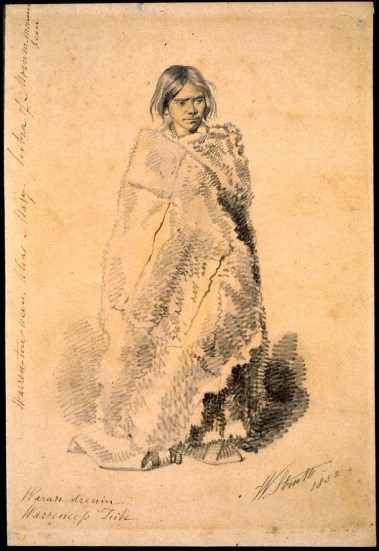
.A drawing of a young Wadawurrung woman who lived in Ballarat during the gold rush. W. Strutt, Waran-drenin, 1852. Reproduced with permission from the British Museum.
While many Wadawurrung women adapted quickly to the changing conditions and played a variety of roles in the new European economy and culture that was brought to Australia, others died from introduced diseases/alcohol and at the hands of violent settler-colonisers. By the late 1860s, most were forced off Country to live on reserves and missions in different parts of Victoria. Despite the damage this caused Aboriginal communities, many Wadawurrung women passed their language and culture onto their children, which is one of the reasons why it lives on today.
The Arrival of Non-Aboriginal Women in Ballarat
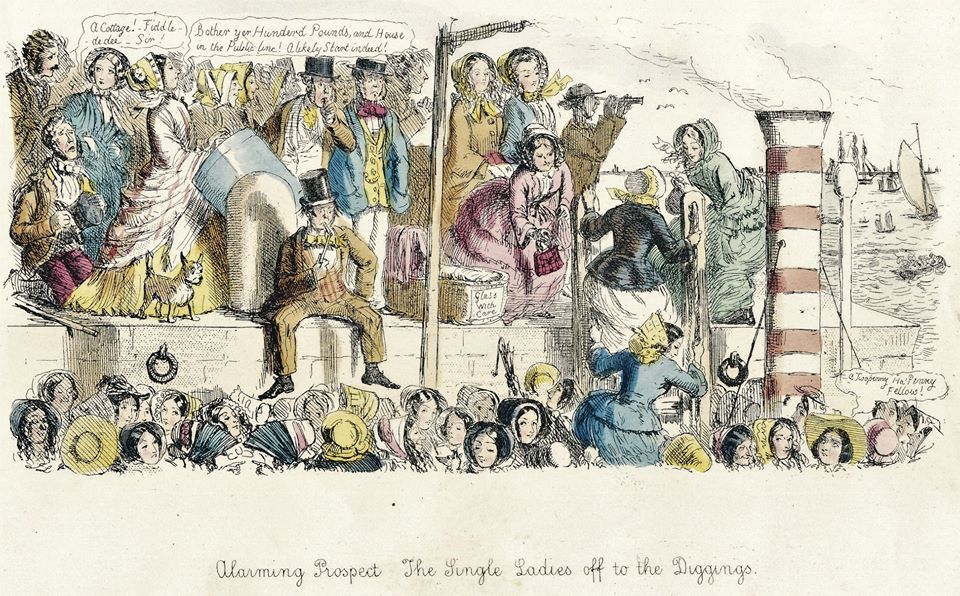
In the early years of Australia’s gold rushes, most of the non-Aboriginal women on Ballarat’s diggings came from Europe, specifically the British Isles. Female goldrush immigrants took huge risks to get to Australia by ship and hoped to become wealthy through hard work and/or a good marriage. Social mobility was nearly impossible back in Europe, but in Australia, anyone willing to work could strike it rich on a goldfield which is why around half a million new Australians arrived in Victoria during the 1850s.
John Leech, Alarming Prospect: The Single Ladies off to the Diggings, Punch Pocket Book, 1853. Reproduced with permission from The Gold Museum, The Sovereign Hill Museums Association.
As most of these new arrivals were men, the colonial government (on advice from people like Caroline Chisholm) made many attempts to attract female immigrants because they were considered to be a ‘civilising influence’ on male-dominated goldrush communities like Ballarat. Gold seeking was thought to bring out poor behaviour in some men, and it was believed by many that just the presence of women could restore their more gentlemanly qualities.
Women were in such high demand on the early diggings – not only were they a ‘civilising influence’ but also companions, cooks and cleaners – that ships arriving in the ports of Melbourne or Geelong were often met by miners ready to propose marriage to the first female they clapped eyes on!
Typical 19th Century European Womanhood
.A costumed character at Sovereign Hill panning for gold in a day cap which is designed to both keep hair clean and provide sun protection.
Religion, culture and tradition have always influenced the way in which people behave and dress. A model mid-19th century European woman was likely to be a Christian who obeyed the social norms that came with this identity. This included being quiet and calm, a loving mother/wife, a dutiful homemaker, and good at following the instructions of men. Such women believed that the Bible should guide their behaviour in addition to their clothing choices. During the daytime, European women wore dresses that covered every part of their body except their faces and hands because a polite Christian woman was expected to be modest and hide her body. This is part of the reason you see costumed women at Sovereign Hill wearing day caps.
Ideally, a European woman would only marry a man who could already afford to house, clothe and feed her and the family they would likely make together. On their wedding day, the bride would wear the best dress she owned in whatever colour she liked. White wedding dresses were popularised by Queen Victoria – but only very wealthy families could afford to dress brides in what was ultimately a one-use dress. Back then it was considered quite normal for European women to be married before the end of their teens, as was having ten or more children. In comparison, 21st century Australian women who choose to get married (which is far less common today than it was in the past) are on average aged 30 and will typically only have one or two children.
Womanhood on Australia’s Goldfields
Some historians suggest that immigrant women on Australia’s 1850s goldfields experienced a different kind of womanhood compared to women back in Europe. This was arguably due to the relative youth of the immigrant population and the opportunities that existed for European women in Australia to work outside their homes.
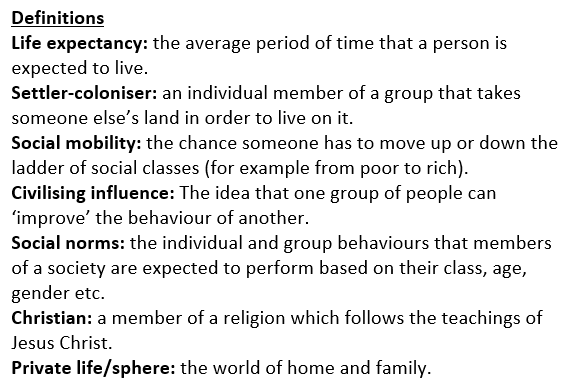
Many of the European women on the goldfields were in their late teens/early twenties. Their youth helped them survive the tough living and working conditions – raising a family in a tent and having to trudge through deep mud in a Ballarat winter to buy food or harvest it from a vegetable garden was hard work. On average, Australian women at this time in history would only live until they were about 40 years old, while life expectancy for Australian women today is about 80 years old. Their shorter (on average) lives is one of the reasons that 19th century women tended to marry and start families at a younger age than women today.
In Europe, if a woman had a job, perhaps as a seamstress, housemaid, or governess (tutor) at this time in history, she would be fired as soon as she got married (unless she was very poor). From her wedding day onwards, she was expected to be busy managing a household and having children, leaving no time for other work. If poverty forced her to work outside the home, it would be a source of shame for the whole family (you can read more about this here). In Australia, and especially in places like 1850s Ballarat, living conditions changed these social norms.
Women on Australia’s goldfields could ‘bend’ social norms somewhat because they filled essential roles that the community needed in order to function while men focused on mining. They could leave the house (to go shopping, visit friends etc.) once they were visibly pregnant, which in Europe was considered bad manners. Put simply, there were many vital jobs that needed doing, so Ballarat’s women rolled up their sleeves and got to work, whether they were already married or not. You can learn more about this topic in our next blogpost.
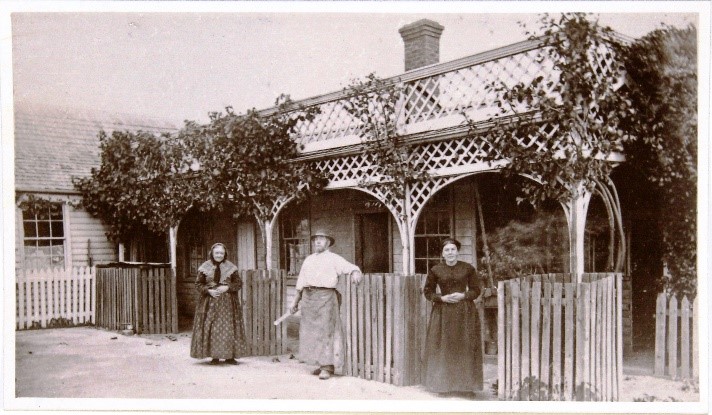
Photographer unknown, (from left to right) Eliza Sharwood, John Sharwood, and an unknown woman, Lot 50, Peel Street South, Ballarat, c.1875. Reproduced with permission from the Gold Museum, The Sovereign Hill Museums Association.
Once Ballarat became a more permanent community from about the 1860s, the European social norms of the era resumed and women became focussed on life in the private sphere once more.
The lives of Australian women have changed significantly since the 1850s. What social norms do you think have changed for the better and which ones have changed for the worse?
During Ballarat’s gold rushes, there were many animals – both native and introduced – living on the diggings. Some were of great use to the miners and their families as a source of transport or food, while others were security guards, working animals and even served as hot water bottles. Many native animals were just living their lives but when gold mining changed their habitat, they had to relocate to different parts of Victoria as the risk of becoming extinct was high. Let’s explore the roles they played and the lives they would have led back then.
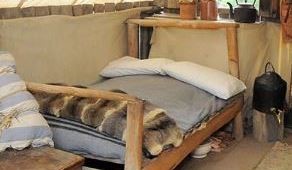
Rugs made from possum-skins like this one would keep people very warm during a cold Ballarat winter. The Wadawurrung people made these to sell to the miners, who paid a lot of money for such soft and life-saving rugs.
The Wadawurrung people encouraged certain native animals across this region for thousands of years before the arrival of the European squatters and then gold miners in the 1800s. Animals such as brushtail possums, eels and grey kangaroos were plentiful around Ballarat because traditional Wadawurrung landscape management took care of them by making sure their sources of food were in rich supply. This meant that when people wanted to make use of these animals for food or clothing, they could easily be located and collected. However, enough of each species was always left alive at the end of a hunt to ensure people living in this area could keep eating and using products from these animals long into the future.
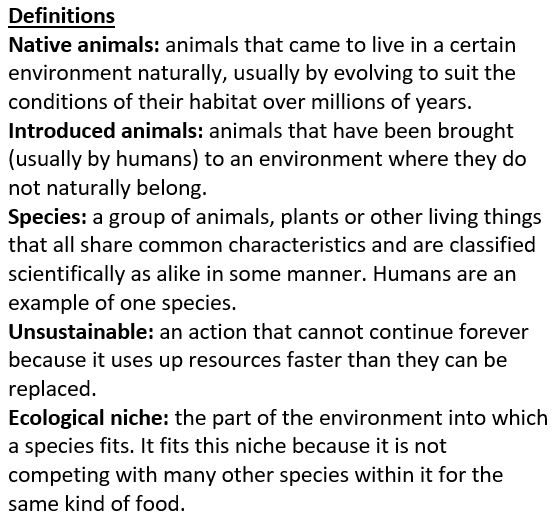
After 1835, European farmers (known as squatters) brought introduced animals such as sheep, cows, goats, and horses to what we now call the State of Victoria. The introduction of these animals (mainly sheep) and the use of European farming practices changed the landscape in terms of the kinds of plants and trees that covered it. As a result, the habitats for native animals were affected. While some native species survived, others became locally extinct (like quolls, bandicoots and bustards [also known as bush turkeys]) because Europeans ate them in unsustainable numbers, or the introduced animals seized their ecological niche. This means that today there is a mix of native and introduced species wherever you go in Australia, from kookaburras to sparrows in the sky, wombats to foxes on land, and blue-ringed octopuses to European green shore crabs in our oceans.
We had kangaroo-soup, roasted [wild] turkey well stuffed, a boiled leg of mutton, a parrot-pie, potatoes, and green peas; next, a plum pudding and strawberry-tart, with plenty of cream. Katherine Kirkland (who lived in Trawalla – 40kms west of Ballarat), Life in the Bush. By a Lady, 1845, p.23.
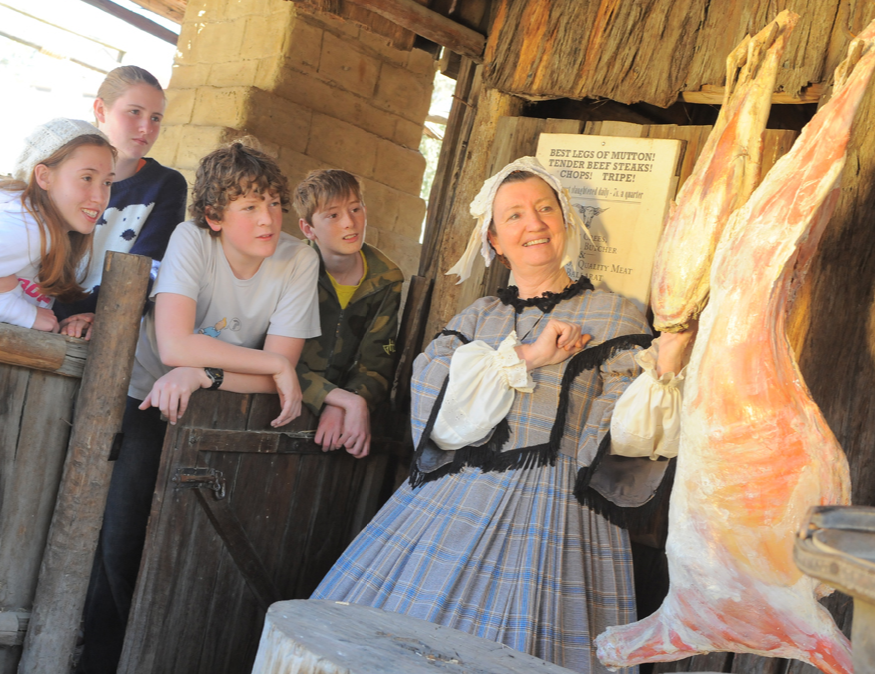
Here is one of our Education Officers taking visiting students to the Butcher’s Shamble, where miners could buy mutton (this mutton however, is made of plastic).
The gold rushes began in 1851 and brought hundreds of thousands of people from all around the world to the shores of Victoria. Many of these new migrants transported yet more animals with them. Dogs were particularly useful companion animals on the diggings because they could keep you warm at night and guard your tent/hut while you were goldmining. For this reason, there are many dogs featured in the sketches of ST Gill, one of the most famous goldrush artists. Some animals were even introduced from the late 1850s onward to help Europeans ease their homesickness! Songbirds like sparrows, starlings and blackbirds were thought to make the Australian bush sound more like England.
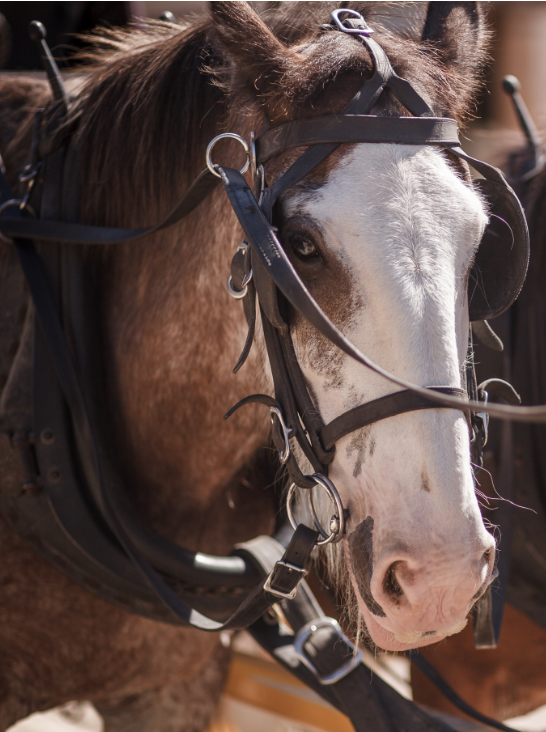
The most useful of horse breeds on the diggings were draft horses, also known as Clydesdales – these are the biggest and strongest type of horse.
Horses were also in high demand during the early years of the gold rushes (before the need for steam-powered machines increased), as all mining work relied on muscle power. As a horse can typically push/pull the same load as ten people, they were used to lift heavy metal buckets of dirt, rocks and gold from below ground in the first few years of the gold rushes. Likewise, horses could be attached to machines that were used to free gold from paydirt and quartz rock, for example, puddling machines and Chilean mills. People and goods could also move around by horse (or sometimes bullock). They were attached to coaches or other vehicles to transport larger groups of people and/or numerous goods. Cobb & Co built a coach, which was a bit like a modern bus, called the ‘Leviathan’ (a word meaning big monster). This vehicle could carry up to 60 people from Ballarat to Geelong with the help of 16 horses, but it did not prove very successful.
Sheep fat was commonly used to make soap for washing clothes and bodies. Candles could also be made from animal fat.
Many animals were also brought by the new arrivals for food. Goats and cows were milked to produce dairy products to feed miners and their families, while chickens, ducks, geese and turkeys were farmed for eggs and their meat. However, the meat that was most commonly eaten on the Victorian goldfields in the 1850s was mutton (old sheep). You can see many animals around Sovereign Hill which represent the animals that were brought here by goldrush migrants. During a visit, you might even spy our museum cat ‘Fergus’ who helps to keep the mice and rats away from the outdoor museum.
Some animals also toured the Victorian goldfields as entertainment – read about the visits from a tiger, an elephant and two zebras that came to Ballarat in the 1850s here.
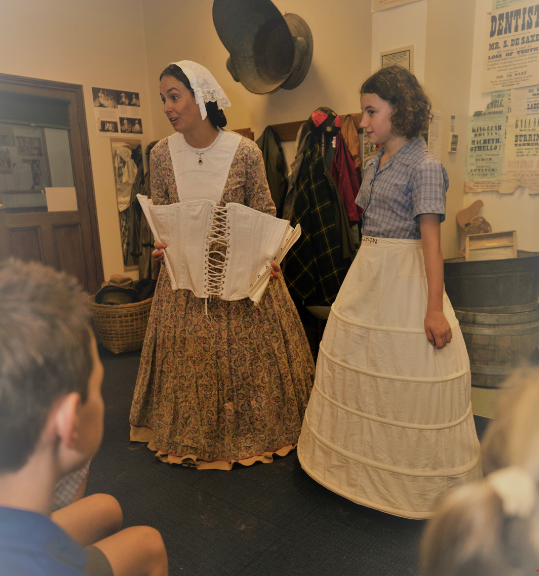
Even 19th century ladies’ underwear, like this corset, were often made using animal products – the tough ribbing was typically made of baleen whale teeth, while the smooth lining was made by silk worms (the caterpillar of the silk moth).
Next time you visit Sovereign Hill, perhaps you could take photos to write a story book about the many animals that miners would have encountered on the diggings – from native animals to domesticated pets and animals that produce food.
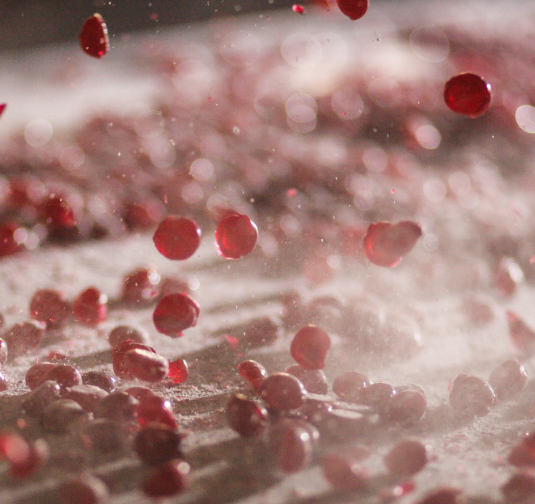
In the 1850s, animals were even used to create the red colour of raspberry drops. The cochineal beetle from Brazil was dried and ground-up to make red dye. But don’t worry, no living things are harmed in the making of Sovereign Hill’s lollies.
George Browning, Eureka Stockade, 1854, 1985-9. The City of Ballarat Historical Collection, reproduced with permission from The City of Ballarat. Is this a primary or secondary source of historical information? Do you think it is an accurate representation of the Eureka Stockade Battle? Why/why not?
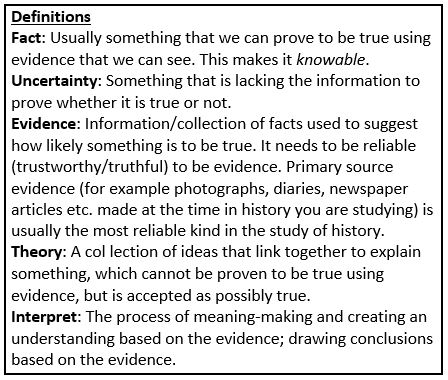
There are many parts of the Eureka Rebellion (also known as the Eureka Stockade) story that we know are historical facts, but there are many other parts that will forever remain uncertain, and even unknowable. This should not stop us from being curious about this interesting and important event in Australian history, as history is full of uncertainties. Sometimes these can be solved by more research, or even new ways of collecting and examining evidence, but sometimes they have to remain a mystery. The history you learn in the school subject often called History or Humanities is driven by the curiosity of academic historians, and their job is tell the truest version of our history. This can change over time when new evidence is found, or when evidence is interpreted from a new perspective.
Ultimately, stretching our critical and creative thinking muscles is really important in the study of history.
So, what can we know about the Eureka Rebellion?
Historians know for a fact that this famous Australian event occurred on Sunday, 3 December 1854. How is this knowable? Historians can find lots of primary source evidence that was written by people who experienced the Eureka Stockade Battle and all claim the event happened on this day. Here are two examples (1, 2) of such primary sources that corroborate (which means agree with each other) to tell us that the date this event happened was indeed Sunday, 3 December 1854.
Here is another: In his famous book about his experience of the Eureka Stockade Battle, Raffaello Carboni wrote in Chapter 1:
‘Brave comrades in arms who fell on that disgraced Sabbath morning, December 3rd’.
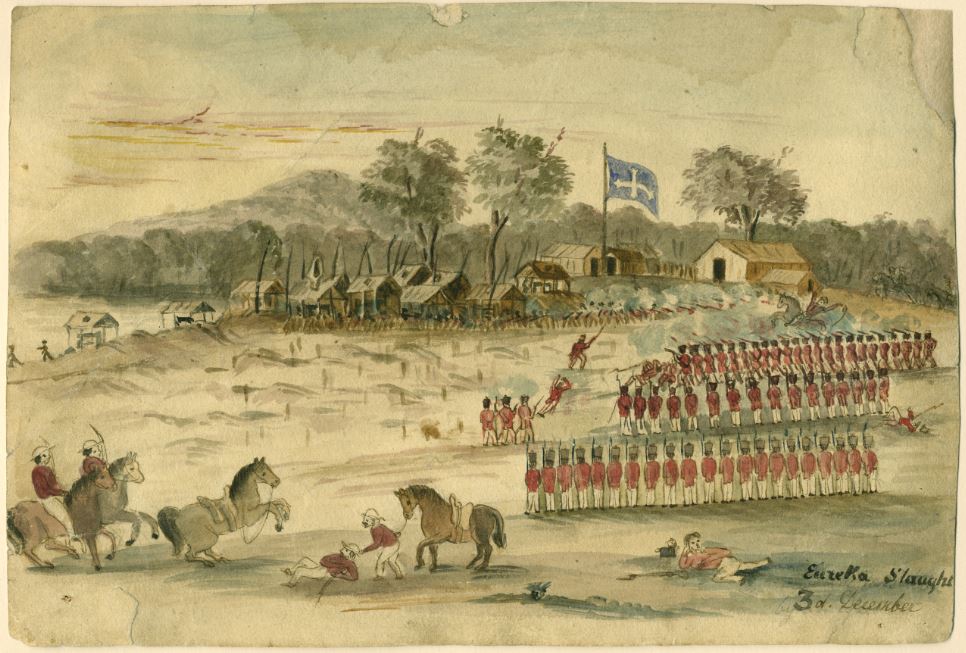
Charles Doudiet, Eureka Slaughter 3rd December, 1854. Ballarat Fine Art Gallery Collection. Reproduced with permission from Wikipedia Commons. Is this a primary or secondary source of historical information? Do you think it is an accurate representation of the Eureka Stockade Battle? Why/why not?
When historians can agree on something like a date, we can be very confident that such a detail is an historical fact. In the same way, we can know for a fact that it was a fight between Redcoat soldiers and a group of (mostly European) goldminers, and that people on both sides died on the day of the battle.
What is currently unknowable about the Eureka Rebellion?
Aunty Marlene Gilson, Surviving on the Goldfields, 2014. Reproduced with permission from the Gold Museum – The Sovereign Hill Museums Association. Aunty Marlene paints Wadawurrung oral histories to document her ancestors’ experiences of 19th century life. Is this a primary or secondary source of historical information? Do you think it is an accurate representation of the Eureka Stockade Battle? Why/why not?
There are some parts of the story that historians do not agree on, and they probably never will. These are uncertainties, or things we cannot currently know based on the available historical evidence. For example, there is a debate about exactly where the Eureka Stockade Battle took place, and just how many people died as a result of it. There are questions around the role of women and children in the days leading up to, and during, the fight itself. A Wadawurrung oral history that has been passed down from generation to generation also exists. It describes Europeans running to the Aboriginal camp near the stockade to keep safe during the fighting – you can learn more about this here. While there is some evidence to support all of these aspects of the Eureka Rebellion story, we cannot be completely confident that these stories are true, and we may never be able to know for sure. And that is okay – we should still learn about them as possible truths about this historical event.
Samuel Huyghue, Plan of the Eureka Stockade attack by the military on 03 December 1854, 1854. Reproduced with permission from Ballarat Heritage Services Picture Collection. Is this a primary or secondary source of historical information? Do you think it is an accurate representation of the Eureka Stockade Battle? Why/why not?
All historical stories contain facts and uncertainties; we simply have to keep our versions of the story honest by stating which parts we can know, and which parts are currently unknowable. For example, in our popular Education Session for visiting students called Put Yourself in the Eureka Story (during which the whole class dresses up as characters who played a role in the Eureka Stockade Battle), we say ‘about 30 people died’ when talking about the battle death toll (the number of people killed) because we will never know for sure. Some reasons why we will never know exactly how many people died during the Eureka Stockade Battle are:
There is no police report from after the battle stating exactly how many dead bodies were found on the battlefield that day, and newspaper reports and books written by witnesses claim different death tolls. Also, due to the complicated politics linked to this event, the government of the time may have wanted to make the death toll look small, while the miners may have wanted the death toll to look large – this may explain why different primary source documents describe different numbers in their death tolls. You can view the list of people whom Peter Lalor believed were killed in the Eureka Stockade Battle here. However, Captain Thomas, leader of the Redcoat soldiers who fought in Ballarat, reported a different death toll:
‘The number of the killed and wounded on the side of the insurgents was great, but I have no means of ascertaining it correctly; I have reason however to believe that there were not less than thirty killed on the spot, and I know that many have since died of their wounds. Amongst these, and the persons in custody, several leaders of the insurrection appear, two of whom lie dangerously, if not mortally wounded, in hotels near the spot.’
Many of the miners who survived the battle went into hiding immediately afterwards to avoid being arrested by the police. During their many months in hiding, some may have died from their battle injuries. However, as they were on the run from the law, it is likely their deaths were never reported to the authorities.
Medicine in the 19th century was not as advanced or informed as it is now – you could die from an infected scratch (because we didn’t know about germs, let alone antiseptics or antibiotics, in the 1850s). As a result, there may have been people who died from their battle injuries a whole year after 3 December 1854, and these deaths were probably not added to the official count of people killed as a result of the Eureka Stockade Battle.
The original Eureka Flag, on display at the Eureka Centre in Ballarat. Reproduced with permission from the City of Ballarat Historical Collection. Photo credit: Tony Evans Photography.
There are also historical uncertainties surrounding the most famous Eureka Rebellion artefact – the Eureka Flag. While recent scientific study of the flag has helped us better understand what the flag is made of, we will never know exactly who made it. For example, there is a popular children’s book called ‘The Night We Made The Flag: A Eureka Story’ by Carole Wilkinson, in which the stars of this famous flag are described as being made from a girl’s nightdress. However, since this book was published, museum conservators have undertaken some study of the flag stars to reveal they are made from a wool fabric, which 19th century fashion experts tell us was not the kind of material used to make nightdresses. Before this research was undertaken, the stars were believed to be made of a fine cotton linen, from which nightdresses were commonly made at this time in history. The blue part of the flag used to be thought of as wool, but this new research tells us it is mostly cotton. This demonstrates how important it is to keep our minds open as to how the flag was made; the nightdress explanation was just a theory which has now evolved and been made less certain thanks to this new research.
Until new evidence or new ways of undertaking research come to light, many aspects of the Eureka Rebellion story have to remain unknowable. What other historical events or characters have question marks hanging over them?
Links and References
Some older Sovereign Hill Education blogposts on the causes of the Eureka Rebellion:














 Sovereign Hill Education Blog